Ok, back from running today's errands.
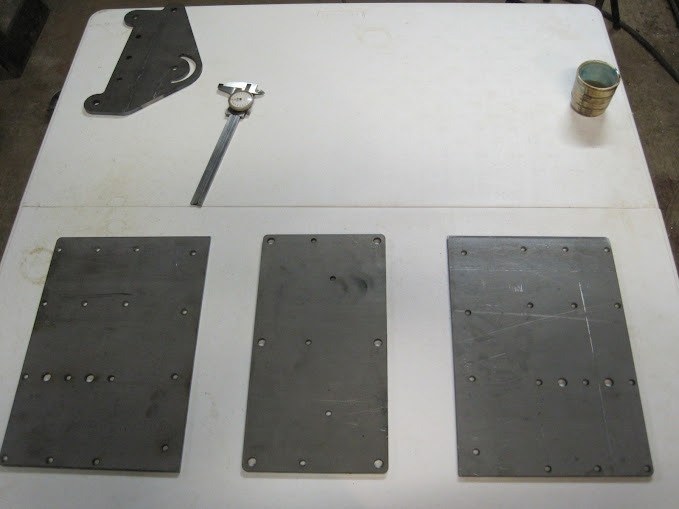
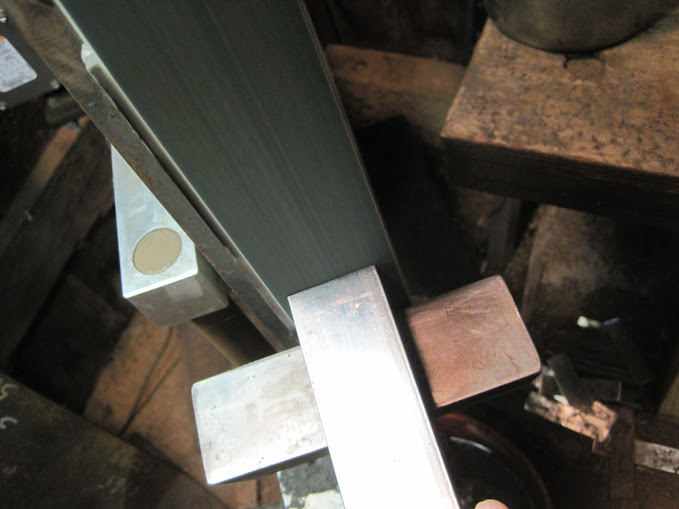
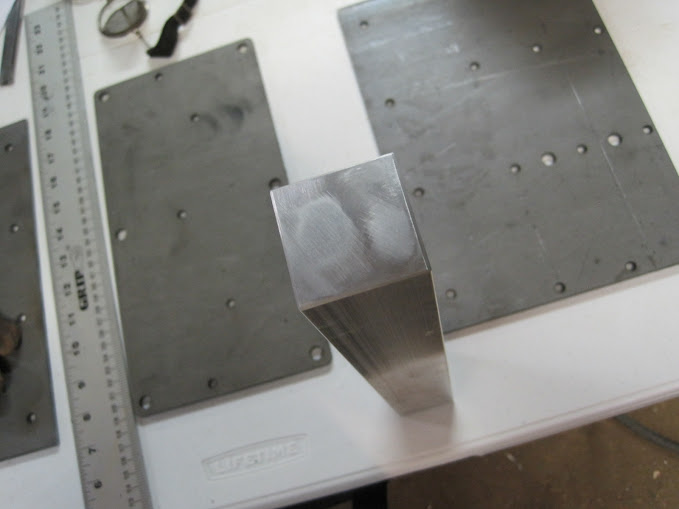
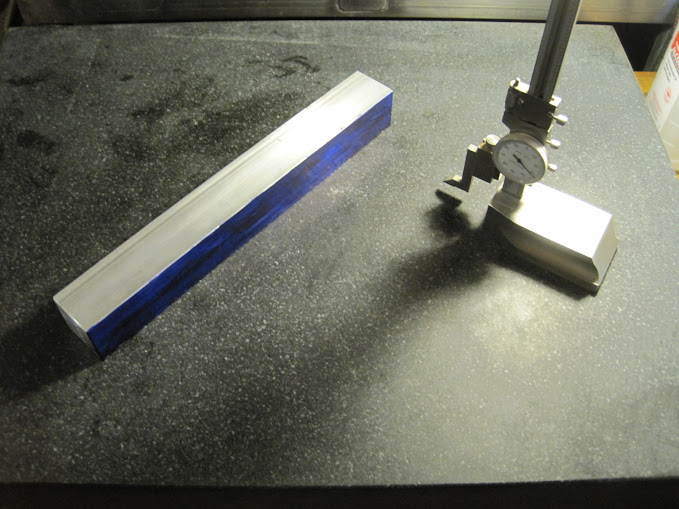
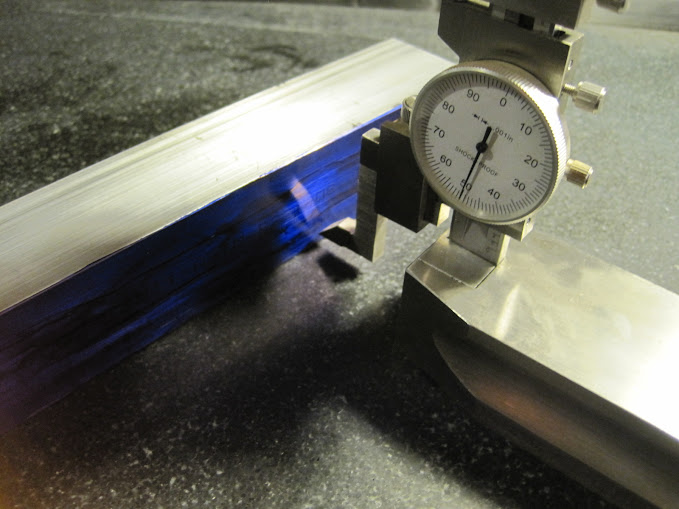
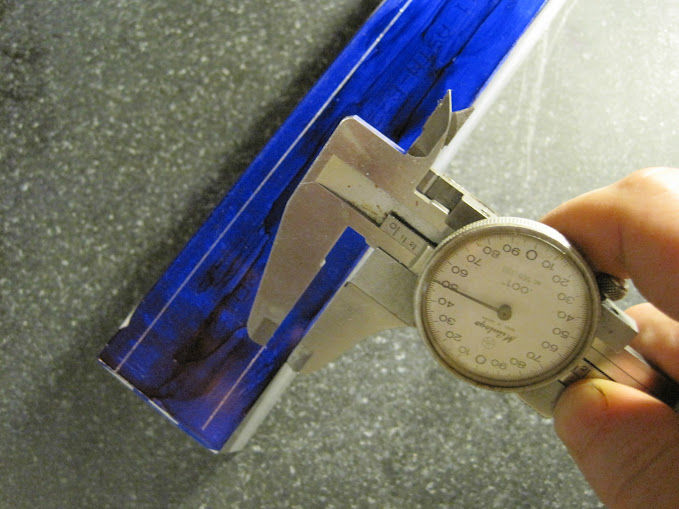
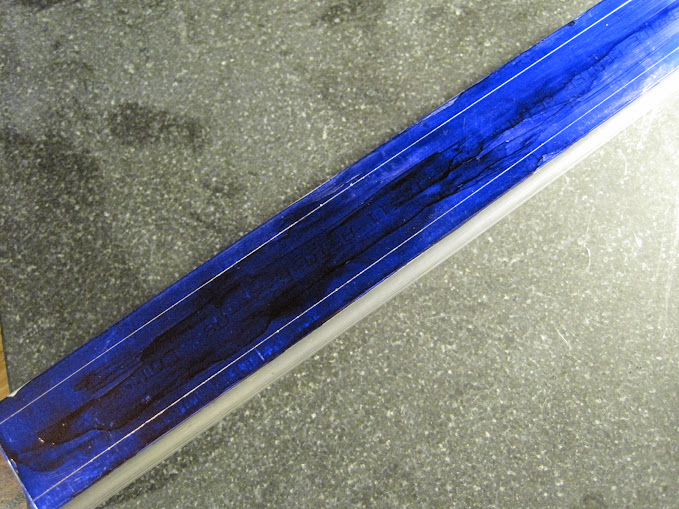
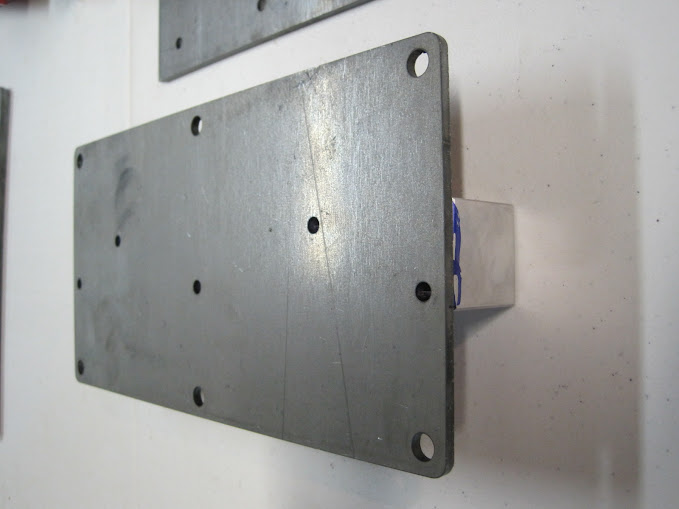
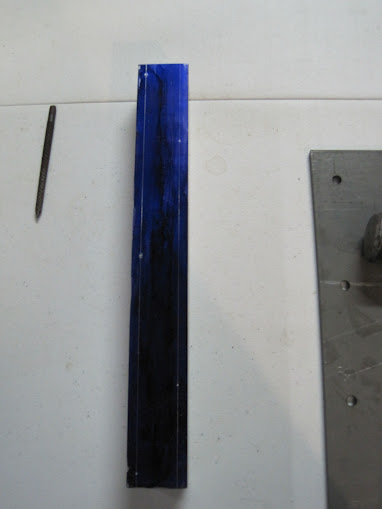
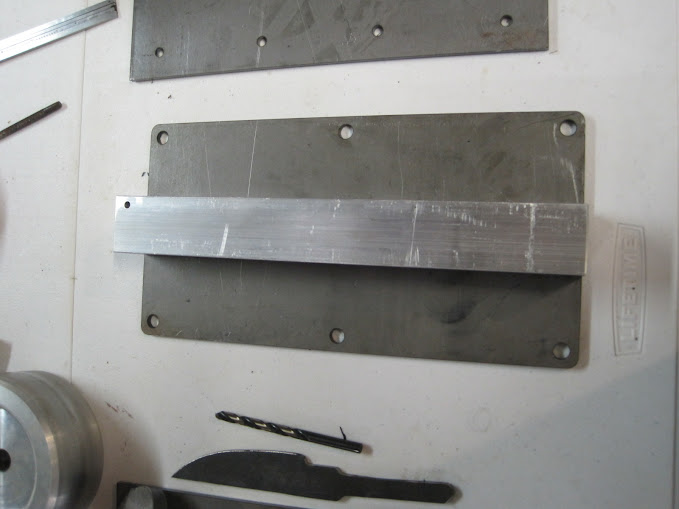
Now that we've got our lines scribed, you'll see the "clever" part I mentioned previously. We'll lay the bottom plate over the 1.5" aluminum bar, and line up the center holes, with the scribed lines. Position it front to rear, and you've got a super easy to mark template to transfer the hole locations. If you were to try and measure all the distances to lay these marks out manually on the bar, I can pretty much guarantee they wouldn't be accurate. That is however, how I would have tried to do it on my first grinder build.
Here you can see the plate overlayed:
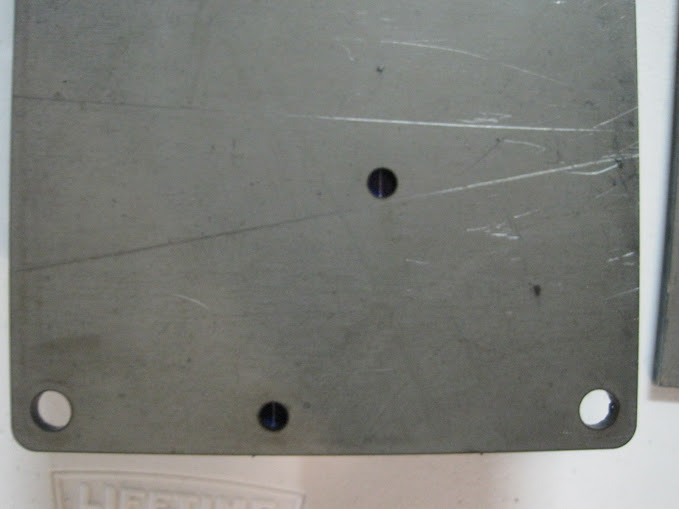
And a close-up of the line showing through the holes:
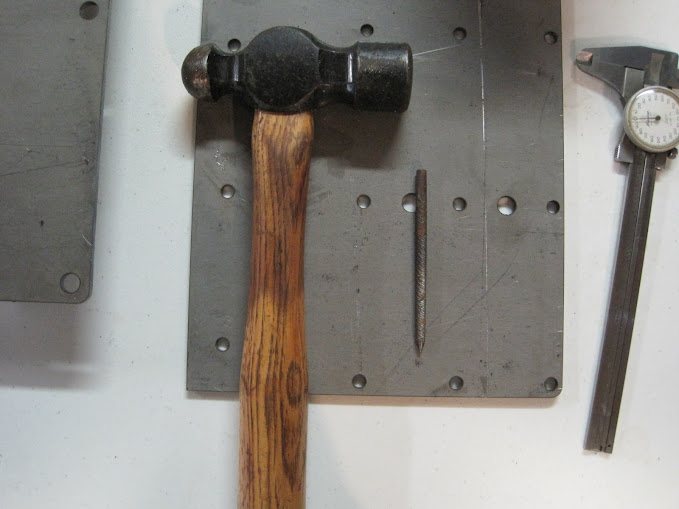
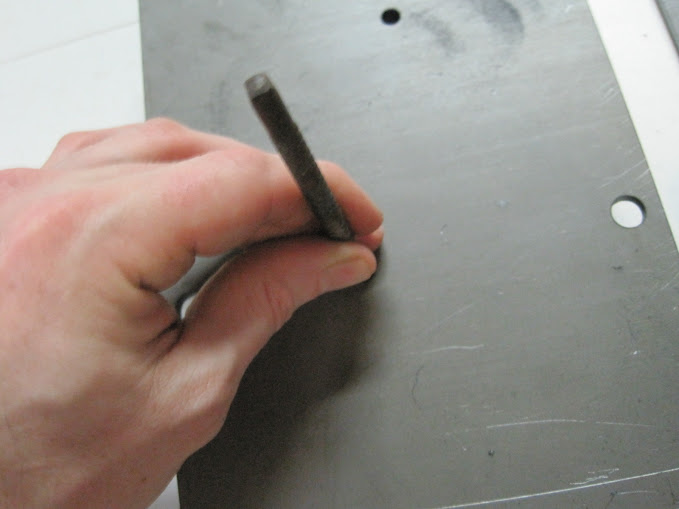
Now, all we have to do is transfer these hole locations, by center punching with these schmancy fancy tools(punch is made from a broken file, since I cant find my spring-loaded punch):
After this you can simply eyeball these to make sure they're center, and if not, make a second mark or shift the first mark with more punching. These give you not only a guideline for starting your holes, but the indent makes it easy to use a spotting drill or combined drill and countersink, to start a perfect hole that won't walk on you.
Here are all the hole locations marked:
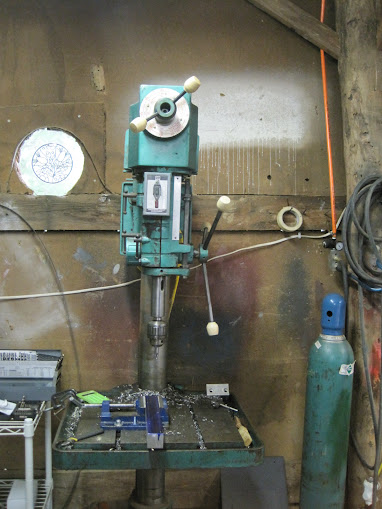
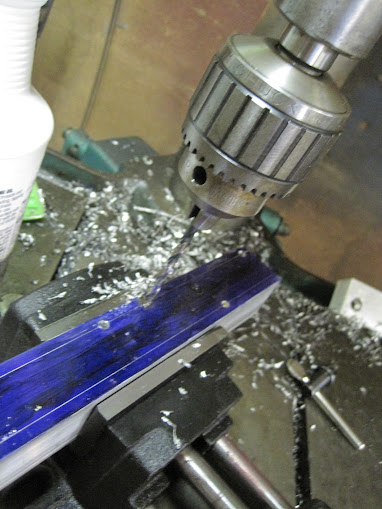
Here's the piece viced up on the Powermatic 1200 drill I'll be doing most of my boring with, however, you can easily do this work on a small bench drill press, as long as you've got your table level and locked down, and a press vise secured and indexed to your quill.
The most important part of getting clean straight holes is setting up correctly in the first place. Your drill needs to be level, it's table level and square to it and tightly secured. You need to fasten your drill vise down to the table as securely as you can, after indexing your hole to the quill and tooling.
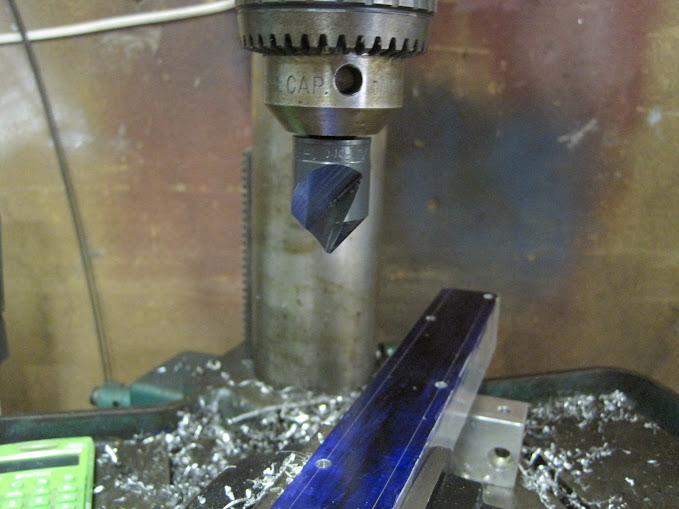
First, I use a #5 combined drill and countersink, since I know I'm going to be drilling 1/4" holes here, and the drilling portion of the #5 is just a bit smaller than this. You can use a spotting drill, or a smaller combined drill and countersink if needed, but the thicker shaft of the #5 has almost no apparent flex, where as using a small diameter drill bit to start your holes, even if they're split point and less prone to walking, can easily exhibit enough flex to drill a crooked, or angled hole, or deflect off the original mark. I start 90% of all holes I drill with one of these combined drill and countersink bits. Here is a pic of the #5, and a #2 for size comparison. Notice these are double sided, and I've broken the drilling end off one side of the #2. These drills only cost a few bucks, and are serious aggravation savers:

It's very difficult to correct a mis-located hole, but with just a bit of forethought, you can avoid a lot of head-aches. Here I've vised up the piece in a super cheap drill vise and spotted my punch mark with the bit end approximately, I've already got my vise screwed down securely to the table, and this is essential. Trying to hold the piece while you drill is not only a guarantee of inaccuracy, but in a large 2HP drill press like this, VERY dangerous. Even in my small harbor freight bench top drill I"ve managed to destroy bits, send tools flying, and cause significant hand damage by attempting to hold the work by hand. Don't do it.
Once you've got your vise clamped down, and your work piece located to the tip of the bit, table secure, etc, all you'll have to do is unclamp the vise and move the work piece linearly to reach each of the marks on one line. It's more work initially, but it saves time and effort in the end, since you quickly move through each hole. Flip the piece around, and do the same for the other line.
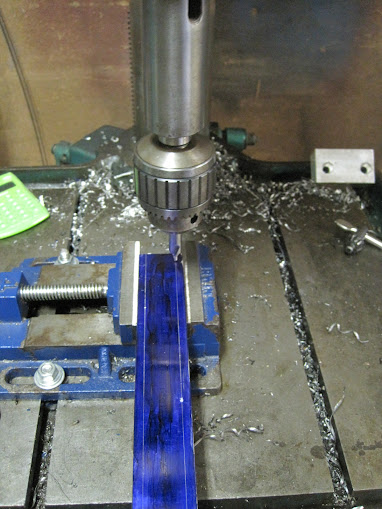
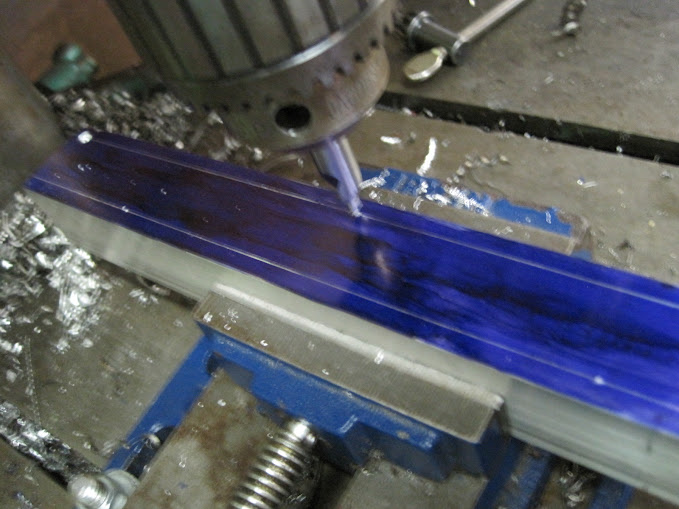
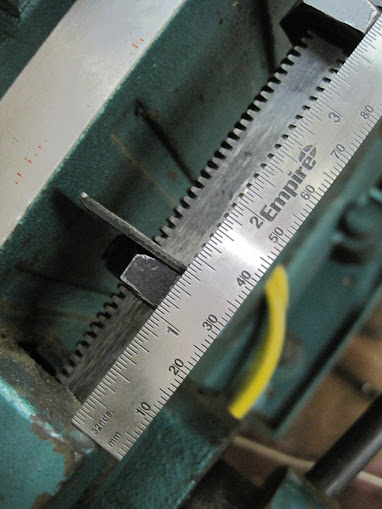
Here I'm holding the piece and table in place with the quill, indexed on my hole location, and tightening up the table. I'll start with this hole, then just slide the bar in, to hit the next hole, without moving anything else:
It's also very important, when you chuck your bit, to tighten it down loosely by hand, and turn on the drill. Look at the bit to make sure it's spinning centered. Check the tip, if you see it moving heavily from side to side, it's either chucked badly, bent, or a bad bit, or there is excessive vibration in your drill.. With cheap import drills, a lot of times this can be fixed by tightening up the motor to the belt drive. Don't observe the chuck or any other part of the spindle, just look at the very tip of the drill. The chuck may not be totally symmetrical, but if the tip isn't moving around, the bit should be turning straight.
Even with a high quality chuck(Jacobs Ball Bearing Super Chuck) in my drill, bit to bit variations mean I sometimes have to move up or down the drill shaft, to get it spinning correctly. However, occasionally, even top quality bits will be slightly bent.
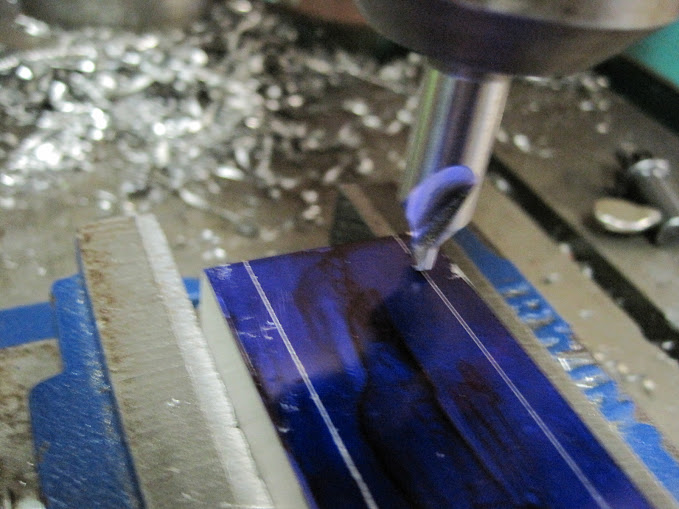
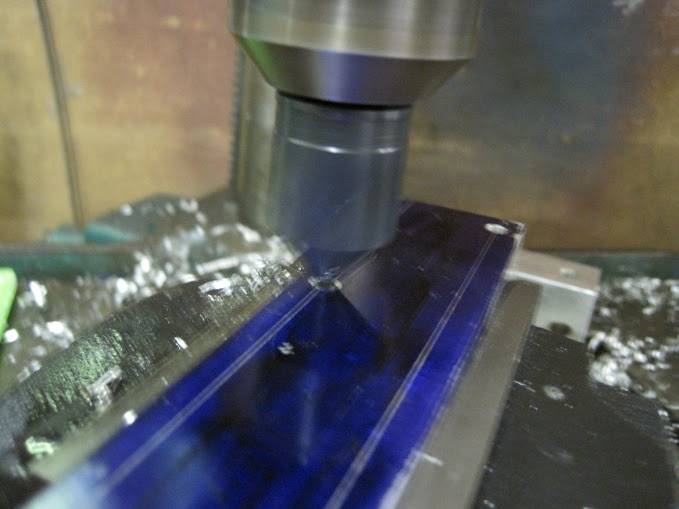
Here's a close-up, double checking that my bit tip hits the center of my mark, and making sure I have no deflection. With small shaft bits, even if you setup your table correctly, being off a hair from your punch mark, can cause the bit to bend over to go down into that mark, which can cause your hole to walk. It's easy to check, just eyeball it, it's obvious when you see the bit move over to go into the punch mark. If so, just move your table or vise over a bit. Get it straight. With a little practice, it's super fast and easy:
If all that sounds difficult, it's not! I just want to save anybody that's unfamiliar with these things a lot of grief I suffered my first time around. Learning to setup you work piece, and secure it properly, is 90% of what machining seems to be about, and I've still go a lot to learn. If you want a good primer or workpiece set in a drill, the serious way, check this URL out:
http://patwarner.com/holding_the_work.html
Now that I feel confident that my work piece is moderately secure and well indexed, I start drilling. In this case, I'm not concerned with the countersink portion of my drill bit, just the drilling portion. I'm trying to put a precise starting hole for a regular drill bit to follow into the material:
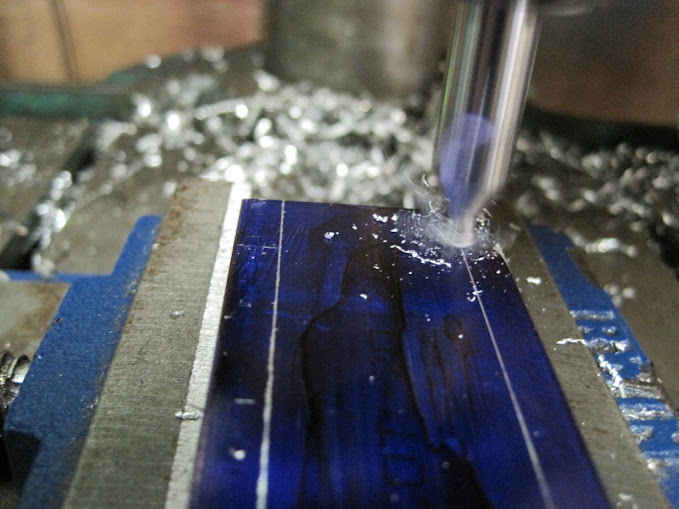
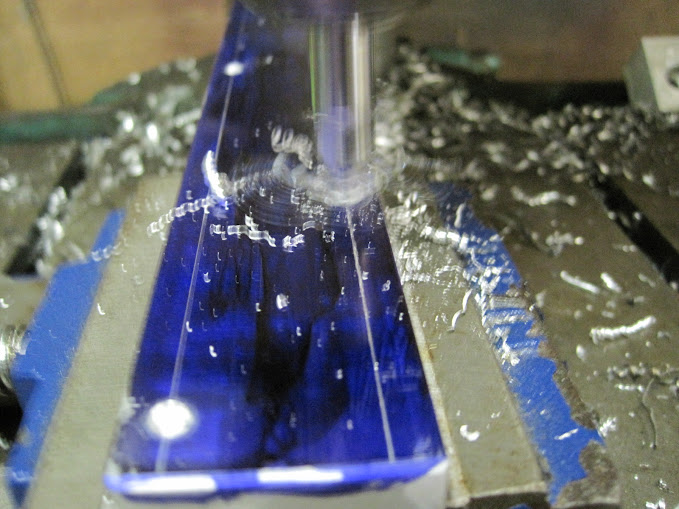
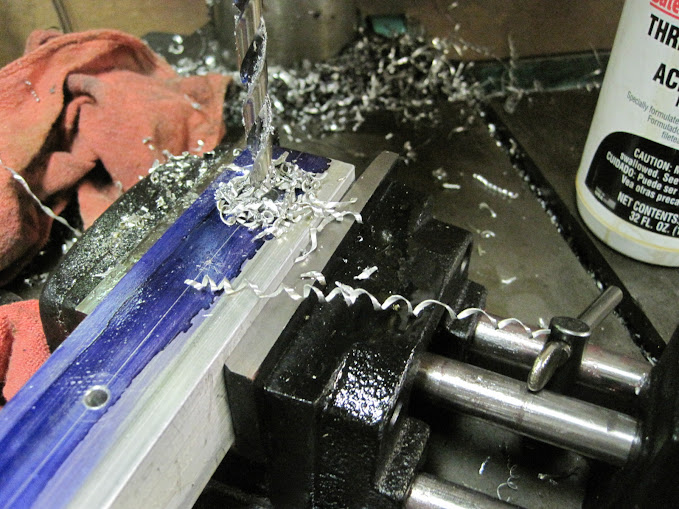
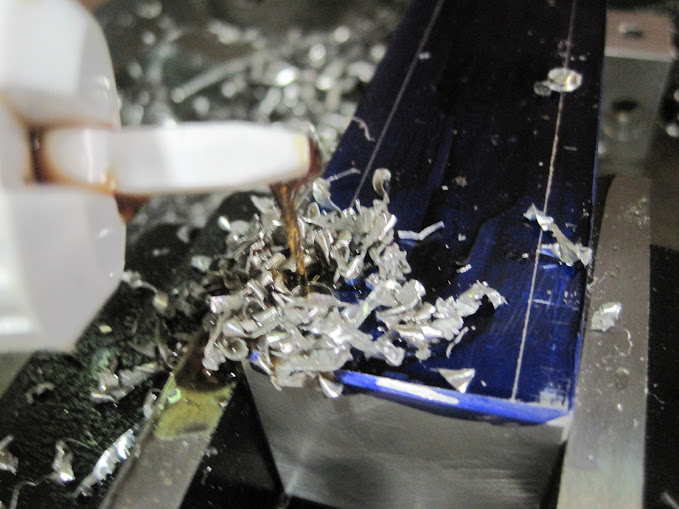
Two big problems with novice drill work, is running the bits at too high, or too low a speed. Going real slow is a good rule of thumb if you're used to working wood, but going too slow can cause you as many problems as going too fast. The best way to see how you're doing is watching the chips. I shoot for tight spirals. This bit is somewhat worn, so I get some other crud, but I"m running this bit at about 1200rpm and getting good curled chips, I could probably be going faster. Another rule of thumb, the smaller the bit, the faster the speed, the opposite being true of larger bits. Start with a very low pressure, most importantly, I"m trying to get my spot pinpointed, high pressure or erratic movement of the quill can cause the bit to walk. Once I'm sure I have the hole started where I want it, I slowly apply more pressure, but it's never high. If you're having to put any muscle into it, you're doing it very very wrong.
At this point I'm not using any cutting fluid, since this is soft material and I'm just going in about 1/4" deep to establish my guide.
First one down, slide the bar in further, and move on:
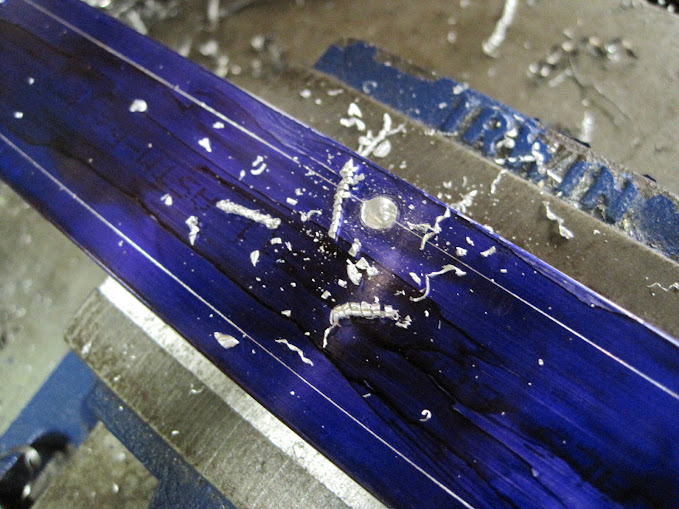
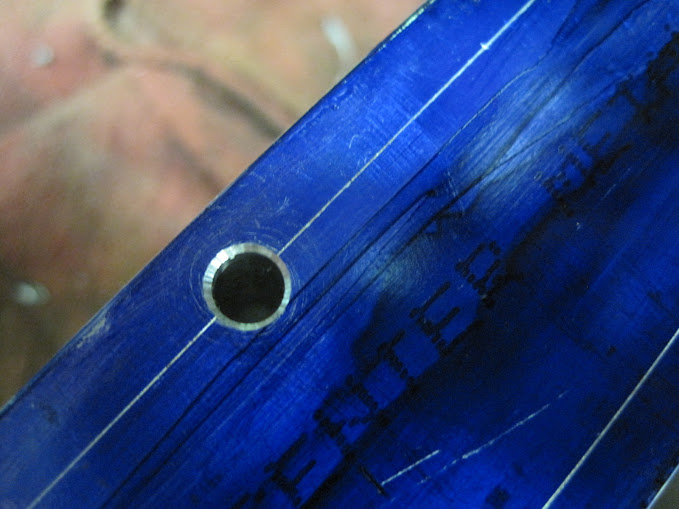
Here's what the holes look like at this point:
Nice action shot:
I know this all sounds long-winded, and time consuming, but it all took less than 5 minutes from the point that I walked over to the drill, and that includes taking photos.
Apologies for the pros that already know all this stuff, but I certainly didn't when I started, and wish I had. Learning to set up your work properly, no matter what task in machining or knifemaking is the most essential step to creating top results in my humble opinion. Take the time to learn that, and life will be good.



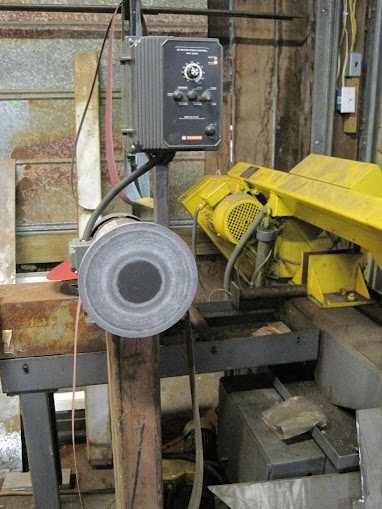
 Bench space is at a premium in my shop, so I brought a folding table out to work off of. I'll eventually fab a dedicated stand for this grinder, since I don't personally like mounting spark shower machines on wooden benches.