
No sharpening 101 sticky?

Joined
May 28, 2012
Messages
7
I was surprised to see that there was no sticky created for the basics of knife sharpening in this forum. If it exists elsewhere and I'm missing it somehow I would appreciate if someone could direct me to it.

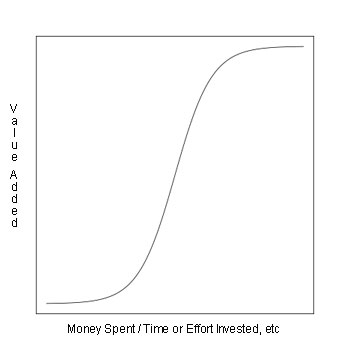
That's not to say I didn't stumble upon some in-depth threads in this forum on all the various finer points of obtaining and maintaining the perfect edge, that's all fantastic information and excellent discussion by obvious enthusiasts of the craft. But I feel its also way over the top for beginner-to-medium knowledge of many. Sometimes having too much information is a bad thing, it paralyzes us and prevents us from acting and this is why I think a sticky on the basics would be an excellent addition here. Here is a general phenomena I have observed on forums of all types, be it for home audio, cars, knives, whatever, basically anything people are passionate about:
ifVm9.jpg


As you can see, there is invariably a 'sweet spot' in the middle where you get the most bang for your buck (not just money-wise but also your time invested, etc). If you go too low on the graph you get an inferior product, or in the case of the actual sharpening you do it shoddily and you wind up with a poor edge because you didn't invest the time and technique to do it properly. Conversely at the top end you get expensive products and complicated techniques and equipment (much higher learning curve too), and yes, while they do improve on the overall final outcome it eventually becomes a product of diminishing returns.

My story is pretty simple, growing up I had pocket knives and hunting knives for camping and stuff and I learned how to sharpen them from my grandad who was a master at it and all he had was a couple stones and a wooden base that he'd built himself in his workshop. He also had a set of small stones to take out into the field and a little bottle of oil to keep his blades protected from rust. I guess my point of all this is that grandad didn't have any of the fancy technology or equipment that we do today and still was able to get a razor sharp edge that would hold up admirably so I feel like that would be a great starting point for me to re-learn the skill from the bottom up.

So where should I begin? What would you buy for stones? (both for home and field use) What about a knife guide to maintain the angle, is that a good idea at first to learn how to perfect it? What's a good model for a simple guide? What angle would you start with? 25? 20? other? What technique would you use in how you draw the blade against the stone (how much pressure, etc) Anything else you can think of?

Apologies for the long post, thanks for reading!
 
I'm just gonna say it: this is a really weird first post.

While I see your point, using a graph with no data points? Cmon.
 
The biggest 'bang for the buck' I found, after basically spinning my wheels for a very long time, was to use a guided sharpener. I realized after the fact, that by temporarily eliminating the variable of angle control (allowing the guide to handle that part), I learned an awful lot about proper use of pressure and watching for a full apex (indicated by the burr formation). That produced my first 'Oh my GAWD!' scary-sharp edge, and I was hooked. That was a beneficial thing, in that I obsessively sharpened every knife I could lay my hands on (including some of my friends' knives). The sheer repetition of doing all that went a long ways towards 'training' my hands for maintaining the angle and developing the 'feel' for correct pressure.

Knowing what I know now, if I were to start all over again, I'd just spend about $15 on a guide clamp (like DMT's), and use it with any bench stone or sandpaper-on-glass. Pick a knife (or several) of known decent steel quality (like basic carbon steel or a mid-range stainless in 420/440 series), and just practice, practice, practice. Many of the sophisticated tools & methods available now can overwhelm one's impression of what it really takes to learn sharpening. It really doesn't take that much, in terms of tools. It's mostly about the three 'P's, for me, in order of importance: Patience, Persistence and Practice.
 
I'm just gonna say it: this is a really weird first post.

While I see your point, using a graph with no data points? Cmon.

exactly what data points would you like to see? The x-axis is ambiguous because it signifies 'investment' (be it in time, effort, money, etc), if you know of a single unit that represents all those then I'm all ears. If you think its a stupid question or that I've explained it poorly then I apologize
 
The biggest 'bang for the buck' I found, after basically spinning my wheels for a very long time, was to use a guided sharpener. I realized after the fact, that by temporarily eliminating the variable of angle control (allowing the guide to handle that part), I learned an awful lot about proper use of pressure and watching for a full apex (indicated by the burr formation). That produced my first 'Oh my GAWD!' scary-sharp edge, and I was hooked. That was a beneficial thing, in that I obsessively sharpened every knife I could lay my hands on (including some of my friends' knives). The sheer repetition of doing all that went a long ways towards 'training' my hands for maintaining the angle and developing the 'feel' for correct pressure.

Knowing what I know now, if I were to start all over again, I'd just spend about $15 on a guide clamp (like DMT's), and use it with any bench stone or sandpaper-on-glass. Pick a knife (or several) of known decent steel quality (like basic carbon steel or a mid-range stainless in 420/440 series), and just practice, practice, practice. Many of the sophisticated tools & methods available now can overwhelm one's impression of what it really takes to learn sharpening. It really doesn't take that much, in terms of tools. It's mostly about the three 'P's, for me, in order of importance: Patience, Persistence and Practice.


Exellent advice, thanks David, that's very much what I was driving at and the 'spinning my wheels' thing is exactly what I was looking to avoid.

Is this the DMT guide that you like? http://www.amazon.com/DMT-ABG-Aligner-Blade-Guide/dp/B00004WFUR

And yes, the knives in question are indeed 440 carbon steel. Given that, is there anything in particular I should seek for stones as far as material or grit is concerned? I was thinking of getting one for home and a smaller more portable one for taking camping with me.

cheers!
 
The DMT clamp is a excellent tool for sharpening and learning the basics of freehand if used with a stone. I would add a $20 Norton India and a strop and call it good until you feel you cans do better than what your tools offer.

I understand the point of the graph and the "sweet spot" you speak of, the problem is that the sweet spot is found through experience and not out the gate. It's taken me 2/3 of my life to find the stones I like to use and the type of sharpening that defines my style. It's not something anyone can tell you its what you evolve into.
 
Exellent advice, thanks David, that's very much what I was driving at and the 'spinning my wheels' thing is exactly what I was looking to avoid.

Is this the DMT guide that you like? http://www.amazon.com/DMT-ABG-Aligner-Blade-Guide/dp/B00004WFUR

And yes, the knives in question are indeed 440 carbon steel. Given that, is there anything in particular I should seek for stones as far as material or grit is concerned? I was thinking of getting one for home and a smaller more portable one for taking camping with me.

cheers!

That's the clamp I was referring to, yes. As for a good starter stone, one that seems to have a good rep around here is a Norton India (aluminum oxide) combo stone. Diamond hones are very useful, but can be somewhat frustrating to use on some of the 'softer' steels (which usually includes carbon and many of the 420/440 grades). Diamond cuts very aggressively, and it's real easy to use too-heavy pressure, which is counter-productive. The AlOx or SiC (silicon carbide) stones would be a little more forgiving, if pressure is a bit heavy, and they work well on most common knife steels. Diamond really excels on the 'super steels' with very highly abrasion-resistant carbides (like S30V or D2). If using diamond on 'softer' steels, I'm developing a habit of relying on only the medium/finer grits, and avoiding the coarse diamond hones altogether. In DMT's example, a Fine (red, 25 micron) hone can accomplish a lot on softer steels or with smaller blades, such as found in traditional pocketknives. I've even used a Fine DMT 'credit card' hone to re-bevel a D2 blade on a traditional pocketknife. It worked great, though it still took some time. A coarse hone would've likely been more ideal for that job.

Norton has a few smaller versions of their India combo stones, in addition to their bench hones. And DMT has a whole bunch of pocketable/field hones, so lots of possibilities there. In particular, the Dia-Folds and the 'credit card' hones are very, very handy. I use them quite a lot. And the Dia-Folds can also be used with the clamp, if including the Magna-Guide accessory (I have this too).
 
Last edited:
I understand the graph perfectly, though in the case of sharpening the effort in/value added would be the steep part, the money in/value added would be a much more gradual curve.

IMHO you should go straight to free-hand and start with a Norton SiC combination stone and some cheap knives. The combination India stone is very good too, but the silicon carbide can work any steel quickly and gives remarkably consistent results across steel types. Add to that a Sharpie, some black and white compound from Sears, a bottle of mineral oil, and some old newspaper. A graphic arts loupe at 10-15x is a big help too. This is what I use most often despite having an entire bin of diamond, aluminum oxide, ceramic, natural stones, waterstones and wet/dry sandpaper.

You're right, it seems amazing we don't have a sticky for this. I'd like to see one started where folks can demo with drawings, pics, video etc how they get their edges, what they consider good results, and how they verify them.
 
The DMT clamp is a excellent tool for sharpening and learning the basics of freehand if used with a stone. I would add a $20 Norton India and a strop and call it good until you feel you cans do better than what your tools offer.

I understand the point of the graph and the "sweet spot" you speak of, the problem is that the sweet spot is found through experience and not out the gate. It's taken me 2/3 of my life to find the stones I like to use and the type of sharpening that defines my style. It's not something anyone can tell you its what you evolve into.

Excellent, that's what I'm looking for. When I was a kid I was only allowed to do it under my grandad's supervision and he would correct me often and guide my hands to the correct angle, I guess after decades of pratice his guide had become built into his hands ;) I wish I could remember the stuff he taught me but its been too long and I was young when he was alive. Thanks for the solid tips.

That's the clamp I was referring to, yes. As for a good starter stone, one that seems to have a good rep around here is a Norton India (aluminum oxide) combo stone. Diamond hones are very useful, but can be somewhat frustrating to use on some of the 'softer' steels (which usually includes carbon and many of the 420/440 grades). Diamond cuts very aggressively, and it's real easy to use too-heavy pressure, which is counter-productive. The AlOx or SiC (silicon carbide) stones would be a little more forgiving, if pressure is a bit heavy, and they work well on most common knife steels. Diamond really excels on the 'super steels' with very highly abrasion-resistant carbides (like S30V or D2). If using diamond on 'softer' steels, I'm developing a habit of relying on only the medium/finer grits, and avoiding the coarse diamond hones altogether. In DMT's example, a Fine (red, 25 micron) hone can accomplish a lot on softer steels or with smaller blades, such as found in traditional pocketknives. I've even used a Fine DMT 'credit card' hone to re-bevel a D2 blade on a traditional pocketknife. It worked great, though it still took some time. A coarse hone would've likely been more ideal for that job.

Norton has a few smaller versions of their India combo stones, in addition to their bench hones. And DMT has a whole bunch of pocketable/field hones, so lots of possibilities there. In particular, the Dia-Folds and the 'credit card' hones are very, very handy. I use them quite a lot.

All pure gold advice, thank you again for the tips. I'll probably try a couple of these options and see what works best for me, the overal message I'm getting reading thru these forums is that the 'feel' for it is as important as anything.

I feel I've gotten enough solid advice that I could practically start a 101 guide myself at this point :D
Thanks again guys.
 
exactly what data points would you like to see? The x-axis is ambiguous because it signifies 'investment' (be it in time, effort, money, etc), if you know of a single unit that represents all those then I'm all ears. If you think its a stupid question or that I've explained it poorly then I apologize

Haha no I get your question, I just think using a meaningless graph is a weird way to illustrate a point. Though I guess I'm probably overthinking it. Just a pet peeve, really :P
 
I understand the graph perfectly, though in the case of sharpening the effort in/value added would be the steep part, the money in/value added would be a much more gradual curve.

yeah its not a perfect analogy I agree because sometimes the x-axis is money and sometimes its skill or technique or materials, but if you use it sort of loosely in that regard you can apply it to virutally any specialized forum, just like this, try it, you'll be amazed ;)

IMHO you should go straight to free-hand and start with a Norton SiC combination stone and some cheap knives. The combination India stone is very good too, but the silicon carbide can work any steel quickly and gives remarkably consistent results across steel types. Add to that a Sharpie, some black and white compound from Sears, a bottle of mineral oil, and some old newspaper. A graphic arts loupe at 10-15x is a big help too. This is what I use most often despite having an entire bin of diamond, aluminum oxide, ceramic, natural stones, waterstones and wet/dry sandpaper.

The "cheap knives" part of this is a great tip. Practice on something you don't care about first then try it on your choice blades. I will take this advice to heart and buy some cheap practice blades to freehand with. I think for my expensive knives I'll go with the guide until my skill is at least acceptable.

A loupe though? :D You must work with knives extensively because that sounds a wee bit on the advanced side for me at the moment. But I think this speaks to my point well though, there is a wealth of knowledge and technique involved in mastering this skill, and I assume it can probably be broken down into sections...basic, intermediate and advanced. Would you agree that technique/practice are the keys to moving from no knowledge, thru basic and into intermediate? Its almost like the basic sticky would read something like:

1)get these basic materials...
2)practice...repeat, repeat, repeat
3)once you can do: a, b and c, move on to the intermediate sticky
 
Regarding 'cheap' knives to practice on, make sure you still know what you're getting.

I've found some 'cheap' ones in the past, of unknown 'mystery steel', which were an exercise in frustration. Sometimes a cheap blade simply won't respond to sharpening, even if you're doing everything right. A couple that I've tried to sharpen were either too soft or too coarse-grained to take a sharp edge. For someone who's still learning how to do it 'right', a blade like that can lead you astray if you start thinking it's something you're doing wrong. That's why I emphasized finding some knives of known steel type/quality (which can still be had very 'inexpensively'; the 'auction site' is great for finding these). They will respond in kind to good technique, and reward you with a screaming-sharp edge. Even a kitchen knife that you've been using a long time, and has held up to reasonable expectations, would be a good bet.
 
Haha no I get your question, I just think using a meaningless graph is a weird way to illustrate a point. Though I guess I'm probably overthinking it. Just a pet peeve, really :P


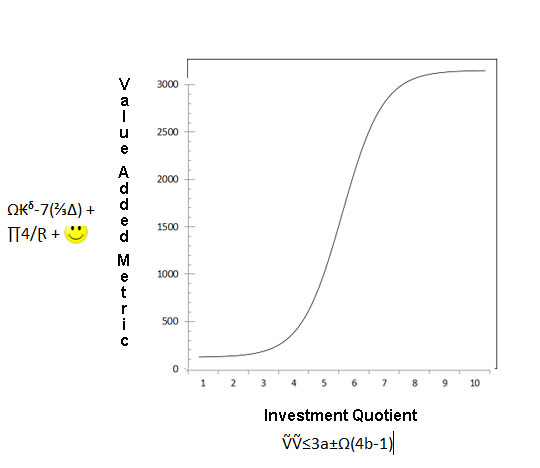
this should be more understandable to you since I've included gridlines and descriptions and such

C05hb.jpg
 
Last edited:
Regarding 'cheap' knives to practice on, make sure you still know what you're getting.

I've found some 'cheap' ones in the past, of unknown 'mystery steel', which were an exercise in frustration. Sometimes a cheap blade simply won't respond to sharpening, even if you're doing everything right. A couple that I've tried to sharpen were either too soft or too coarse-grained to take a sharp edge. For someone who's still learning how to do it 'right', a blade like that can lead you astray if you start thinking it's something you're doing wrong. That's why I emphasized finding some knives of known steel type/quality (which can still be had very 'inexpensively'; the 'auction site' is great for finding these). They will respond in kind to good technique, and reward you with a screaming-sharp edge. Even a kitchen knife that you've been using a long time, and has held up to reasonable expectations, would be a good bet.

good point...ok so not 'cheap' per se, lets say 'affordable'...or better yet 'value conscious'?
 
Last edited:
A loupe though? :D You must work with knives extensively because that sounds a wee bit on the advanced side for me at the moment. But I think this speaks to my point well though, there is a wealth of knowledge and technique involved in mastering this skill, and I assume it can probably be broken down into sections...basic, intermediate and advanced. Would you agree that technique/practice are the keys to moving from no knowledge, thru basic and into intermediate? Its almost like the basic sticky would read something like:

1)get these basic materials...
2)practice...repeat, repeat, repeat
3)once you can do: a, b and c, move on to the intermediate sticky

Understanding the intent, technique, practice, observation of results, both visually (that's where the loupe comes in, you can almost stop using it as your skill progresses, but as with the Sharpie its always nice to have nearby), and with cutting tests. Once you know what you're trying to accomplish at every stage, materials become far less important. I agree that at some level, cheapo knives can just be frustrating, but for learning freehand angle control, a coarse stone and a cheap knife with lots of observation can get you up the curve very quickly. I believe too many people learning freehand try to create a razor edge right off the bat and can't understand why it doesn't work. Reduce the number and complexity of the variables and work up to the better results. Its not that steep of a climb, but the basics must be mastered first.
 
My story is pretty simple, growing up I had pocket knives and hunting knives for camping and stuff and I learned how to sharpen them from my grandad who was a master at it and all he had was a couple stones and a wooden base that he'd built himself in his workshop. He also had a set of small stones to take out into the field and a little bottle of oil to keep his blades protected from rust. I guess my point of all this is that grandad didn't have any of the fancy technology or equipment that we do today and still was able to get a razor sharp edge that would hold up admirably so I feel like that would be a great starting point for me to re-learn the skill from the bottom up.

Your grandad didn't have fancy technology but was a pro
Probably as a result of simply practicing. I'm betting he
Didn't use a guide or anything when he practiced either
so if you want to be as good as him just practice as much as
him. it would be a bit of a leap to consider his years of
experience as just a good starting point when it takes a
lot of practice to get to that point.
 
I guess this thread would be a good start for a sticky. Why? Because the experts have started sharing their accumulatedn wisdom :D.

On the cheap knives to practice with, try Sanrenmus or Enlans. They are cheap, but with adequate QC so that the consistency factor is there. Get some with hollow grind (Enlan EL02) and flat grind (EL01), modelnis only for example. This will provide the basic of how primary grind will affect the rebevelling process. Most come quite sharp out of the box, but none can't be improved by thinning down the angle.
The steel used is good enough to take an edge, but won't be too tough that it becomes a frustration.

There's a thread in Review subforum, you'll find where to get them. Avoid Navy or Ganzo for a start, as the QC are less than Sanrenmu or Enlan. I haven't found any of the smaller model with flat grind so far, that's why the example used are larger knives.
 
Back
Top