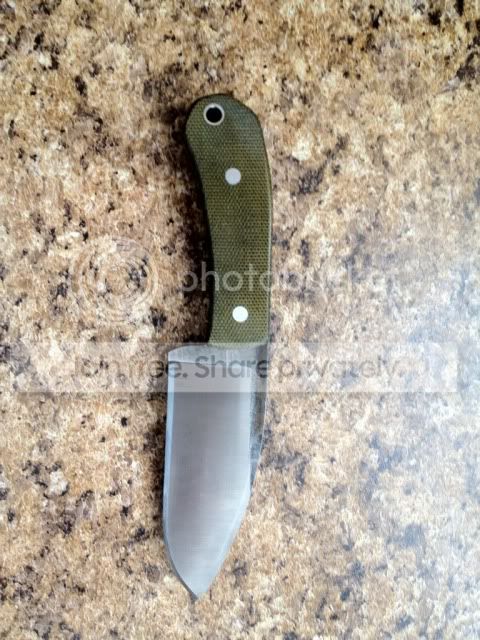
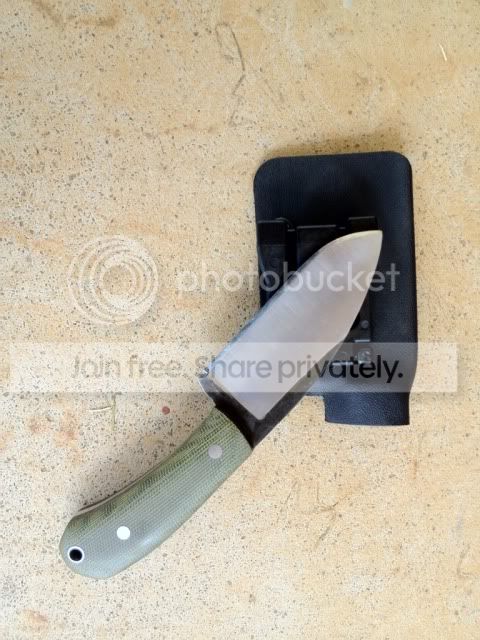
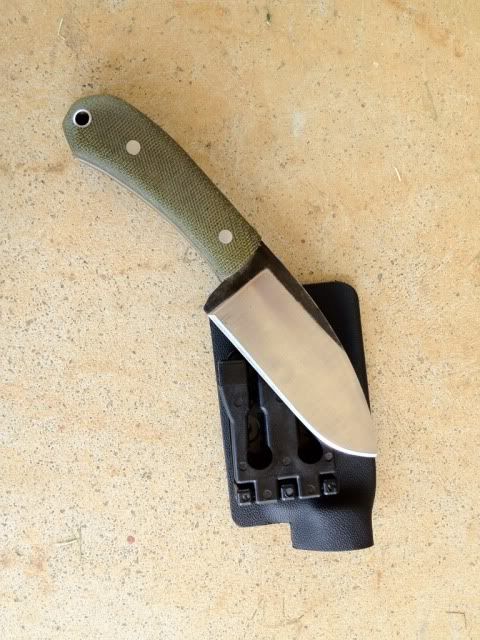
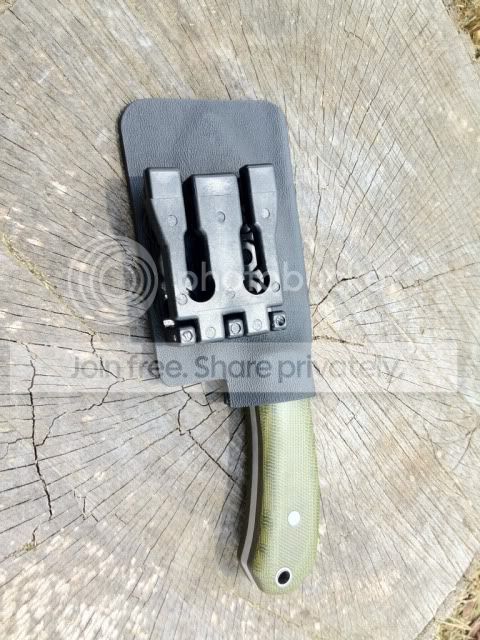
For a second knife, that isn't bad at all.
Some tips and areas to work on for your next knives.
Handle:
The block handle has been addressed, but let me add that a small bit of curve makes a huge difference in the looks and feel of a knife. If you look at Patrice's two shapes, even the blocky one would look and feel much better if the straight sides and top were curved just a bit. Also, a perfect oval, as Patrice's second shape shows, is good, but a slightly better fit for the hand is more egg shaped. Even if left blocky, the bottom should be a little narrower than the top.
My simple way of explaining this to young men is - This is why Victoria's Secret models look better to most people than Russian Women Weight Lifters.
Blade:
The blade isn't a sharpened piece of steel. To look ,feel, and work properly it need "flow" in all directions. You did a good job of making the bevels high, and curving the handle into the spine. Making that curve a bit smoother toward the tip, and bringing the blade edge up to the point a little less sharply will make a better looking and cutting knife. The place where you need to really add something is in the thickness. The blade should have a "Distal Taper" ,which means it should taper thinner as it goes toward the point from the ricasso ( the place between the handle and where the plunge line is). This taper makes the blade look better, and improves balance and cutting efficiency.
Also, unles there is a reason for a blade to be wide (as in a chopping knife), the blade should be a bit less wide than the one you made. It would cut the same, but will handle and look better if that knife was about 1/4" narrower.
Micarta:
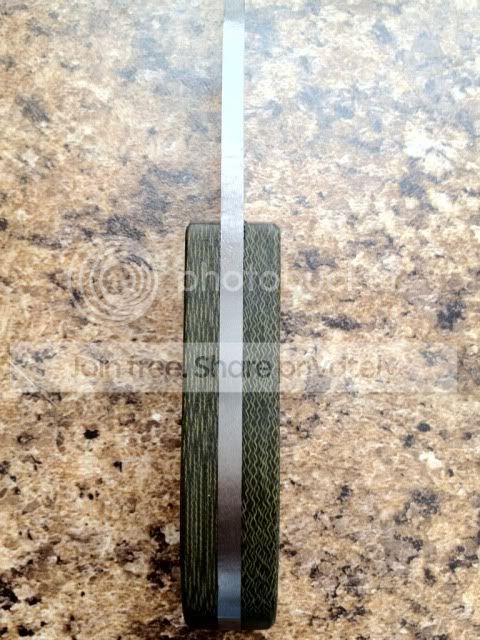
Look at the top view of your handle....notice how the two sides don't match?
That is because Micarta has a grain and direction to it. You must make sure the scales are oriented with the same sides out and up on each side. Marking the insides with arrows can help prevent putting them on wrong.
If cutting scales from a larger sheet of Micarta, make sure all are cut on the same orientation, and mark the sides.
Handle finishing:
All handle work should be done with the blade well taped up.
Micarta, and most handle materials, don't like high speed, heat, or pressure. They will burn if any of these are used. It is hard to keep the belt speed slow on many grinders. Fresh belts will help keep the heat down. After basic shaping with a 220 grit new belt, hand sanding is often the best method. Don't forget that files and rasps are excellent tools for handle shaping. Go slow, and take a little off at a time. It is far easier to take a little more off than to put some back on.
The Whole Package:
A knife isn't an assembly of a handle, guard, and blade. It is a marriage of these elements. It should flow from one to the other in a smooth and graceful movement. A even and gradual taper from the butt to the tip, and some gradual curve in profile along that path will make a knife "POP". Looking at the knives in knife books and The Gallery on BF should give you some ideas about how to accomplish this "flow".
Again, I will use my female analogy - Dolly Parton, Jessica Stam, and Elizabeth Taylor all look great, buy putting Liz's face on Dolly's chest, over Jessi's hips and legs would make a hideous looking woman. All the parts need to match and "flow" together.