O1 Heat Treat Issues - Help Please

Joined
Oct 19, 2017
Messages
340
Hi,

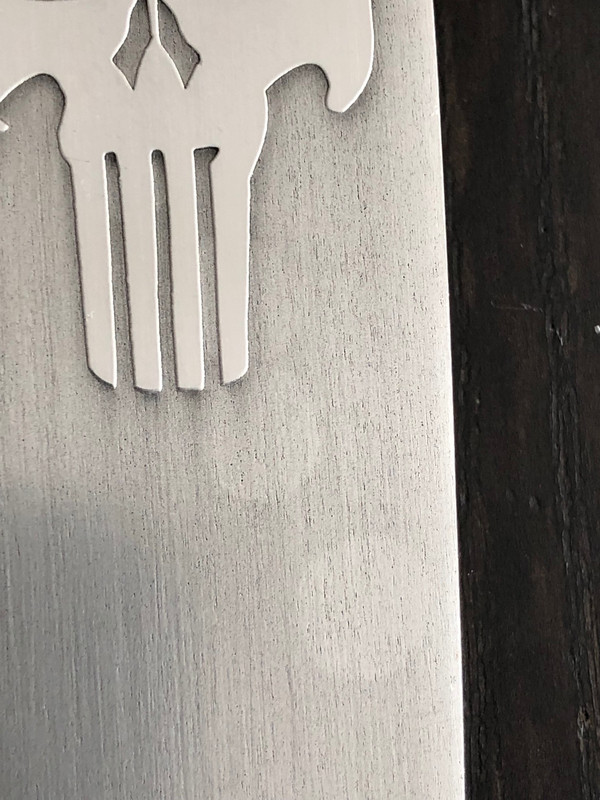
I’m getting some “dots" after HT. This is on O1 steel.

I believe I read that this is caused by soaking it at too high of a temperature or too long at that temperature. The term for this is escaping me right now. It’s not bubbling but something similar, if I recall correctly.

I need advice on what adjustments to make.

Here are my HT steps:

1. Heat the oven to 1250. Once at temperature insert blade in the oven and soak for 15 min.
2. Ramp to 1475 and once there soak for 30 min.
3. Quench in 120F Canola oil
4. Temper twice at 425 for 2 hours.

I’m expecting a hardness of around 61 HRC.

I’m assuming the 1250F for 15 min won’t harm it. I’m doing it to get the oven to stabilize.
However the 30 minutes soak at 1475F may be excessive? What do you think?

Here is what I'm talking about and I also coated the blade with ATP-641 to prevent decarb.
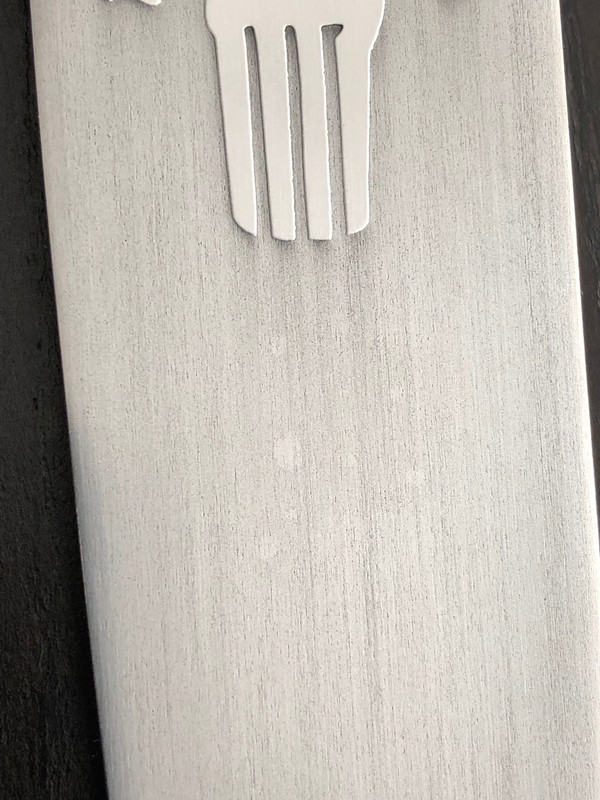
IMG-1721.jpg


IMG-1722.jpg

Thanks in advance,
Constantin
 
Last edited:
I do o1 the same way with the same temps, I hold at 1475 for 10 minutes and quench in 130 canola oil. I notice if I leave it to soak any longer I get blotchy decarb which look like circles and whatnot. Grind through it and you’ve got good steel. I temper at 400 twice and have been tested at 59 Rockwell.

So try a little less soak or if possibly less temp..
 
I do o1 the same way with the same temps, I hold at 1475 for 10 minutes and quench in 130 canola oil. I notice if I leave it to soak any longer I get blotchy decarb which look like circles and whatnot. Grind through it and you’ve got good steel. I temper at 400 twice and have been tested at 59 Rockwell.

So try a little less soak or if possibly less temp..

K KNelson , thanks. I’ve updated the post with some pictures. Is this what you’ve seen in your experience?
 
Hmm not quite.. I’ve seen more of a faint blistering look.. that’s new to me haha run a corner of a file across it and see if there is deviation in hardness?
 
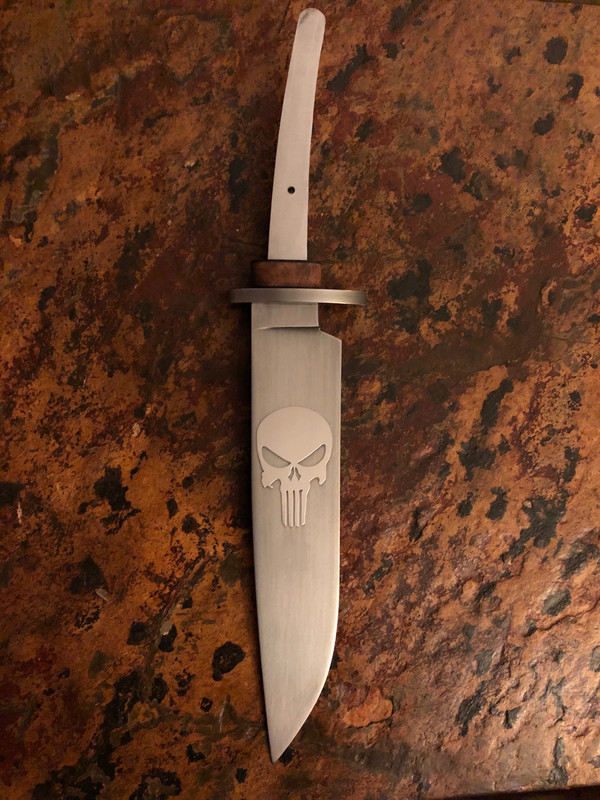
I can’t help with the blotches, but I’d like to see the rest of the knife, looks like a cool symbol on there.
 
Those are possibly areas that weren’t degreased or cleaned enough. When I etch, I clean with dawn and water several times. Dip in ferric and check to make sure there’s a uniform etch then dip again.
 
Those are possibly areas that weren’t degreased or cleaned enough. When I etch, I clean with dawn and water several times. Dip in ferric and check to make sure there’s a uniform etch then dip again.

Thanks, unfortunately I spoted those big circles before acid etching.
I wonder if 30 min soak is too long, any idea?
Now you make me wonder, maybe i didn’t properly degreased before the ATP coating and heat treat, could that have been the issue?
 
Thank you to all that provided their opinion.

Considering the lack of more input, I will try and bring down the soaking time
from 30 to perhaps 15 minutes, as K KNelson suggested.
 
I'm sorry...I'm not understanding the whole "soak" issue. I've seen several makers talking about a 20-30 minute soak on a blade. Other accomplished makers bring their blade up to non-magnetic and quench right then and there, which is what I do in my forge. There might be nothing left of my blade if I left it in my forge for 30 minutes.....I am missing something in the discussion obviously, as there are two distinct lines of thought on proper ht of O1 (and other carbon steels). I am friends with two Mastersmiths and they both tell me the same thing....quench shortly after you reach non-magnetic...maybe ten seconds or so. I am primarily a stock removal CPM154 guy but forge carbon occasionally in between orders for something different to do. What am I missing here?
 
I'm sorry...I'm not understanding the whole "soak" issue. I've seen several makers talking about a 20-30 minute soak on a blade. Other accomplished makers bring their blade up to non-magnetic and quench right then and there, which is what I do in my forge. There might be nothing left of my blade if I left it in my forge for 30 minutes.....I am missing something in the discussion obviously, as there are two distinct lines of thought on proper ht of O1 (and other carbon steels). I am friends with two Mastersmiths and they both tell me the same thing....quench shortly after you reach non-magnetic...maybe ten seconds or so. I am primarily a stock removal CPM154 guy but forge carbon occasionally in between orders for something different to do. What am I missing here?

I know this one. You are forging, so the carbon is already dissolved in the steel from prior heating, so you don't need a hold. But if you are starting from the spheroidized annealed condition, your blade won't fully harden without a hold.
 
I'm sorry...I'm not understanding the whole "soak" issue. I've seen several makers talking about a 20-30 minute soak on a blade. Other accomplished makers bring their blade up to non-magnetic and quench right then and there, which is what I do in my forge. There might be nothing left of my blade if I left it in my forge for 30 minutes.....I am missing something in the discussion obviously, as there are two distinct lines of thought on proper ht of O1 (and other carbon steels). I am friends with two Mastersmiths and they both tell me the same thing....quench shortly after you reach non-magnetic...maybe ten seconds or so. I am primarily a stock removal CPM154 guy but forge carbon occasionally in between orders for something different to do. What am I missing here?

O1 needs to be soaked, as oposed to just brought to non magnetic and quenched right away.
You need an HT oven to be able to control temperature and duration in order to reach the full potential of the steel.
 
When my oven reaches 1525° I put my blades in. When the oven stabilizes again at that temperature I start a timer for 20 minutes.

I heat my blades up with a hand torch when I apply the ATP anti scale compound. I find I can get it to stick to the blade better. This also might burn off any impurities that didn't get cleaned off properly. l do several small coatings of it, torching after each to dry it .
 
When my oven reaches 1525° I put my blades in. When the oven stabilizes again at that temperature I start a timer for 20 minutes.

I heat my blades up with a hand torch when I apply the ATP anti scale compound. I find I can get it to stick to the blade better. This also might burn off any impurities that didn't get cleaned off properly. l do several small coatings of it, torching after each to dry it .

Thanks for the tip on heating the blade, I’ll try that.
bmilleker bmilleker , Isn’t 1525 a bit too high? I thought max for O1 is 1500.
 
Thanks for the tip on heating the blade, I’ll try that.
bmilleker bmilleker , Isn’t 1525 a bit too high? I thought max for O1 is 1500.

Heating the blade is the only way I could get the ATP to stick to clean and shiny metal.

I tried a lower temperature with my oven and 1525 is what I found works the best for me. No decarb with the ATP and the blades come out hard. I believe I saw 1525 on this forum by a well known maker. I have snapped a few test blades to look at the grain and it has never been oversized.
 
Heating the blade is the only way I could get the ATP to stick to clean and shiny metal.

I tried a lower temperature with my oven and 1525 is what I found works the best for me. No decarb with the ATP and the blades come out hard. I believe I saw 1525 on this forum by a well known maker. I have snapped a few test blades to look at the grain and it has never been oversized.

Good to know, thanks again.
 
Back
Top