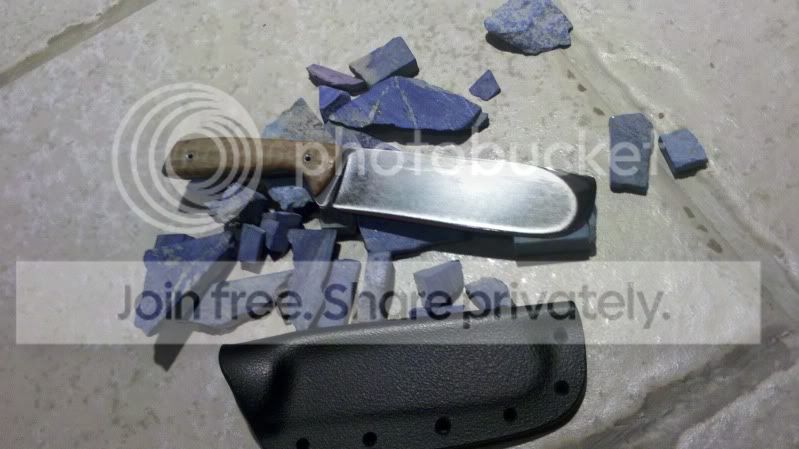
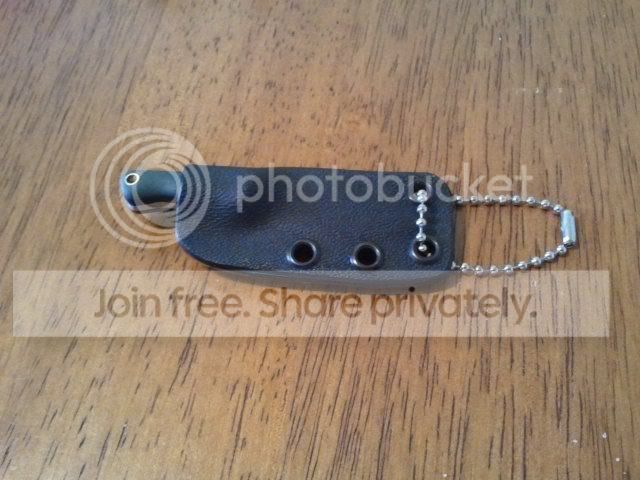
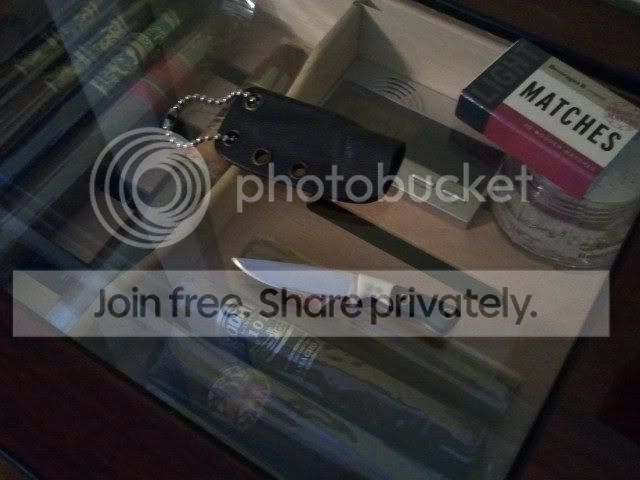
A sign of a good mini, properly done to scale, is that without a reference for size, someone may assume it is full size.And with a reference to size, it seems amazingly small.
Attention to scale is far more important than embellishment. If the piece is hand engraved amazingly, with ivory and gold fittings, but the scale is off, or the ivory grain is too wide, the whole mini is pretty much worthless. However, a simple chopper or bowie ,with no embellishment, made to scale in every detail will look better and sell for $100-200.
For shooting photos that make this show best, there are two ways to go.
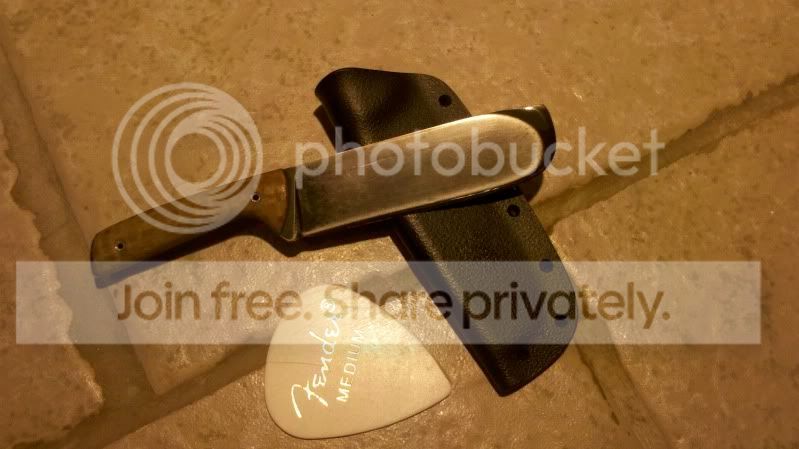
One is to use scale revealing props. The GI Joe is a good way to show the scale size. Other ways are to use something that will say to the brain, "Wow, that's small." Coins, printed material ( books and magazines),a Zippo lighter,a 45 calibre bullet,your palm or fingertips,a leaf or an acorn, etc. These things show how tiny the knife is.
The other way is to use something that the brain will assume to be bigger than it is. A mini anvil can be used to shoot a picture of the blade resting on the face during construction. Without any other things in the shot, it will not give away the size. Use tight weave cloth for background, like silk or nylon.Use very tight grain wood for the same reason.
After showing some of these shots, follow with a shot of a scale revealing nature. The effect seems to make the mini seem even smaller.
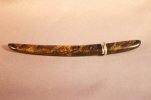
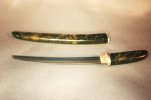
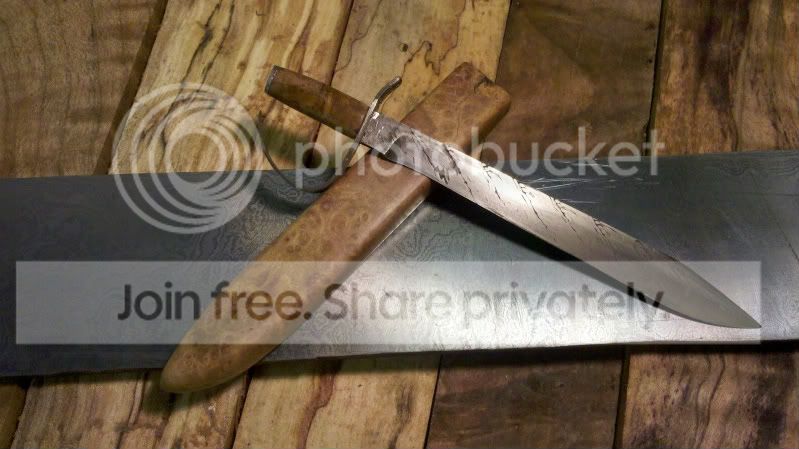
A few years back I posted shots of a katana and wakizashi blade I was working on. Shortly after that I posted some shots of a second blade set. Everyone assumed they were full size until I shot them sitting on the kissaki of the full size blade. I followed that with a bowie,with the stats stating it was 16 OAL with a 5 handle. and then a few days later I shot the bowie on a dime.The measurements were in mm ( 25:1 scale). For about a year after that, no one would believe any of my full size blades were real.
To keep scale realistic, all things must match. The thickness at the spine, and the handle thickness and length are the most common wrong places. They often work out to be a 5/8" thick blade or a 2" thick handle, by scale. Use your micrometer while working, and keep removing material until the scale is right. An easy way of doing this is to use scales that are somewhat easy for your brain to convert. 10:1 is easy, as all you do is move the decimal a place.16" = 1.6".
25:1 is easy as all you do is read in mm and think in inches. thus a 36" sword with a .380" thick blade is a 36mm mini with a .380mm blade.
Making a measurement chart for reference is always a good idea. Draw the mini with all parts in an exploded diagram. Put the full size measurements by each one, and the scale size under those numbers.Pay attention to thicknesses.
Things to look for:
Super tight grain wood for mini handles. Ebony and other nearly grainless woods are good choices.Linen Micarta is a good material,too.
Metals with no visible grain or markings.
Metals with markings that give a scale look - needle files for file knives, or super tight twist for scale damascus.
Things to avoid -
Wood, ivory, materials with visible large grain.
Standard size damascus patterns.
Porous materials and metals.
Materials that don't fit the scale, like canvas Micarta, leather and kydex showing normal size surface patterns,etc.