
-
The BladeForums.com 2024 Traditional Knife is available! Price is $250 ea (shipped within CONUS).
Order here: https://www.bladeforums.com/help/2024-traditional/
You are using an out of date browser. It may not display this or other websites correctly.
You should upgrade or use an alternative browser.
You should upgrade or use an alternative browser.
Older slip joints, steel and geometry, who did it best?
- Thread starter rockgolfer
- Start date


- Joined
- Mar 1, 2008
- Messages
- 4,573
Hmmm.... Best for what?
People have different ideas about blades that make good "pocket slicers". Some considerations...
1) Carbon steel has varied in carbon content. Today 1095 is most common. Not sure it become standard but several companies still use steels with lower carbon content. Current Opinel Carbon is close to 1086. Condor (fixed blades) still uses 1075. As we go further back in history, my understanding of what is meant by "carbon steel" gets hazier and hazier.
2) Hardening has changed. 54 to 55 Rc used to be more common. Today 56 to 58 Rc is more common.
3) Grind preferences have changed. My sense is that back in the day, most pocket knives were flat ground (my pref). Today, there are more hollow ground knives and there are plenty of fans of them.
4) Stainless has evolved. Of course, if you're talking really old knives, you're probably not talking about stainless anyway.
I agree with others that I think Schrade-Walden and Schrade USA carbon steel is pretty special stuff. It's 1095 that is reportedly in the 58Rc range and it feels that way to me on the stone and in use. But a hard steel like that is a certain feel and may or may not be to your preference.
Schrade-Walden H-15 modified to drop point
Schrade H-15 Modified by Pinnah, on Flickr
Schrade (USA) 5OT
Shrade 5OT by Pinnah, on Flickr
Great post Pinnah! Best was a rhetorical question really, I think everyone has answered it to the best of their knowledge and I have learned a great deal :thumbup:
I would say I cant ignore all the recommendations for an Old Timer, its at the top of my list now.
Thanks again for the continued contributions everyone


- Joined
- Aug 13, 2013
- Messages
- 2,072
For sheer cutting performance I find the inexpensive knives from the 40's to 60's to be great.
Hammer, Camillus, Colonial, Imperial, ect all had the cheap knives that were carbon steel and had thinner stock than some of the more expensive models.
There were tons of these knives made and some can still be found in good shape.
They may not be the prettiest or most desirable but they sure can take a fine edge.
Hammer, Camillus, Colonial, Imperial, ect all had the cheap knives that were carbon steel and had thinner stock than some of the more expensive models.
There were tons of these knives made and some can still be found in good shape.
They may not be the prettiest or most desirable but they sure can take a fine edge.

wlfryjr
Gold Member
- Joined
- Oct 20, 2011
- Messages
- 2,024
At one time the Sheffield cutlery industry was unequaled,hardly anyone could compete with the organization of artisans who specialized in only one aspect of of making a pocket knife,but the working conditions left much to be desired.
Then along came the chance to go to a new land of opportunity,some just immigrated,many were hired by agents whose job was only that of acquiring cutlers for the American industry . The tariff of 1891 (?) afforded the American companies an edge and the best began to flourish. The influence of these "little mesters" gave us some of the best cutlery ever manufactured. As some have said ,at least up to the Depression or even WWII,about every brand was quality.
Then along came the chance to go to a new land of opportunity,some just immigrated,many were hired by agents whose job was only that of acquiring cutlers for the American industry . The tariff of 1891 (?) afforded the American companies an edge and the best began to flourish. The influence of these "little mesters" gave us some of the best cutlery ever manufactured. As some have said ,at least up to the Depression or even WWII,about every brand was quality.
Last edited:

silenthunterstudios
Slipjoint Addict
- Joined
- Feb 2, 2005
- Messages
- 20,039
Case XX and the early family of Case brands; Cattaraugus; Remington from the original factory; old Imperial seems to be very well made; old Camillus, 4 line stamp I believe; old Schrade.
- Joined
- Jan 10, 2010
- Messages
- 161
I can't claim to be more than an accumulator, but I have found so many Imperials from the 1930-36 era that have swedges, tiny and big bolsters, bareheaded and such that have some dead serious made carbon blade...even some the later clip on scales that are excellent quality and they ALL get sharp...Herb

- Joined
- Nov 15, 1998
- Messages
- 3,137
Ixl, Remington
IXL made some fine knives. The horn on this one is off the charts.
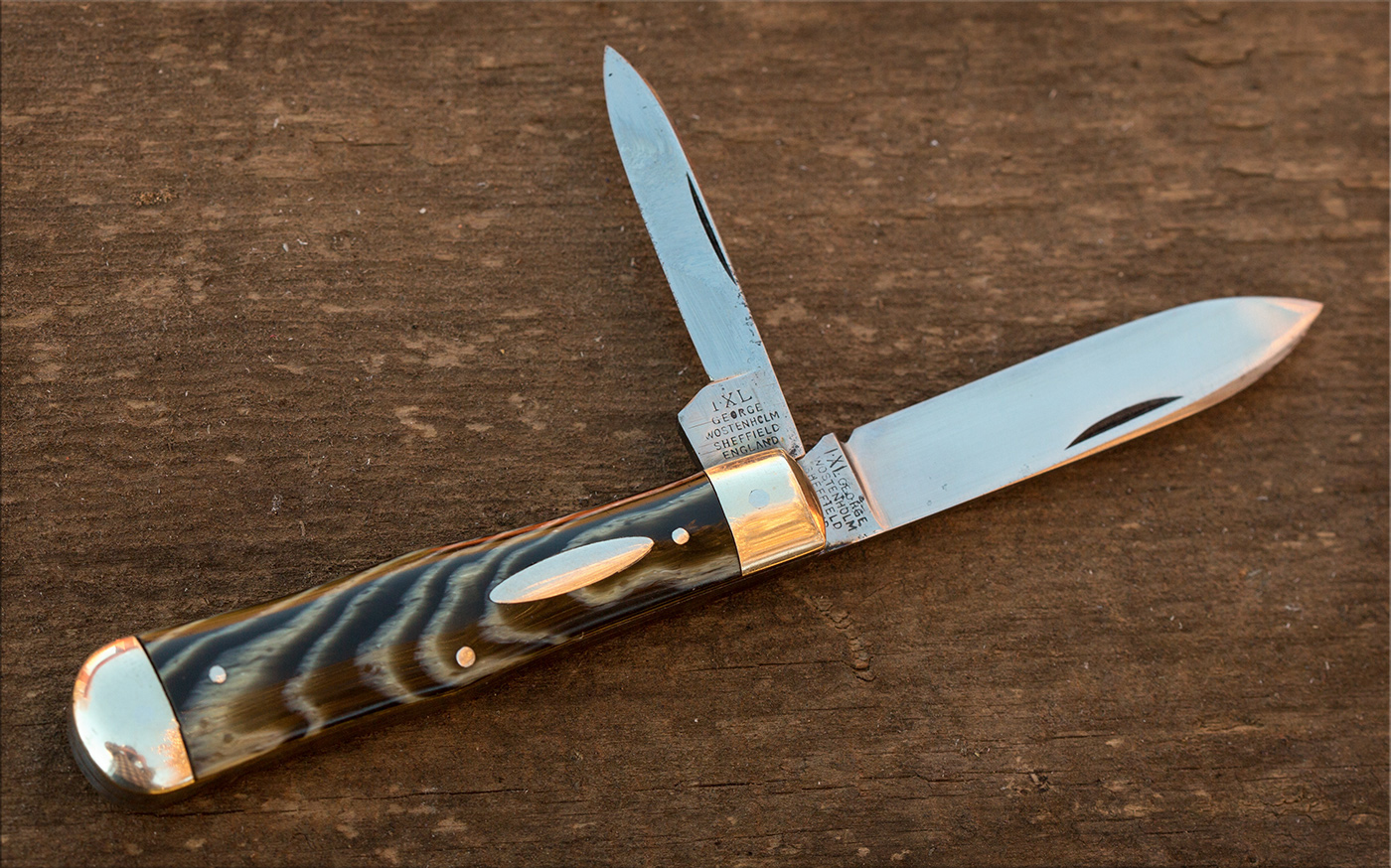
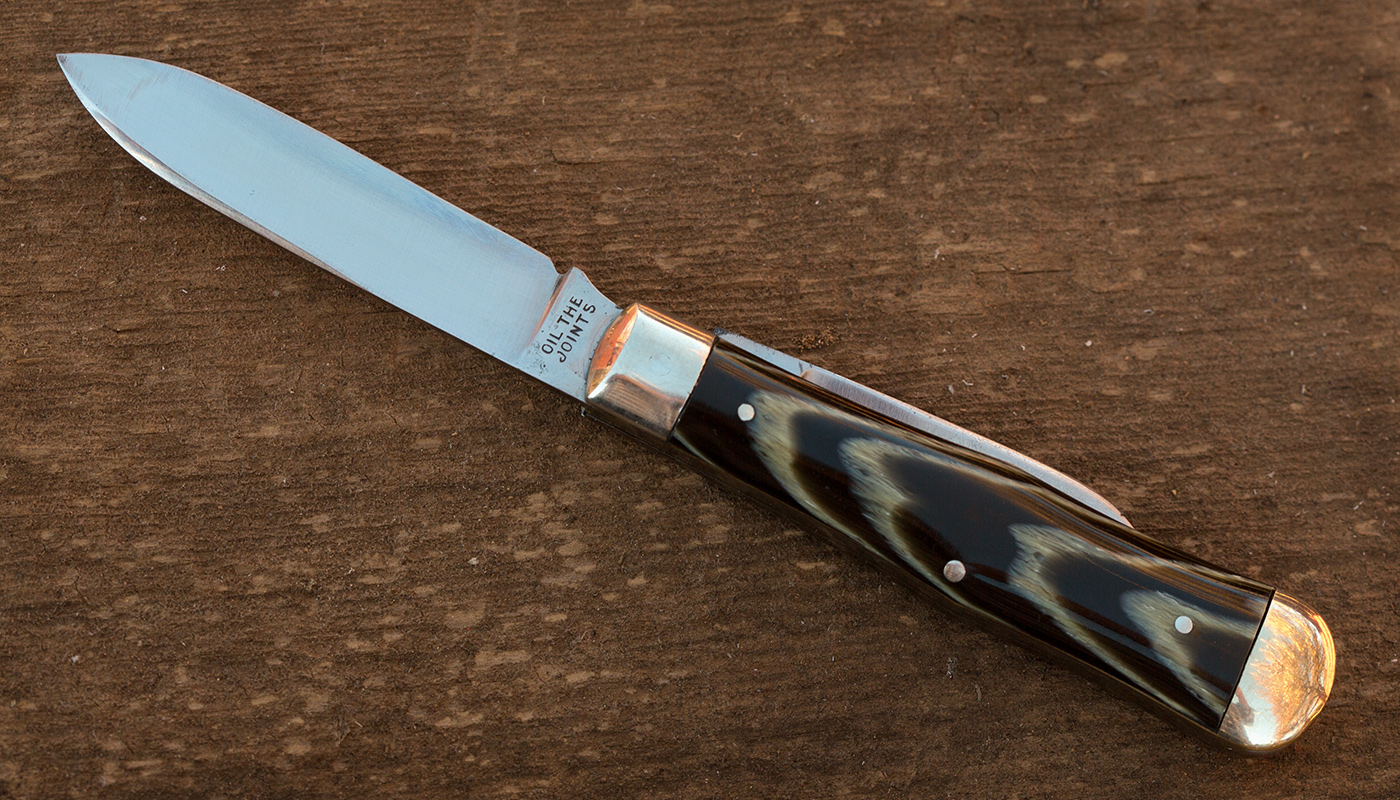
This old remmy is nice too ...
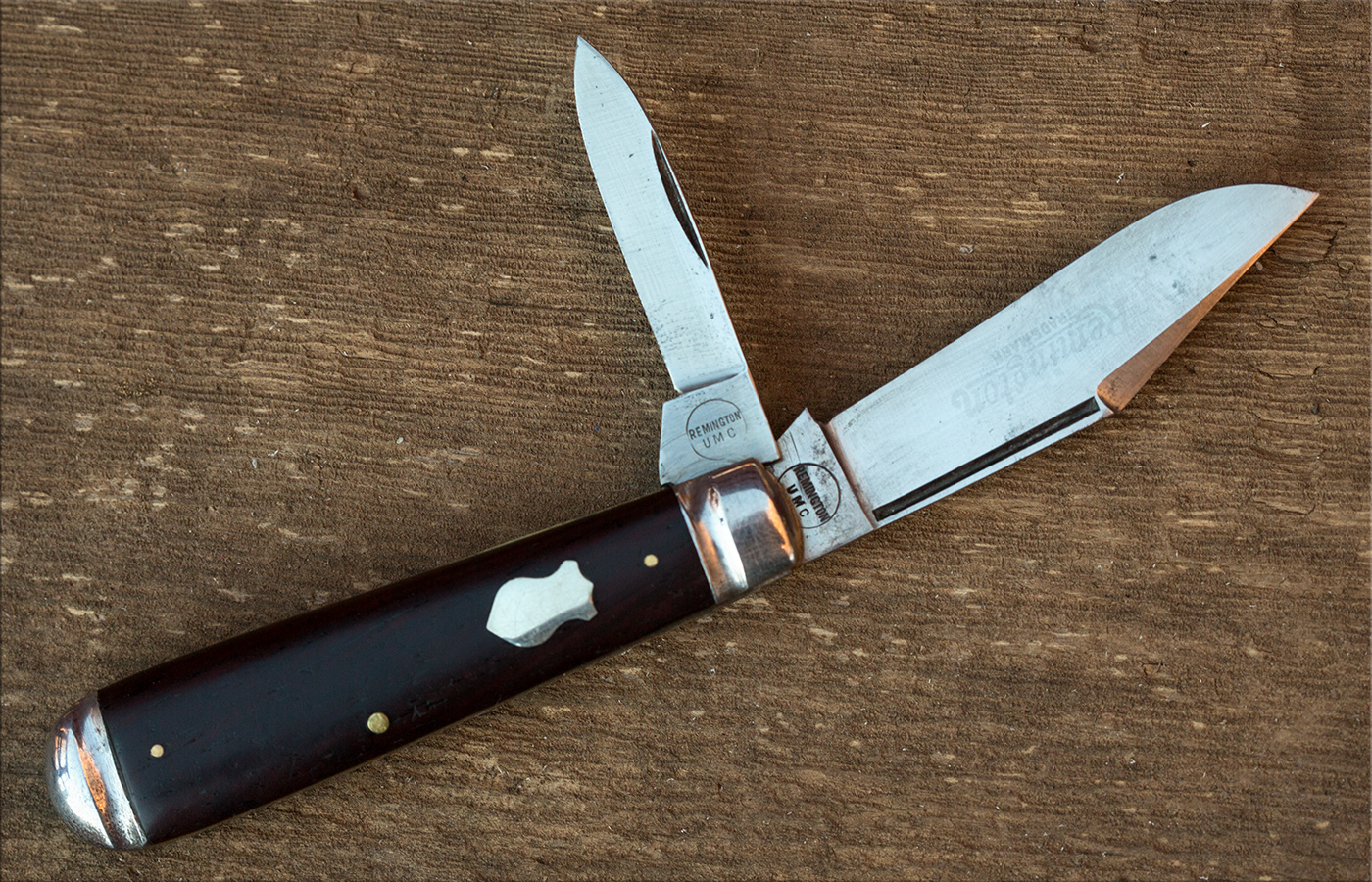

5K Qs
Gold Member
- Joined
- Jul 20, 2014
- Messages
- 16,474
IXL made some fine knives. The horn on this one is off the charts.
...
Truer words were never spoken, John.
 :thumbup: Holy Cow (or Bull or Buffalo or whatever)!!
- GT

- Joined
- Apr 12, 2009
- Messages
- 13,662
Also +1 for Schrade U.S.A. in 1095, on both counts (steel, geometry); and I'd include 'heat treat' as the third and best 'plus' by Schrade. Great edge-holding, on very thin & springy-tempered blades. Best slicers I've seen. :thumbup:
David
David
According to Schrade, they were heat treating their 1095 at 60RC. GEC is the highest factory heat treat that I know of today, and I believe theirs is 59RC. I love my USA Old Timers and the steel is top notch. (I have no other vintage knives, so I'm not comparing among older knives--just making a statement about USA Schrade's 1095 heat treat and that of other makers today).
Also +1 for Schrade U.S.A. in 1095, on both counts (steel, geometry); and I'd include 'heat treat' as the third and best 'plus' by Schrade. Great edge-holding, on very thin & springy-tempered blades. Best slicers I've seen. :thumbup:
David
kootenay joe
BANNED
- Joined
- Jan 30, 2015
- Messages
- 1,566
RobbW, i don't think Schrade USA was taking their 1095 to Rc 60. It does not sharpen like it is that hard and a quick touch up sharpening in the field was common practice during 'Schrade Times'. There are former Schrade ( & Camillus) employees who are BF members. Would be neat to hear from one of them.
kj
kj
RobbW, i don't think Schrade USA was taking their 1095 to Rc 60. It does not sharpen like it is that hard and a quick touch up sharpening in the field was common practice during 'Schrade Times'. There are former Schrade ( & Camillus) employees who are BF members. Would be neat to hear from one of them.
kj
Schrade took their 1095 up as high as 62Rc. Check out their own chart below.
They did their own heat treat and really knew their way around the several steels they used. I'm a big fan of 1095 because of how hard it can get, how long the edge lasts, yet the edge is so easy to touch up and restore because of the lack of large, hard carbides. Frank Richtig was another who produced magic from 1085 or 1095. His amazing blade properties can't even be replicated today.
All this talk of taking the hardness really high in 1095 is giving me an idea for the 2015 Forum Knife.

- Joined
- Apr 12, 2009
- Messages
- 13,662
RobbW, i don't think Schrade USA was taking their 1095 to Rc 60. It does not sharpen like it is that hard and a quick touch up sharpening in the field was common practice during 'Schrade Times'. There are former Schrade ( & Camillus) employees who are BF members. Would be neat to hear from one of them.
kj
The ease of sharpening is essentially a matter of the steel having no hard carbides (chromium, vanadium), which is completely independent of the RC hardness of the blade's matrix steel (only a fraction as hard as the carbides themselves). Even at 60 HRC, 1095 will still be a breeze to sharpen up on all but the most marginal of stones, including natural stones. Chromium carbides are ~2X as hard as the matrix steel, and vanadium carbides nearly ~3X as hard. Since 1095 contains no chromium or vanadium at all, or anything else forming those hard carbides (molybdenum, tungsten, etc), ease or difficulty of sharpening isn't an issue at all. The RC hardness is more an indicator of how resistant the steel will be to plastic deformation (rolling, denting), as opposed to abrasion resistance (including resistance to abrasive honing/sharpening), which is what the carbides bring to other steels having them.
(This is all why I love my Schrade USA Old Timers, because they're among the easiest to sharpen up, and their thin edges remain strong & durable, and wicked-sharp. At lower RC, I'd expect such thin edges to roll easily; I have seen this on another 1095 folder I have of different branding, which loses a similarly-thin edge in just cutting paper, due to rolling.)
David
Last edited:
kootenay joe
BANNED
- Joined
- Jan 30, 2015
- Messages
- 1,566
David, thank you for explaining this. Here i thought i had something figured out but i didn't. However i think it is common to assume that higher Rc = longer sharpening time, even tho as you explain this is not the case.
RobbW, sorry for doubting you about the Rc of 60 for Schrade's 1095. I had thought it was 57-58 just a bit harder than Case's CV.
I'm unsure as to how the Rc scale works; i.e. if it is linear ? For example is it possible to say by percentage how much harder Rc 60 is than Rc 58 ? It's only '2 points' but i think this makes quite a difference in the steel.
Knives are harder to understand than one would think.
kj
RobbW, sorry for doubting you about the Rc of 60 for Schrade's 1095. I had thought it was 57-58 just a bit harder than Case's CV.
I'm unsure as to how the Rc scale works; i.e. if it is linear ? For example is it possible to say by percentage how much harder Rc 60 is than Rc 58 ? It's only '2 points' but i think this makes quite a difference in the steel.
Knives are harder to understand than one would think.
kj
- Joined
- Apr 12, 2009
- Messages
- 13,662
David, thank you for explaining this. Here i thought i had something figured out but i didn't. However i think it is common to assume that higher Rc = longer sharpening time, even tho as you explain this is not the case.
RobbW, sorry for doubting you about the Rc of 60 for Schrade's 1095. I had thought it was 57-58 just a bit harder than Case's CV.
I'm unsure as to how the Rc scale works; i.e. if it is linear ? For example is it possible to say by percentage how much harder Rc 60 is than Rc 58 ? It's only '2 points' but i think this makes quite a difference in the steel.
Knives are harder to understand than one would think.
kj
The Rockwell (RC) scale isn't linear, so it's somewhat deceptive. For perspective, the hard carbides (chromium, vanadium) are sometimes listed at RC levels in the high-60s (chromium carbides) to mid-80s range (vanadium carbides). Obviously harder than simple low-alloy steel in the 50-60 range, but not quite as hard as is reflected with a linear scale, like the Knoop scale. On a Knoop scale of hardness (which is linear, referenced to a maximum value of 7000 for diamond), hardened steel (minus the carbides) is usually somewhere below 1000, maybe down in the 700-800 range. Compare to chromium carbides at ~1700-1800 Knoop, and vanadium carbides at ~2600-2700 Knoop. This is why some abrasives have so much trouble with high-carbide steels like D2 or ZDP-189 (heavy chromium carbide content) or S30V (heavy in vanadium carbides), but little or no trouble with something simpler, like 1095 or CV (essentially no hard carbides at all). The carbides act like uber-hard 'rocks' in concrete aggregate, getting very much in the way of anything trying to abrade a concrete structure; by contrast, compare a steel like 1095 to a simple cement mixture, minus the uber-hard 'rocks', which will then be much less wear-resistant.
David
Last edited:
My understanding of the Rockwell scale is that it is somewhat linear in the hardness values that concern axes and knives. It drops off in an inverse log below around 30.
The scale is material specific--it has the most meaning when you compare the same materials. Say--carbon steel to carbon steel. It has less meaning comparing stainless steel to carbon steel because carbides will give the stainless greater wear resistance. So a harder carbon steel might be less wear resistant (loose it's edge faster) than a softer stainless steel, because the carbides in the stainless are doing the cutting, not the steel matrix itself (like with carbon steel).
The best description I've read here on BFC is that carbon steel is like concrete. It is finely grained, and you could shape concrete into a wedge and cut with it. Stainless steel is like taking big chunks of gravel and mixing it into the concrete. You couldn't form as fine an edge because the gravel is so lumpy. On the other hand that gravel is much more abrasion-resistant than the concrete it's embedded in-- it will resist wearing longer than concrete alone. One interesting note--when the gravel starts to "rip" out of the concrete matrix--you have a very poor edge. It will be riddled with pox marks. It will require a greater amount of re-beveling to restore than the mere "touching up" that would be required of the concrete-only edge.
So, hardness matters, but it's not the only thing that matters. And it also depends on what you're cutting. Carbon holds up just fine cutting meat, and won't chip when it hits a bone. But for cardboard which has clay and other abrasive material in it, the carbides of stainless steel really do make it very wear resistant.
The scale is material specific--it has the most meaning when you compare the same materials. Say--carbon steel to carbon steel. It has less meaning comparing stainless steel to carbon steel because carbides will give the stainless greater wear resistance. So a harder carbon steel might be less wear resistant (loose it's edge faster) than a softer stainless steel, because the carbides in the stainless are doing the cutting, not the steel matrix itself (like with carbon steel).
The best description I've read here on BFC is that carbon steel is like concrete. It is finely grained, and you could shape concrete into a wedge and cut with it. Stainless steel is like taking big chunks of gravel and mixing it into the concrete. You couldn't form as fine an edge because the gravel is so lumpy. On the other hand that gravel is much more abrasion-resistant than the concrete it's embedded in-- it will resist wearing longer than concrete alone. One interesting note--when the gravel starts to "rip" out of the concrete matrix--you have a very poor edge. It will be riddled with pox marks. It will require a greater amount of re-beveling to restore than the mere "touching up" that would be required of the concrete-only edge.
So, hardness matters, but it's not the only thing that matters. And it also depends on what you're cutting. Carbon holds up just fine cutting meat, and won't chip when it hits a bone. But for cardboard which has clay and other abrasive material in it, the carbides of stainless steel really do make it very wear resistant.
The Rockwell (RC) scale isn't linear, so it's somewhat deceptive. For perspective, the hard carbides (chromium, vanadium) are sometimes listed at RC levels in the high-60s (chromium carbides) to mid-80s range (vanadium carbides). Obviously harder than simple low-alloy steel in the 50-60 range, but not quite as hard as is reflected with a linear scale, like the Knoop scale. On a Knoop scale of hardness (which is linear), hardened steel (minus the carbides) is usually somewhere below 1000, maybe down in the 700-800 range. Compare to chromium carbides at ~1700-1800 Knoop, and vanadium carbides at ~2600-2700 Knoop. This is why some abrasives have so much trouble with high-carbide steels like D2 or ZDP-189 (heavy chromium carbide content) or S30V (heavy in vanadium carbides), but little or no trouble with something simple, like 1095 or CV (essentially no hard carbides at all). The carbides act like uber-hard 'rocks' in concrete aggregate, getting very much in the way of anything trying to abrade a concrete structure; by contrast, compare a steel like 1095 to a simple cement mixture, minus the uber-hard 'rocks', which will then be much less wear-resistant.
David
beat me to it. I'm a slower typist.
kootenay joe
BANNED
- Joined
- Jan 30, 2015
- Messages
- 1,566
Wow ! Thank you both for taking the time to share your knowledge & experience. I really do appreciate it. I'm glad i made my incorrect post as it resulted in learning some basic but very important properties of knife steel. The concrete comparison makes the properties that affect sharpening and edge holding easy to understand.
kj
kj