

- Joined
- Nov 29, 2011
- Messages
- 1,396
Working on this fighter type design one more time since I cracked the last one. Its aldo's W2 stock removal that started out about 1/4" thick. Still pretty close to stock thickness at thickest part.
Sorry for crummy paint but wanted to show satanite layout. The green is about 1/8" thick, the blueish color is where I take my paint brush and very thinned out satanite and blend it with the fingers that come down. The whole blade gets a wash (basically just a color change thickness less then just a milky water thickness).
Austenite at around 1450F, quenched in parks 50 at about 100F, tempered at around 420f for a couple of hours. I do this in my forge with a temperature readout but the temps are obviously somewhat hard to be exact on plus with a forge different areas will vary temperature. I do not have a muffler setup yet (in the works).
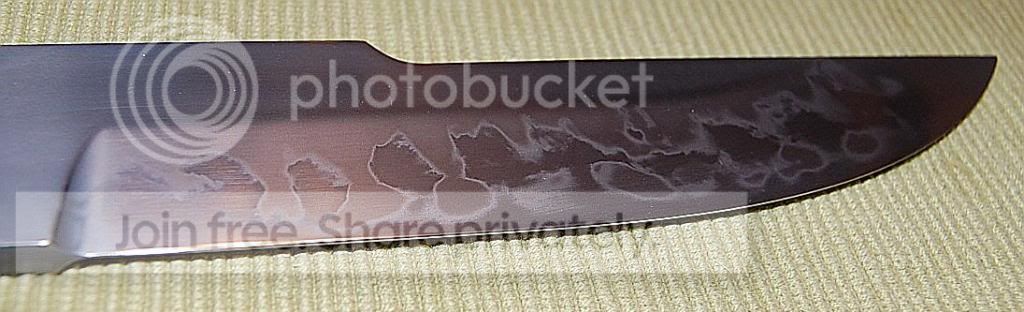
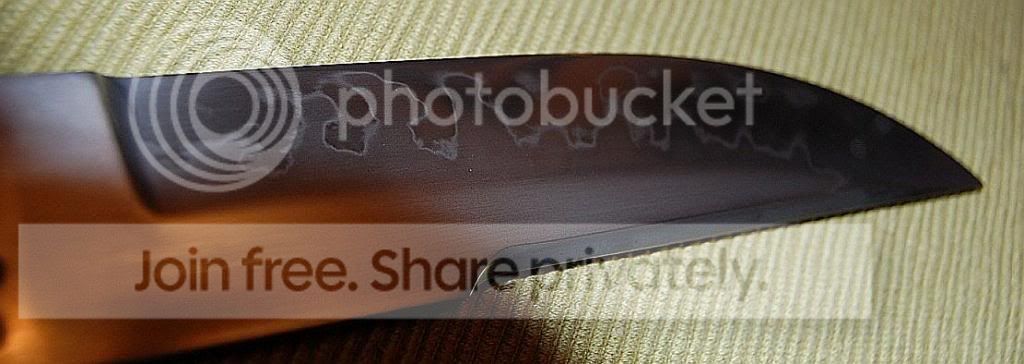
Not sure why the hamon features go so far down on the blade, I guess thats just the random nature of the beast or I was doing something wrong, or is this even a concern as long as the edge is proper hardness.
Thoughts, suggestions, welcome. Thanks for looking.
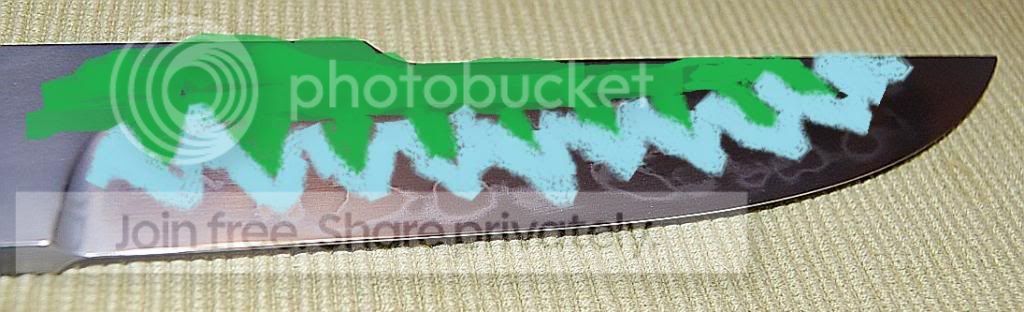
Sorry for crummy paint but wanted to show satanite layout. The green is about 1/8" thick, the blueish color is where I take my paint brush and very thinned out satanite and blend it with the fingers that come down. The whole blade gets a wash (basically just a color change thickness less then just a milky water thickness).
Austenite at around 1450F, quenched in parks 50 at about 100F, tempered at around 420f for a couple of hours. I do this in my forge with a temperature readout but the temps are obviously somewhat hard to be exact on plus with a forge different areas will vary temperature. I do not have a muffler setup yet (in the works).
Not sure why the hamon features go so far down on the blade, I guess thats just the random nature of the beast or I was doing something wrong, or is this even a concern as long as the edge is proper hardness.
Thoughts, suggestions, welcome. Thanks for looking.


