Para 2, S30V and the power of the microbevel

Joined
Mar 15, 2007
Messages
737
Hey guys,
as the title says I want to talk a little about the paramilitary 2 (hoping not get you bored) which is my hard use knife. I know some of you that don't think the Para 2 is a hard use knife but for me It certainly is since I always carry a traditional slipjoint of some kind.
The spy gets use for working around the house, cutting all kind of stuff from wood to hard plastic, cardboard or even like this time wall.
So, I reprofiled a while ago to what I think should be a little less than 30º degrees inclusive(I always sharpen freehand so that is based of some pictures of with known angles from other forumites) the edge was amazingly sharp litterally hair whittling.
At this time I had to put a new shelf into the closet, the problem was that the inside was not straight so I cut the wood with the Para, you can't imagine how hard is pine wood across grain, the edge held up nicely keeping its sharpness perfectly, but after finishing I saw a strap of hard plastic material hanging out of the closing mechanism of the door and cutting it the edge hit metal...:mad: happily It did not chip, only a mayor rolling which I straighten up with a ceramic rod, nice stuff S30V, and not so prone to chipping as It is known for.
Well, since the rolling was not completely repaired and I never tried the microbevel before I thought It could be a great time, so, more or less 20º micro and ready to go in the blink of an eye without the need of spending time on the stones.
Yesterday I had to cut some wall to fit two grids on the ceiling, and man this is hard on an edge
CD274298-2B16-47BF-8148-2A41A416EBBB-1010-000000D7F76AFC24.jpg

8415EE22-A045-4D36-B7D0-A1AC591D2F0F-1010-000000D7DECEF0F8.jpg


after finish the edge was dull but the stability and integrity was perfect. And here comes the best part 3 pases/side on 600 grit DMT and 3 more/side on 1200 with a little bit of stropping afterwards and shaving sharp again... THE POWER OF THE MICROBEVEL.
0B9E548C-BC4A-429E-A32B-9E7719E0DB00-1010-000000D7E8ECC408.jpg


Well this thread has no purpose other than explain my experience with this knife, steel and sharpening technique, hope you like it, and please any comment will be welcomed.

see you,
Mateo
 
I've always wondered why there is so much handle to so little blade with that knife?
 
Thanks for sharing. The Para 2 is one of my favorite knives. It is nice to see it holds up well to hard use.

Unklfranco
 
The handle to blade ratio is exaggerated in the pictures. While it does have a big handle, its not as big compared to the blade as the pictures would lead you to believe. However it is also bigger overall than it appears in the pictures..
 
The PM2 doesn't have the best blade to handle ratio but I think it is ergonimically superior to just about any other folding knife I've handled.
 
I've always wondered why there is so much handle to so little blade with that knife?

And that pertains to his thread how? Why don't you comment on what the thread is actually about.

Anyway, nice real world usage there. I just rolled the edge on my Sage 3 (S30V 30 degrees inclusive), and after I worked it out added a 39 degree micro bevel. I would say my Sage 3 is my "hardest use folder." Don't know exactly why I made it my hard use folder, but I really like the bolt-action lock when working with one hand, so it gets called on and looks like your PM2, often needing cleaned up a lot.
 
Very nice. I love my Para 2's. I never understood why handle to blade ratio was such an ordeal. It is really ergonomic, however I do prefer the Military's larger handle. At any rate, good to see the knife getting used. I micro bevel all my knives now, easier to touch the edge back up IMO, and will make your blade last longer down the road.
 
Would someone please explain what a micro bevel is? Don't all knives come with them?
 
Would someone please explain what a micro bevel is? Don't all knives come with them?

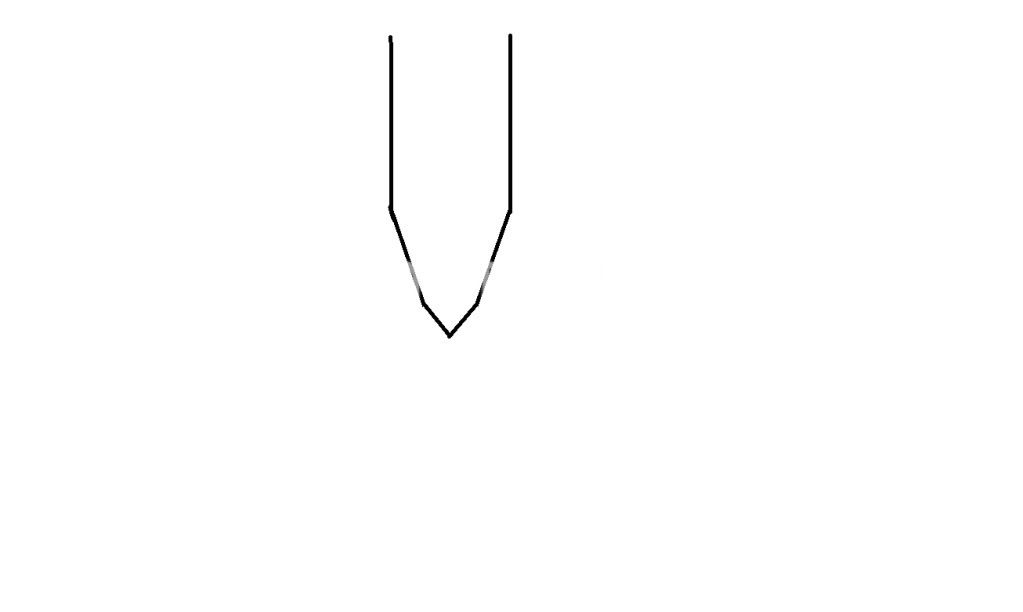
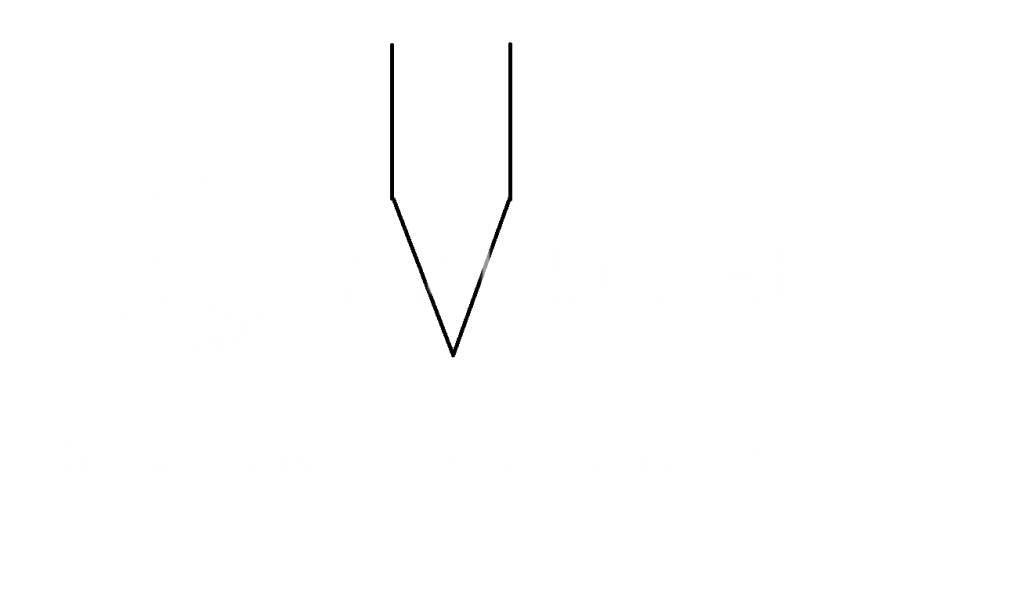
On a knife you have your primary grind: flat grind, hollow grind, convex grind ect. Then you have your primary bevel or main edge. If you put on a micro bevel or secondary edge it is at an angle which is larger than your primary.


Edge with a micro bevel:
Edge2.jpg


Edge without:
Edge1.png
 
On a knife you have your primary grind: flat grind, hollow grind, convex grind ect. Then you have your primary bevel or main edge. If you put on a micro bevel or secondary edge it is at an angle which is larger than your primary.

Your terminology is a bit off. The primary grind IS the primary bevel, a bevel being cut or ground away from flat. All subsequent grinds or bevels proceed from there to the edge: secondary, tertiary, quaternary, etc. Each time the grind angle or trend changes, a new bevel has been added. A "micro"-bevel is a grind of such minute width it is difficult to see, such as would be accomplished by a single stroke along a hone at a higher angle. Most knives possess a very acute primary bevel (or grind) and a slightly more obtuse secondary (or "edge") bevel that extends to the apex. On many "Scandi"-ground knives, this secondary bevel is so miniscule it is called a "micro-bevel".

On the OP's knife, it sounds like his Para2 was sharpened (on the secondary bevel) to 15 dps (30 inclusive), but after dulling, rather than resharpening to this same angle (which takes more time and metal removal), he simply increased the sharpening angle to 20 dps (40 inclusive) for a few passes and achieved the edge he needed. The result was a knife with three grinds - primary, secondary (15 dps), and tertiary (20 dps) micro-bevel at the edge.
 
Your terminology is a bit off. The primary grind IS the primary bevel, a bevel being cut or ground away from flat. All subsequent grinds or bevels proceed from there to the edge: secondary, tertiary, quaternary, etc. Each time the grind angle or trend changes, a new bevel has been added. A "micro"-bevel is a grind of such minute width it is difficult to see, such as would be accomplished by a single stroke along a hone at a higher angle. Most knives possess a very acute primary bevel (or grind) and a slightly more obtuse secondary (or "edge") bevel that extends to the apex. On many "Scandi"-ground knives, this secondary bevel is so miniscule it is called a "micro-bevel".

On the OP's knife, it sounds like his Para2 was sharpened (on the secondary bevel) to 15 dps (30 inclusive), but after dulling, rather than resharpening to this same angle (which takes more time and metal removal), he simply increased the sharpening angle to 20 dps (40 inclusive) for a few passes and achieved the edge he needed. The result was a knife with three grinds - primary, secondary (15 dps), and tertiary (20 dps) micro-bevel at the edge.
Yah I was having a brain fart with my terminology ;). Thanks for explaining it though. I was trying to remember the terms, but couldn't find anything to jog my memory.
 
Hey guys, it doesn't matter a little deviation of the subject, that's the fun part of the forum.
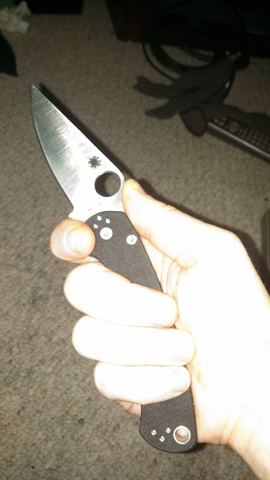
My impressions on the blade/handle ratio "issue" (here is a more accurate pic)
77C6A21B-9811-4266-AA4F-3185C29DA8D3-1804-00000234C76A037E.jpg

that in fact is one of the things that make this knife so praised, and for illustrate that here are some picks of the common grips I usually use with it:
Unlike a lot of the video reviews I have seen on the Internet the hammer grip is the less practical for me and only use it when I have to put a lot of force behind the edge which is not very often
013D43D9-3D7C-493D-8E88-78F9B8F37160-1804-00000236263495BA.jpg


Next one is the precision cutting grip, and here is what the choil is all about, look how close to the edge you can get with this grip
5322CA70-5121-4B9B-8DF2-3573553B5402-1804-0000023565F7E499.jpg

You can rest your thumb in the spine for forward cutting or on the flat of the blade for sideways cutting.

The last one and the most used grip by a large margin is the cutting grip( that's what a knife is all about :D)
6197CB0D-77B3-451B-8215-857818812726-1804-00000235F9C8D2F2.jpg

Here is where the para excels, you can put your index finger on the choil or not but look how well the curve of the handle follows the shape of the palm, and how comfortable the other fingers rest on the belly, besides the so controversial hadle/blade ratio provides a huge leverage with this grip for a really powerful yet controlled cut.

Just my opinion on the ergos, to follow the debate.
Thank you for your answers guys, keep going

Mateo
 
lutejones....I couldn't help but notice you didn't post a picture using the thumb ramp+jimping for your thumb? Is this what you call "hammer grip"? I am usually using the grip pictured below when I use my PM2..

IMG_20121218_095934_534.jpg


Cheers
 
Well, blade to handle ratio or whatever you wanna complain about. I've had more PM2's that any other knife. Must have had
15 at one time in s90v, CTS-XHP, CTS-20CP, D2, M390 and a few I forget about. I loved them all. Only have a few "lessers" remaining, and those I'll keep. I have one 20CP that's a favorite, and an all-black in S30v that's a kick-around knife. But the folks who talk about all these ratios are just trying to find an excuse to NOT buy one and try it out. A wonderful folder, and the compression lock kicks butt. Just don't cut off your finger-tips playing with it.
 
Hey T.L. You've noticed it. I don't really like using the thumb ramp is kind of awkward to me since I learn how to use a knife without it. So, feels uncomfortable. Instead I put my thumb on the side, on the pivot screw.
What I call hammer grip is pretty obvious if you think in the way you would handle a hammer.

Mateo
 
Back
Top