Patina or Clean

Joined
Feb 9, 2004
Messages
1,447
I have a small knife collection, but there not just a collection, I use them all. They all have a different feel and cutting abilities so I usually grab a different one for a special task or to take along on one of my many journeys. My question is I see a lot of people letting their knife get a patina on them or adding the patina with mustard or vinegar. I usually just clean my knives after I use them. If the knife becomes really dirty or stained I clean it up with Flitz metal polish, and my knives always look shiny and new. :confused:
 
My question is...where is the "?" mark in the above question? ;) :p

Sorry, I just had to read it a couple of times before working out what you were asking :o

I used to try to keep my knives fairly shiny. I had one or two that had been given ferric chloride soaks and I left those alone, but tried to keep the rest patina free. I changed my mind a bit after a trip to Norway for a week's camping last year. We used knives a lot and I found that it was very difficult to prevent my O-1 blade developing rust pits during the course of the day. I cleaned it regularly, but it seemed like a loosing battle. I want to be able to use my knife, not be constantly fussing with it. I didn't recall the etched blades rusting that fast, so tried a vinegar soak on the shiny blade when I got home. While the oxide does wear off, it doesn't seem to pit as readily as the shiny blade did.

I think that a natural patina is probably the best protection, but a forced patina helps to protect the blade before it has time to develope one naturally. In the end though, whatever works for you is good. I couldn't keep my blade as clean as I liked with the level of care I was prepared to put in, so I went the other way and now only clean it occasionally. It doesn't seem to have hurt it.
 
I only break out the flitz when the blade starts to show rusting. Patina is fine with me. I'm not one to carry around brand spanking new gear or gear that looks that way. To me, patina gives a knife character.
 
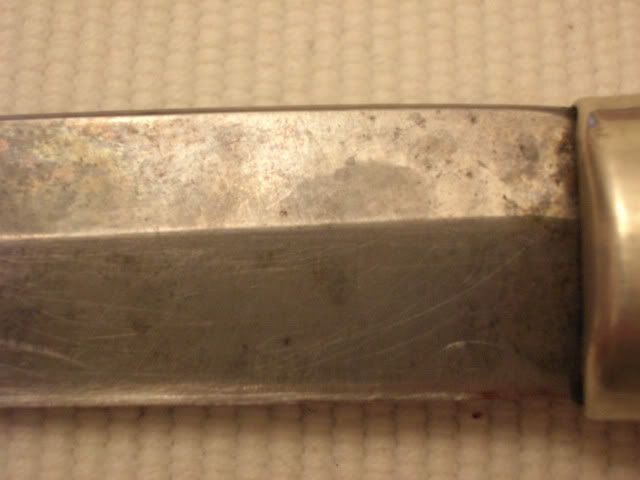
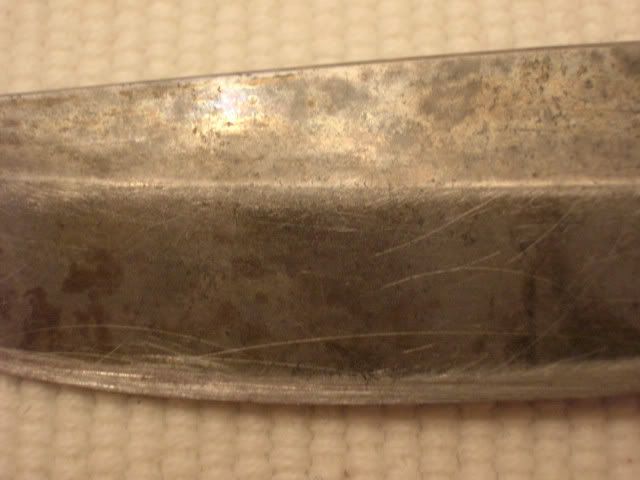
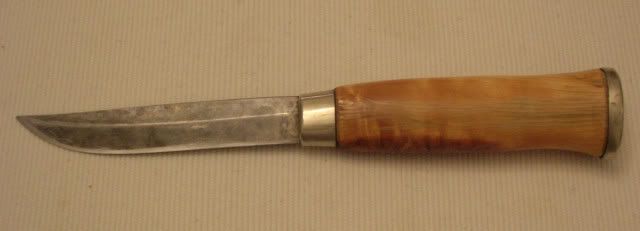
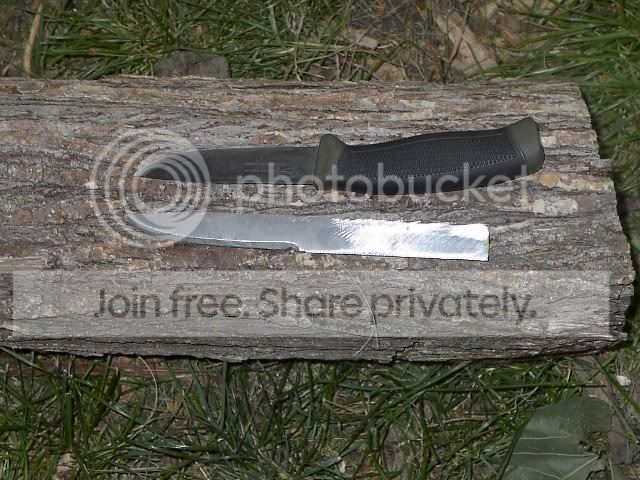
will someone post an example pic of a natural and a forced patina? maybe a before and after shot?
 
I like the patina, I sort of let it happen naturaly since I use my knives in the kitchen too. I like the darker color, the rust protection and the character the patina adds. But nothing wrong with keeping a knife looking nice too, I mean they are beautiful, functional tools.
 
I like the patina, I sort of let it happen naturaly since I use my knives in the kitchen too. I like the darker color, the rust protection and the character the patina adds. But nothing wrong with keeping a knife looking nice too, I mean they are beautiful, functional tools.

I've seen yours. :thumbup: :D :p I was hoping to see others.

KR
 
This shows some natural patina from cutting meat and use around food.
http://www.britishblades.com/forums/showthread.php?t=39719


TBK0125.jpg


http://www.britishblades.com/forums/showthread.php?t=31755
This one shows a couple with forced patina, a vinegar soak.

A real natural patina doesn't rub off too easy, and the blade can look shiny and still have color on the surface, like kitchen knifes that cut meat and acidic fruit for a long time.
 
C.C. That is a really nice design, I like it. ANd I like the patina. I like that bigger brother knife, very cool :D
 
Here's more than twenty years worth of use on a carbon blade.

DSCN10430001_1.jpg


DSCN10500001.jpg


DSCN10530001.jpg


This knife develops rust in a blink of an eye if left wet.
 
Here is some force patina on a Frost Clipper.

sammyismaboi006-1.jpg


Myakka, I think you should do what you like best, if you like shiny blades, keep them polished. But I like the look of scratched and dirty blades, but that doesn't mean I don't oil them.
 
I have blued some of my knives, others have been stuck in a potato overnight, others have a natural patina. Lookswise I prefer the potato method. I have yet to try mustard. All seem to work OK.

Edited to add: I do keep them oiled when not being used.
 
i have always liked the patina look myself.... :D i only clean/polish my blades if i see any rust on them, they do get oiled when not in use...

i have yet to try adding the patina on a knife.... cook a few meals in the kitchen or camp and there you have your patina...:D
 
I have blued some of my knives, others have been stuck in a potato overnight, others have a natural patina. Lookswise I prefer the potato method. I have yet to try mustard. All seem to work OK.

Edited to add: I do keep them oiled when not being used.

Hmm I have not heard of the potato method before. How are the results lookwise?
 
If the knife is for using, than it doesn't matter. Shiny or dark, however you prefer. If you do prefer shiny, you might consider buying knives with stainless steel blades.

But if you're buying/selling an antique knife, it should have the patina intact. Like sanding a hardwood floor or refinishing an antique table, once the original finish is gone the item loses all historic interest (and much of it's value).

Best Wishes,
-Bob
 
I have some patina on carbon steel folders but my problem is even though I like a natural patina it comes off when I sharpen. Having convex grind knives, I resharpen on the belt grinder with a coarse scotchbrite belt whichs removes most of the patina.
Scott
 
Back
Top