Kaizen1
Gold Member
- Joined
- Jan 4, 2006
- Messages
- 6,349
Hey folks,
I was lucky enough to win a great custom fixed blade on another forum. Below I'll paste the initial thoughts I had about the blade once receiving it and the following post will be the full review I made about a week later. I don't do many reviews so I hope this one doesn't bore you too much. Sorry ahead of time for crappy pics.
~~~~~~~~~~~~~~~~~~~~~~~~~~~~~~~~~~~~~~~~~~~~~~~~~~~
Hey all,
I was the lucky bastard that won Patrick's (Other-knife-site-forum username: Doyle) first giveaway. And a helluva giveaway it was. I have a couple of pictures from my phone but they're so crappy, I'll first post Doyle's pic from his giveaway thread:
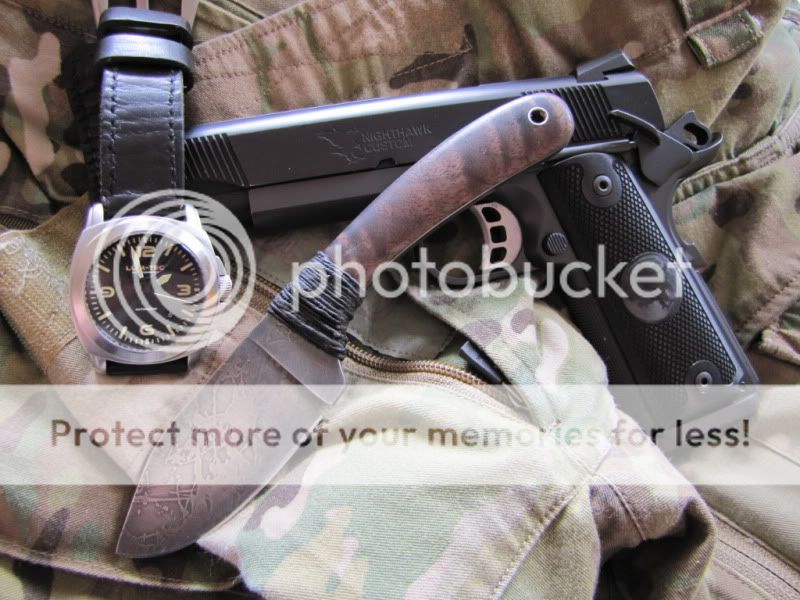
I'm not sure on the model name or if there is one, but here's some basic info on it:
Blade finish: Acid Etched and Blued
Blade Length: 3 1/2"
Cutting Edge: 3"
Handle Length: 4 1/4"
Blade stock thickness: 5mm or .1968"
Heat Treat by Peters: 60-61 rc
Steel: CPMD2
Grind: Full Flat
Handle Material: Walnut and Resin Soaked Hemp
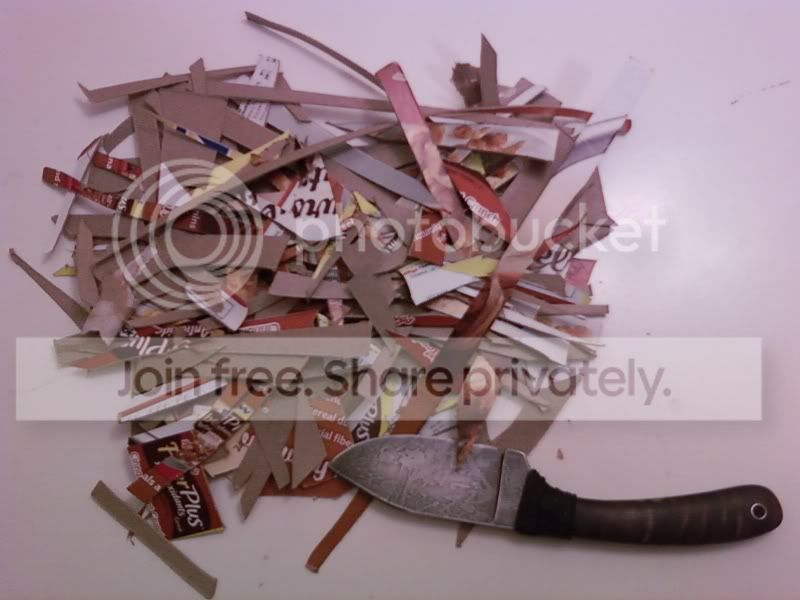
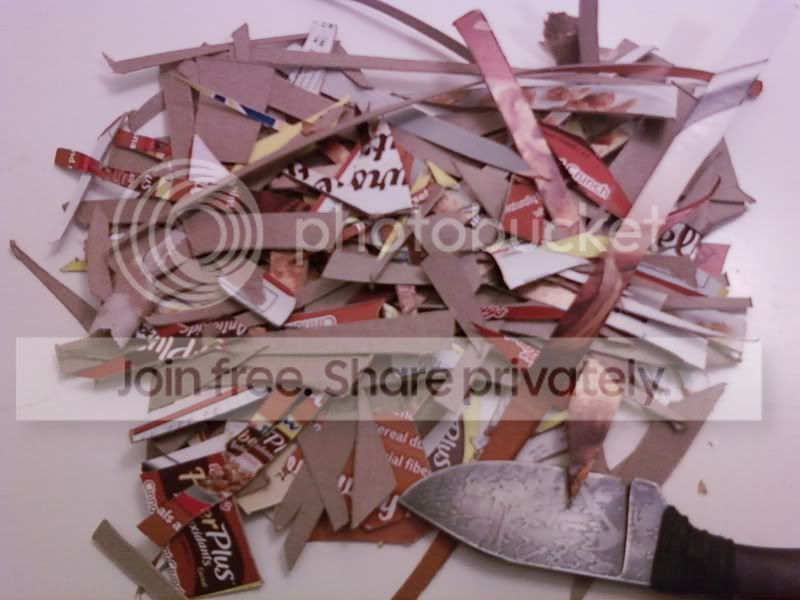
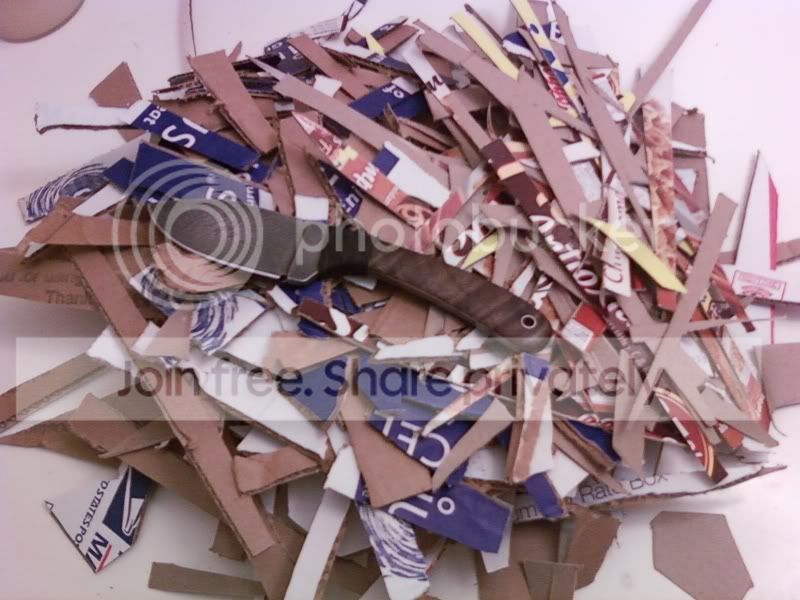
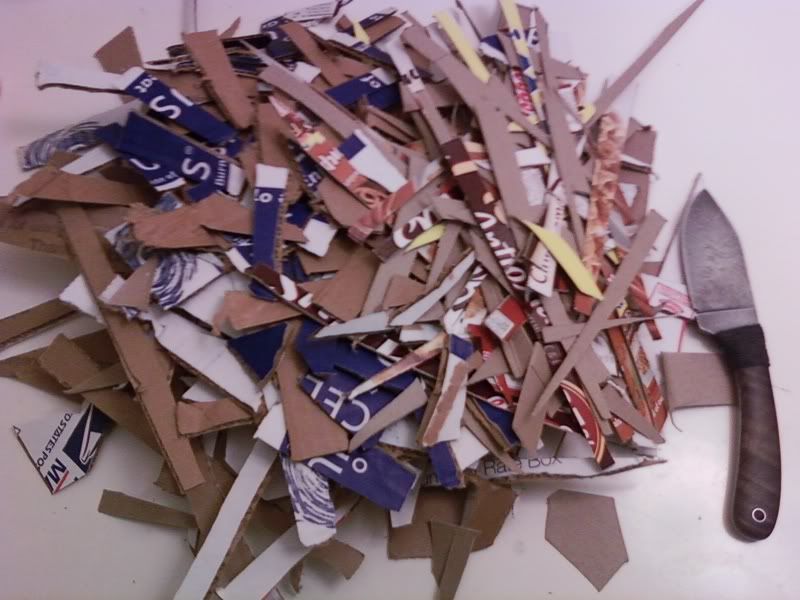
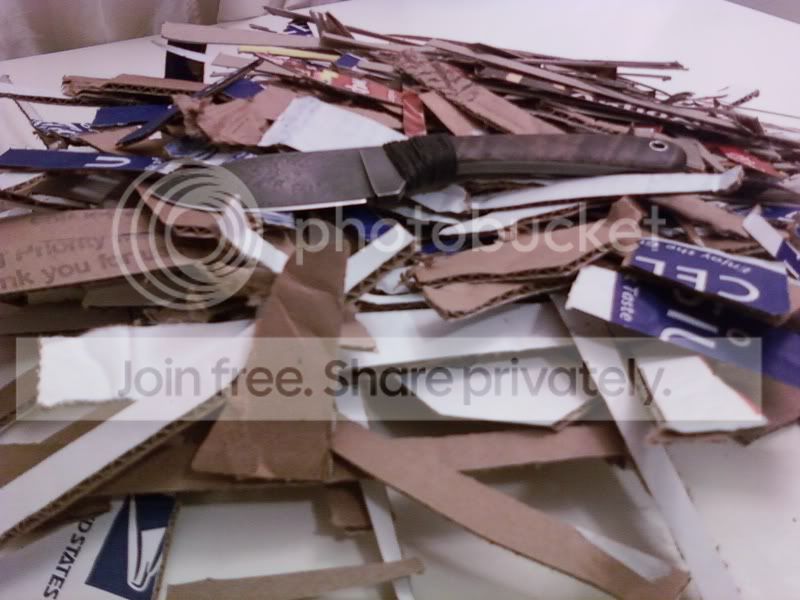
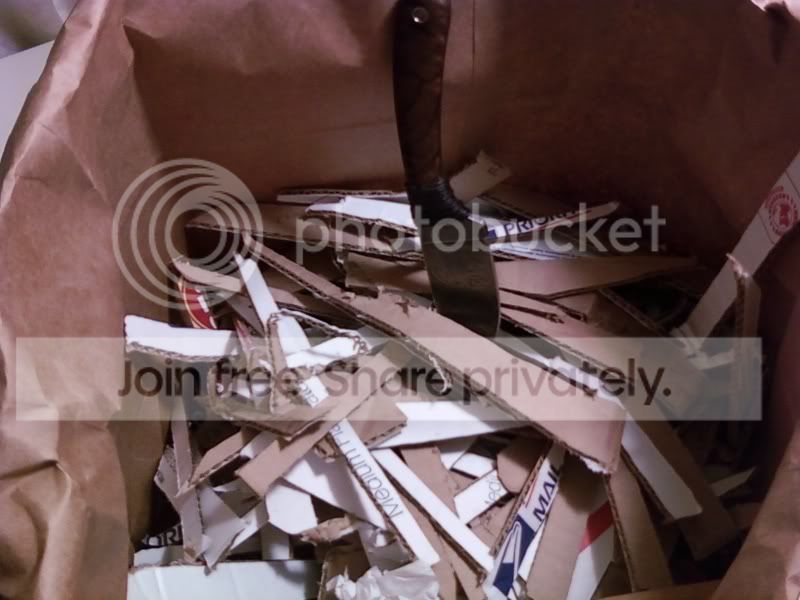
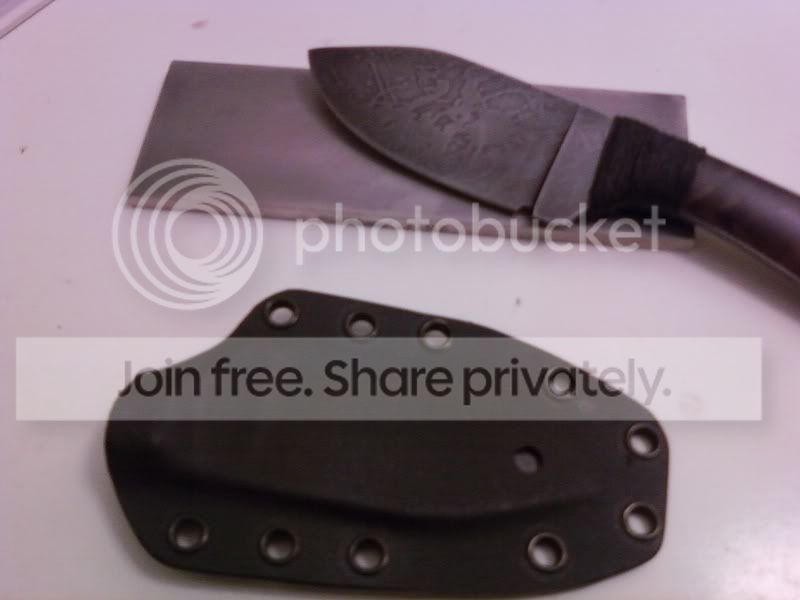
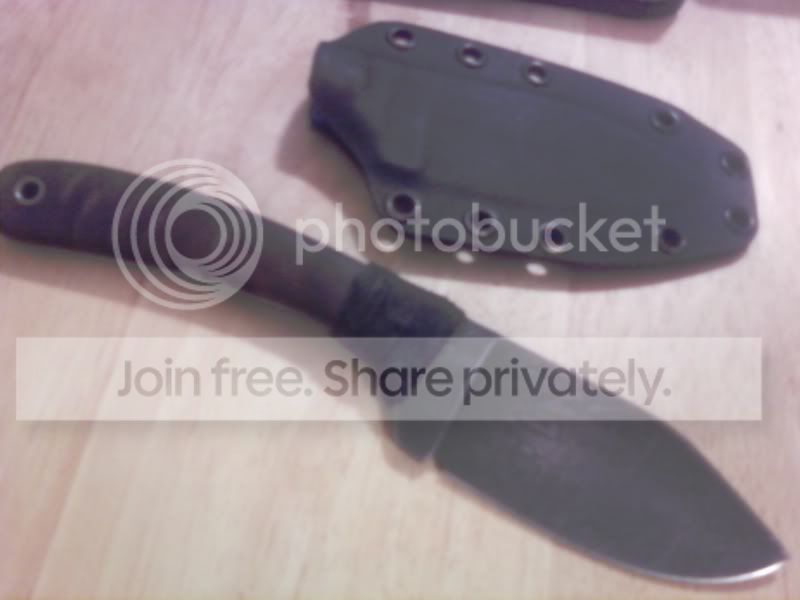
Some of my horrible, horrible pics:
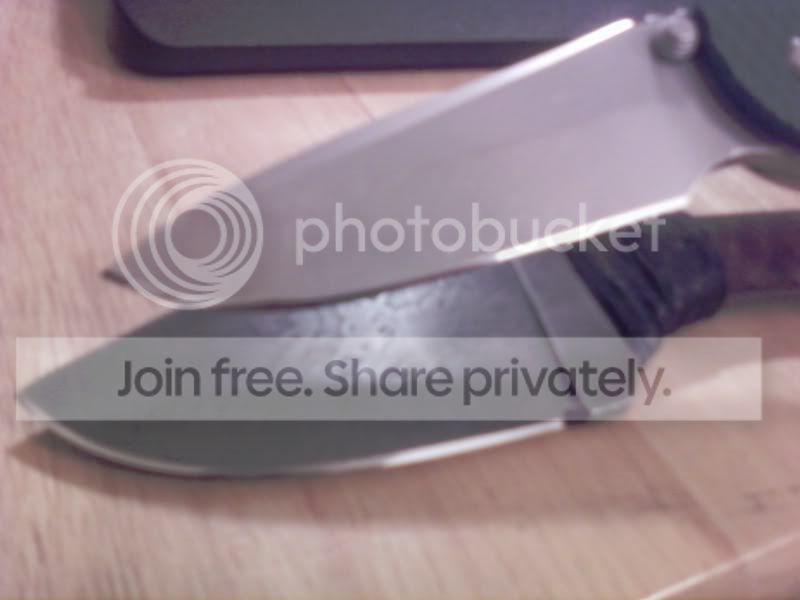
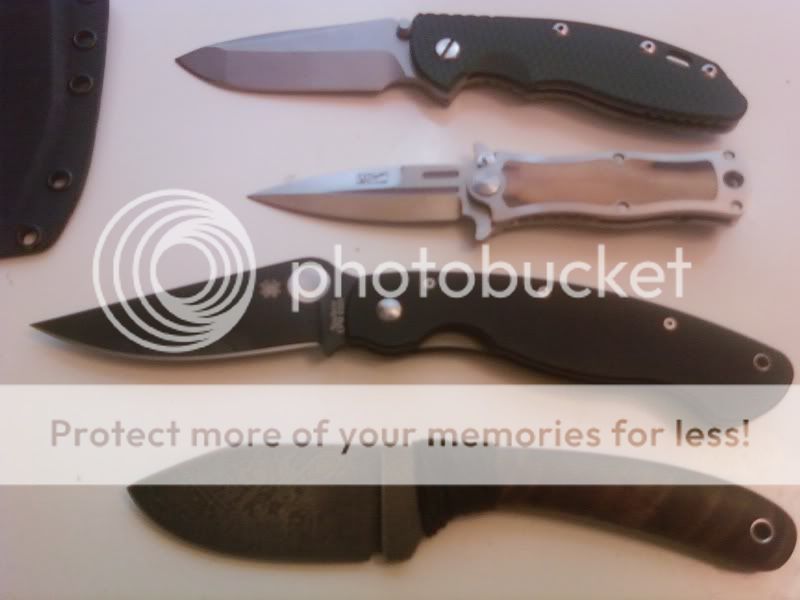
Size comparison shot:
Initial thoughts:
One of the initial striking aesthetic features about the design itself to me (aside from the nice acid-etching and patina) was the contrast between the wide-looking blade and the relatively thinner handle. This seemed to me to be the markings of a minimalist and utilitarian influence in the design. In the hand, the ergonomics seem to confirm this thought. The handle is thin but comfortable, smooth but still secure.
Another interesting thing about the design is the hemp rope which is only wrapped partially at the ricasso and where the handle meets the blade. I've personally never seen this and wondered about it when I first saw the pic in the GAW thread. Now that I've seen it up close and handled it a bit, at least part of its design is readily apparent to me; it provides a fantastic extra secure fit into the kydex and it really helps with the grip, especially if I place my thumb on the spine. This is really interesting to me because this is the first knife that I have not been able to shake out of its kydex. I just tried for a good 2 minutes of repeatedly shaking it and though I heard a rattle, it didn't budge. On top of that, it doesn't negatively affect the ease of taking the blade out of the sheath when I want to. It comes right out with no struggle on my part. That may be old news to others, but kind of shocked me to see that. Being able to shake a knife out of its sheath has come to be somewhat of an expectation of mine. This is gonna give me great confidence when hiking. I'm not going to have to worry about that. What it also does aesthetically is provide an opportunity to use a nice looking material like the Walnut he used while simultaneously getting that utilitarian value from the hemp and it gives a unique contrast you don't see much; the wood with the hemp.
The blade came tree-top shaving sharp (I was able to shave arm hair off without touching the skin). All in all, this looks like it's gonna be a nice user. I'll be writing up a full review within about a week or so after I've used it a bunch and resharpened it.
One more note about the maker himself: Based on my communication with him as well as from observing the his comments in his giveaway thread, I get the feeling that the man is a perfectionist that really stands behind his product. In his GAW thread he seemed a bit concerned that there were some minor "flaws" in the blade and I have it up close and it's beautiful. He also put a little note in with the package essentially saying that he's there if there's ever any problem with the knife- and he gave it away for free! C'mon, that's gotta say something about his character. I think that's the type of person you want making your knives personally. More to come later. Thanks for reading.
I was lucky enough to win a great custom fixed blade on another forum. Below I'll paste the initial thoughts I had about the blade once receiving it and the following post will be the full review I made about a week later. I don't do many reviews so I hope this one doesn't bore you too much. Sorry ahead of time for crappy pics.
~~~~~~~~~~~~~~~~~~~~~~~~~~~~~~~~~~~~~~~~~~~~~~~~~~~
Hey all,
I was the lucky bastard that won Patrick's (Other-knife-site-forum username: Doyle) first giveaway. And a helluva giveaway it was. I have a couple of pictures from my phone but they're so crappy, I'll first post Doyle's pic from his giveaway thread:
I'm not sure on the model name or if there is one, but here's some basic info on it:
Blade finish: Acid Etched and Blued
Blade Length: 3 1/2"
Cutting Edge: 3"
Handle Length: 4 1/4"
Blade stock thickness: 5mm or .1968"
Heat Treat by Peters: 60-61 rc
Steel: CPMD2
Grind: Full Flat
Handle Material: Walnut and Resin Soaked Hemp
Some of my horrible, horrible pics:
Size comparison shot:
Initial thoughts:
One of the initial striking aesthetic features about the design itself to me (aside from the nice acid-etching and patina) was the contrast between the wide-looking blade and the relatively thinner handle. This seemed to me to be the markings of a minimalist and utilitarian influence in the design. In the hand, the ergonomics seem to confirm this thought. The handle is thin but comfortable, smooth but still secure.
Another interesting thing about the design is the hemp rope which is only wrapped partially at the ricasso and where the handle meets the blade. I've personally never seen this and wondered about it when I first saw the pic in the GAW thread. Now that I've seen it up close and handled it a bit, at least part of its design is readily apparent to me; it provides a fantastic extra secure fit into the kydex and it really helps with the grip, especially if I place my thumb on the spine. This is really interesting to me because this is the first knife that I have not been able to shake out of its kydex. I just tried for a good 2 minutes of repeatedly shaking it and though I heard a rattle, it didn't budge. On top of that, it doesn't negatively affect the ease of taking the blade out of the sheath when I want to. It comes right out with no struggle on my part. That may be old news to others, but kind of shocked me to see that. Being able to shake a knife out of its sheath has come to be somewhat of an expectation of mine. This is gonna give me great confidence when hiking. I'm not going to have to worry about that. What it also does aesthetically is provide an opportunity to use a nice looking material like the Walnut he used while simultaneously getting that utilitarian value from the hemp and it gives a unique contrast you don't see much; the wood with the hemp.
The blade came tree-top shaving sharp (I was able to shave arm hair off without touching the skin). All in all, this looks like it's gonna be a nice user. I'll be writing up a full review within about a week or so after I've used it a bunch and resharpened it.
One more note about the maker himself: Based on my communication with him as well as from observing the his comments in his giveaway thread, I get the feeling that the man is a perfectionist that really stands behind his product. In his GAW thread he seemed a bit concerned that there were some minor "flaws" in the blade and I have it up close and it's beautiful. He also put a little note in with the package essentially saying that he's there if there's ever any problem with the knife- and he gave it away for free! C'mon, that's gotta say something about his character. I think that's the type of person you want making your knives personally. More to come later. Thanks for reading.