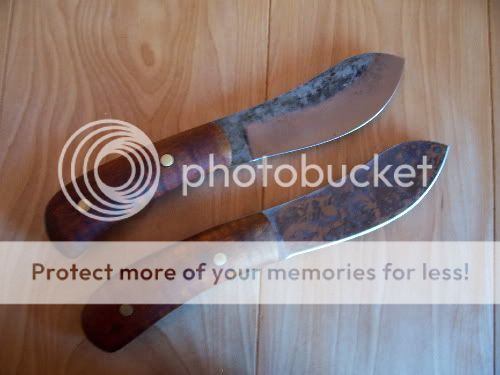
Period Knives

G L Drew

Knifemaker / Craftsman / Service Provider
Joined
Feb 3, 2005
Messages
4,809
I looked at a "period knife" on the Makers/Straight Knife side of BF and looked at Stephen5's French Period Knife. Rather than walk all over his thread, I thought I would ask your opinions here.

Stephan5 has evidently studied this style of knife and done all he could to make it historically correct. In it's time this was evidently a mass produced knife made in large numbers in a factory to be used for sale and trade and the exact replication is important to some reenactment people.

Reenactments take place in everything from the revolution to cowboy days and everyone has their own ideas about how these dress up knives should be made. All agree that they must be made from tool steel but differ in thier opinions of style and workmanship. Does a period knife have to be poorly made with a sloppy fit to be a good replica? I am sure that most historical knives were made by local smiths, each with thier own standards of workmanship and design. Some good, some bad. I personally feel that if I make a period knife I will do my best workmanship and try hard to make it look like an antique. My opinion is that any knife that leaves my shop should be a good usable tool with the best of workmanship if it is a $90 period knife or a $500 collector piece.
 
Dunno, looks like he took a bar of steel, bandsawed it out ground an edge on it did some woodwork and called it a replica
To make it period correct it would be forged, possibly with a slight distal taper, actually to be period correct it would likely have been steeled wrought iron if the original had been made on this continent, possibly indirect reduction if it was produced in Europe. I disagree on making "reproduction" out of tool steel without at least a disclaimer. I am currently working on making a reproduction of a 14th century knife based on the "Knives and Scabbards" book published by the British Museum. The blade is ultimately going to be wrought iron with an edge forgewelded on of steeled wrought iron, steeled until it properly passes a period style break test. My test blade so far while I work out the process has been antique wrought iron with 1070 forgewelded on for the edge, ultimately it will be wrought from my own smelt, with the edge of steeled wrought, or bloom steel with a high enough carbon to harden (If I am so fortunate) The handle will be of a specie that would have been used according to the archaelogical finds, any glue will be hide glue, and the sheath will be oak tanned and sewn with linen thread, tooled as the originals. The knife will be finished as a new knife with hand tools, and as clean and well fitted as I can make it, not as an aged sloppy "antique"

-Page
 
i have some period syle pieces and i will only buy them if they are forged from quality steel and are usable.....whether or not i use them is up to me.....al of my knives in my collection are able to be used.....i think the knife should have the same quality fit and finish you are used to.....if it is antiqued correctly it will look like that time period......ryan
 
Period correct pieces are definitely able to be used if done right. Period style and period correct reproduction, are two different animals. I can make a period style knife out of ATS 34 and it will have all of the wonderful properties of ATS34 if it is heat treated correctly, and it will look like a period piece and cut like a demon if the edge geometry is right through all sorts of abuse, On the other hand I can make a period correct replica using steel that is a match for what was used by the best smiths in period, using the proper techniques, and make an extremely usable tool, like the ones that have survived were.

Nothing wrong with "Period Style" I've made quite a few, the real adventure is making "Period Correct"

-Page
 
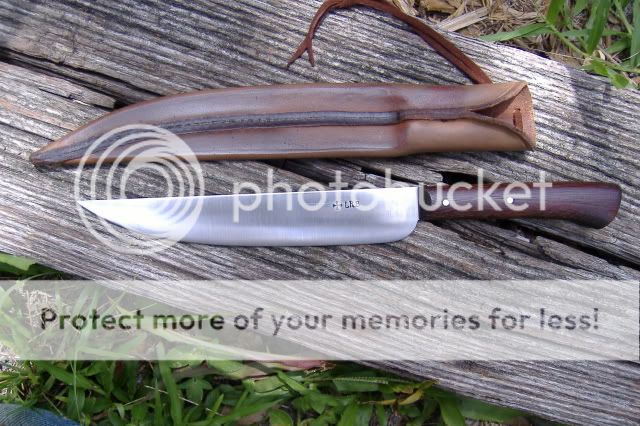
It depends on which period of time you are wanting.Pre 1800 French and English Furtrade period most were factory made and not blacksmith made.Materials and quality varied greatly and basic junk was usually refused by the buyers. Simple to more time consuming and elaborate designs were availible. Photo of my 1800 time period cartouche knife.


cartnew2.jpg
 
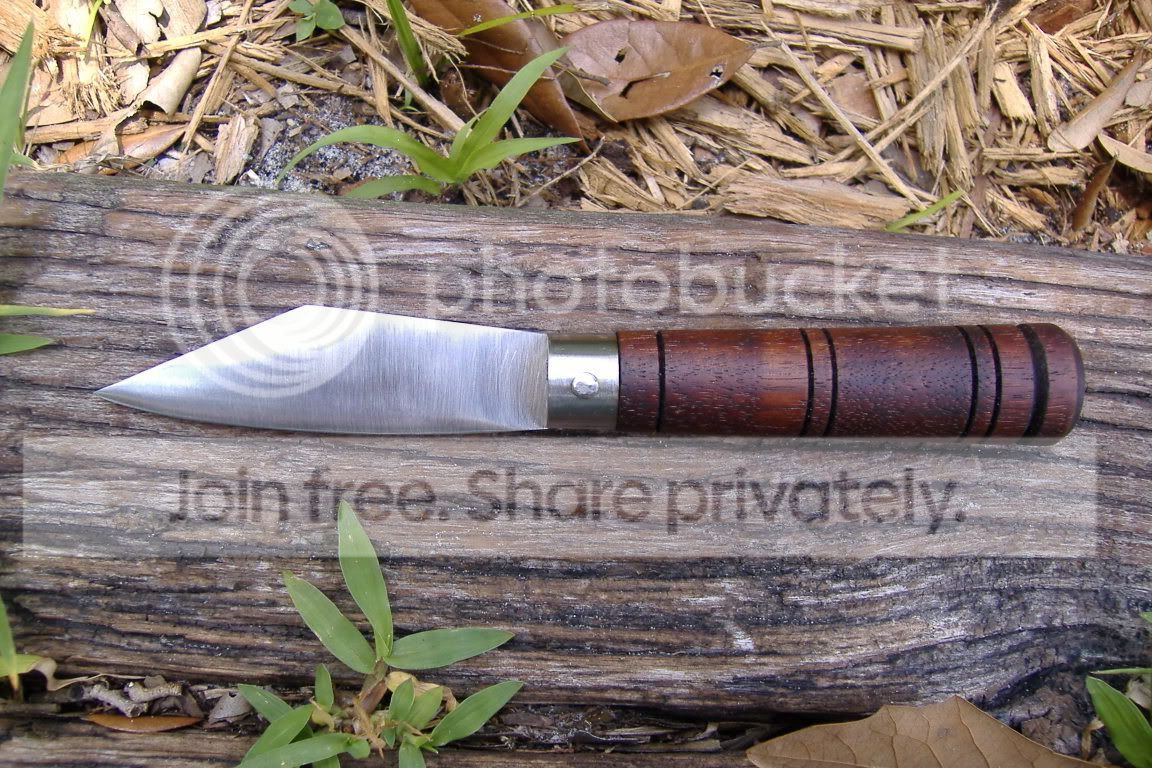
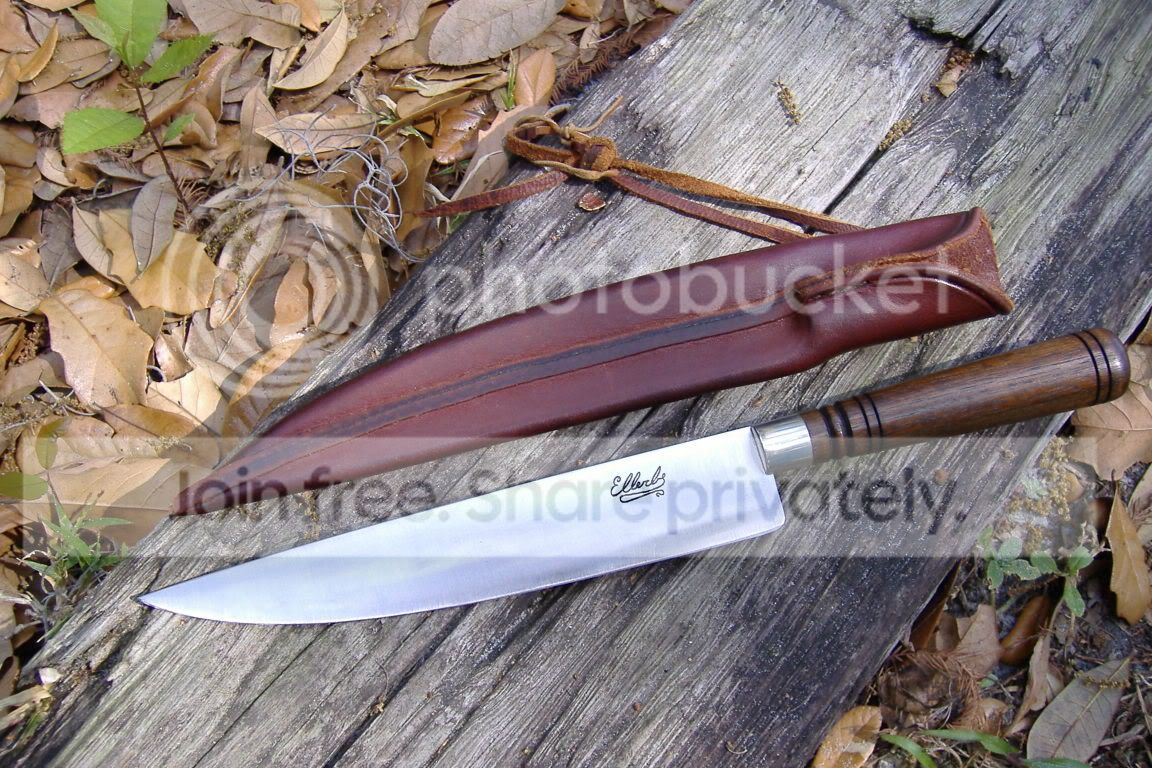
This is one of my French Boucherons, and an English penny knife. I use 01, stock removal, and heat treat with an oven. The Boucheron has a distal taper, and a tapered tang as the originals.
pennyknife009_640x480.jpg

pennyknife002.jpg
 
Does a period knife have to be poorly made with a sloppy fit to be a good replica? I am sure that most historical knives were made by local smiths.....

1) No - most knives of the 18-19th centuries were quite well fitted, whether factory or local made, dependent on the market, low end or high end just like today. While the majority were factory, local made products are well documented.

2) Actually as today, MOST historical knives of the 18-19th centuries were in fact factory made. For instance, the majority of fur trade knives from 1763-1840 were imported from England as were the vast majority of Bowies post 1830 or so......

For a good overall view of "period knives" there are several resources including:

The Knife in Homespun America by Madison Grant.

The Collector's Encyclopedia of the American Revolution by Neumann and Kravic

The Fur Trade Cutlery Sketchbook by Hanson.

Swords and Blades of the American Revolution by Neumann
Also check http://www.lanouvelle-france.com/

Period knives ran the gamut from "primitive" styles to the finest available.

I personally feel that if I make a period knife I will do my best workmanship and try hard to make it look like an antique.
While there are those who want them to look like "antiques: IMNSHO, if one is doing a portrayla "in period" than it may look aged but not really antique.

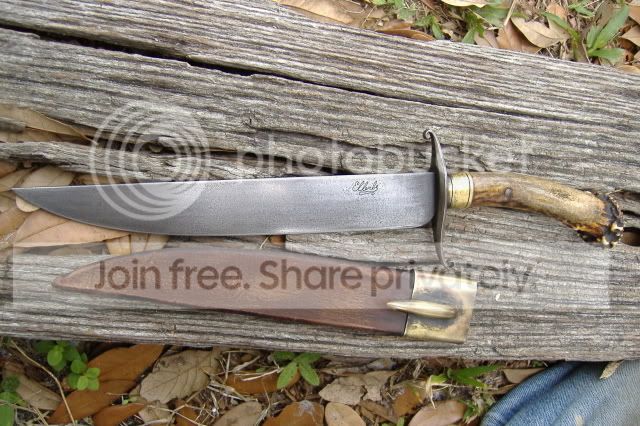
Here's just a small sampling, but all of the follwoing were made "new" using as many period techniques as possible and with the view that they were made by a smith here in the Old Southwest, which maintained a long tradition of local iron work. Once together they were aged to certain look as a whole, just as any used knife does.

plethora-of-knives.jpg


actually to be period correct it would likely have been steeled wrought iron if the original had been made on this continent, possibly indirect reduction if it was produced in Europe.
During the 18-19th Centuries the steels most widely used in the Colonies/USA and Great Britain would have been:
1) Blister steel - carbonized wrought iron
2) Shear Steel - blister steel chopped into short sections and then forged welded together making a random pattern Damascus. The process homogenized the steel making it better overall quality.
3) After 1745, cast or crucible steel - blister steel which was chopped into section and then homogenized by melting and casting into ingots.

I disagree on making "reproduction" out of tool steel without at least a disclaimer
I and several others (including Shakudo), have had artifact blades of the 18-19th Century analyzed and in all cases I've seen or read (about 30 or so altogether) the steel analysis was/is virtually indistiguishable (just minor %'s in the trace elements) from the 10XX series steel, in the .55-.85 carbon range. In the the market for reproductions, it has long been understood held that certain products (such as the type steel except in the case of Stainless or other exotics) are used without disclaimers - while adding the fact you made your own steel can be a good marketing tool, most see no reason for more than that.....

As always others mileage WILL vary........
 
This is a fun thread! Lots of cool knives! Heres my personal opinion.
In the end any knife you make can only be a rendition of something, your take on it, if you know what I mean. I feel there is room for all degrees of period knives.

I have noticed that some people think damascus looks old and they dont like it! These types whant shiny. In the end it comes down to personal taste and $. Its the same with damascus. Why make damascus when it does not actually inprove the usability of the knife, because it looks cool!

Personally I have been thinking of trying to make Early Iron age inspired knives. I found a cool website that sells these kinds of artifacts. Personally I will, if I do try this, make them out of tool steel and not iron.
 
This has been a fun thread; good strong opinions but no strong criticism. (See we can all get along)

Something that I have always suspected when I look at old cowboy and mountain man photographs-----I think a lot of the guys just stuck a butcher knife in thier belts as they went out the door to go hunting. Something sharp with a handle on one end that would skin a moose or a rabbit.
 
1) No - most knives of the 18-19th centuries were quite well fitted, whether factory or local made, dependent on the market, low end or high end just like today. While the majority were factory, local made products are well documented.


For a good overall view of "period knives" there are several resources including:

The Knife in Homespun America by Madison Grant.

The Collector's Encyclopedia of the American Revolution by Neumann and Kravic

The Fur Trade Cutlery Sketchbook by Hanson.

Swords and Blades of the American Revolution by Neumann
Also check http://www.lanouvelle-france.com/

Period knives ran the gamut from "primitive" styles to the finest available.


While there are those who want them to look like "antiques: IMNSHO, if one is doing a portrayla "in period" than it may look aged but not really antique.


During the 18-19th Centuries the steels most widely used in the Colonies/USA and Great Britain would have been:
1) Blister steel - carbonized wrought iron
2) Shear Steel - blister steel chopped into short sections and then forged welded together making a random pattern Damascus. The process homogenized the steel making it better overall quality.
3) After 1745, cast or crucible steel - blister steel which was chopped into section and then homogenized by melting and casting into ingots.


I and several others (including Shakudo), have had artifact blades of the 18-19th Century analyzed and in all cases I've seen or read (about 30 or so altogether) the steel analysis was/is virtually indistiguishable (just minor %'s in the trace elements) from the 10XX series steel, in the .55-.85 carbon range. In the the market for reproductions, it has long been understood held that certain products (such as the type steel except in the case of Stainless or other exotics) are used without disclaimers - while adding the fact you made your own steel can be a good marketing tool, most see no reason for more than that.....

As always others mileage WILL vary........

Wild Rose, Thank you for your input (especially on the documentation and the analysis of the artifact blades), I have been using 1070 on my replica test blades forgewelded to some antique wrought, in an attempt to match 14th century composite construction.

I probably will make some sale pieces using the 1070 and wrought combination now, thanks. I still plan to make a few pieces that are completely made from my homebrew steel, but I will likely keep them.

LRB those are some beautiful pieces! Thanks for sharing!

-Page
 
Back
Top