
Pid and Thermocouple questions, HELP I'm lost

Joined
Jun 11, 2006
Messages
8,651
I'm about to order my Pid and Thermocouple for my temperature controled forge setup and this is what i have considered buying. First off the pid, I dont need any ramping or fancy stuff so i am just going to get a standard model but i dont realy want a small one as i want it to be big and easy to see and program. so i was thinking of getting a 1/4 DIN PID instead of a 1/16 DIN. but every refrence to a pid i have found online for a heat treat oven or forge uses the 1/16 DIN. is there a reasion why they use that insted of the biger one. here is the one i want. this is the link to it http://auberins.com/index.php?main_page=product_info&cPath=1&products_id=102

and it's picture
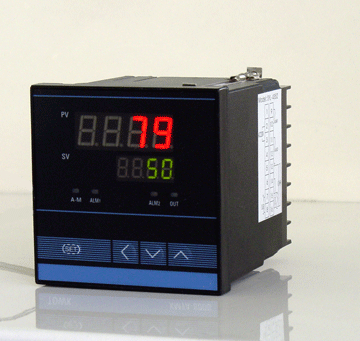
SYL4352.gif


Will this work ok, i would imagine it would but i thought i would ask.

now next up is the thermocouple, as i'm going to be using it in my forge i wanted somthing robust and strong. i had looked at the ones from Auber, this one http://auberins.com/index.php?main_page=product_info&cPath=3&products_id=39.
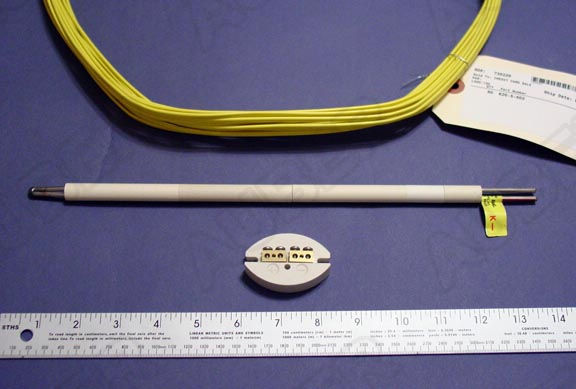
sensor_%20kiln.jpg


but that one needs a proctive thermo well around it and that is another 18.00 http://auberins.com/index.php?main_page=product_info&products_id=40.
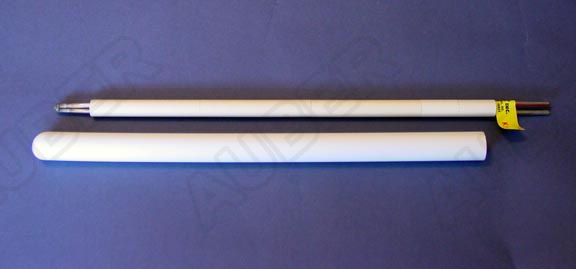
Sheath.jpg


So i looked on the Omega site and found there Super OMEGACLAD® XL Heavy Duty Transition Junction Thermocouple Probes. they look perfect for what i need. here is the link and a picture http://www.omega.com/ppt/pptsc.asp?ref=TJ36CAXL_NNXL
TJ36CAXL_NNXL_l.jpg


also they have various diameter sizes from 1/16" to 3/8". I am thinking of going with the 3/8" size for derability and also just the fact of go big or go home ;). Also from what i have read they are vastley better then the other ones on the market. i dont mind paying more for it if it it will be what i need. here is a graph from there site on how tempature stable it is a diffrent temps. they say it lasts tons longer then other thermocouples. here is a pdf of its specs http://www.omega.com/Temperature/pdf/TJ36CAXL_NNXL.pdf

OmegacladXL_Chart.gif


I used the part number builder to design the probe and this is what it is TJ36-CAXL-38U-12. but it is 12" long and that was the shortest thay had listed. but i found out that if you change the 12 to 6 in the part number then search for it in the search box it comes up as a 6" one that needs one week to make. I think a 6" one would be easear to use as my forge is onley 12" long and i'm thinking of sticking it in through the side of the forge body and adding a little locking screw to hold it in place like how my burner is held to the forge. I am thinking of getting the Ungrounded junction as it look like it would give me a more stable temp reading and not get as affected by flame temp as it does not come in contact with the casing. here is a picture if the types of junctions.
Junctions.gif


It will cost me 52 bucks but that's not bad as it's onely a little bit more then the other one and the thermo well also it look like a killer thermocouple.

so i will spend a bit more then if i sorced everything off ebay but thats ok as i want the good stuff. any tips or comments on this would be great as this is all new to me.
 
I got my second PID from Auber their service is good the product is good, Auber packs the manual with the product. good luck interpreting the setup, that was fun . . .
make sure you get the apropriate SSR

-Page
 
Looks like you did your homework.
I don't like those itty bitty 1/16 DIN controllers, either.
All your choices look good. You won't get fast responses with the massive thermocouple, which is a plus if you use it in a forge, as it averages out the fluctuations.
+1 on the SSR suggestion by sunshadow.
 
Hello JT,

The 1/4 vs 1/16 is only $10 difference. I have the 1/16 and like it very much. I also have a 1/32 and that is fine as well. Any size will work as long as they cover the options you need like AC power through 240V, 60Hz and PID for a SSR rather than a relay. Both my PIDs are from Auber and they were great to deal with.

I use the Omega Super OMEGACLAD® XL Heavy Duty Transition Junction Thermocouple Probe for my salt pot (called to order a custom 18" to allow a good bend to the side) but use the Auber kiln thermocouple that you have pictured above along with its protective thermo well for the gas forge. There is a lot of oxidization that will take place in a gas forge and you need that ceramic insulator protection.

I also use grounded thermocouples in both instances in order to have a quicker response time to tempurature change. I'm looking for fine control.

Be sure to order a heat sink --> http://auberins.com/index.php?main_page=product_info&products_id=77 for your SSR. If you don't you may get runaway temps and possibly damage your SSR (ask me how I know this...). I also mount a small computer fan to blow across the heat sink as well. No problems with runaway temps after this adjustment.

Hope this helps...

Eric
 
So should i not get the omega thermocupple then. I was reading about it that it has aluminum oxide on the out side of the sheath to protect it from oxadation.
 
I wish Auber had a controller that had a serial port so I could program it on my laptop. I think Omega does but it has a retarded price.
 
I can say from experience that the whole "you need a ceramic sleeve in a forge or you're toast" is a bunch of bull. I have a 1/8" OmegaClad thermocouple and it's just fine and has been for quite some time. Only some minor discoloration on the part that goes into the forge. I specifically asked the folks at Omega about this on the phone and was told that the OmegaClad was find for oxidizing environments (it even says on the website). I went un-grounded for longer life in a really hot environment. I went 1/8" as it will respond much more quickly to temperature changes than the 3/8" one and is plenty durable. Also, the quick disconnect end on a 12" probe is just fine. If your probe hangs out of the side of your forge a bit it won't hurt anything and it NEVER gets hot enough to hurt the quick disconnect plug.

So, that works out to part#: KQXL-18U-12 and the cost is only $30.

-d
 
I wish Auber had a controller that had a serial port so I could program it on my laptop. I think Omega does but it has a retarded price.

That only matters if you have software to talk to it ;) I have a couple of Omron controllers with a db9 on them and have looked at writing software to drive them. It would be a bit of a pain due to the fact that their protocol would require a somewhat complex state machine to parse, but it's not too bad. Then I found a guy who already wrote kiln control software for them ;) I'll be buying that for $120 rather than waste months of my life debugging software. I started 'smithing to get AWAY from computers :D

-d
 
I can say from experience that the whole "you need a ceramic sleeve in a forge or you're toast" is a bunch of bull.
-d

In my conversation with Omega, they recommended a ceramic sleeve for their OmegaClad thermocouples when running at continious tempuratures of 2200F in a gas forge. It's cheap protection to prolog your thermocouple. Check out this link from Omega --> http://www.omega.com/pptst/ORX_INSULATORS.html

Non insulated will work but insulated will last longer. Got this right from the Omega reps mouth. Just my .02 cents from what I was told. :)

Eric
 
In my conversation with Omega, they recommended a ceramic sleeve for their OmegaClad thermocouples when running at continious tempuratures of 2200F in a gas forge. It's cheap protection to prolog your thermocouple. Check out this link from Omega --> http://www.omega.com/pptst/ORX_INSULATORS.html

Non insulated will work but insulated will last longer. Got this right from the Omega reps mouth. Just my .02 cents from what I was told. :)

Eric

Gotta love customer service. My info came from the exact same source. :rolleyes:

That said, I work my forge pretty hard and haven't burnt one out yet!

-d
 
That only matters if you have software to talk to it ;) I have a couple of Omron controllers with a db9 on them and have looked at writing software to drive them. It would be a bit of a pain due to the fact that their protocol would require a somewhat complex state machine to parse, but it's not too bad. Then I found a guy who already wrote kiln control software for them ;) I'll be buying that for $120 rather than waste months of my life debugging software. I started 'smithing to get AWAY from computers :D

-d

I would have figured that Omega would already have written kiln control software since the big guys in foundries and large scale opearations probably are using some form of computer control. But then again too, they are probably using proprietary gear, as in almost turnkey setups, kiln all the way to their own computer systems integrated as one unit. Otherwise known as **out or our price range, scope of operation**.

I am the kind of person that would rather look at setup parameters on a whole page as compared to looking at abbreviations and hitting the same botton several times. Point and click is always nicer IMO (heh, as long as the software works, right?).

Hmmm, wonder waht kind of software does come with the controllers, looking at the website right now...


Food for Thought...
http://www.omega.com/iSeries/iEmbed.htm


JT sorry for the thread jack...
 
Last edited:
So do you think the 3/8th would be to slow to be used in a forge. I know it would be slower then the smaller but how much slower. i might just go with t 1/8" one or somthing.
 
Last edited:
I went back throught the site and found one that i think will work better. it's the Super OMEGACLAD® XL Thermocouple Probes - Miniature Transition Junction Probe. it comes in 6" lengths and 1/8" diameter sheath sizes. also it's cheaper by half of the other one. and being onley 6" long it will fit my forge perfect. i will just need to drill an 1/8" hole through the side of my forge and slide in the thermocouple. but this one has a wire connected to it, should i get the one that has the connector attached to the thermocouple.
here is a picture of it

KMTXL_NMTXL_l.jpg


this is what the site says about the sheath material.

New Super OMEGACLAD® XL sheathed mineral-insulated thermocouple wire, designated “XL” for ordering, can be used at ultra-high temperatures for prolonged periods with very little drift of the base metal thermocouple. The sheath material uses Nickel-Chrome based Super OMEGACLAD® XL sheathing, which provides excellent oxidation resistance. The sheath can withstand exposure to combustion gases or air at temperatures up to 1335°C (2435°F). Superior resistance to oxidation attack results from a tenacious and protective high-temperature film that does not affect the stability of the thermocouple alloys. This film permits the sensor to be used at ultra-high temperatures for prolonged periods with improved accuracy over other available sheath materials. Super OMEGACLAD® XL sheathing also provides excellent resistance to corrosion in high temperature chlorine-contaminated oxidizing environments and ammonia/nitride-rich environments at temperatures above 980°C (1800°F), the temperature at which the protective film forms.
 
JT, I'm thinkin' of putting in a thermocouple in my forge as well.
Do you have to have that probe sticking out into the forge, or do you have it backed into the refractory?
- Thanks...I don't know the first thing about thermo-whatevers.
- Mitch
 
JT, I'm thinkin' of putting in a thermocouple in my forge as well.
Do you have to have that probe sticking out into the forge, or do you have it backed into the refractory?
- Thanks...I don't know the first thing about thermo-whatevers.
- Mitch

I would think it would have to stick out into the forge or it wont read the temp corectley beacuse the refractory will insulate it. but if you drilled the hole all the way through the refractory and then when you insearted the probe you pulled it back from the forge wall about 1/4" it might work very well. but i am going to weld a little pipe onto the outside of my forge that has a set screw so i can move it in or out depending on what works the best. the good thing about it being backed into the refractory a bit is that it is not in direct path of the flame and will just read the forges wall tempature.
 
I would think it would have to stick out into the forge or it wont read the temp corectley beacuse the refractory will insulate it. but if you drilled the hole all the way through the refractory and then when you insearted the probe you pulled it back from the forge wall about 1/4" it might work very well. but i am going to weld a little pipe onto the outside of my forge that has a set screw so i can move it in or out depending on what works the best. the good thing about it being backed into the refractory a bit is that it is not in direct path of the flame and will just read the forges wall tempature.

Good idea about the set screw.:thumbup: Let me know when you get your rig up and running. (So I can pick your brain!:))
Thanks again,
Mitch
 
Back
Top