
transmaster
Gold Member
- Joined
- Sep 11, 2023
- Messages
- 366
Cats were very popular with the Anglo-Saxons for controlling rats and mice.

The BladeForums.com 2024 Traditional Knife is available! Price is $250 ea (shipped within CONUS).
Order here: https://www.bladeforums.com/help/2024-traditional/
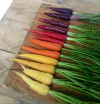
Vegetables grown by Anglo-Saxons included onions, garlic, cabbage, turnips, mushrooms, beetroot, parsnips, carrots (which were white or purple at the time), peas, and beans, which formed the basis of many Anglo-Saxons' diets. It's unclear how much was cultivated and how much was foraged from the wild. I can tell you Mushrooms were harvested in the wild. Mushroom cultivation in Europe began in France in the 17th century.
enjoyed the video. what's the deal there? those folks living like folks used to in old times in the UK i'm assuming?
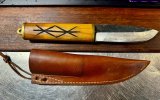

What you are describing is more akin to the field of Living History, which is distinct in a number of ways from Experimental Archaeology. It is not merely a UK practice. Both are worldwide phenomenon.In the UK, there is a part of Archaeology called Experimental archaeology. These are people who recreate history. You have metalsmiths who recreate copper, bronze, and iron age tools and weapons, and others who duplicate textiles and leather tanning. Others recreate how Bronze Age, Iron Age, and later ethnic groups lived. The metal workers and the experimental chefs are the most interesting to me. I have this Viking-Anglo style 7th-century Seax from Bushman Survival, in the UK, forged by Paul Roberts.
View attachment 3176303

What you are describing is more akin to the field of Living History, which is distinct in a number of ways from Experimental Archaeology. It is not merely a UK practice. Both are worldwide phenomenon.
No, that is not what I'm saying. Living History and Experimental Archaeology are two very different things, and the video you shared and activity you described is Living History, not experimental archeology. There is a meaningful and distinct difference between the two things. Living History is closer to "historically accurate LARPing" and is usually intended as either recreational or educational or some mix of the two. Experimental Archaeology is making and doing things specifically in the attempt to gain deeper insight into how things were made, the contextual challenges that were overcome, activities that might lead to certain wear marks on historical items, and so on and so forth. It is done specifically with the DOING intending to reveal more information about existing or future-found artifacts. That may or may not include wearing accurate clothing, living in the style of period workers, or so on, but only if the experiment would be influenced in some way by those things. Very often Experimental Archaeology would be like "we have this surviving flanged axe head. Let's take try making a few different handles in styles that seem to best approximate artistic representations and fragmentary finds that we have and try them out and see what the strengths and weaknesses of each approach are." Period clothing is not specifically required for that level of coarse granularity, as compared to "let's try sword manual maneuvers in period clothing to see how that influences the moves" but neither of those tasks requires, for instance, living in a period house and eating a period breakfast. Living History is a complete "here's what life was like based on our best current understanding" thing.Yes, here in the States, it is referred to as Living History. You are correct, it is practiced in countries that wish to preserve their past. Not all do, which is so sad.
The BBC Farm Series was very interesting, consisting of 9 mini-series. Starts with a Stuart farm of 1620, Tudor, Edwardian. Victorian, WWII. Another series is called The Supersizers Go. The Supersizers Go is particularly interesting, with Giles Coren and Sue Perkins for one week living and eating period foods. At the beginning of each show, Giles and Sue did a baseline medical work up, and than afterwards to see what the diet did to them. They brought in chefs who knew how to prepare these dishes. The Medieval episode had to substitute turkey for swan. The Medieval feast featured steamed entrails. that made today's Menudo, and Chitlins equal to prime beef. Giles was gagging.
Look on YouTube for these shows. They can also be downloaded here, MVGroup, on Amazon Prime Video, and Apple TV.
