Playin' with my new Sears belt grinder

Joined
Sep 16, 2002
Messages
1,577
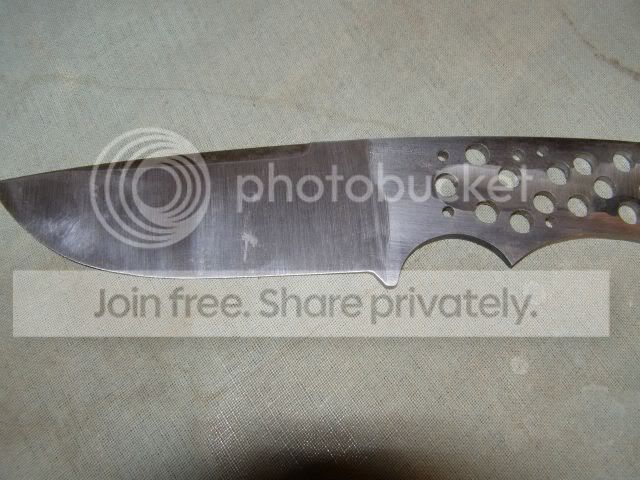
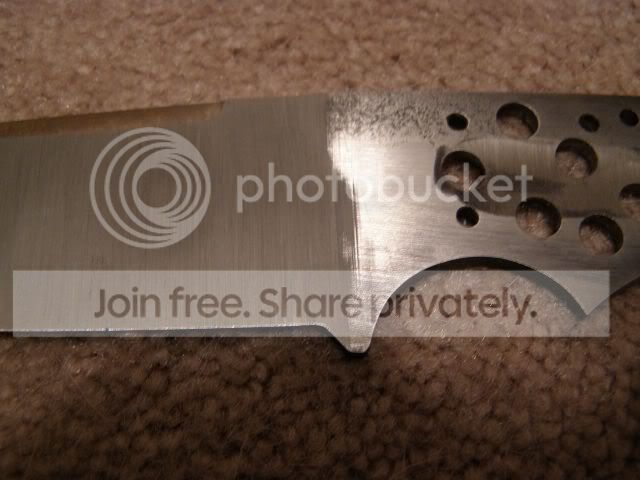
I spent a couple of hours today, before I had to quit for lunch, playing with my new Sears grinder and a 60 grit belt. This was just a piece of scrap 1/4" 5160 that I was using to practice and learn on, but I might actually finish it.

I did a partial grind on one side (I forgot initially about the concept of a plunge line, but I think you can see where I picked that up part way through):
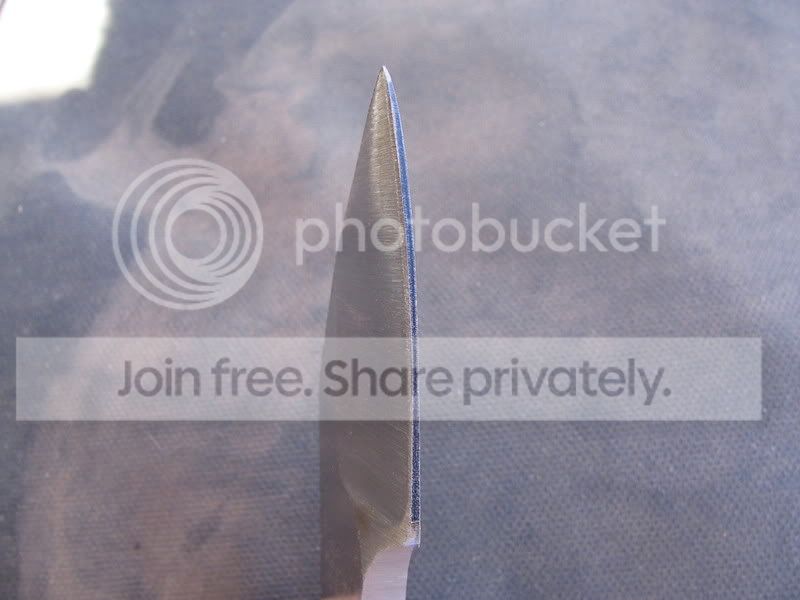
IMG_0896.jpg

IMG_0898.jpg


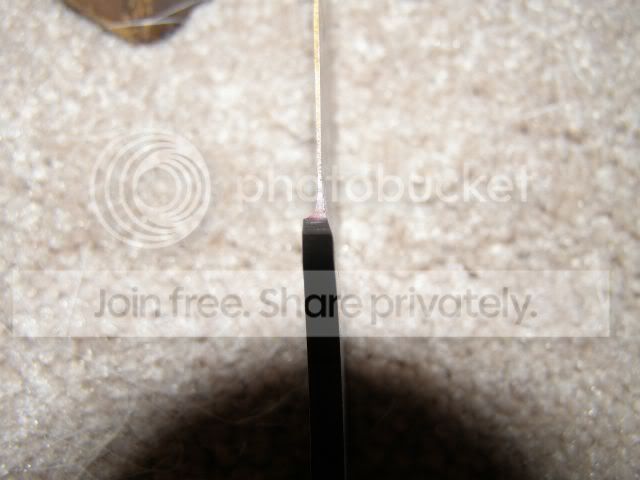
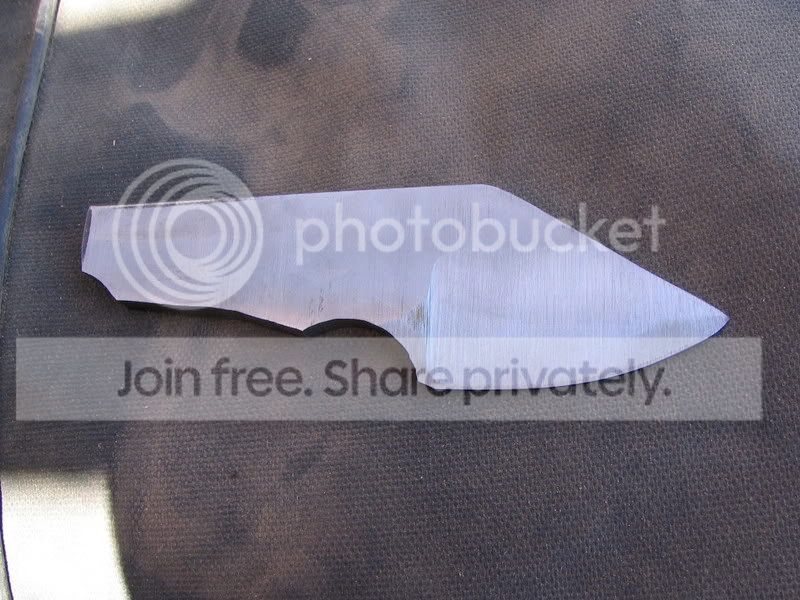
And (I think) a full height grind on the other:
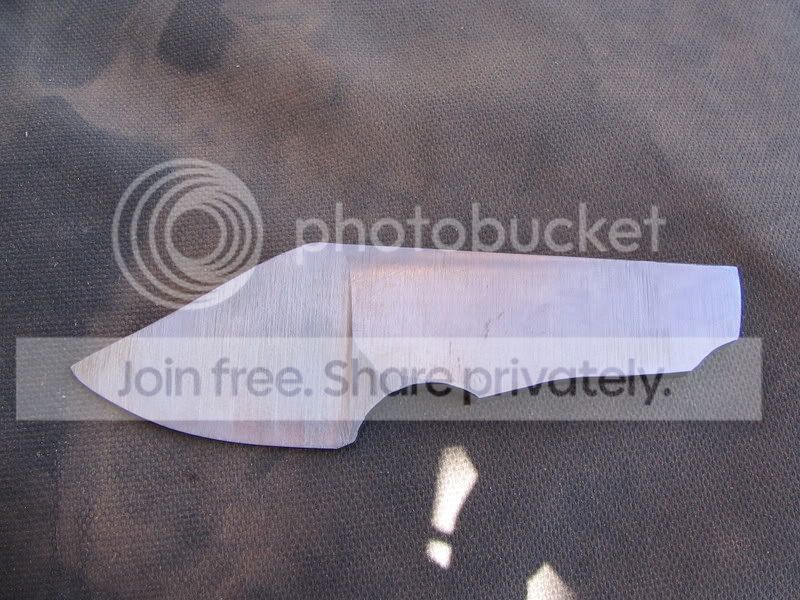
IMG_0894.jpg

IMG_0897.jpg


Whadya think?
 
Thanks guys. After resupplying my blood sugar and studying this a bit, I can't think of anyway to fix the pre-plunge-concept grinding I did around the front of the finger groove/choil(?) area. Does anyone have any creative ideas on that?

Also, during grinding the steel got pretty hot to the touch which I expected, but it also showed some light gold or straw colors in a couple of spots which I assume was from heat. Is this normal to see during grinding?
 
When I first started grinding I had a few where I ground the plunge area like you did. After messing with it I figured out I could "wash out" the plung line. I would grind over the plunge cut so that it didn't have a plunge cut it just swept out from ricasso to blade. A few of them turned out good looking and everyonce in a while I get a request for one with no plunge cut. If you grind too far back on the handle washing out the plunge cut you will have an uneven surface for your handle or bolsters to sit on so you have to be careful of that.
 
some of the gold and straw colors can be crap on the blade heating up and causing the discoloration. I had 5160 from a spring shop that would do the same. but keep dunking it in water, try not to let it get too hot

looks like a good start. the grind that isnt all the way up turned out quite nice


could you guys elaborate a bit on the plunge cut in the first place for me?
 
When I first started grinding I had a few where I ground the plunge area like you did. After messing with it I figured out I could "wash out" the plung line. I would grind over the plunge cut so that it didn't have a plunge cut it just swept out from ricasso to blade. A few of them turned out good looking and everyonce in a while I get a request for one with no plunge cut. If you grind too far back on the handle washing out the plunge cut you will have an uneven surface for your handle or bolsters to sit on so you have to be careful of that.

Hi Ryan,

I really appreciate the suggestion, but I'm having some trouble visualizing what you are describing. You don't by chance have a picture of an example, do you?
 
some of the gold and straw colors can be crap on the blade heating up and causing the discoloration. I had 5160 from a spring shop that would do the same. but keep dunking it in water, try not to let it get too hot

looks like a good start. the grind that isnt all the way up turned out quite nice


could you guys elaborate a bit on the plunge cut in the first place for me?

That may have been it, invictus, but it was pretty deep into the grind so I'm not sure. I was dunking it frequently...almost as often as it got hot enough to burn my fingers ;)

Thanks for the comments.
 
If the heat is building during grinding, you will often seen some color changes. On thin areas, it's really easy to build up into the blues. This isn't too much of a problem, but it does add stress into the steel as the heat often happens unevenly. Normalizing before heat treat can reduce any warps that may result from uneven stresses added into the bar stock during grinding.

I used to get a lot of color changes in steel when I first started out. This is because I was over using worn out belts and pushing too hard on the grinder. I was able to clean up and even out my grinding skills a good bit when I figured out that you don't have to push hard to remove steel. It will take a tiny bit longer, but let the belts do the work. And if you are starting your bevels, a sharp, new belt will make a ton of difference. Definitely dunk the steel frequently in the water bucket. This keeps the steel temp down and helps you be more consistent because you're able to concentrate on the grind rather than the heat. You'll be surprise at how quickly heat builds into the steel.

Working on the grinder sure beats all heck out of files, huh? :D Enjoy!

--nathan
 
If the heat is building during grinding, you will often seen some color changes. On thin areas, it's really easy to build up into the blues. This isn't too much of a problem, but it does add stress into the steel as the heat often happens unevenly. Normalizing before heat treat can reduce any warps that may result from uneven stresses added into the bar stock during grinding.

I used to get a lot of color changes in steel when I first started out. This is because I was over using worn out belts and pushing too hard on the grinder. I was able to clean up and even out my grinding skills a good bit when I figured out that you don't have to push hard to remove steel. It will take a tiny bit longer, but let the belts do the work. And if you are starting your bevels, a sharp, new belt will make a ton of difference. Definitely dunk the steel frequently in the water bucket. This keeps the steel temp down and helps you be more consistent because you're able to concentrate on the grind rather than the heat. You'll be surprise at how quickly heat builds into the steel.

Working on the grinder sure beats all heck out of files, huh? :D Enjoy!

--nathan

Truer words were never spoke, Nathan!

The color I noticed tended to be out near the tip where it was thinnest, so that makes sense. The belt was brand new from TruGrit, and the little bit of profiling and the starting of the bevels was done with the crappy AO belt that came with it from Sears. There is a pretty good chance I was pushing harder than necessary at times, but I tried to control that. My grinder isn't bolted down yet and the motor is only 1/3 HP, so I can't push all that hard anyway.
 
Here's a quick and dirty example I went and got out the scrap bucket to grind the way I was talking about. In the first picture you can see a plunge cut up on the false edge but you can't see a defined plunge cut on the main bevel. The last picture is looking from the edge on the left side you can see a defined plunge cut and on the right the washed out plunge cut. I think with that knife you could wash out the plunge cut too look like this one and fix the pre-plunge cut area you are talking about.
plungecut.jpg

plungecut2.jpg

plungecutwashout.jpg
 
Ryan,

If I'm seeing this correctly, you have basically just blended the bevel to the ricasso so that the radius is not noticeable? If so, how did you accomplish that (platen, slack belt, contact wheel???)

I really appreciate the help!
 
That's exactly what I did. I just ran my belt over the platen at first I just hung the belt over 1/8" then a 1/4" when i got closer to where I wanted to be, it helped it blend a little better the further off the platen the belt was. edited to add I've also done it with a half round file.
 
LOL I know exactly what your going through. I got the 2 x 42 and it is a learning curve. I have gone from better lines to "Man how am I gonna fix that."
I cant wait to get a KMG later.
 
Last night I was cruising the For Sale posts, and came across this beautiful little EDC model posted by sharpeknives:

http://www.bladeforums.com/forums/showthread.php?t=544783

The way he has cut the finger groove into the blade bevel I think could also fix my grinding snafu, and he has graciously given me permission to steal that idea.

Thanks to Mr. Sharpe, Ryan, and everyone else for their ideas!
 
How are you guys making your inside round grinds? I was thinking of making some different platens using different size steel rods and some J belts. It there a better way?
 
You could always do a full convex grind, although the stock is a little thick.

Thanks for the idea, but wouldn't I have to bring the grind all the way back into the choil in order for that to disguise my mistakes?

looks nice the first one is a bit special in the shape but cool! :)

Daniel CL.

Yes, it's kinda fugly, but it wasn't meant to be a knife when I started, just a piece of scrap to practice and learn with. I think I can improve the profile a bit though, and I might just HT and finish it for the heck of it since my first time grinding turned out so much better than I thought it would.
 
Back
Top