Plunge cuts

Joined
Dec 4, 2009
Messages
503
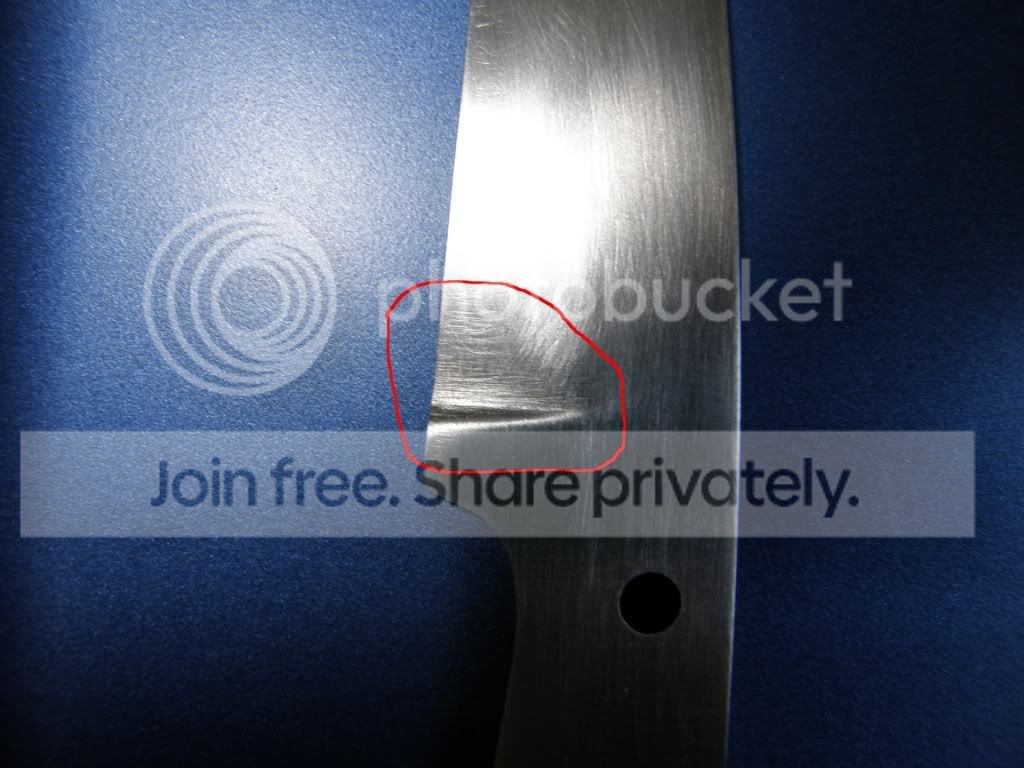
Hello and Happy Easter everyone! So I've been working on a knife for quite a while now due to school and such and I finally got to work on it some more during spring break. I've got pretty much everything I can do done pre-HT but the plunge cuts on my knife still have some scratches from the filing. I cant get in there with sandpaper. How would you get rid of them in this case?

p4040005m.jpg

By echo29, shot with SP560UZ at 2010-04-04
 
Yes, you can get in there. Make something (wood, plastic, metal, whatever) the shape you need to back the sandpaper with. The scratches on the Ricasso also show that you are not done sanding yet. Do it now before heat treat.
Don't be in too big of a hurry to get to the next step. Hand sanding does take time. That's why knifemakers aren't millionaires.
 
yes, don't worry, you can get them out like MadBug said, it won't even take that long in the grand scheme of things, but don't skimp on the sandpaper ( I remember when I couldn't afford sandpaper...my knives showed it). Go back to a coarser grit if you have to. If the scratches bother you now imagine how they will bother you after HT!
 
Reducing the size of the pic before uploading would help us see it better. A good free editor is IrfanView. They are really big out of the camera.
 
Reducing the size of the pic before uploading would help us see it better. A good free editor is IrfanView. They are really big out of the camera.

Indeed. Take some water with you if you decide to make the journey to the other side of the page...
 
Something I learned in a Jewelry class in college, sand 90 degrees to the scratches with finer grit sand paper than the scratch. You will create more scratches but finer than the scratch, when these smaller scratches cover the bigger scratch, change to the next grit and sand 90 degrees to the scratches that you just made. So every change in grit, change direction 90 degrees. You will sand less with less rounding of edges and have a flatter more uniform finish.

Also use a backer stick to keep flat surfaces flat. Try wrapping your file with sandpaper.

Learn to Draw file.
 
Whew.. I'm back from the other side, this is what I found.


I gotta go lay down

I hope you recover quickly:o

To add some usefulness to my smartass reply, I like to use a wide-ish piece of backing, shape the edge to match the plunge I am trying to achieve, wrap it over tightly with 100 or 120 grit paper, and use duct tape placed on the paper such that it keeps the abrasive off the main area of the bevel and concentrates your effort on the plunge area. This also helps to avoid digging a groove across the bevel with the other edge of the backing.
 
Last edited:
Thanks for the heads up guys, I'll definitely try that 90 degrees deal Perfessr. I've been trying to get em out with the corner of my sanding block and that obviously did no good.

Justin, would a sanding sponge work for what you suggested? I figured since its pliable and such, it could kinda form to the shape of the plunge.

Sorry about the pics... I knew I was going to get called out for that. I'll cut em down next time.
 
A soft backing such as a sanding sponge will wash out your lines and your flat bevel will start to dome. A hard backing is the way to go, with the right abrasive paper you can clean plunge areas up pretty quickly.
 
most likely start with some 120 grit on a sanding board. I made some sanding sticks with a couple pieces of hard maple. they work awesome. I would go 120, 220, 320, 400, 600, 1000 and buff the snot out of it or use a structured abrasive belts all the way from 220 grit up to 3000. kellyw
 
My sanding sticks were round and I cut them in half and sanded it more square. The round part works well in the ricaso area and small stubborn scratches that dont want to come out.
 
Ok, so generally speaking, when you are sanding a blade, are you pushing/pulling or pulling from ricasso to tip only when going lengthwise on the blade. Same for sanding perpendicular to the blade...do you just pull in one direction or go back and forth?

I've read that on the final finish (if doing brushed or what have you) that you are to go from ricasso to tip, one direction only, pulling. But I can never find anything that tells the proper way to do it before the final finish.
 
hellgap, since I haven't even HTed the blade yet, I figured I don't need to do worry myself with the finish just yet. I was told that sanding up to about 600 grit is fine before HT.

Ok, so generally speaking, when you are sanding a blade, are you pushing/pulling or pulling from ricasso to tip only when going lengthwise on the blade. Same for sanding perpendicular to the blade...do you just pull in one direction or go back and forth?

I've read that on the final finish (if doing brushed or what have you) that you are to go from ricasso to tip, one direction only, pulling. But I can never find anything that tells the proper way to do it before the final finish.

I'm using a sort of back and forth motion from tip to plunge with my abrasive laid out on a table.
 
Back
Top