Plunge tips for a noob?

Joined
Jun 16, 2012
Messages
368
Ok so I started a lil knife the other night. I'm still working on learning flat grind. I nailed, it, got it perfect. I had my moment of joy, then looked at the plunge. It needed some love to get them to be mirror images of each other. I put it in a vice and set to work with a file. I encountered two problems.
1. I found it very hard to work the file at a constant angle and ended up convexing it a bit as well as biting into my grind a bit
2. When I went to level it all out I screwed up my flat grind :( I took it to a full flat grind to fix it but the plunge is still about half a mm off.

Some of the fault I am going to lay on my platen which has a very rounded edge, and I'm going to fix that with a glued on tile plate (is stone floor tile good enough?)... but any tips on how do to get a perfect plunge? Should I cut the whole plunge first with a file? if so, with a wide file or a narrow one? and to full depth?
 
You may not want to square up the edge completely because if its too square on the edge of your platen and the transition from the grind to the choil is not rounded then you have created a stress riser. I had a squared off platen till Paul Moore told me to round the edges over so the plunge would be smooth and rounded along the transition. Food for thought.

I am not an expert so use your own judgment with what I say. I use two pieces of hardened carbon steel to set where my plunge will lay. Then I simply do my grinding and just before I finish grinding to my scribed lines along the edge I use a 3/32 round file with some 220 sand paper wrapped around it once to finish the plunge and round it out. Make the last few passes and it good to go. If it needs any other work i take care of it when I am hand sanding the flats.

Dont be afraid........ PLUNGE in !! sorry could not resist :)
 
I use this:
It is screwed into the board and there are holes drilled along the board to correspond with my most common bevel angles.

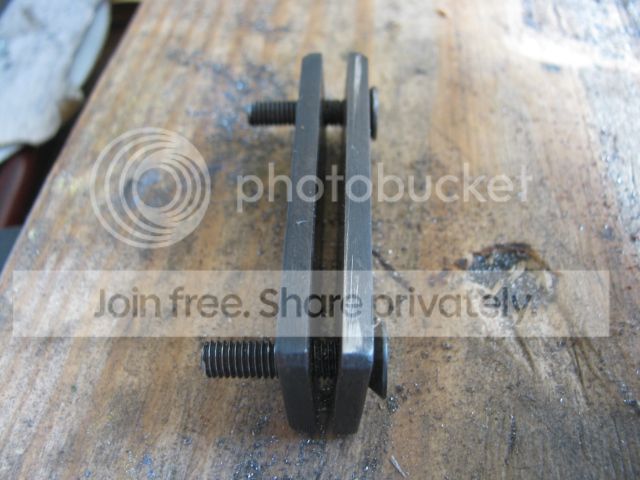
Here is my file guide:


Two pieces of hardened 1084 attached with two flat head bolts.
IMG_1324.jpg


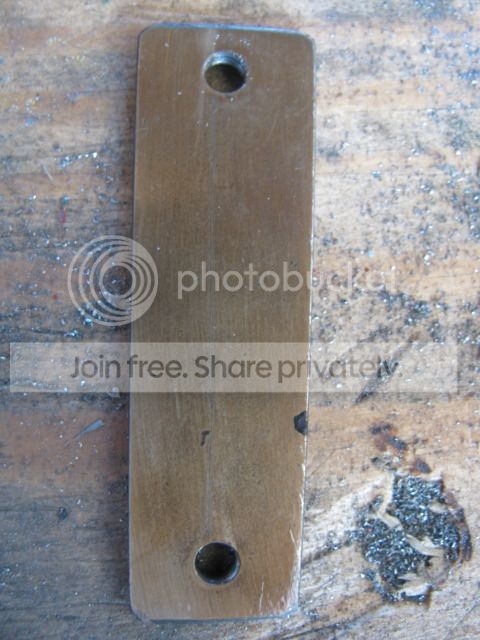
One is drilled with a #21 tap drill and tapped 10-32...
IMG_1327.jpg


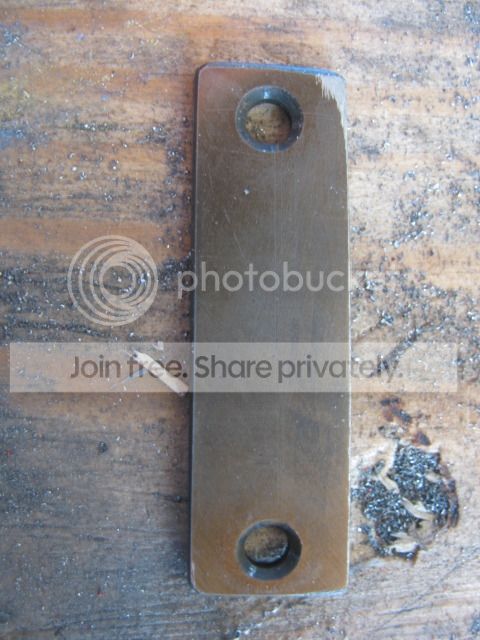
And the other is drilled with a #5 tap drill and countersunk.
IMG_1328.jpg


Bolted together with 2 of these (there's only one in the photo though)
IMG_1330.jpg


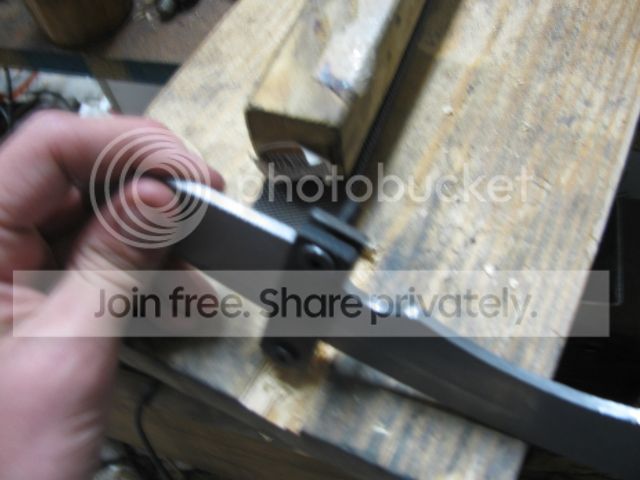
Attached to the knife like so...
IMG_1303.jpg


Before I hardened the steel I bolted them together and evened the edges with a file and sandpaper.

Hope this helps! :D Good luck in your knife making adventure! :thumbup:
 
I think most guys use a file guide. You can make your own, but I opted to buy one from "Uncle Al, the knifemaker's pal". It is beautifully made, incredibly tight and precise, with carbide faces.

I think it was about $150, but it's the best I've seen, and I can look forward to using it for ever.

Wow! It must take me too long to type. There were no replies when I started!
 
I forgot I bought some carbide strips to make a file guide but haven't done it yet, wonder where on earth I put em ... I was using a mini vice and trying to not eat up the top.

When you guys are cutting it are you following the blade grind and cutting towards the tang, or getting up onto the raised part and trying to bring it down level to the bevel? I was doing the latter. Like if the blade point were vertical pointed up, would you be cutting down, horizontally?

This knife is still passable, I think ill finish it up real quick, harden it, no scales, and give it to my old man to cut up coke cans (he dips snuff and spits into coke cans with split open tops. Eats up knives doing that). Then try again. after making a real file guide.
 
Ok so I started a lil knife the other night. I'm still working on learning flat grind. I nailed, it, got it perfect. I had my moment of joy, then looked at the plunge. It needed some love to get them to be mirror images of each other. I put it in a vice and set to work with a file. I encountered two problems.
1. I found it very hard to work the file at a constant angle and ended up convexing it a bit as well as biting into my grind a bit
2. When I went to level it all out I screwed up my flat grind :( I took it to a full flat grind to fix it but the plunge is still about half a mm off.

Some of the fault I am going to lay on my platen which has a very rounded edge, and I'm going to fix that with a glued on tile plate (is stone floor tile good enough?)... but any tips on how do to get a perfect plunge? Should I cut the whole plunge first with a file? if so, with a wide file or a narrow one? and to full depth?

You can always take a brand new file and grind off one or more sides.
They call those smooth sides "safe edges" because it's safe to run it up against a metal surface.

If you ground a flat face smooth, the edges could come in and fix the plunge. You can put a slat spot on a round file too, same idea.
 
You can always take a brand new file and grind off one or more sides.
They call those smooth sides "safe edges" because it's safe to run it up against a metal surface.

If you ground a flat face smooth, the edges could come in and fix the plunge. You can put a slat spot on a round file too, same idea.

I never thought of that. Does it matter what kind of belt I use (AO, Ceramic, etc..) and is it going to tear the belt up?
 
Did not manage to really fix the plunge, but I did use the less than perfect blade to try my hand a stone-washing. Its still a perfectly functional piece, just my plunge is less than perfect and I shouldnt have gone with those sharp curves in the handle as I dont have any way to mechanically round them. By hand with a file turned out to be tedious and less than perfect.

orpf09.jpg
 
Did not manage to really fix the plunge, but I did use the less than perfect blade to try my hand a stone-washing. Its still a perfectly functional piece, just my plunge is less than perfect and
I shouldn't have gone with those sharp curves in the handle as I don't have any way to mechanically round them. By hand with a file turned out to be tedious and less than perfect.

I would draw file them a bit and the lines would flatten out, either with the files you have, or with a half round file.
I would also knock down the very sharp point quite a lot.

Have a look around the house for something round and similar in size to those curves = wrap abrasive paper around that.
Socket wrench sets have many sizes to choose from; fat marker pens, wooden spoons, dowelling.
Metal supply stores will have shelves full of cut off short pieces called drops, I like finding short pieces, maybe a foot or less & you can get them for a $ or 2.
 
Back
Top