Pre-industrial origins of Western metallurgy and a pocketknife that continues its legacy

Joined
Feb 15, 2026
Messages
142
In this post, I’m going to show the modern origins (18th Century) of knife, axe and sword making. The modern manufacturing definitely has its roots in Europe and the U.S., but I think it’s interesting to see the path that led to the tools we carry today.

I’ve put this thread together with total humility, based on verifiable historical facts, and without discounting the many influences from other nations over the centuries. At the same time, I can’t hide my excitement in discovering that these origins lie just a few hundred miles from my hometown, right here in my own country.

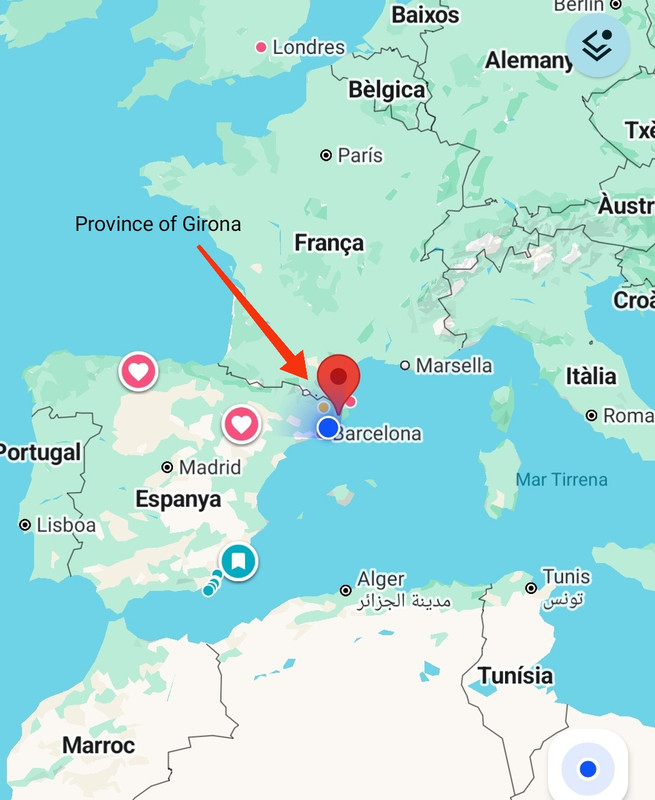
I am Spanish and I live in the province of Barcelona, although the focus of my research is the province of Girona, also here in the Autonomous Community of Catalonia.
IMG-20260318-095819.jpg


Before Rome ruled the world, they met their match in the Iberian Peninsula. The weapon that haunted their nightmares was the Falcata—a brutal, forward-curving blade that hit with the power of an axe but cut like a razor. It was famous for splitting Roman helmets in a single strike.

The Romans were so impressed (and terrified) that they didn't just copy the carbon steel; Many of them, adopted the Gladius Hispaniensis (the Spanish Sword) as their standard weapon. This wasn't just a change in gear—it was the birth of Western military supremacy, built on the superior carbon steel and forging techniques of ancient Spain.
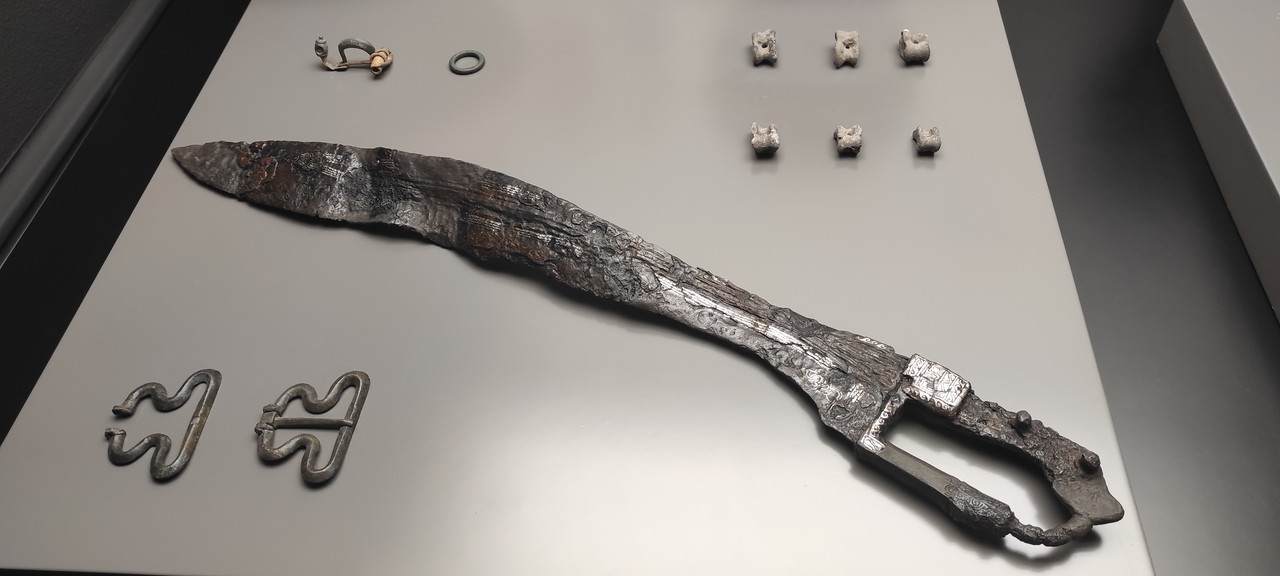
figura-1.jpg


But let’s go forward a little further, to the 18th century, which is where things get really interesting:

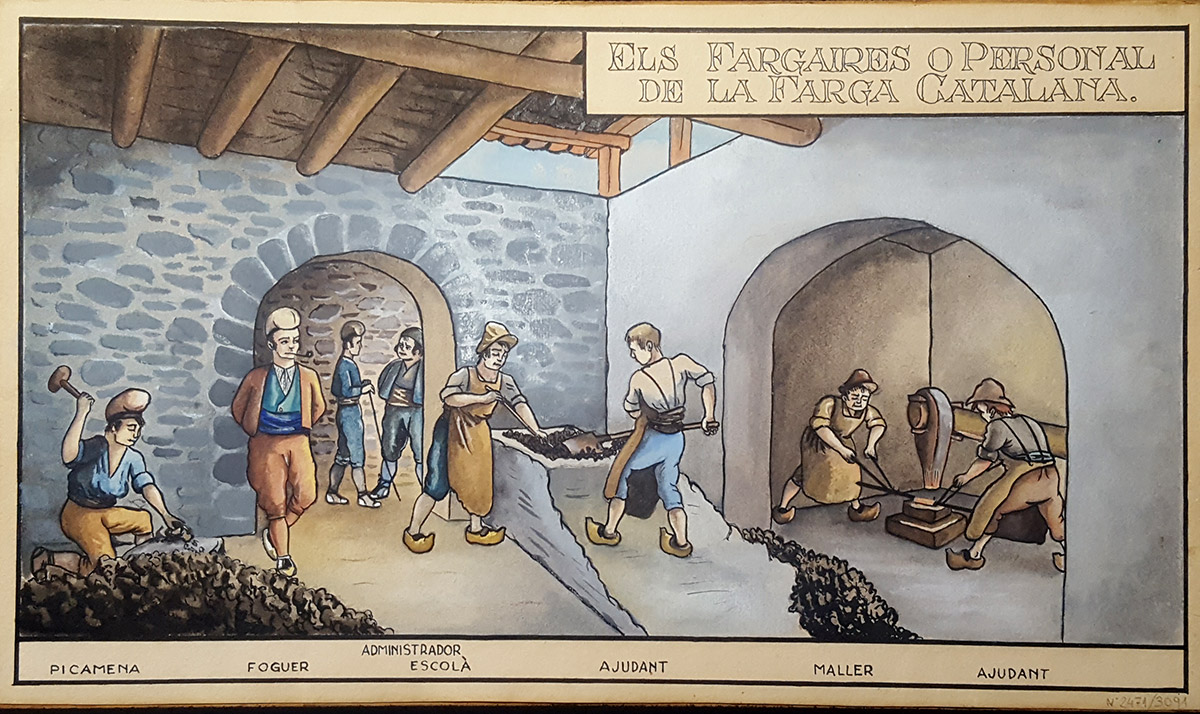
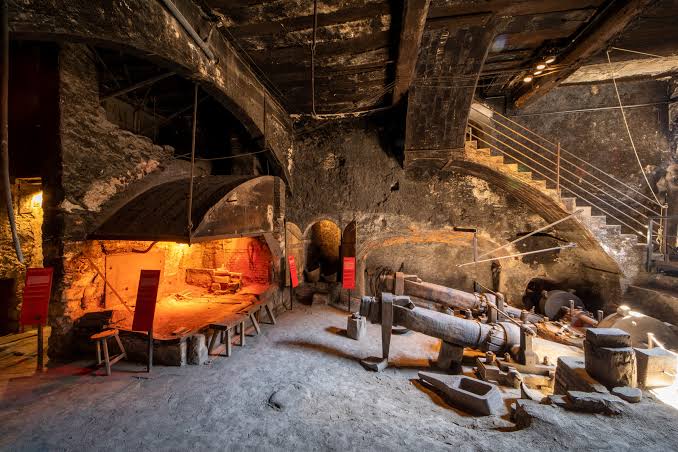
"From the Middle Ages until the 19th century, Western European countries—France, England, Austria, and Italy, among others—obtained iron using the metallurgical method known worldwide as the 'Catalan process' or 'Catalan forge.' The natural resources essential for its operation, namely iron ore, wood for charcoal (for the furnaces), and water (used as driving force), were found in abundance in our region where, up until the 18th century, more than twenty forges have been documented.
farga1.jpg


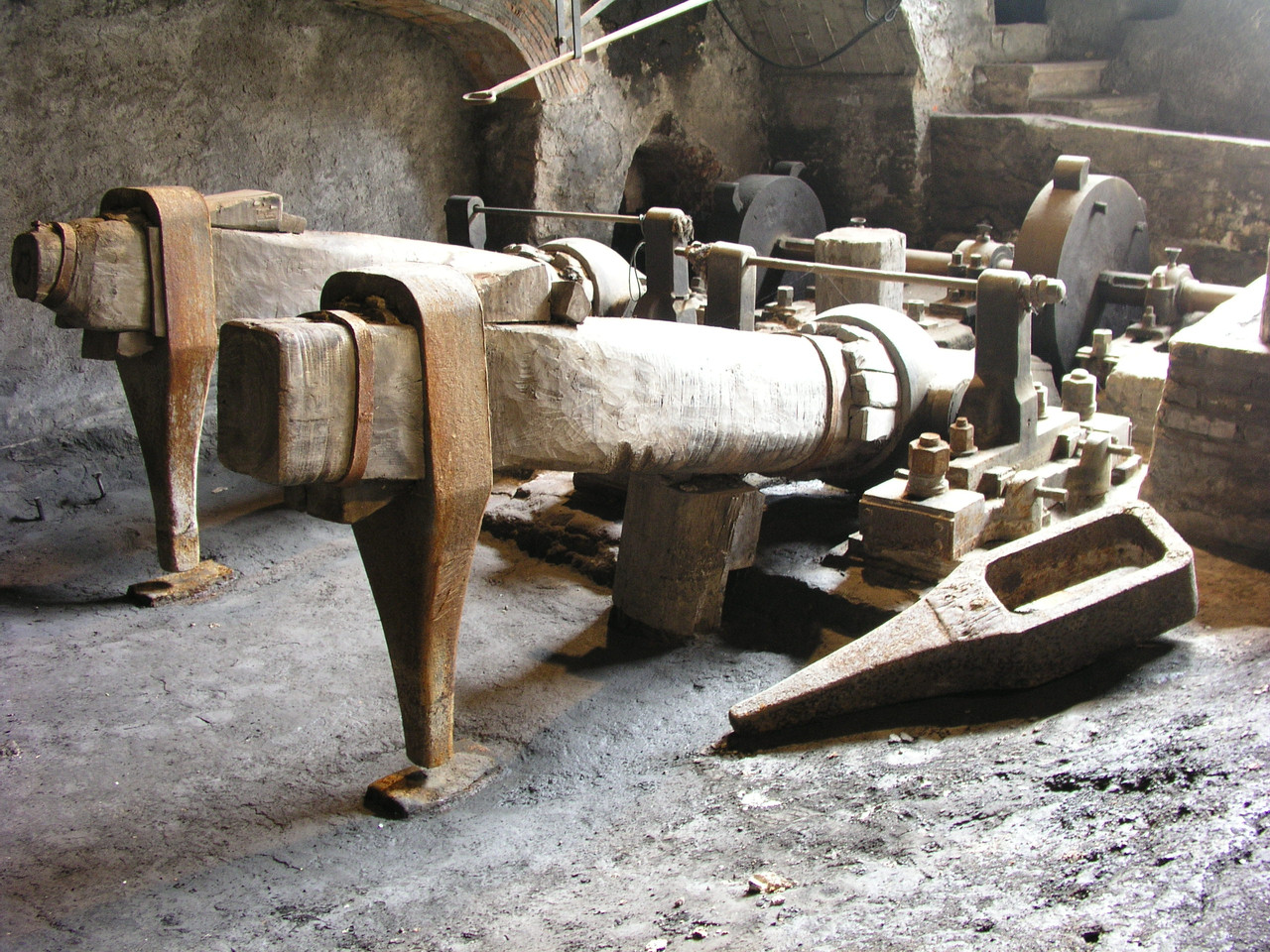
The trip hammer (martinete) was used in the ancient Catalan forge to compact the masser (the bloom or mass of iron), to clear it of slag, and to forge it. It was a device of such considerable dimensions that it required hydraulic energy to operate. It consisted essentially of a hammer that functioned by applying force to the rear end of the handle, acting as a lever to lift it, and then letting the front end—where the head was located—fall upon the masser placed on an anvil."

Source: Ethnographic Museum of Ripoll (Girona, Spain). Section: The Catalan Forge and Iron Metallurgy.
images.jpg

24_Farga_Ripoll_01_Jaume_Matamala.jpg

images(1).jpg


During the height of the Spanish Empire, the province of Girona became the "Silicon Valley" of European metallurgy. Thanks to the Farga Catalana (Catalan Forge), smiths achieved a level of iron purity that was centuries ahead of its time. While this technology forged the legendary weapons of the Tercios, its true heart was in the humble tools of the field—the axes and knives that built a nation. Not to mention the firearms, which were a world-class reference, comparable to the power of the Texan defense industry.

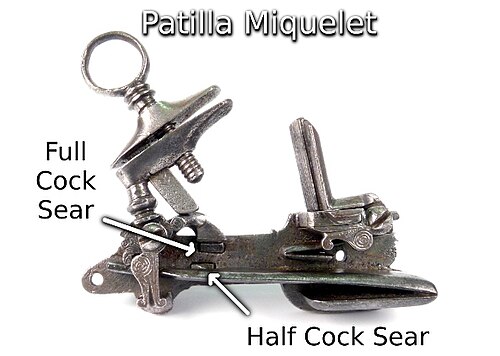
The 'Miquelet Lock' was a radical innovation in firearm ignition systems. This 'Made in Girona/Catalonia' technology dominated the Spanish Empire and spread across the Americas, and even as far as the Ottoman Empire.

Patilla-Style-Miquelet-Lock.jpg


But the innovation didn't stop there. This expertise was perfected in the Basque Country, where ironworking became a global powerhouse. From Basque ports, this superior steel traveled to the Americas. Long before the "Wild West" was won, Basque mariners were using these tools in Canada and the early American frontiers.

In fact, Basque metallurgical support was crucial during the American Revolution; their high-quality blades and bayonets were a silent partner to George Washington. Eventually, the "Basque Method" of refining and forging became so efficient that the rest of Europe began to copy their techniques, cementing Spanish metallurgy as the gold standard of the pre-industrial world.

Interestingly, this journey went both ways during the 19th and early 20th centuries. Basque industrialists traveled to the U.S. to study American manufacturing techniques and brought that industrial expertise back to Spain. This exchange sparked a massive technological leap forward in my country (and others), blending ancient craftsmanship with modern American efficiency.

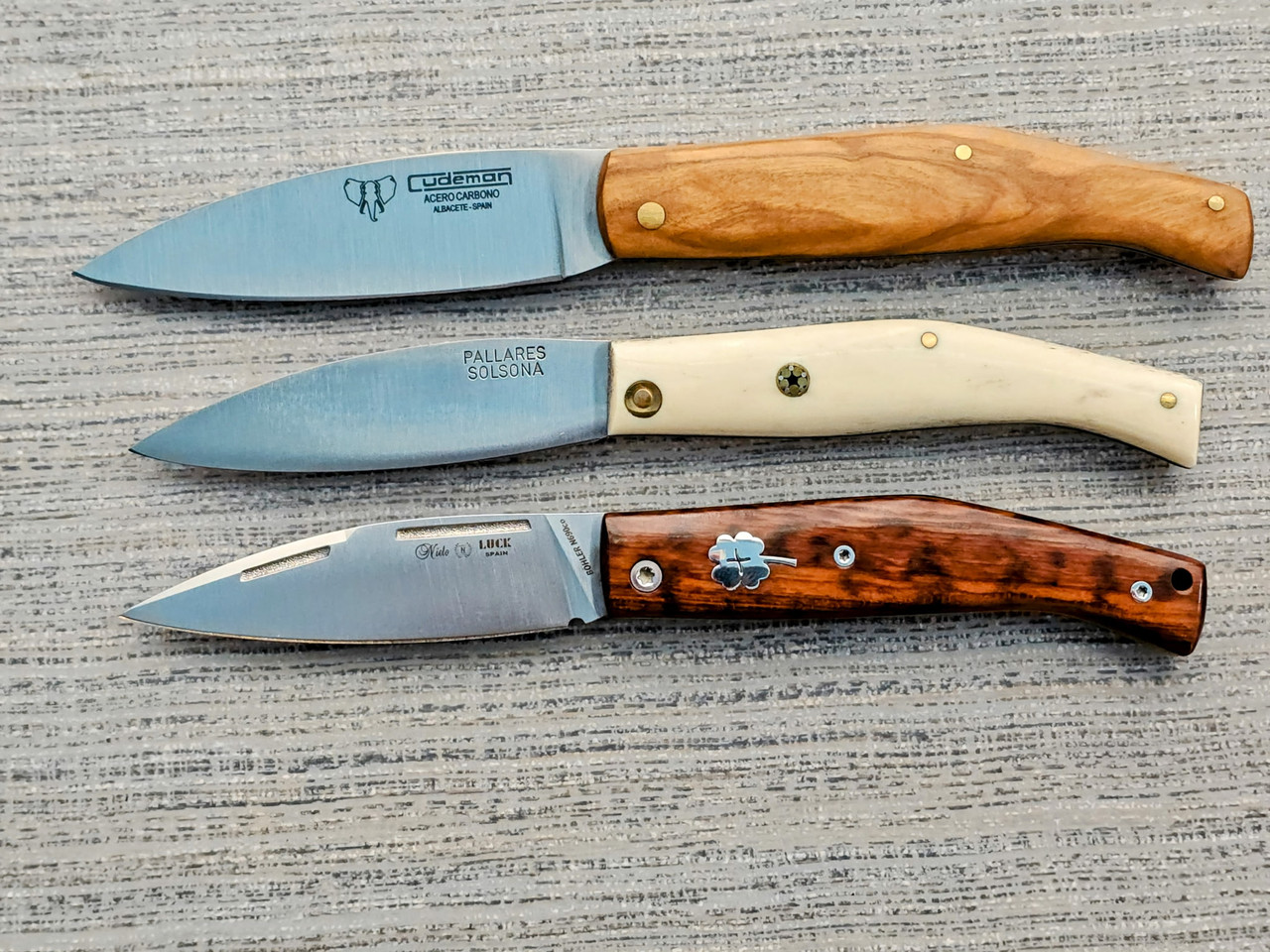
But this history is not just a relic of the past; it breathes today in Spain's vibrant cutlery scene. Prestigious brands like Aitor, renowned for their rugged tactical and survival knives, and Cudeman, famous for their beautiful hunting and outdoor designs, carry the torch of quality.

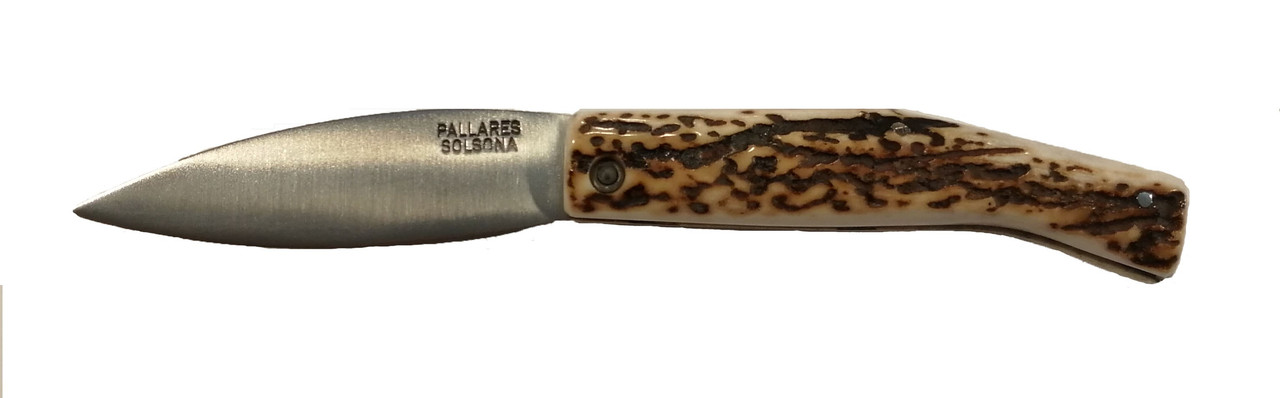
However, if you want to find the true, beating heart of the Girona tradition, you must look at Pallarès in Solsona. If France has the Opinel, Spain has the Pallarès. For generations, these simple, dependable folders have been a ubiquitous presence in the pockets of our grandfathers, from Catalan farmers to urban tradesmen throughout Spain.

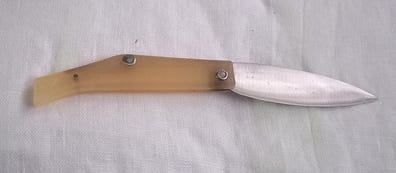
While they are globally recognized for their iconic "electrician's knife" with its utilitarian plastic handle, the true soul of Pallarès lies in their craftsmanship.

4ad83036-be9d-4703-a201-4655e6ac5c09.jpg


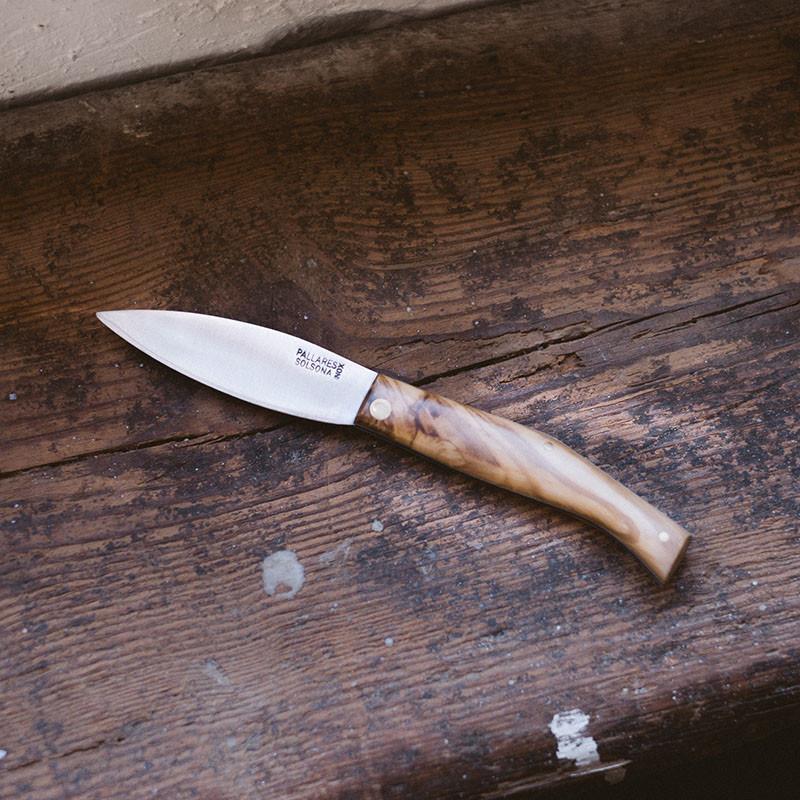
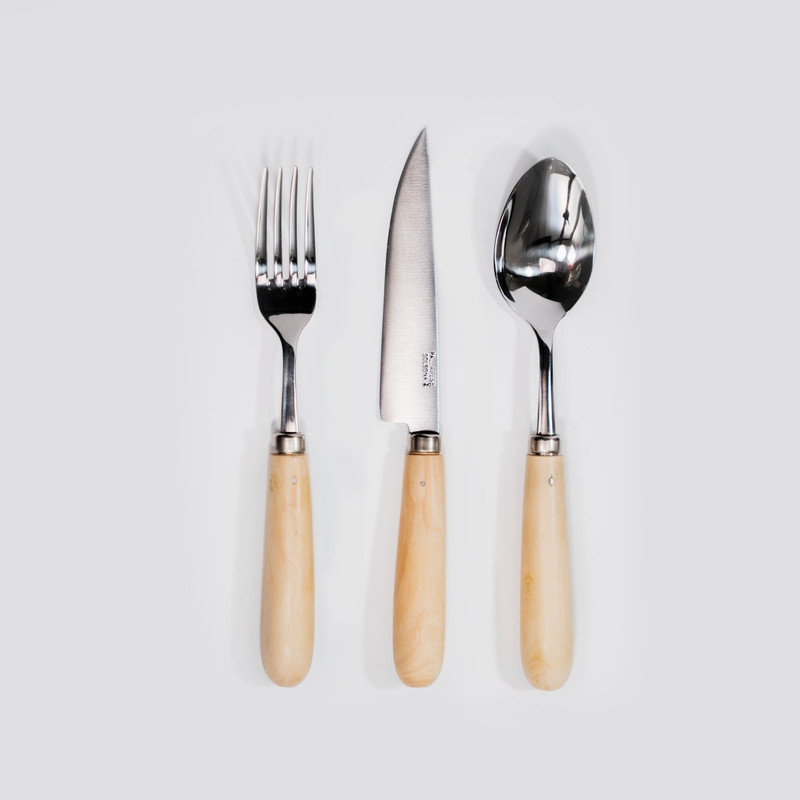
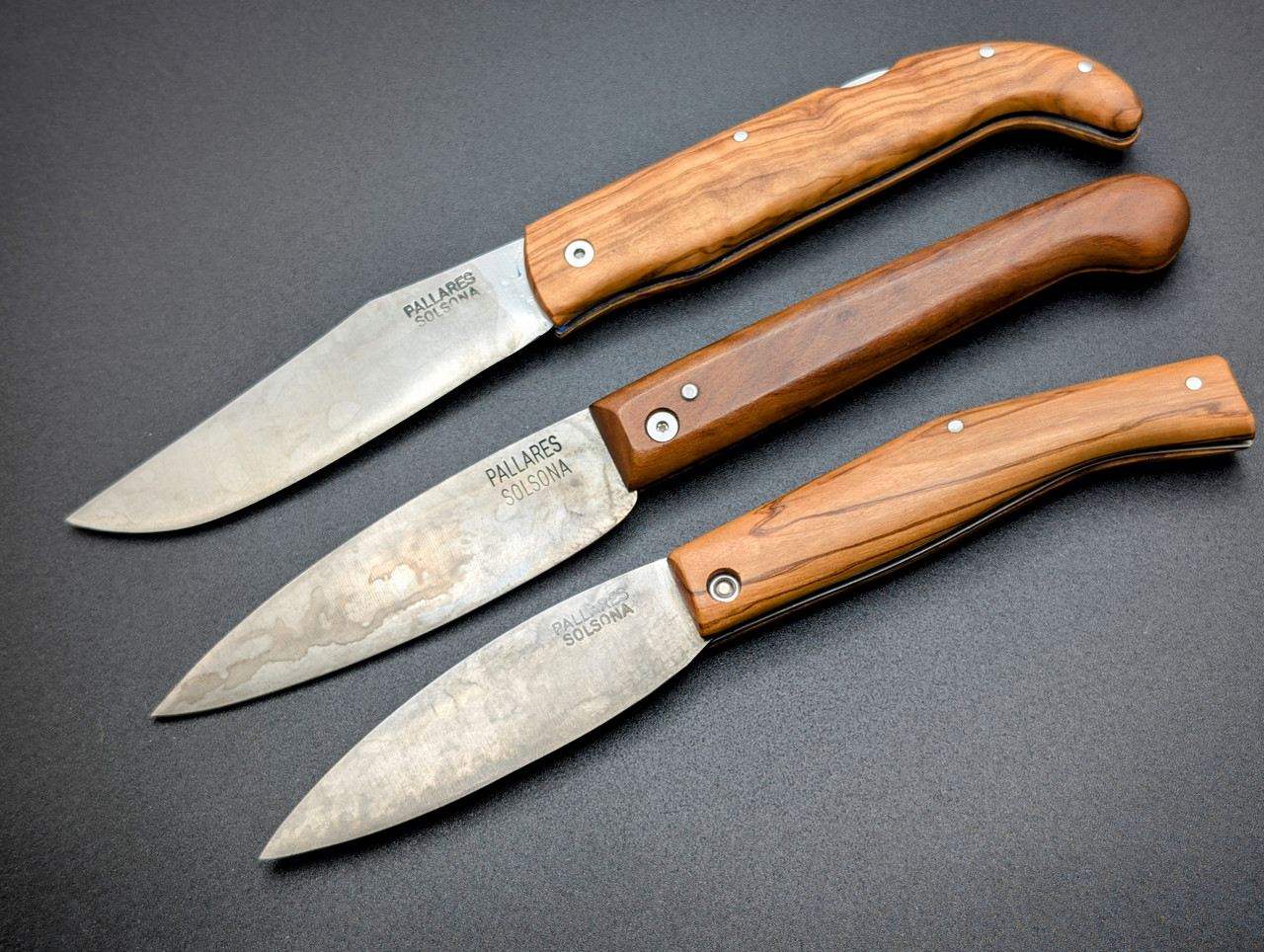
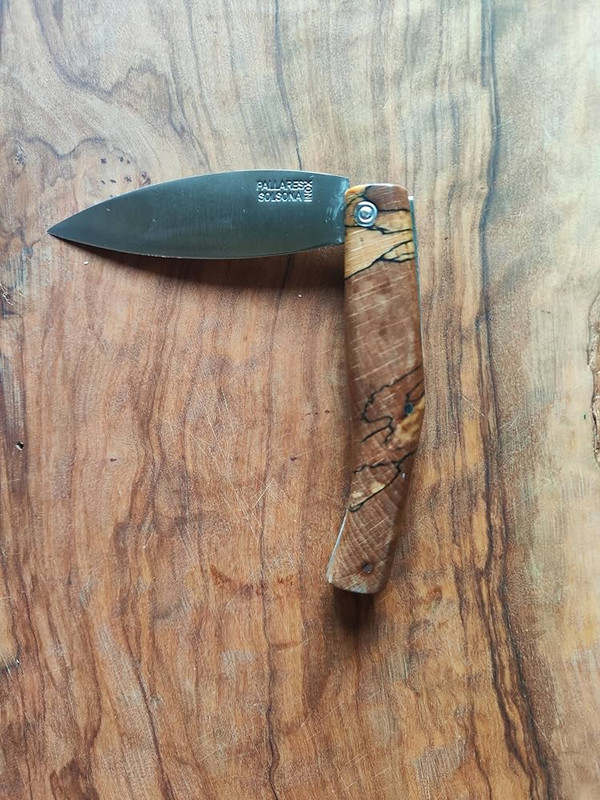
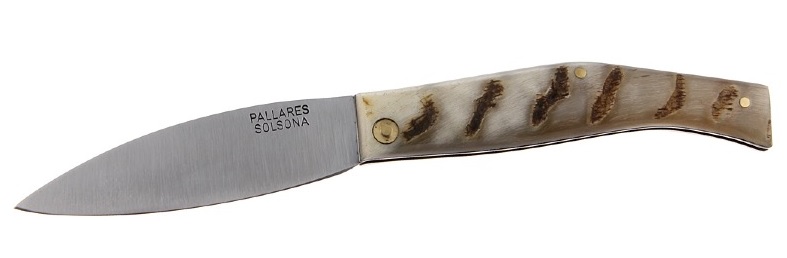
Today, under the direction of David Pallarès, they continue to create pieces that are a delight to the hand and the eye. They offer traditional folders made from noble materials and exquisite carbon steel and wood cutlery sets that are a favorite among discerning home cooks and professional chefs. I like the "Busa"...

91b6m-F0INCL-AC-UF894-1000-QL80.jpg

850013_carnero_5.jpg

navaja_busa_n0_acero_carbono_pallares_solsona_madera_olivo_8_cm.jpg

navaja_pallares_con_mango_de_olivo_633f2d9a_1f39_49b5_a724_784dc82256db.jpg

custom-resized-932d560f-f510-41e6-a90e-05a0e2385809.jpg


These aren't just tools; they are a direct, uninterrupted link to the tradition. For those looking for a piece of truly authentic, vintage-style European heritage, 100% made in Solsona (Girona province), Pallarès is the name 👍

- For the record, the author has no affiliation with this brand; he’s simply been partial to these knives since using them from a very young age 🤣
 
Last edited:
For clarification, is this only about Carbon steel? Knives and swords were produced with iron, copper/brass way before that in many areas throughout the world. There are ancient knives and swords from China, Africa, Greece, Americas etc.
 
For clarification, is this only about Carbon steel? Knives and swords were produced with iron, copper/brass way before that in many areas throughout the world. There are ancient knives and swords from China, Africa, Greece, Americas etc.
Sorry, You're confusing basic blacksmithing with metallurgy. Copper and brass are too soft for functional weaponry; they were displaced by steel because of its carbon content and structural integrity. The pre-industrial debate isn't about who made a knife or swords first, but about the standardization and mass production of high-carbon alloys.
 
Last edited:
And I always thought that metallurgy covered all metals. You learn new things all the time.
 
And I always thought that metallurgy covered all metals. You learn new things all the time.
You’re right by definition, but we are talking about steelwork for building weapons or heavy-duty tools from the 18th century onward. I’ve edited my post to avoid confusion. English isn’t my first language... 👍
 
Interesting read! May I suggest changing the line

"But let’s go back a little further, to the 18th century, which is where things get really interesting:"

Going back further implies traveling back further in time from the point that was previously under discussion. You jumped ahead from "When Rome ruled the world", not back further. As a pretty particular native English speaker, this was the only problem I noticed in the article. :)
 
Interesting read! May I suggest changing the line

"But let’s go back a little further, to the 18th century, which is where things get really interesting:"

Going back further implies traveling back further in time from the point that was previously under discussion. You jumped ahead from "When Rome ruled the world", not back further. As a pretty particular native English speaker, this was the only problem I noticed in the article. :)
A slip-up with my English.
 
Many thanks for an enthusiastic and illuminating post. I particularly like the Pallarès knives as they combine form&function very well indeed. I have a Busa in Ram's Horn which is an excellent slicer and a convenient size, recently I got hold of a couple of the plastic handled ones from a dealer in France-but he messed up my order and I'll have to look elsewhere. I really like these simple plastic/resin coloured handles and the blades are razor sharp on arrival, rustic style and totally authentic .

Couple of weeks back I ordered a steel de Buyer frying pan, a Clock timer and an Office Kitchen knife from an outfit in Spain. So nice to be able to buy quality European goods, the frying pan from France, Clock timer Germany and the Office knife an Ebony handled Pallarès Solsona in stainless, from Catalonia all to here in Finland. The Office knife is really practical and efficient, wonderful to maintain a tradition in knife & tool making from 1917 to this date, good quality reasonable prices.

Here an Aitor

r2dIVez.jpg


Thanks, Will
 
Last edited:
Will Power Will Power - trying to send you a message but won't go through...........subs..? (unless you're blocking just me..!)
 
Last edited:
In this post, I’m going to show the modern origins (18th Century) of knife, axe and sword making. The modern manufacturing definitely has its roots in Europe and the U.S., but I think it’s interesting to see the path that led to the tools we carry today.

I’ve put this thread together with total humility, based on verifiable historical facts, and without discounting the many influences from other nations over the centuries. At the same time, I can’t hide my excitement in discovering that these origins lie just a few hundred miles from my hometown, right here in my own country.

I am Spanish and I live in the province of Barcelona, although the focus of my research is the province of Girona, also here in the Autonomous Community of Catalonia.

IMG-20260318-095819.jpg


Before Rome ruled the world, they met their match in the Iberian Peninsula. The weapon that haunted their nightmares was the Falcata—a brutal, forward-curving blade that hit with the power of an axe but cut like a razor. It was famous for splitting Roman helmets in a single strike.

The Romans were so impressed (and terrified) that they didn't just copy the carbon steel; they adopted the Gladius Hispaniensis (the Spanish Sword) as their standard weapon. This wasn't just a change in gear—it was the birth of Western military supremacy, built on the superior carbon steel and forging techniques of ancient Spain.

figura-1.jpg


But let’s go forward a little further, to the 18th century, which is where things get really interesting:

"From the Middle Ages until the 19th century, Western European countries—France, England, Austria, and Italy, among others—obtained iron using the metallurgical method known worldwide as the 'Catalan process' or 'Catalan forge.' The natural resources essential for its operation, namely iron ore, wood for charcoal (for the furnaces), and water (used as driving force), were found in abundance in our region where, up until the 18th century, more than twenty forges have been documented.

farga1.jpg


The trip hammer (martinete) was used in the ancient Catalan forge to compact the masser (the bloom or mass of iron), to clear it of slag, and to forge it. It was a device of such considerable dimensions that it required hydraulic energy to operate. It consisted essentially of a hammer that functioned by applying force to the rear end of the handle, acting as a lever to lift it, and then letting the front end—where the head was located—fall upon the masser placed on an anvil."

Source: Ethnographic Museum of Ripoll (Girona, Spain). Section: The Catalan Forge and Iron Metallurgy.

images.jpg

24_Farga_Ripoll_01_Jaume_Matamala.jpg

images(1).jpg


During the height of the Spanish Empire, the province of Girona became the "Silicon Valley" of European metallurgy. Thanks to the Farga Catalana (Catalan Forge), smiths achieved a level of iron purity that was centuries ahead of its time. While this technology forged the legendary weapons of the Tercios, its true heart was in the humble tools of the field—the axes and knives that built a nation. Not to mention the firearms, which were a world-class reference, comparable to the power of the Texan defense industry.

The 'Miquelet Lock' was a radical innovation in firearm ignition systems. This 'Made in Girona/Catalonia' technology dominated the Spanish Empire and spread across the Americas, and even as far as the Ottoman Empire.
Patilla-Style-Miquelet-Lock.jpg


But the innovation didn't stop there. This expertise was perfected in the Basque Country, where ironworking became a global powerhouse. From Basque ports, this superior steel traveled to the Americas. Long before the "Wild West" was won, Basque mariners were using these tools in Canada and the early American frontiers.

In fact, Basque metallurgical support was crucial during the American Revolution; their high-quality blades and bayonets were a silent partner to George Washington. Eventually, the "Basque Method" of refining and forging became so efficient that the rest of Europe began to copy their techniques, cementing Spanish metallurgy as the gold standard of the pre-industrial world.

Interestingly, this journey went both ways during the 19th and early 20th centuries. Basque industrialists traveled to the U.S. to study American manufacturing techniques and brought that industrial expertise back to Spain. This exchange sparked a massive technological leap forward in my country (and others), blending ancient craftsmanship with modern American efficiency.

But this history is not just a relic of the past; it breathes today in Spain's vibrant cutlery scene. Prestigious brands like Aitor, renowned for their rugged tactical and survival knives, and Cudeman, famous for their beautiful hunting and outdoor designs, carry the torch of quality.

However, if you want to find the true, beating heart of the Girona tradition, you must look at Pallarès in Solsona. If France has the Opinel, Spain has the Pallarès. For generations, these simple, dependable folders have been a ubiquitous presence in the pockets of our grandfathers, from Catalan farmers to urban tradesmen throughout Spain.

While they are globally recognized for their iconic "electrician's knife" with its utilitarian plastic handle, the true soul of Pallarès lies in their craftsmanship.
4ad83036-be9d-4703-a201-4655e6ac5c09.jpg


Today, under the direction of David Pallarès, they continue to create pieces that are a delight to the hand and the eye. They offer traditional folders made from noble materials and exquisite carbon steel and wood cutlery sets that are a favorite among discerning home cooks and professional chefs. I like the "Busa"...
91b6m-F0INCL-AC-UF894-1000-QL80.jpg

850013_carnero_5.jpg

navaja_busa_n0_acero_carbono_pallares_solsona_madera_olivo_8_cm.jpg

navaja_pallares_con_mango_de_olivo_633f2d9a_1f39_49b5_a724_784dc82256db.jpg

custom-resized-932d560f-f510-41e6-a90e-05a0e2385809.jpg


These aren't just tools; they are a direct, uninterrupted link to the tradition. For those looking for a piece of truly authentic, vintage-style European heritage, 100% made in Solsona (Girona province), Pallarès is the name 👍

- For the record, the author has no affiliation with this brand; he’s simply been partial to these knives since using them from a very young age 🤣
- fascinating article F Falcata ........thank you for putting it all together 👍

We have a guy in UK who studies and writes on such things too - once attended a talk he gave on Saxon twisted-pattern damascus swords - utterly amazing how they managed to produce such skillfully made swords and knives with the most basic of tools and materials.
 
Will Power Will Power - trying to send you a message but won't go through...........subs..? (unless you're blocking just me..!)
I am a new member with limited privileges. I don’t even know how to block other users. I don’t know what the problem is ☝
 
Last edited:
- fascinating article F Falcata ........thank you for putting it all together 👍

We have a guy in UK who studies and writes on such things too - once attended a talk he gave on Saxon twisted-pattern damascus swords - utterly amazing how they managed to produce such skillfully made swords and knives with the most basic of tools and materials.
I’ve even read that some Iberians buried the ore to use only the parts that didn’t oxidize. The Iberians were largely Celtiberians (Celts from the peninsula that includes Portugal, Spain, and Andorra). We know very little about them because Roman culture was so advanced and appealing that their own culture was overshadowed. And we don’t complain about being conquered like others do; on the contrary, we feel proud of our Latin culture from the Roman people.

Here, incredible discoveries are being made that many European peoples probably practiced as well. For example, prehistoric ship anchors have been found in the Strait of Gibraltar and the Azores, suggesting ongoing maritime activity. They weren’t as “primitive” as people once thought…

I believe what we call globalization has very ancient roots. In places like Menorca and Ibiza, objects have been found that ultimately originated in Egypt, which shows that long-distance exchange networks were already in place.

Across the Mediterranean—and likely much of Europe—there were established trade and cultural routes connecting different peoples. These contacts didn’t just involve goods, but also the exchange of ideas, technologies, and artistic influences.
Of course, this wasn’t globalization in the modern sense, but rather a complex web of regional interactions that, over time, linked distant societies more than we often assume.
 
Last edited:
Many thanks for an enthusiastic and illuminating post. I particularly like the Pallarès knives as they combine form&function very well indeed. I have a Busa in Ram's Horn which is an excellent slicer and a convenient size, recently I got hold of a couple of the plastic handled ones from a dealer in France-but he messed up my order and I'll have to look elsewhere. I really like these simple plastic/resin coloured handles and the blades are razor sharp on arrival, rustic style and totally authentic .

Couple of weeks back I ordered a steel de Buyer frying pan, a Clock timer and an Office Kitchen knife from an outfit in Spain. So nice to be able to buy quality European goods, the frying pan from France, Clock timer Germany and the Office knife an Ebony handled Pallarès Solsona in stainless, from Catalonia all to here in Finland. The Office knife is really practical and efficient, wonderful to maintain a tradition in knife & tool making from 1917 to this date, good quality reasonable prices.

Here an Aitor

r2dIVez.jpg


Thanks, Will
The Pallarès family worked for other workshops before starting their own family business (before the beginning of the 20th century). Back then, having a commercial brand wasn’t very common; usually just some initials and a quality mark.

I love that we Europeans use suppliers from different countries. I’ve bought something from Germany, but the websites are in German and it’s quite a hassle… We need to come to an agreement to improve our internal trade.

If you need anything from here, I can help you without any problem. Most online stores are completely legitimate. The only downside is the shipping costs… We also have some second-hand apps (Wallapop) where you can find really good bargains, but they only work between Italy, Portugal, and Spain.
 
Last edited:
F Falcata I really enjoy your thread! I don't really have anything to add to the history of the metallurgy aspect but for a while I was very interested in the history of cutlery from the Iberian Peninsula.

Pallares is one of my favorites and I had the good fortune to have brief correspondence with David Pallares a few years back. It was surprising to me that he spoke with me directly. They must be a small operation, but they make fantastic knives.


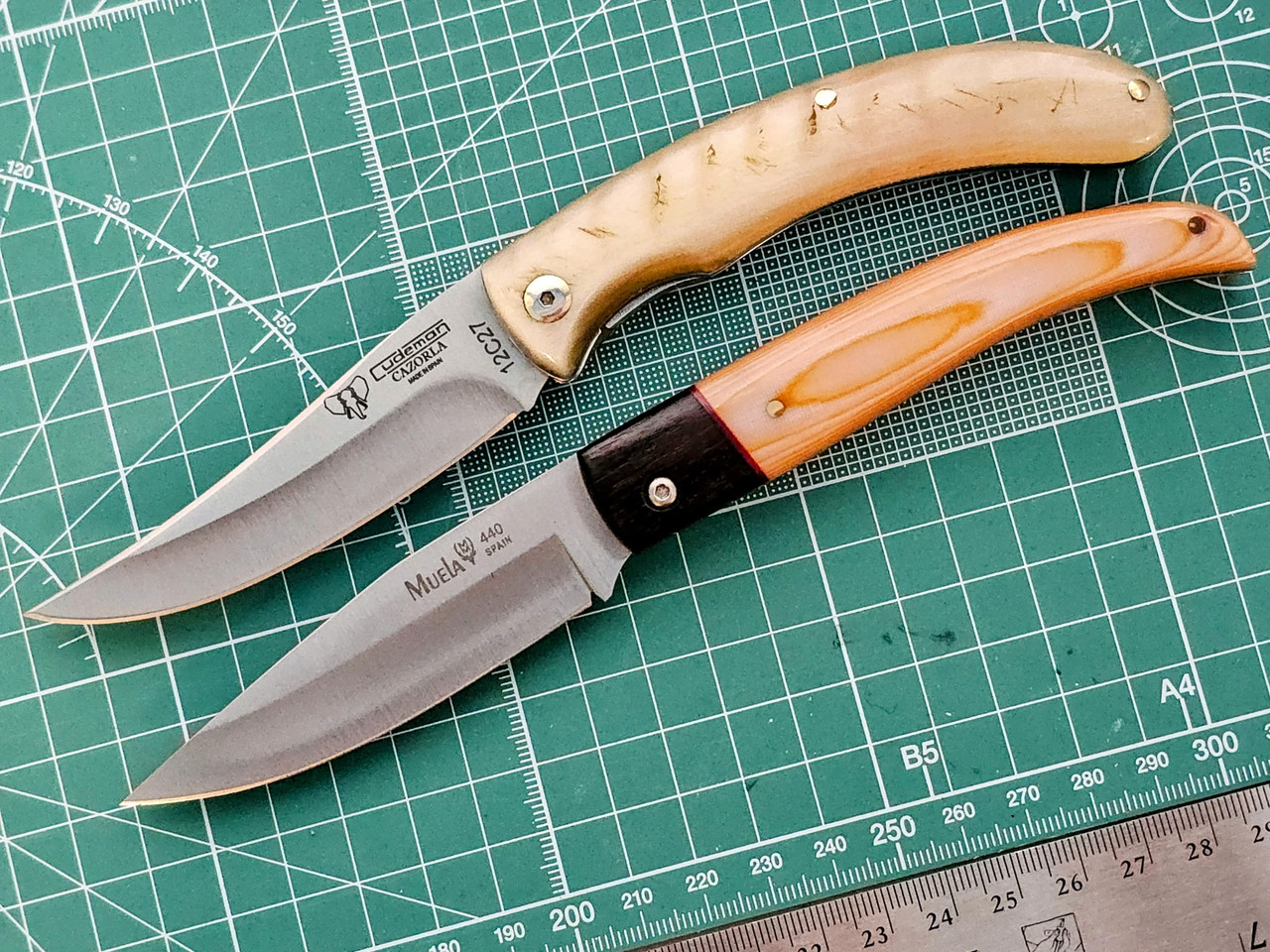
When it comes to modern Spanish manufacturing, I've been impressed with Nieto as well as Muela.


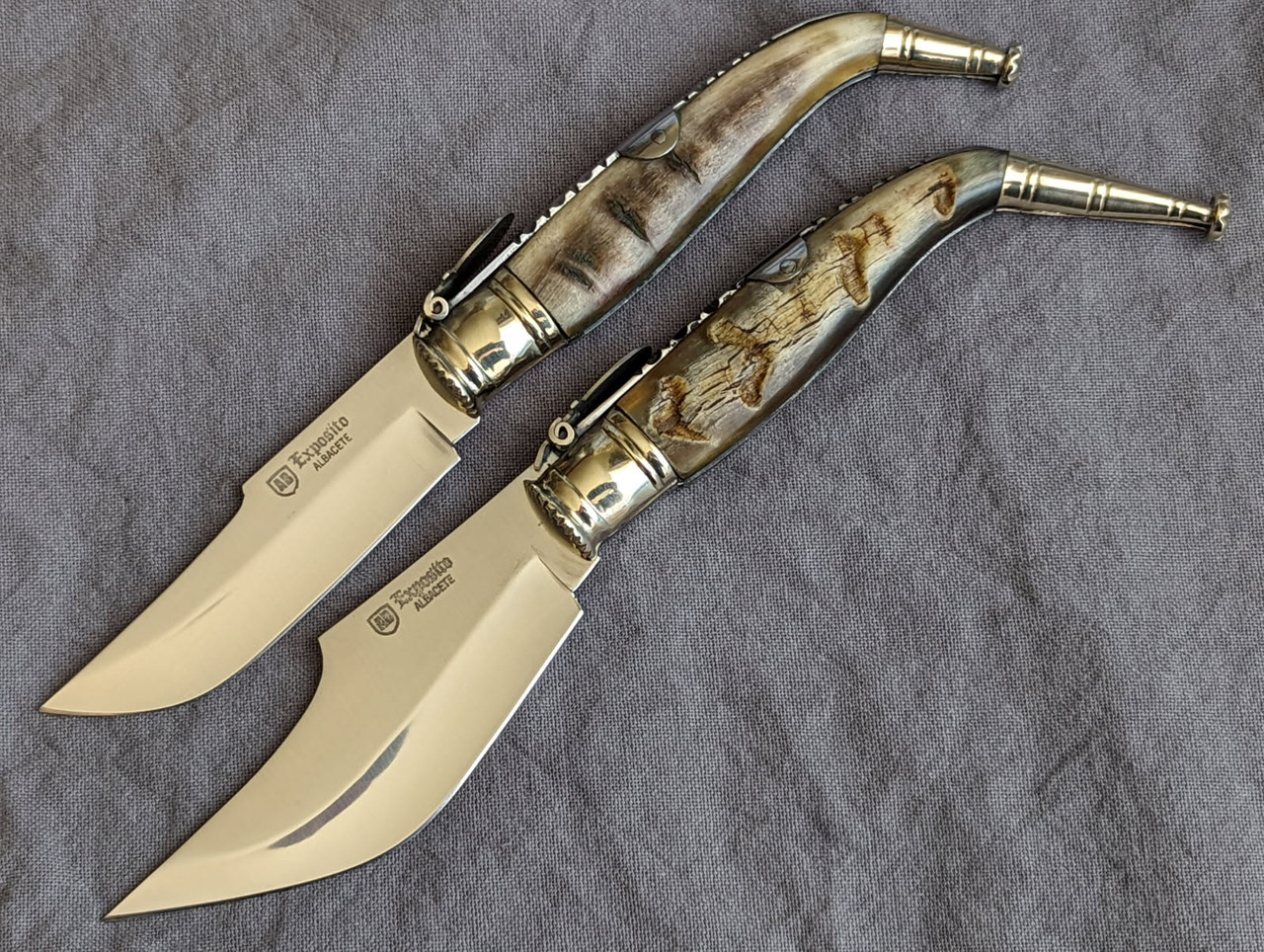
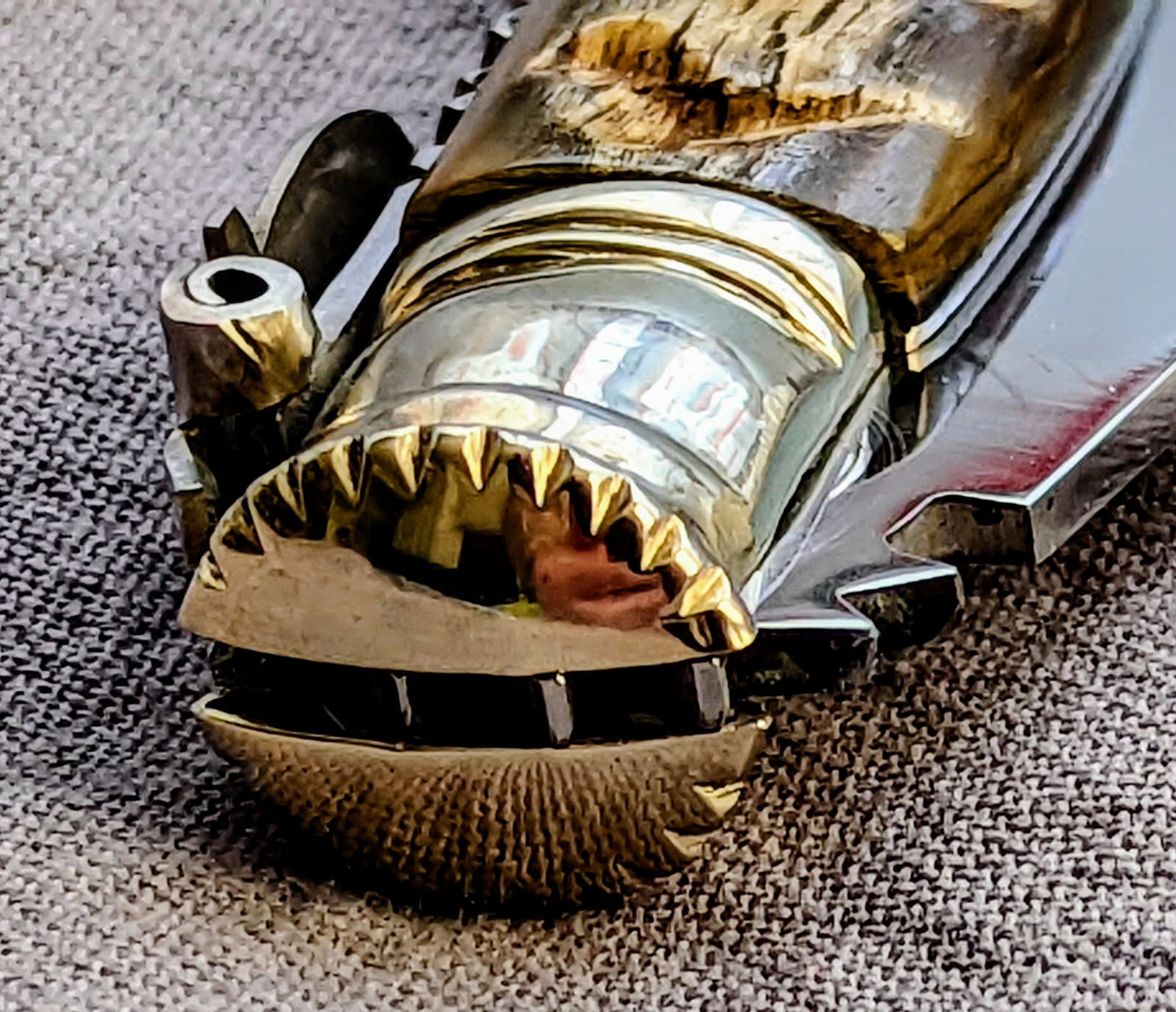
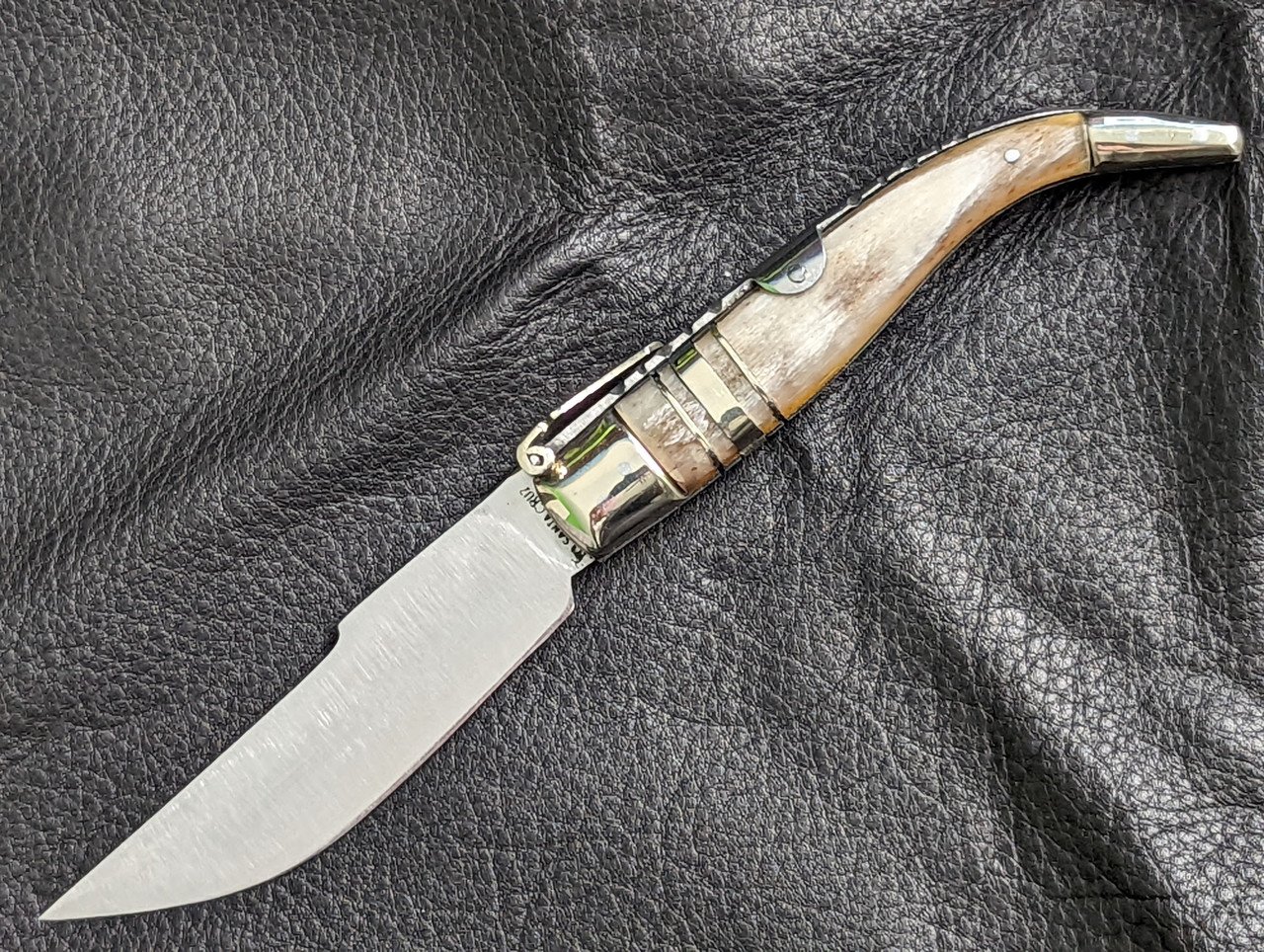
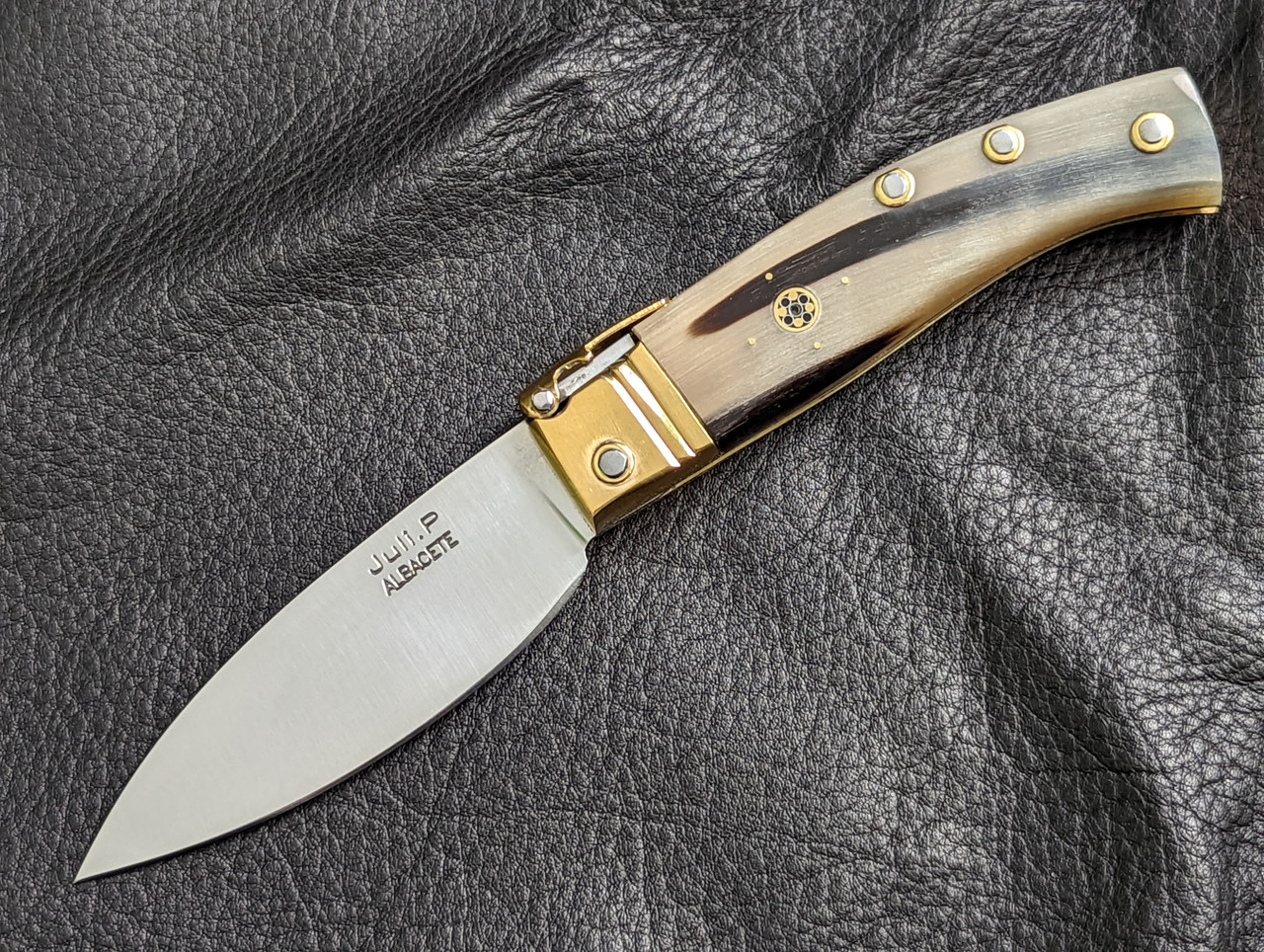
Please correct me if I am wrong, but it is my understanding that Albacete Spain was once the heart of Spanish knife making. This is where the Spanish navaja originated from in the 17th century. From what I have read, they also created the first locking mechanism. Similar to a back lock, but the spring was formed on top of the handle. A ring was later added to aid in closing the knife, and then eventually became a spring lifter flap called a palanquilla.

When I first thought of the classic Spanish navaja, this springs to mind. The top one is called an Albaceteña and the lower a Bandolera. Although more of a modern novelty version, they both feature the carraca ratcheting teeth and are quite capable pocket knives.


Very similar to the Albaceteña, when made in Santa Cruz de Mudela, it is called an Estaje.


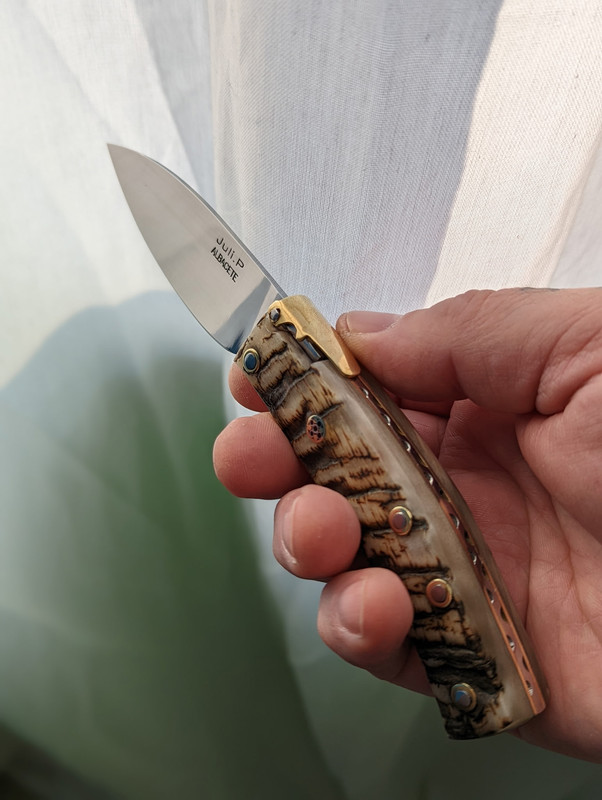
I have sometimes heard Spanish collectors refer to the the Pallares busa knife as the Catalonian and sometimes the French style knife. Probably due to the French influence from the other side of the Pyrenees.

This one has a very similar shape.


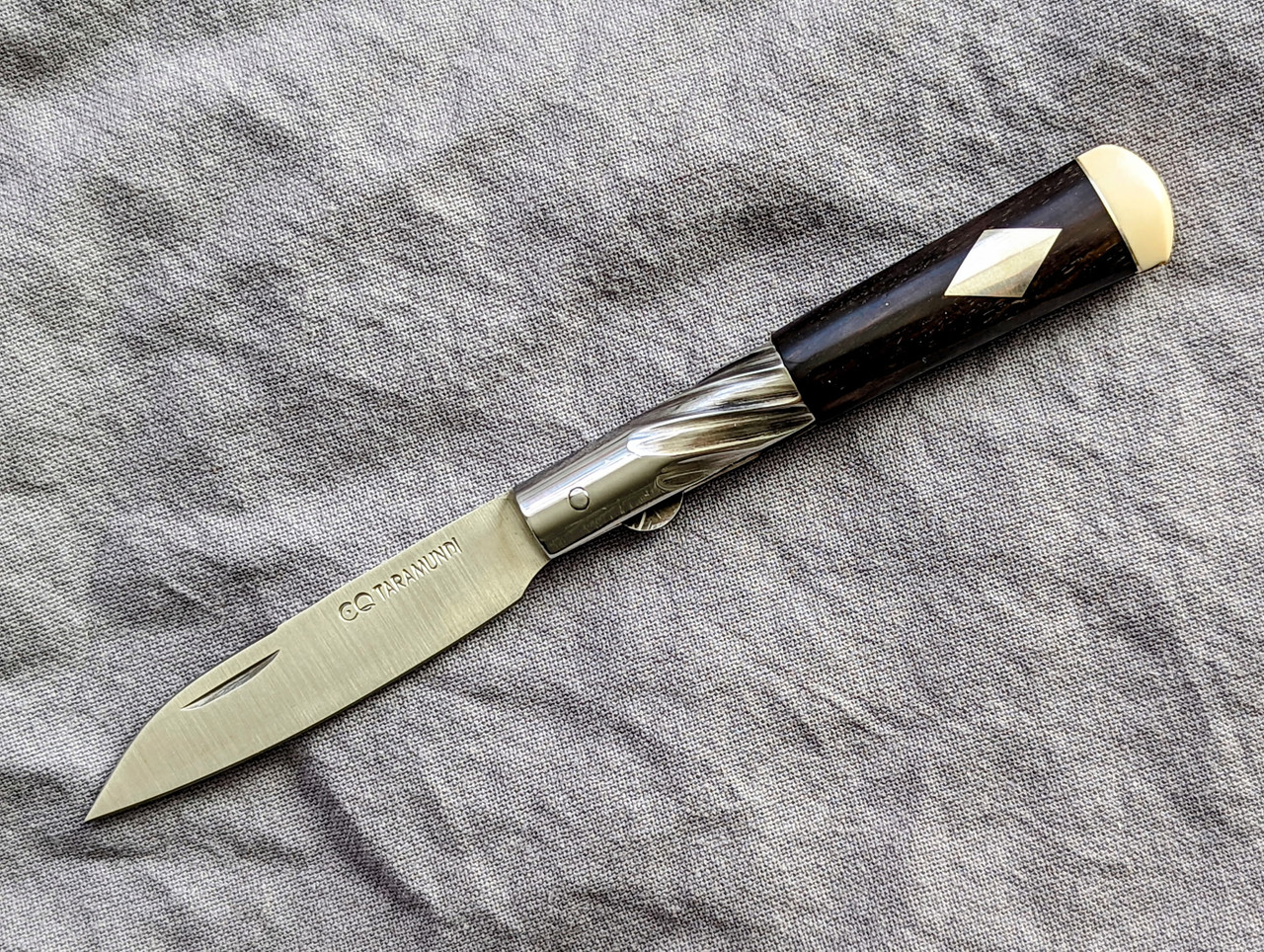
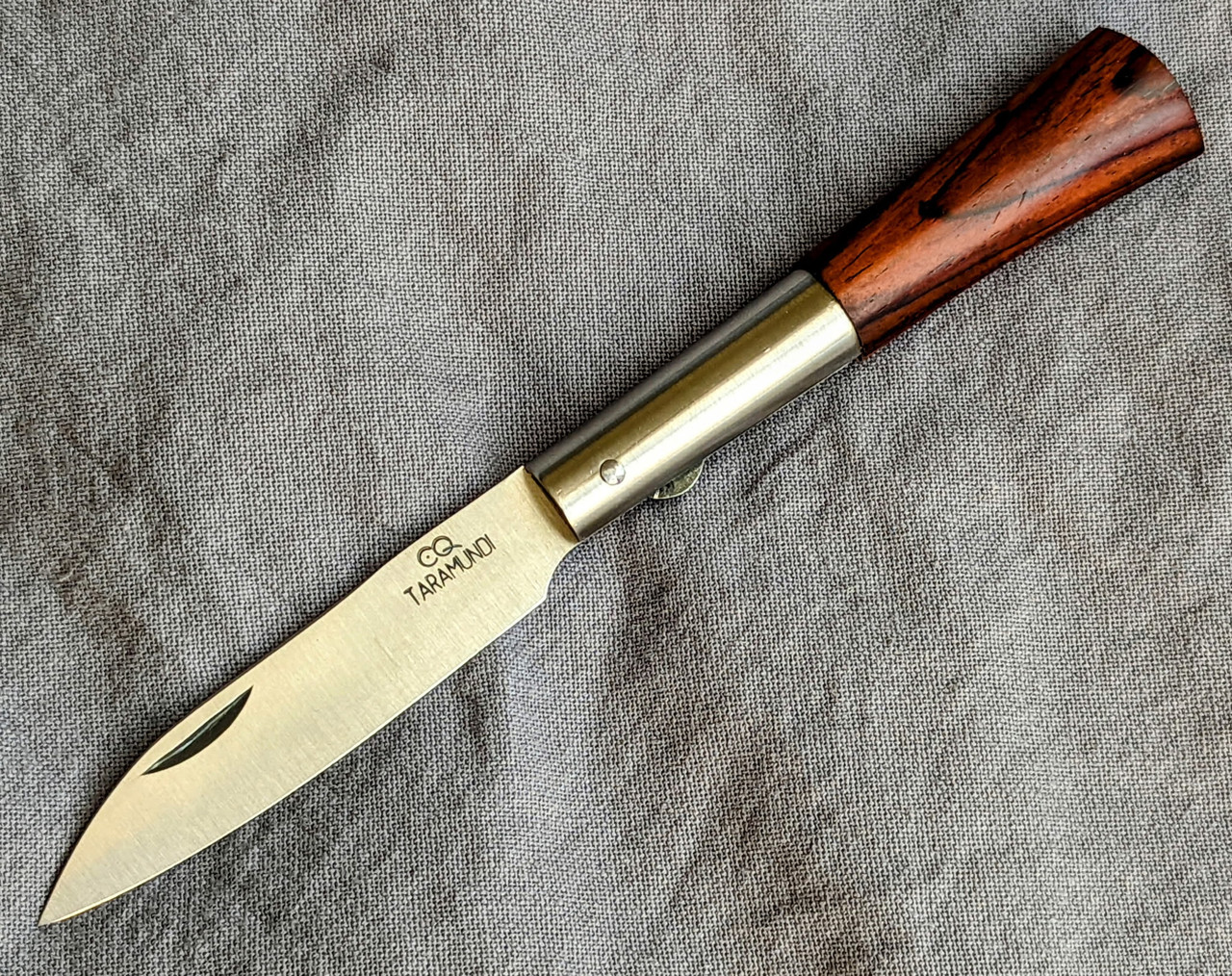
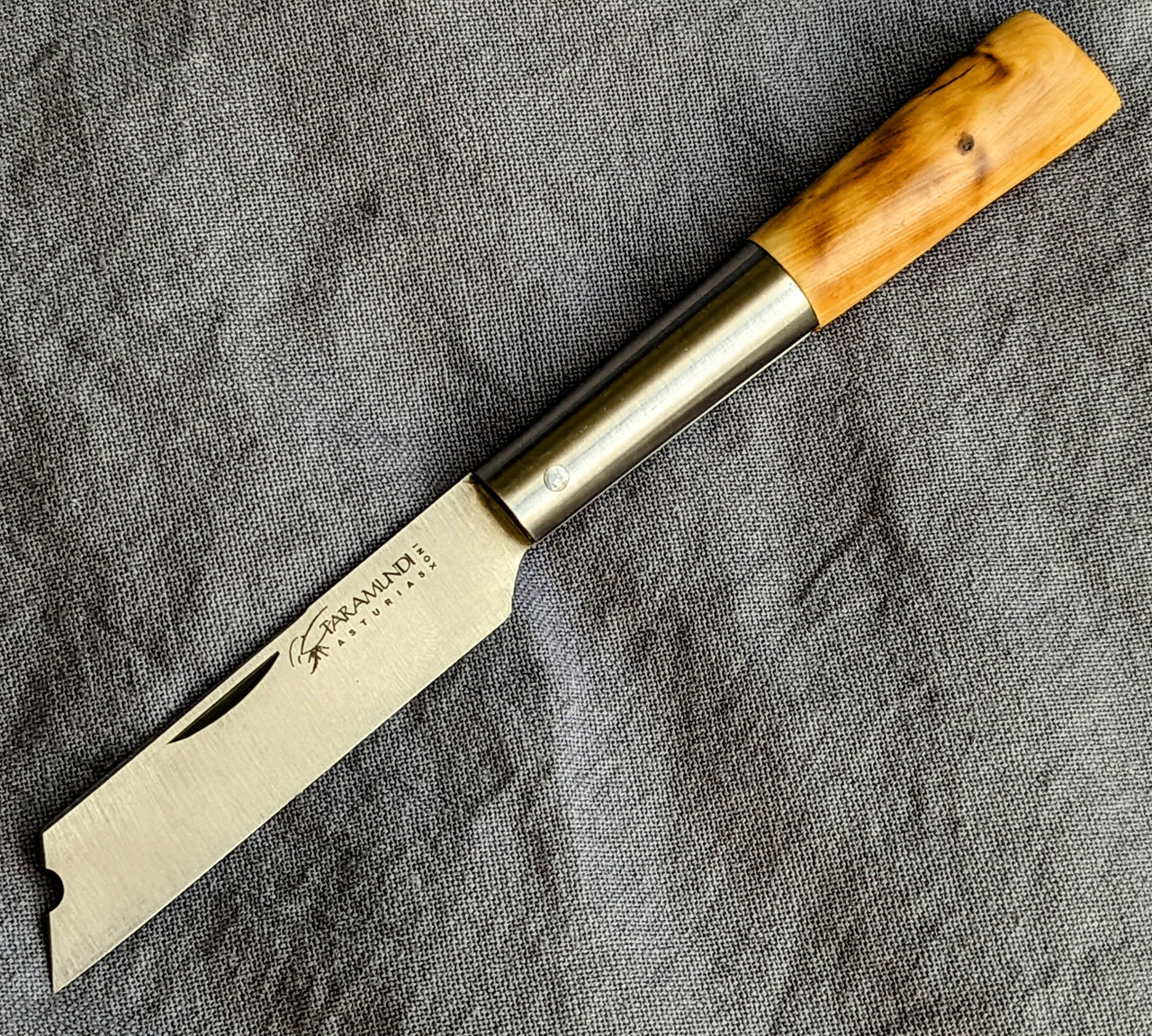
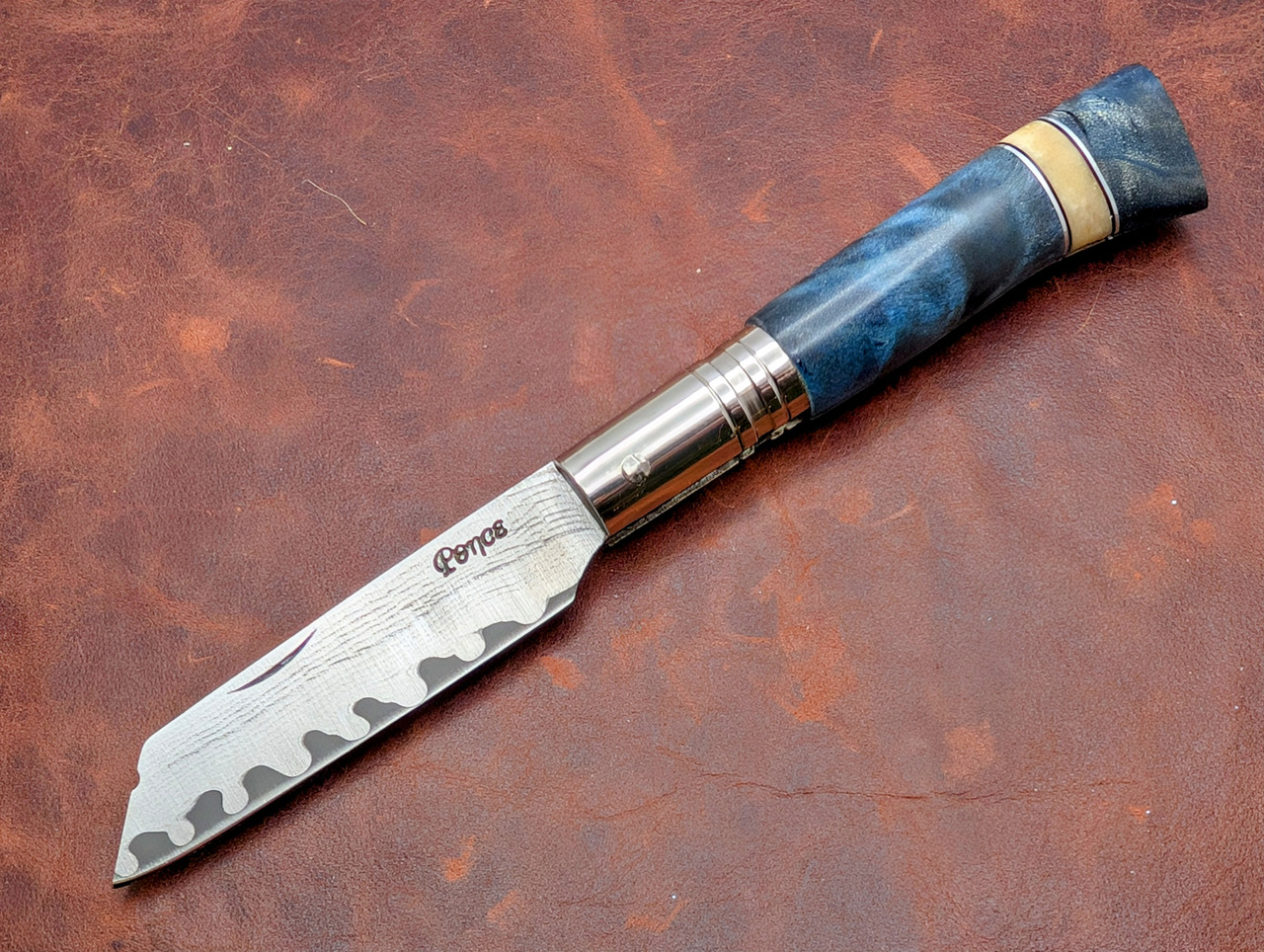
From what I have seen in the past few years is that the makers of the traditional Spanish knives from Albacete and Santa Cruz de Mudela are disappearing at an alarming rate. There does still appear to be many makers of the Taramundi which are from Asturias. There is quite a wide variety in quality and materials. Something for every taste!


Hope I didn't detail the thread too much.
 
F Falcata I really enjoy your thread! I don't really have anything to add to the history of the metallurgy aspect but for a while I was very interested in the history of cutlery from the Iberian Peninsula.

Pallares is one of my favorites and I had the good fortune to have brief correspondence with David Pallares a few years back. It was surprising to me that he spoke with me directly. They must be a small operation, but they make fantastic knives.


When it comes to modern Spanish manufacturing, I've been impressed with Nieto as well as Muela.


Please correct me if I am wrong, but it is my understanding that Albacete Spain was once the heart of Spanish knife making. This is where the Spanish navaja originated from in the 17th century. From what I have read, they also created the first locking mechanism. Similar to a back lock, but the spring was formed on top of the handle. A ring was later added to aid in closing the knife, and then eventually became a spring lifter flap called a palanquilla.

When I first thought of the classic Spanish navaja, this springs to mind. The top one is called an Albaceteña and the lower a Bandolera. Although more of a modern novelty version, they both feature the carraca ratcheting teeth and are quite capable pocket knives.


Very similar to the Albaceteña, when made in Santa Cruz de Mudela, it is called an Estaje.


I have sometimes heard Spanish collectors refer to the the Pallares busa knife as the Catalonian and sometimes the French style knife. Probably due to the French influence from the other side of the Pyrenees.

This one has a very similar shape.


From what I have seen in the past few years is that the makers of the traditional Spanish knives from Albacete and Santa Cruz de Mudela are disappearing at an alarming rate. There does still appear to be many makers of the Taramundi which are from Asturias. There is quite a wide variety in quality and materials. Something for every taste!


Hope I didn't detail the thread too much.
What a collection! You’ve got everything, and only the best. And you're right, Muela, Julián Panadero and Cudeman are incredible—their limited editions are almost too beautiful to actually use 🤣. They’re true works of craftsmanship. I love your Albaceteña; it’s the dream traditional folding knife. And yes, Albacete really is the Thiers of Spain. Most Taramundi knives actually use blades from there.

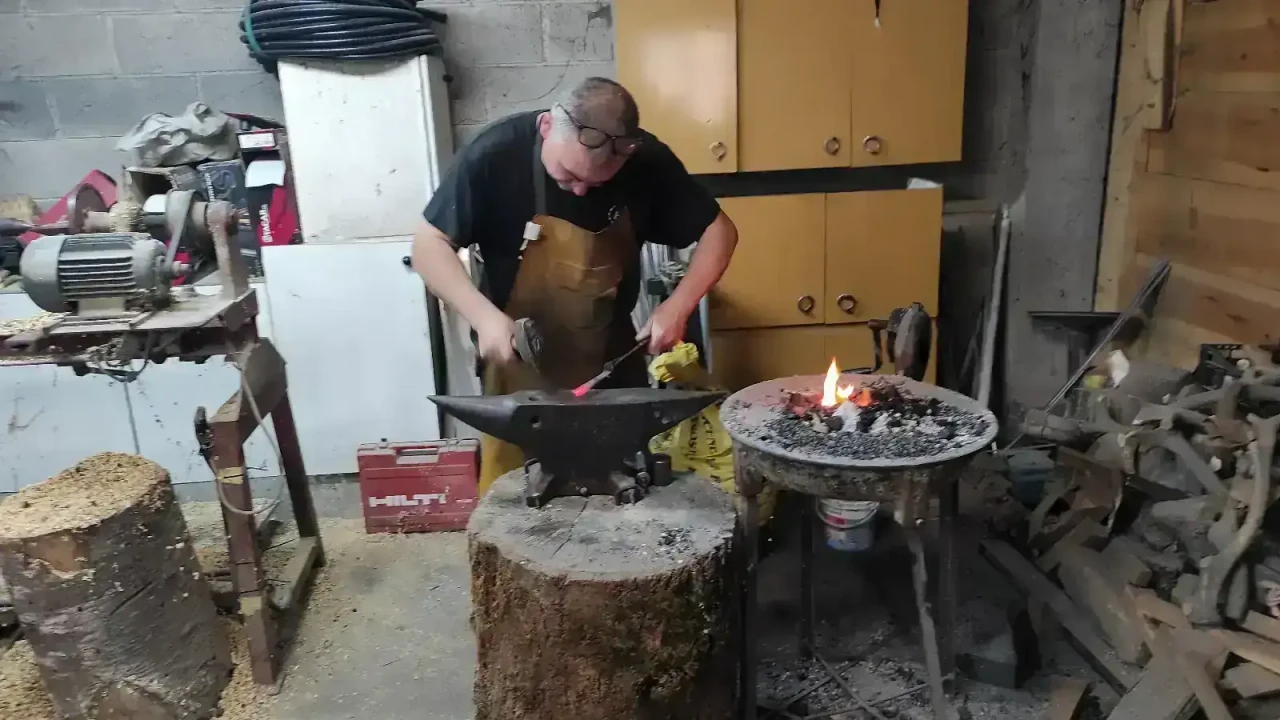
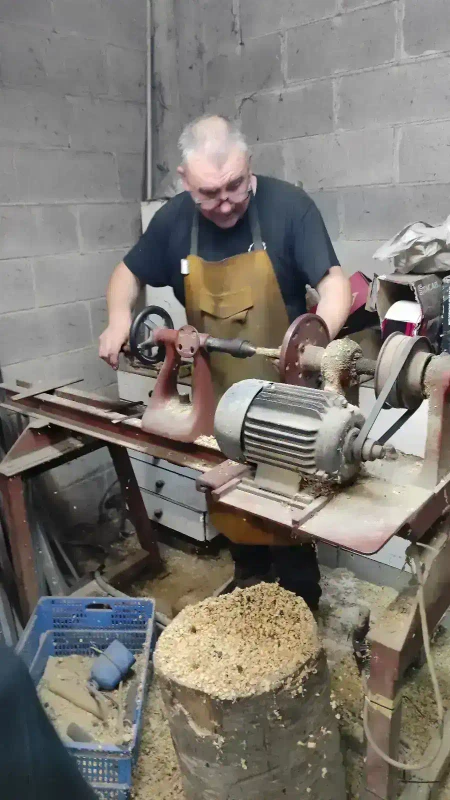
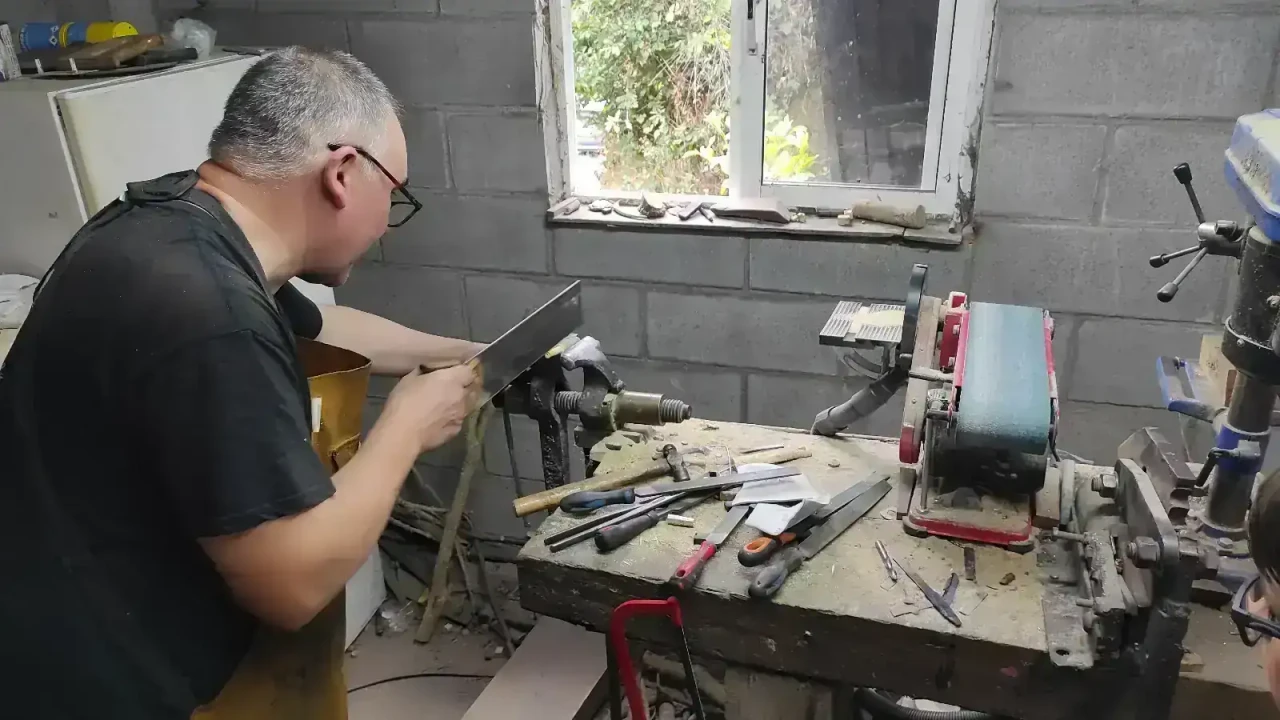
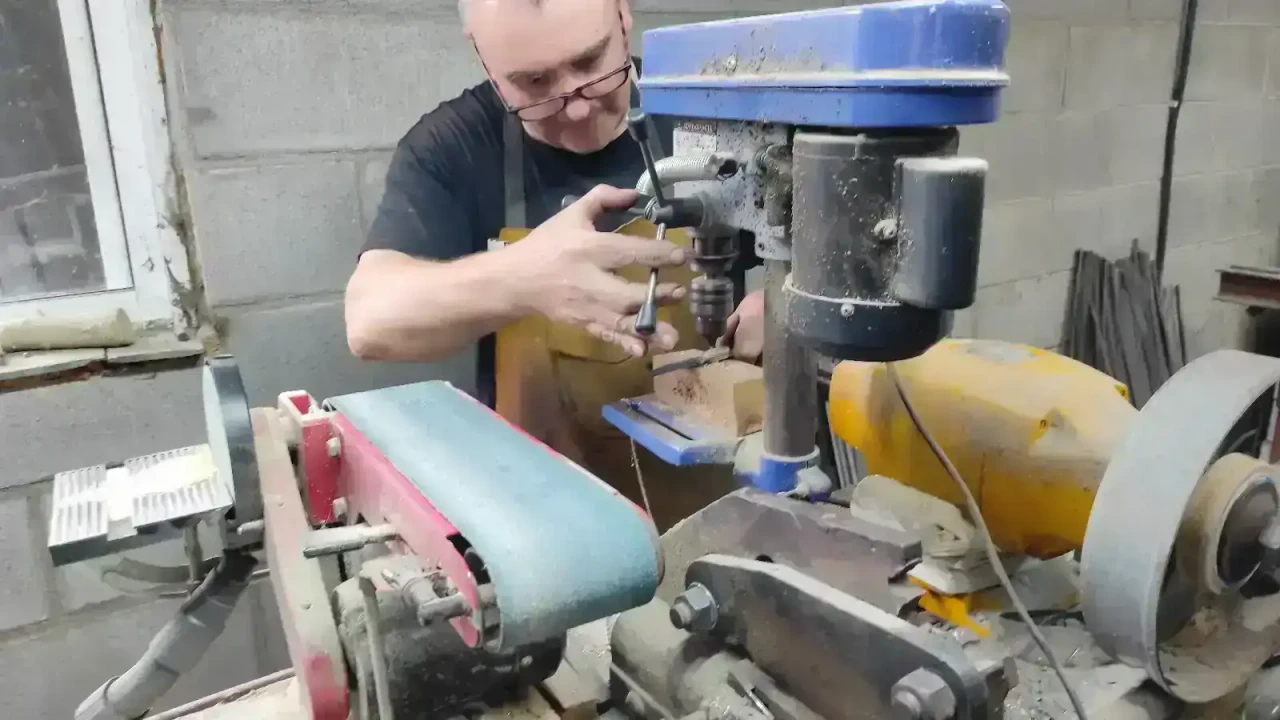
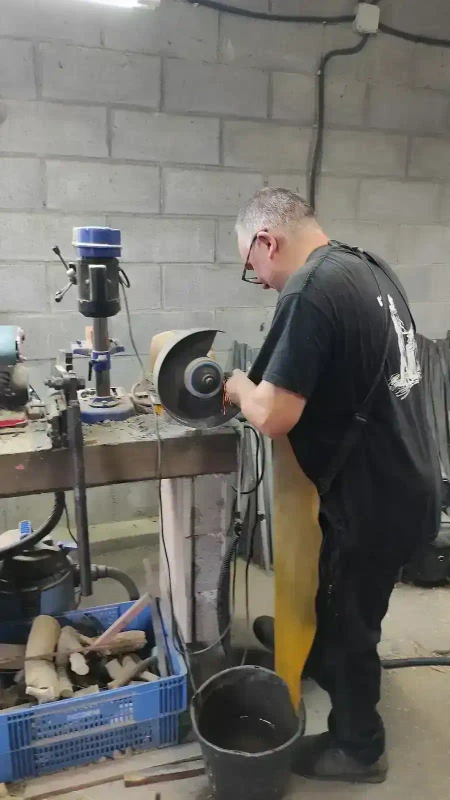
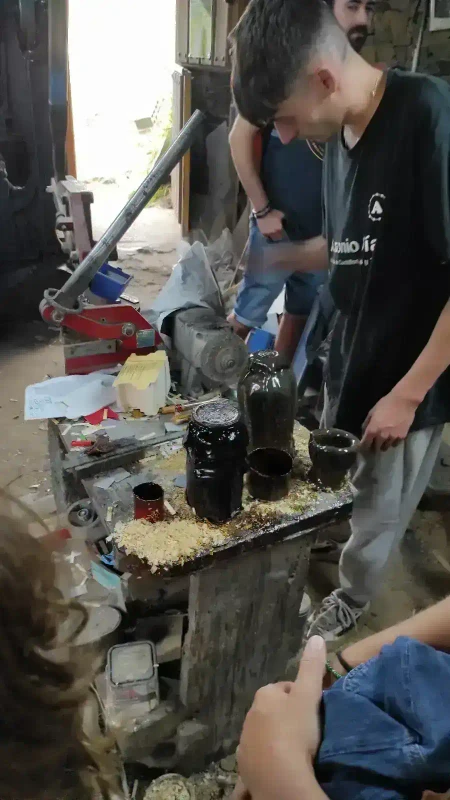
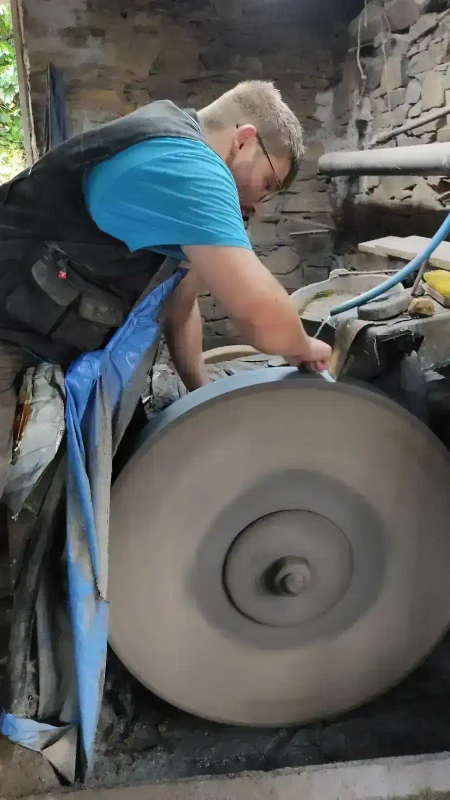
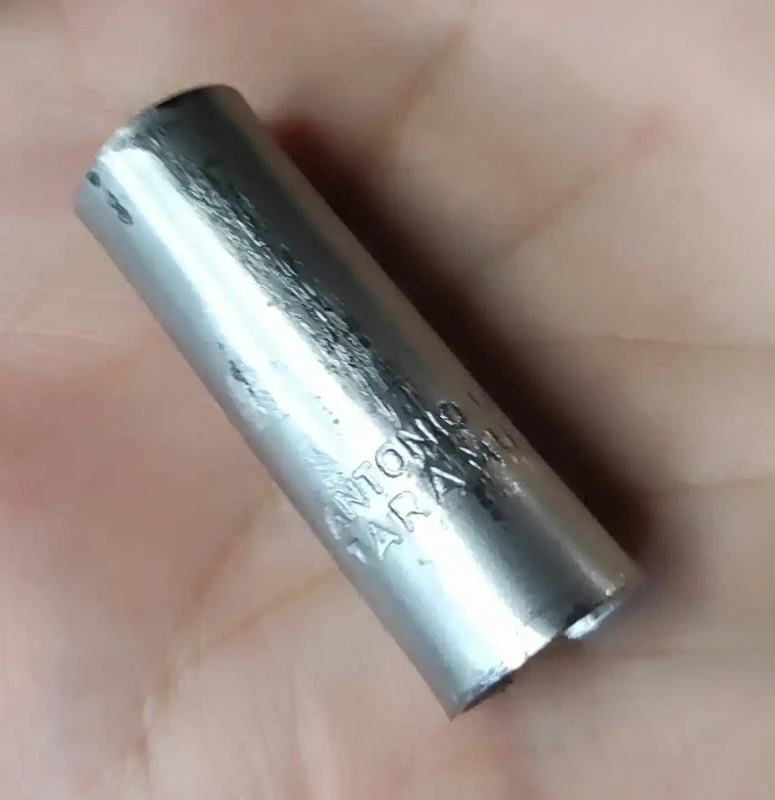
You would have a blast with the Asturian artisans who have their little workshops up in the mountains. I was there with my family this summer and I forced the poor things to come along with me. They ended up loving it! I'll leave you with a few photos... (Antonio Díaz, Taramundi, Asturias):

IMG_20250812_180741.webp

IMG_20250812_180903.webp

IMG_20250812_180958.webp

IMG_20250812_181146.webp

IMG_20250812_181218.webp

IMG_20250812_182122.webp

IMG_20250812_182222.webp

IMG_20250815_000106.webp


Regarding the Pallarès vs. the Albaceteña: the first is the indestructible 'workhorse' knife, while the second was the 'fancy' one—meant to be carried in a vest pocket and shown off to friends at the bar.
 
Last edited:
Back
Top