Press motor switch

Joined
Dec 2, 2011
Messages
913
I have all the structure done for my press, and most of the other components, but I'm a little confused about the switch for the 5hp 220 motor. I see Menards has a 30amp rated switch for something like $20.(Looks like a light switch) The book called for a manual motor starting switch with a outdated grainger part number. They range in price from $20-$250?

Also, that should be fine with a 30amp breaker and receptical with #10 wire right?

I talked to my electrical friend and he was pushing me on a 50 amp breaker and #8 wire and a switch that cost a couple hundred bucks. Seems over kill to me🤔
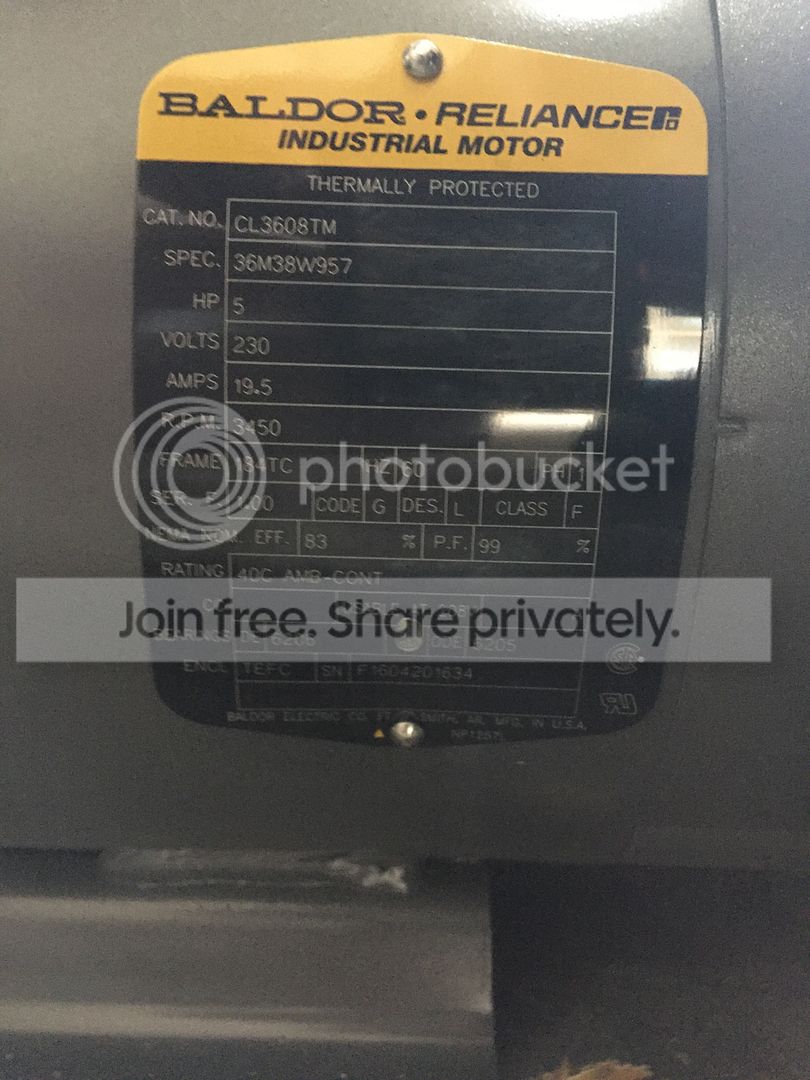
Here is the motor plate
 
I have all the structure done for my press, and most of the other components, but I'm a little confused about the switch for the 5hp 220 motor. I see Menards has a 30amp rated switch for something like $20.(Looks like a light switch) The book called for a manual motor starting switch with a outdated grainger part number. They range in price from $20-$250?

Also, that should be fine with a 30amp breaker and receptical with #10 wire right?

I talked to my electrical friend and he was pushing me on a 50 amp breaker and #8 wire and a switch that cost a couple hundred bucks. Seems over kill to me🤔
Here is the motor plate

Why doubt him ?

Stop being cheap and do what he told you . :)


A motor uses much more power to start than to run.
A light type switch is built differently than a motor switch.
Ratings for switches are based on motor HP rather than Amps.

A motor switch has to have heavy contacts to handle the power.
It also has to break that contact quickly and maintain a gap sufficient to keep it off.

The cheap switch may work for a while, until the contact becomes burned, then the switch sticks, high resistance, some current and a whole lot of heat.

It's' the same problem that chevy had with the ignition switches in the cars and they got sued after they burned some houses down.
 
Last edited:
Just looking for second opinions. Not scared to spend a little extra money when I need to.

As far as the breaker goes, wouldn't it be better to have a breaker closer to the amperage of the motor. I know that you should only be 80% of it, but it rates less then 20 amps. Wouldn't a 30 be just about right? Less chance of burning up my motor?
 
I'm not sure about more than 200% on the circuit breaker.

However it isn't uncommon for industrial set ups to have a circuit breaker with a higher amperage, and the motor starter to have the functional over current protection. The heaters take a little extra time to warm up under high current, so there is an inherent time delay in them. If the circuit breaker had a matching amperage it would trip faster than the heaters.
 
Try Grainger 1H416 for an idea of the manual switch they are likely referring to.

-Ron
 

It has the potential to work, but generally these switches are found more often as a motor disconnect, not as a motor starter. It can be done, but it is generally not the duty they are used for.

Cody,
That style of motor starter will require purchasing the overload heaters seperately. Also I'd say, it sounds like your electrician is trying yo help you do it right to me. Might be worth talking it out with him.
 
Just looking for second opinions. Not scared to spend a little extra money when I need to.

As far as the breaker goes, wouldn't it be better to have a breaker closer to the amperage of the motor. I know that you should only be 80% of it, but it rates less then 20 amps. Wouldn't a 30 be just about right? Less chance of burning up my motor?

There are "slow blow" fuses and circut breakers that are less sensitive so they prevent nusanse tripping on startup.

I believe that they are more expensive than a standard, so going larger over all may be actually cheaper


In terms of wire size, the distance from the breaker to the load is also a factor.
Wire size must go up to compensate for long distance.
Something he may have considered, but we can't see here.


Just making that a 50amp circuit, he may be forward thinking for you or the next occupant.
It's a standard size for welders or other equipment.
 
That grizzly switch has an adjustable overload. Cheaper and it spares you the extra trouble of selecting correct heaters. Nice choice.
 
A motor that size should have a contactor with overloads.
The heater type overload are old school reliable. But there are programmable electronic type now days.
I think a NEMA #1 size is minimum for 5hp motor, but do your own homework there. There are different specs for single or 3 phase.

In industry motor circuits, its not uncommon to see a breaker what one might think is oversize compared to ts conductors.
(40 amp breaker supplying 14awg for example)
Breaker is oversized to allow start-up current, but conductors still large enough to trip the breaker upon a shortcircuit.
The heaters take care of an overload on the motor.
 
Last edited:
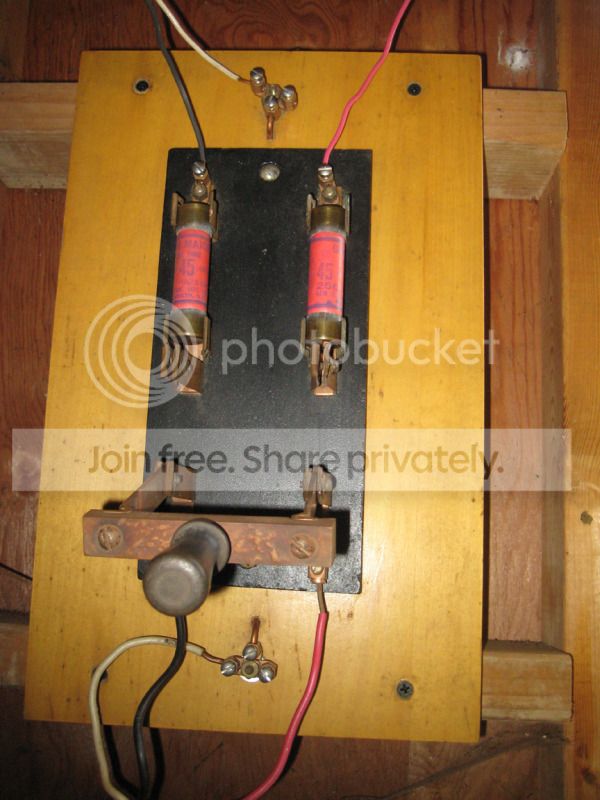
Generally, when switching single phase 220V in the 2-5 hp. range I use a knife switch. I keep an eye out for these at second hand places, junkyards, old machinery etc. Not a fancy motor starter anyway, but they will have built in fuses. You'll need to find one that is rated for your amp draw. That's what I use on my press, my 5 hp lathe, and as a motor cutoff for my power hammer.
 
Generally, when switching single phase 220V in the 2-5 hp. range I use a knife switch. I keep an eye out for these at second hand places, junkyards, old machinery etc. Not a fancy motor starter anyway, but they will have built in fuses. You'll need to find one that is rated for your amp draw. That's what I use on my press, my 5 hp lathe, and as a motor cutoff for my power hammer.

Ok.. Knifeswitch in a Knife Workshop.
You like the Steampunk theme...
When you operate them, Do you use all the theactrical accessories ? Elbow length rubber gloves, apron & goggles too ??

Seriously, aside from lacking overload protection, knife switches work well, but there is a good reason you only find them in Antique Shops.
 
I'm pretty sure what you are picturing is quite different than what he has outlined.

knifewswitch_zpsjzhbxz0v.png
 
Fair enough, That has knife switches within & fuseholders only, thats what we would just call a "disconnect switch".
Something else comes to mind under the name "knifeswitch"
KnifeSwitch.jpg
 
A knife switch will certainly do the job, but a better and safer choice is a motor starter switch or "contactor". They sell for a small fortune new, but they are cheap on the surplus and eBay sites. To really save money, buy a 3 phase contactor. You just use only two legs for 220/240 single phase motors, or one for a 120 volt motor. The extra leg/legs can be used to turn on lights or pumps that run when the machine is on. Be sure to match the amps per leg with the draw your motor. You wire a push button or low amp light switch to the coil (you want a 120V coil ) to energize the contactor.

For instance, this one would work for your motor:
http://www.ebay.com/itm/AC-Contacto...310203?hash=item5430b34e3b:g:-mcAAOSwgNRV8VSB
$10 with free shipping.
 
If you had a 50 amp breaker you would need number 6 wire. It would also leave your equipment unprotected. Because your motor has integral thermal protection and reset you only need a simple motor starting switch like I listed above. Dedicated feed circuit should be a 30 amp in ten wire. Cord and plug connection recommended as a local/service disconnect. Circuit is allowed to be rated 115% of full load amps. I think that motor probably has a start capacitor on it, this mitigates inrush current.
You could throw a simple fuse block inline and fuse down to 25 amps if you want more cheap protection. Or you could spend a couple hundred on a motor switch with overload protection. It will certainly add more protection and some are adjustable.
If it's a dedicated circuit it should be 30 amp.
 
Yep Ron, that's the type. No fuss, no muss.
I've wired in motor starters with contactors, with separate accessories in 120 volt single phase wired into a 240 volt machine, dealt with 208 and wild leg delta, and the like... but much of it can be done without just fine if a basic turnkey machine is all that is wanted. Just make sure you have fuses at least, and a solid ground circuit from the motor to your breaker box. Code is another matter, but I mostly just wire stuff up where I'm at, as needed.

Then again, maybe don't listen to me... not so good at wiring that I managed to avoid a serious jolt the other day from 3 phase 240V when wiring in my big lathe!:eek:
 
Back
Top