Primal/Tactical SERE knife

Joined
Apr 12, 2006
Messages
2,506
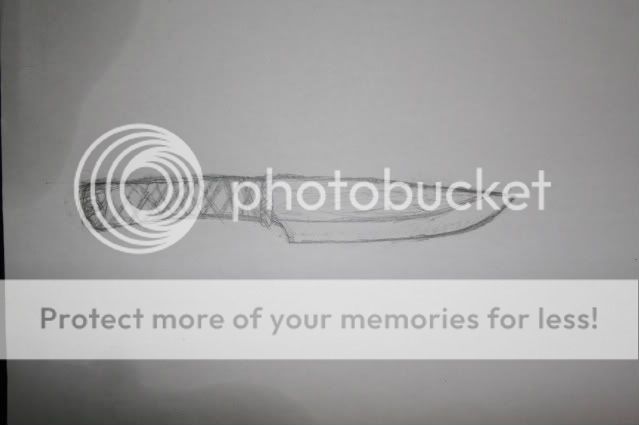
I was contacted by a flight engineer on an AC-130 gunship about a knife to carry with him. He's about to go do his SERE training and wanted a good knife to take, as well as just general usage. He gave me some general parameters of what he was looking for and a blade size, 7". I sent him a quick sketch:
IMG_1855.jpg


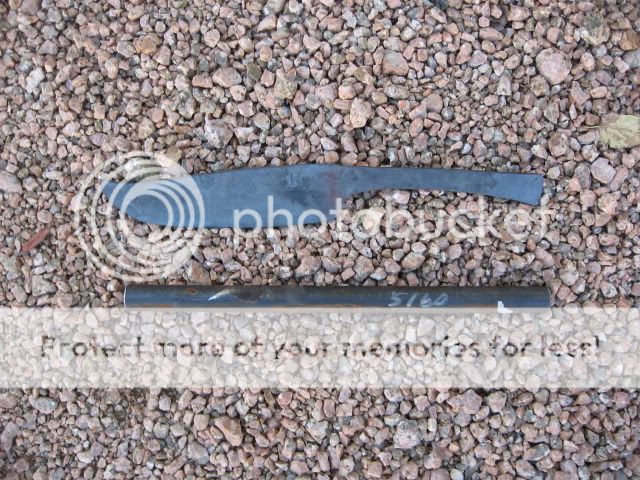
He approved and I got busy. I started with 3/4" round 5160 and forged this:
alex.jpg


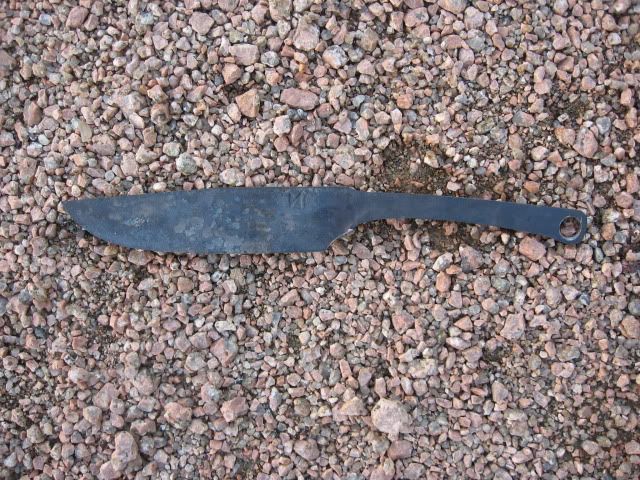
I cleaned up the profile and it looked much more like the sketch, even though I didn't have to take off much steel. After cleanup grinding:
alex1.jpg


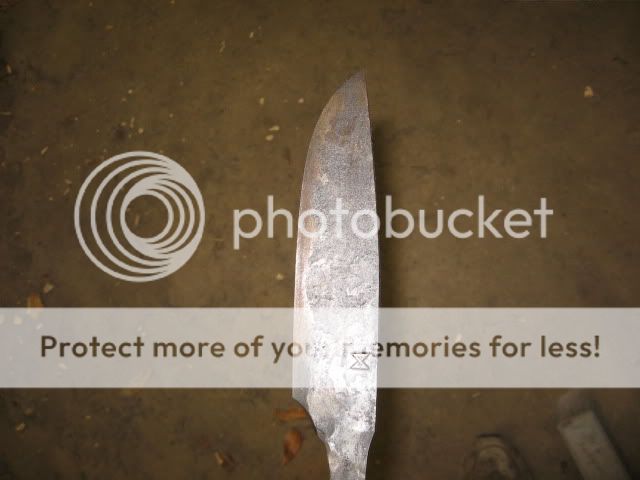
I soaked it in vinegar to eat the scale off the blade, filed the bevels, a triple hardened it in veggie oil:
alex2.jpg


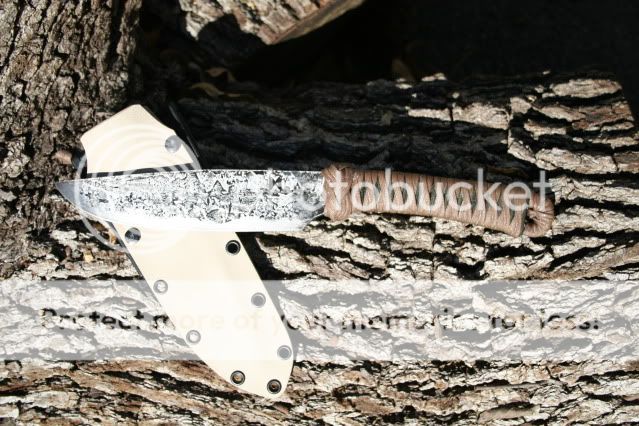
After tempering three times and cleanup, I used a new style of cord wrap I've been working on. It uses an underlay and an overlay of contrasting parachute cord, the underlay intact to build up the size of the handle appropriately and the overlay stipped of its core cords to lay flatter. The inspiration for this style of wrap came from a Mongol saber I saw recently in a museum exhibit on Ghengis Khan. I looked at it closely and fixed in my mind how it looked, then played around with paracrod until I figured it out. Fairly simple, really. After each layer is wrapped, it is sealed in cyanoacrylate (superglue), which wicks down into the fibers and hardens, forming a solid composite material in place.

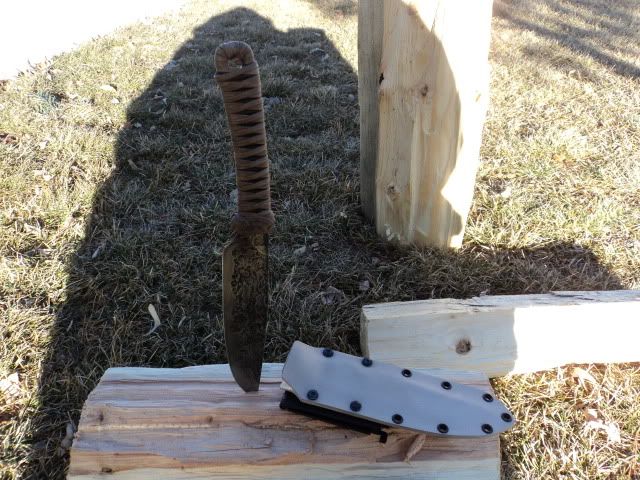
In this case, the underlay is olive drab and the overlay is desert tan. After that, a Kydex sheath with a pair of MOLLE clips, sharpening, and it's in the mail on its way to him.
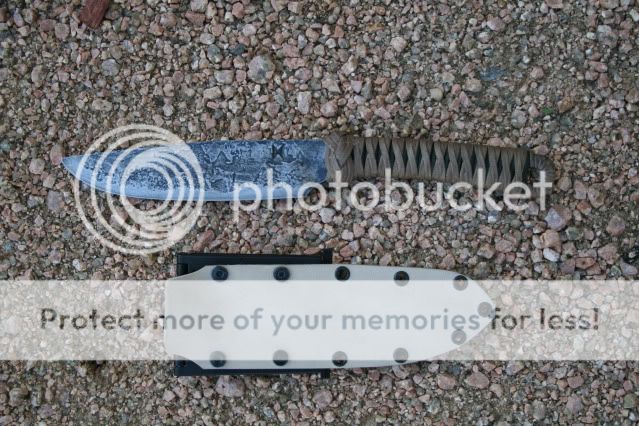
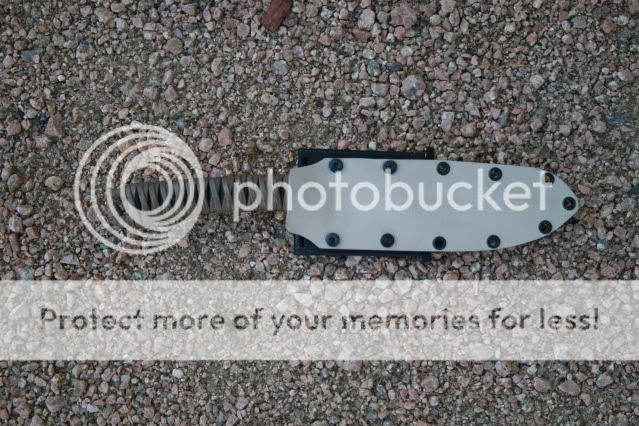
alex6.jpg


alex7.jpg


alex5.jpg


The spine on this is 1/4" thick, yet because it's forged into one long bevel (essentially a full flat grind, though it's forged and not ground), it still has a bevel angle that cuts well.

I'm looking forward to hearing how this knife does with the SERE training. Several more in this basic style are in the works for some Marines. :)
 
SERE instructors push maintaining sharp freaking edges, and I think 5160 is a great steel for easily maintaining in the field. Tip looks pretty decent, alot of the techniques they teach involve heavy tip works. Blade leaves room for some improvisation use, which is good. I think it's a capable design. The only one thing is that rust is a major no-no. Any little speck of rust or dirt is bad news-he's going to have to find a way of waterproofing that thing in constantly wet, soggy conditions. That and keeping the kydex sheath from rattling. Kydex or any other molded plastic sheath is the absolute worst material for E&E because it's hard, clinks against stuff, and if it loosens up at all during the abuse of SERE school, the blade is going to rattle.
 
Last edited:
Storm Crow, Very nice and I think it will serve him well. Can I ask why you used CA on the paracord and not epoxy? Just curious since I've been thinking about trying some similar handle wraps.

PR: The vinegar patina will help prevent rust (not eliminate it, but it will help) and a kydex sheath will trap less moisture and be more durable than a leather one. Just my $0.02.

randy
 
you'd rather have to be meticulous about maintenance than be caught because you're humping clanky gear. Patinas and forged finishes can do a great job at preventing rust, yes, I'm just saying it's something he will have to pay more attention to.
 
Storm Crow - I like it.
handle wrap looks comfortable and should be plenty grippy even in wet conditions.
will look forward to hearing the "after action" report if you hear back from the SERE candidate.
 
Thanks for the feedback, everyone!

Payette - You've piqued my curiousity. The forge finish is durable and if it rusts, 100 grit sandpaper returns it to looking like it did when it was new. It never occurred to me than there would be any problem with a blade developing rust as far as the training goes, only in maintaining it afterwards. What is it about rust that is such a problem in SERE trainging? Potential for infection if you get cut with your blade?

The pits from the forge scale help hold oil, and I gave it a light layer and wiped the excess off before shipping. That will help some. I may let him know that he might take some sandpaper if it's going to be a problem. I'm working on a forge finished blade for another airman that will be Durabaked. We'll see how the two go together.

At least part of the sheath can have paracord wrapped around it (up to the MOLLE clips) , which would keep it from rattling and also allow for extra cordage. I'm actually going to direct him to this thread so he can see the discussion. I think it's very helpful. Thank you!

Randy - The cyanoacrylate is thinner. This is a super-thin variety that I got from an art supply store. It wicks down into the paracord much better than the epoxy did. The first knife I did with this wrap (which I have not yet put online) had epoxy, and it was so thick and gross I ended up grinding the whole mess off and doing it again.

There's not much of a vinegar patina left as it gets sanded off after heat treatment, but the low spots retain some baked-on veggie oil from the quench that will help somewhat with rust, as well as cut down on shinyness.

1066vik - I'm looking forward to it as well, and have asked him to give me feedback on how the knife performs. I'm sure it will be a great workout for the knife and show where I need to make changes. It's going to be the first hard use this kind of wrap has seen, and I'm very curious how it does.
 
Storm Crow, thanks; that's kinda what I figured on the CA being thinner. Again, nice knife.

randy
 
Not at all Storm Crow-it is curriculum based. They push tool maintenance all the time, every time. They are meticulous about it. Every nook and cranny, no dirt, no sand, no rust... functionally it's overboard, but you can see where they are coming from. They are trying to drive home survival basics in a couple of weeks that will become muscle memory for a lifetime-like paying attention to your tool maintenance while on the run.

I know rust is easily overcome. I lived on the ocean for a few years and EDC'd HC blades. He's just going to have to pay attention to his blade and make sure all the orange disappears for inspections.
 
West Systems does an epoxy mix which is super runny for just this type of thing.
Cool thread!
 
Payette - Ah, I see. Emphasizing maintenance of gear more so than a specific problem with rusty knives. Thanks!

Lorien - Thanks for the info. I will check it out. I do like how the superglue is in a handy squeeze bottle to apply it in precise amounts where it's needed, as well as how quickly it dries under normal conditions. I have found that it is a bit finicky about the weather, and likes hot, dry air to wick into the fibers and dry quickly like it's supposed to. I actually used my Kydex heat gun (very carefully!) to blow the superglue around and warm it to the point that it wicked in and dried like it needed to. Worked well to do that.
 
Thanks for the feedback, everyone!

Payette - You've piqued my curiousity. The forge finish is durable and if it rusts, 100 grit sandpaper returns it to looking like it did when it was new. It never occurred to me than there would be any problem with a blade developing rust as far as the training goes, only in maintaining it afterwards. What is it about rust that is such a problem in SERE trainging? Potential for infection if you get cut with your blade?

It also has to do with personal discipline. If you overlook rust and dirt on your blade how would you treat a weapon that needs more maintainence like a rifle? How will you treat your other survival gear? Can you do other things that you are told to do which will save your life, without hessitation? Seems like a small detail but everything they do and train for has meaning behind it.
 
That makes sense. Attitude is the most important deciding factor in most situations, and when you're trying to survive being crashed behind enemy lines, mental discipline is going to be one of your best assets.
 
I think you've got a good knife there, Storm Crow. I don't think it is going to matter too much if the knife has a little rust on it or not. He's going to be put through hell anyway before the course is over, unless it has changed drastically over the last 5 years or so. That is the purpose of the course; a little extra grief over rust is going to be lost in the noise. That is unless SERE has gone soft.
 
Hey Storm Crow, you were right about using CA instead of epoxy on paracord; I should have listened to you to start with. :) I finished this one up last night: http://www.bladeforums.com/forums/s...apped-Bush-Camp-Knife?p=10382790#post10382790 . I didn't have enough thin CA, so i thought i'd try the epoxy; bad idea. The thin superglue was MUCH easier to work with and soak into the paracord and I only glued myself to the knife once. :)

randy
 
Yep, the only problem I've had is the superglue being tempermental about the weather. On a nice warm day, it sucks into the cord with no problem. A little bit cooler (and perhaps humidity plays a role as well) and it doesn't want to. I need to look into the epoxy Lorien mentioned.
 
The airman who ordered this knife completed his SERE training. With his permission, here's what he told me about using it:

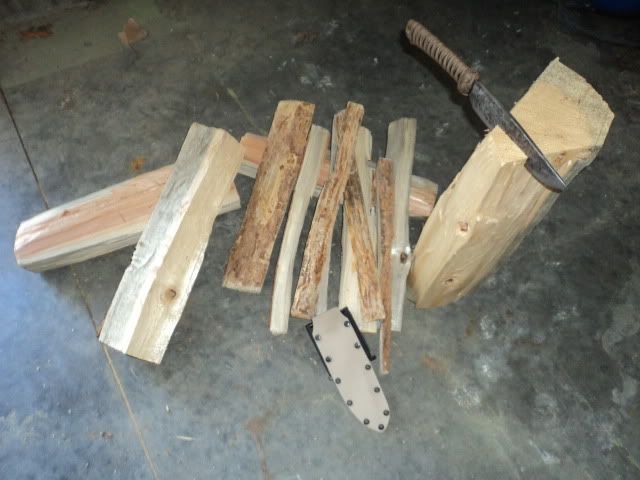
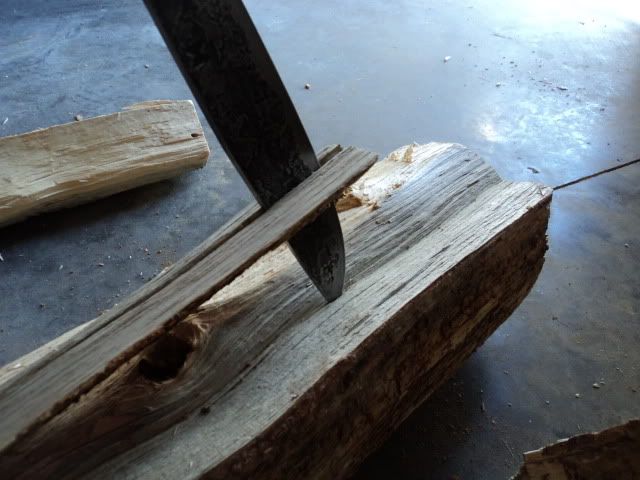
"Ok, so im back from SERE school and it was rough. Learned alot though. My wife sent me the knife and out of the box i thought it was awsome. Sheath is very cool and functional. knife stays well with tension. The clips work very well on a web belt as well as MOLLE attachments on my vest. The knife itself is very beefy. I was not able to take pictures because alot of the training is classified and i was not able to bring a camera. I can say that the knife worked like a dream. We had many tasks during the training that involved a good knife. They issued us all bolt knives but i chose to use yours even though i still had to lug around the bolt knife as well. cutting tree bows down was very easy. I probobly cut down about 150 bows for shelters and camo. We also cut down alot of tree bolts for fires. we used large branches to beat the knife through the the tree bolts to have smaller pieces and the knife went through like butter. finished way faster than the guys with the bolt knifes. probobly went through about 20 bolts of wood. the tip worked real well for breaking down wood too. I also used the kinfe to start fires with a metal match and cut down alot of brush while evading. The knife worked like a dream and i had alot of guys ask where i got it so your cards went to good homes. Im sure you will get a few calls. This knife is definately staying in my helmet bag when i fly. Great knife. email me with any specific questions you have. Im still telling alot of people about it. Oh and the knife is still as sharp as it was when i got it in the mail. Thanks again. "

I had to look up that a "bolt knife" is the USAF-issued survival knife, named that for it's bolt head-shaped pommel. I also hadn't heard the term "tree bolt", but he sent some pictures to show me.

DSC02854.jpg


DSC02855.jpg


DSC02848.jpg


Folks, I was surprised to see his comment about the blade being as sharp as when he got it after putting it through the kind of work he described. I was hoping it would serve him well, but this is by far the hardest use one of my little blades has seen and it performed better than I had expected. That's why I made that part bold. :D I'm pretty proud to have made a blade that would do that well.
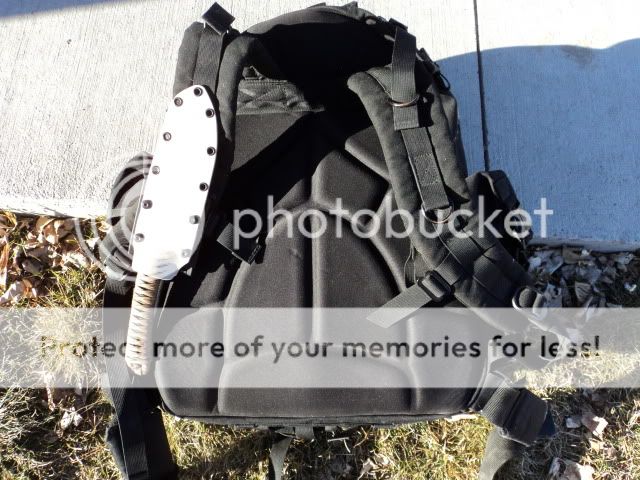
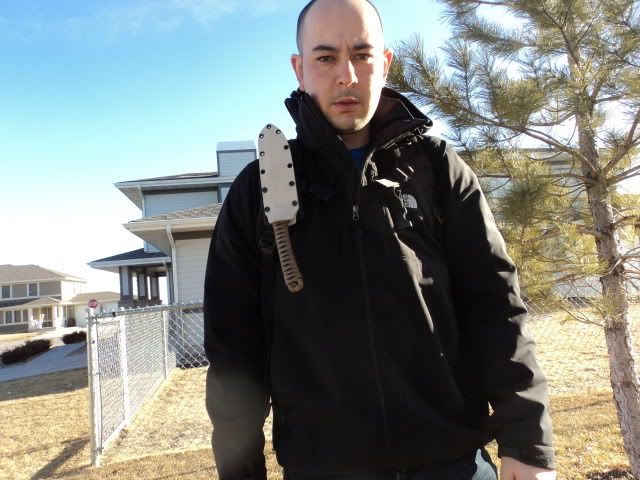
I asked him about how the handle had been both in comfort and in durability. His response: "I really liked the handle wrap as well. It fit good in my hand even when i wore gloves. It was very cold so we wore nomex flight gloves as well as calf skin leather gloves. Very good grip. also the sheath worked very well and was very quiet with the knife in as well which was good because we had to do alot of evading."

A couple of pics he sent of it on his bag:

DSC02853.jpg


DSC02852.jpg


This is not the last primal/tactical knife I will be making. I have four in the works for active-duty military and hope to have more serving our armed forces in the future.
 
Couldn't get a much better review than that!! That's great!

You must feel very proud... and so you should.
 
Not surprised in the least that the knife worked like a champ. Maybe a little surprised at how well it held an edge, but that is only because I'm not familiar with your prior work, Storm Crow. Question for you, though. How do you think that CA impregnated cord wrap would stand up to batonning on the butt of the knife? The reason I ask is I was just recently presented with a situation where I had to do a lot of batonning on the butt of a Fallkniven I have. Using a wood baton, the knife held up well, and anyone familiar with the Fallkniven H1 would expect the tip to hold up fine. I like the way that cord wrap looks, and it sounds like cord-wrap is a good, very viable method of forming the handle. Just curious about the batonning.
 
Back
Top