
primitive forging spear head and some comments about the value of files

"Steel can be very hard and still tough and fairly soft and still brittle, there are lots of ways that the heat treating can go wrong and it is very difficult to detect without breaking the knife and looking at the structure or just subjecting it to various materials tests and make sure it is up to specifications."

Right which is why it's not practical to approach it that way. Might make an interesting test, but awareneess of how the steel works while sharpening actually allows the knife to survive past first encounter with the user.

"A hardness test is better than nothing but far from inclusive. That class of steels (SK-5) actually has a toughness maximum at near full hardness."

Is that "toughness" in the real world, or the knife world. Knife world "toughness" does not appear to correlate with the real word definition. Or is this just a real low hardening steel where the best it can do is just as we like it?
 
Protactical said:
...but awareneess of how the steel works while sharpening actually allows the knife to survive past first encounter with the user.

This again is better than nothing, but not very inclusive, in general the only real way to know if it can do something is to do it. Generally if the sharpening is problematic (edge chips under the stone) you can suspect improper hardening, however if it sharpens fine this doesn't really tell you anything consider the performance of the Sebenza here :

http://www.bladeforums.com/forums/showthread.php?t=386998

Knife world "toughness" does not appear to correlate with the real word definition.

I was refering to the materials defination which means it handles high rate strains well, this is what most people mean by a tough material in general (takes impacts well and can bend a fair bit) it also has near maximum strength at the same point.

Or is this just a real low hardening steel where the best it can do is just as we like it?
SK-5 is a japanese steel similar to AISI W1 tool steel. It is shallow hardening (fraction of an inch is full hardness) but that isn't overly relevant to knives because they are so thin, the max hardness is 66 HRC, it is commonly used to make files.

Cold Steel has tempered it really hot to reduce the hardness which makes it easy to file and *really* resistant to fracture from direct impact, which makes sense considering it is promoted as a possible spear head.

-Cliff
 
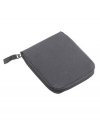
When I was a teenager I carried a piece of file in my pocket "Be Prepared Kit". This was essentially an emergency escape and survival kit packed into a zipper-sided wallet something like the picture in the attached link. I took a zipper-sided wallet and cut out the insides. I epoxied in some leather loops for holding things which included:
A 4-blade scout knife with side scales removed, a small lighter, a large book of matches, a 4-inch piece broken off an 8-inch mill bastard file (with 30-pound test polyfiliment nylon fishing line wrapped around one end as a grip), a similar 4-inch piece of fine-toothed hacksaw blade with cord wrapped handle, a couple fish hooks, a needle and heavy duty thread, a small bottle of water purification tablets, a forgery kit (small mechanical pencil with 5 colors of lead and a small ballpoint pen and 4 colors of ink), a very small pad of paper, a couple bandaids, a tin of aspirin, and a tiny bottle of 90% alcohol. I had watched a lot of I-Spy on TV and was more thinking of breaking out of rooms than surviving in the wilderness. I may not have had all of these in the kit simultaneously, but I did have most of them most of the time. Sometimes I stuck in a wire saw.
 

Attachments

  • zip_wallet.jpg
    zip_wallet.jpg
    8.3 KB · Views: 3
Back
Top