
Problems with my first 1095 blade

Joined
Aug 9, 2013
Messages
78
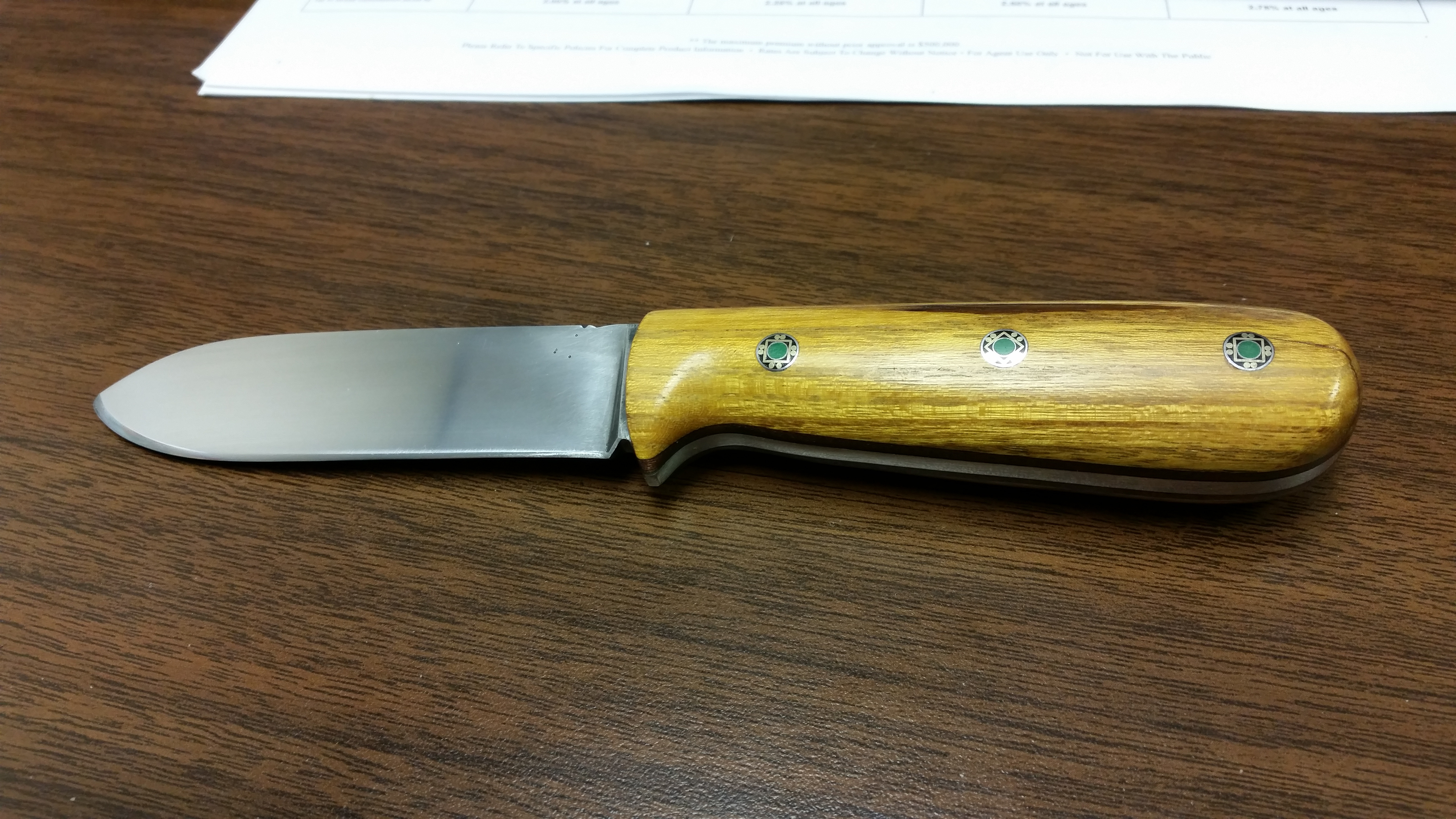
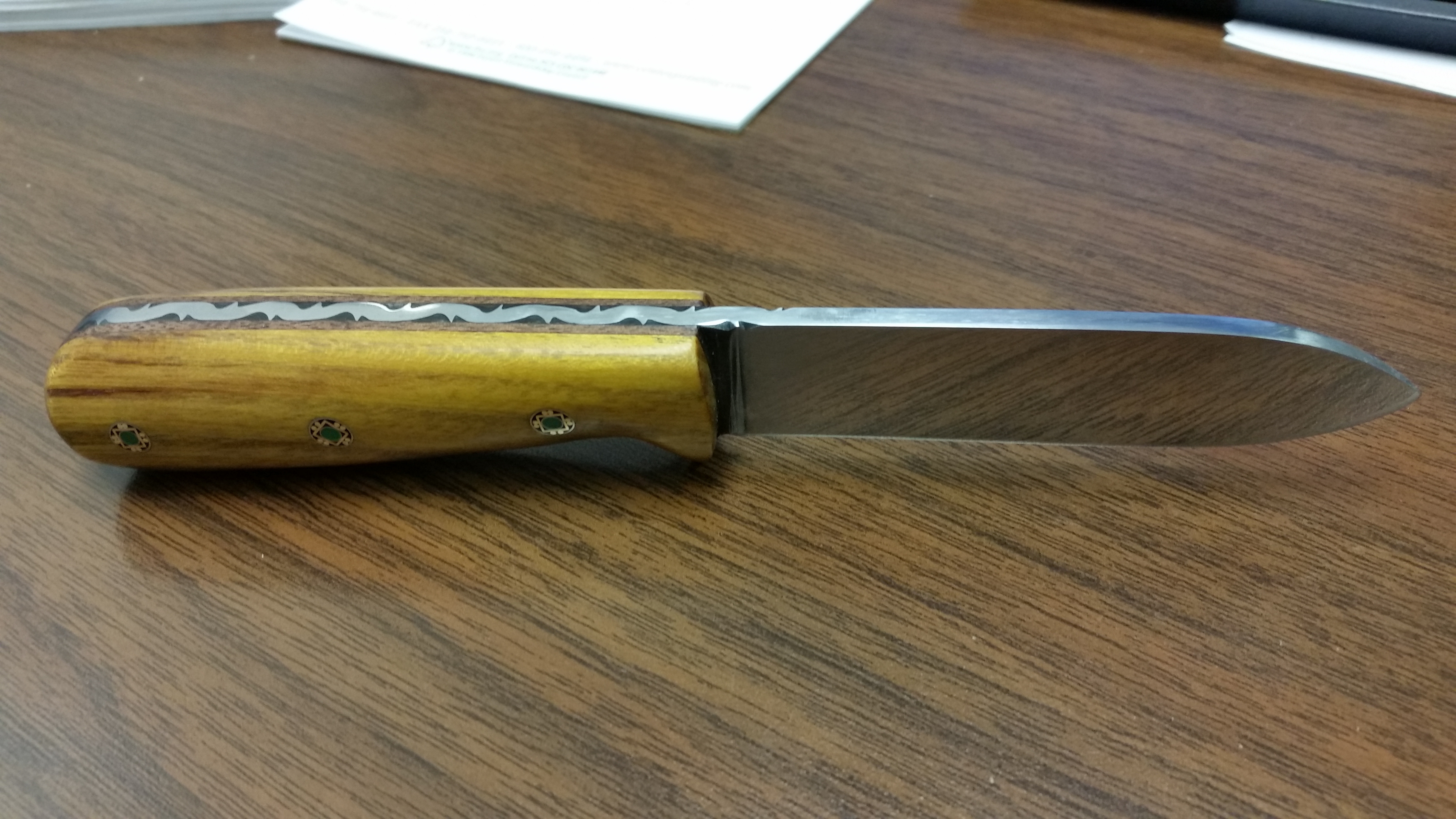
This is a Kephart knife I'm making for my uncle. Here's the blade as it stands. All that would be left is to etch my logo on it.
N2fnp9v.jpg


FeHUoJZ.jpg


My first hint that there was a problem was when we tested the hardness on Jim's new machine. I don't know what the machine is called but maybe someone will know as I describe how it works (i know there's different types). It tests accurate on other steels. On this blade our readings were all over the place. Most consistently, it pre-loaded and the gauge needle would spin back around 2-3 times, then you pull the lever and it would spin back up to something like 90 which is off the chart on the Rockwell scale.

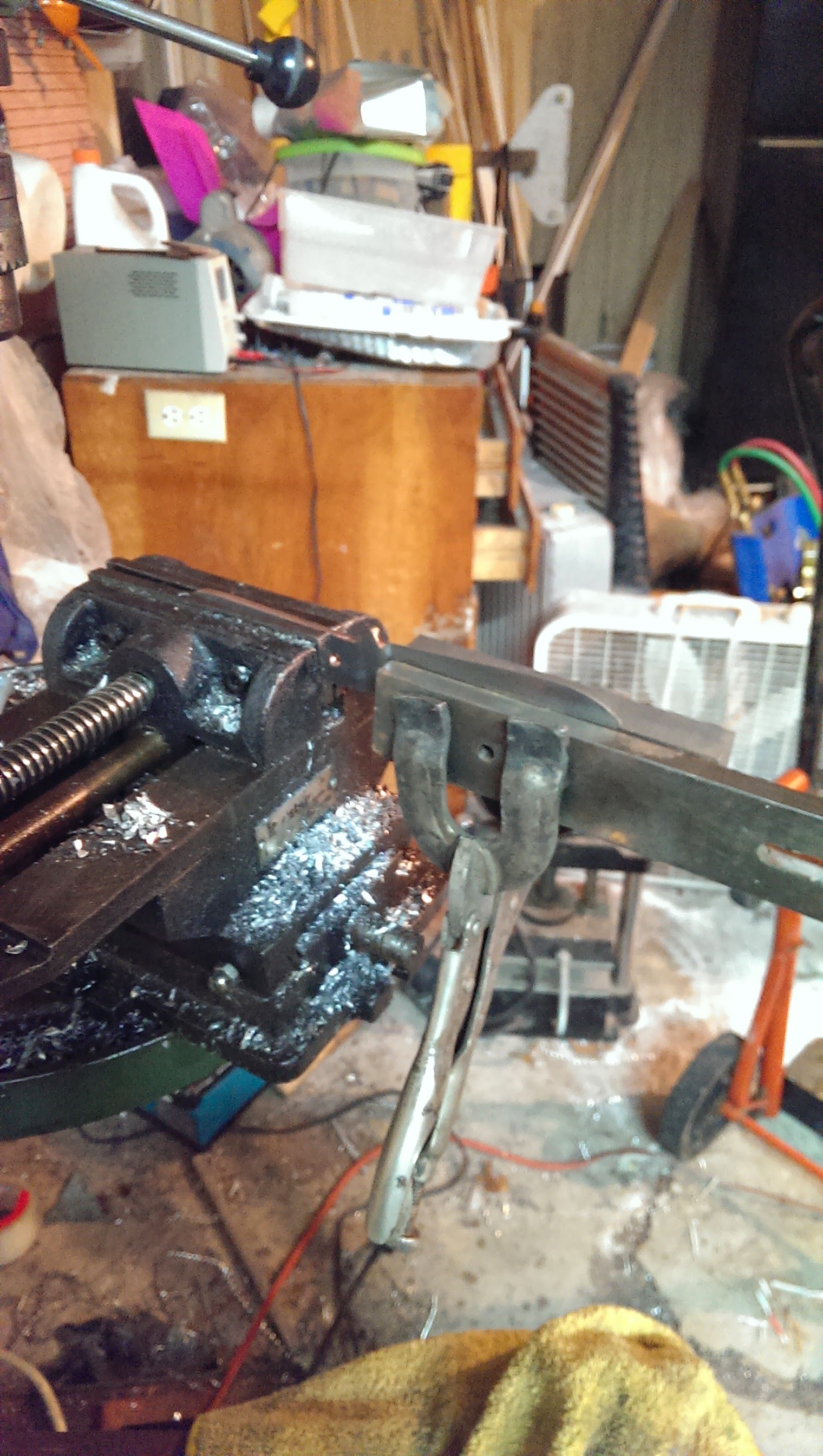
I anticipate there were different harnesses because I was going for a differential heat treat. Here is how we did it.

We clamped 2 steel plates on either side of the blade over the spine to sink heat away in those areas hoping to just get the edge hardened.
XS8sxK2.jpg


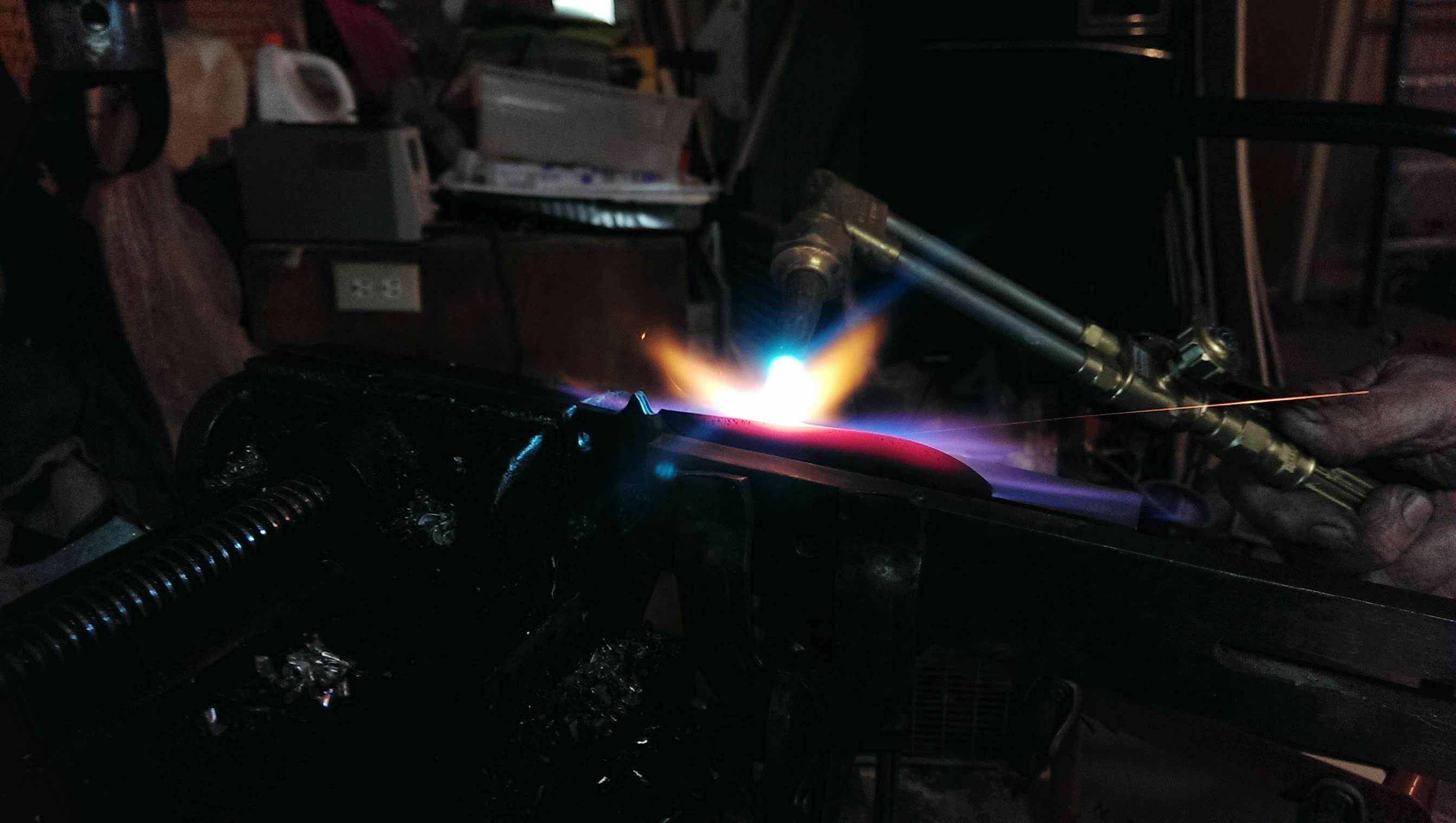
We used a torch to heat the edge evenly to non-magnetic and then quenched in canola oil.
TNiypAQ.jpg


Here is after HT and a little bit of sanding.
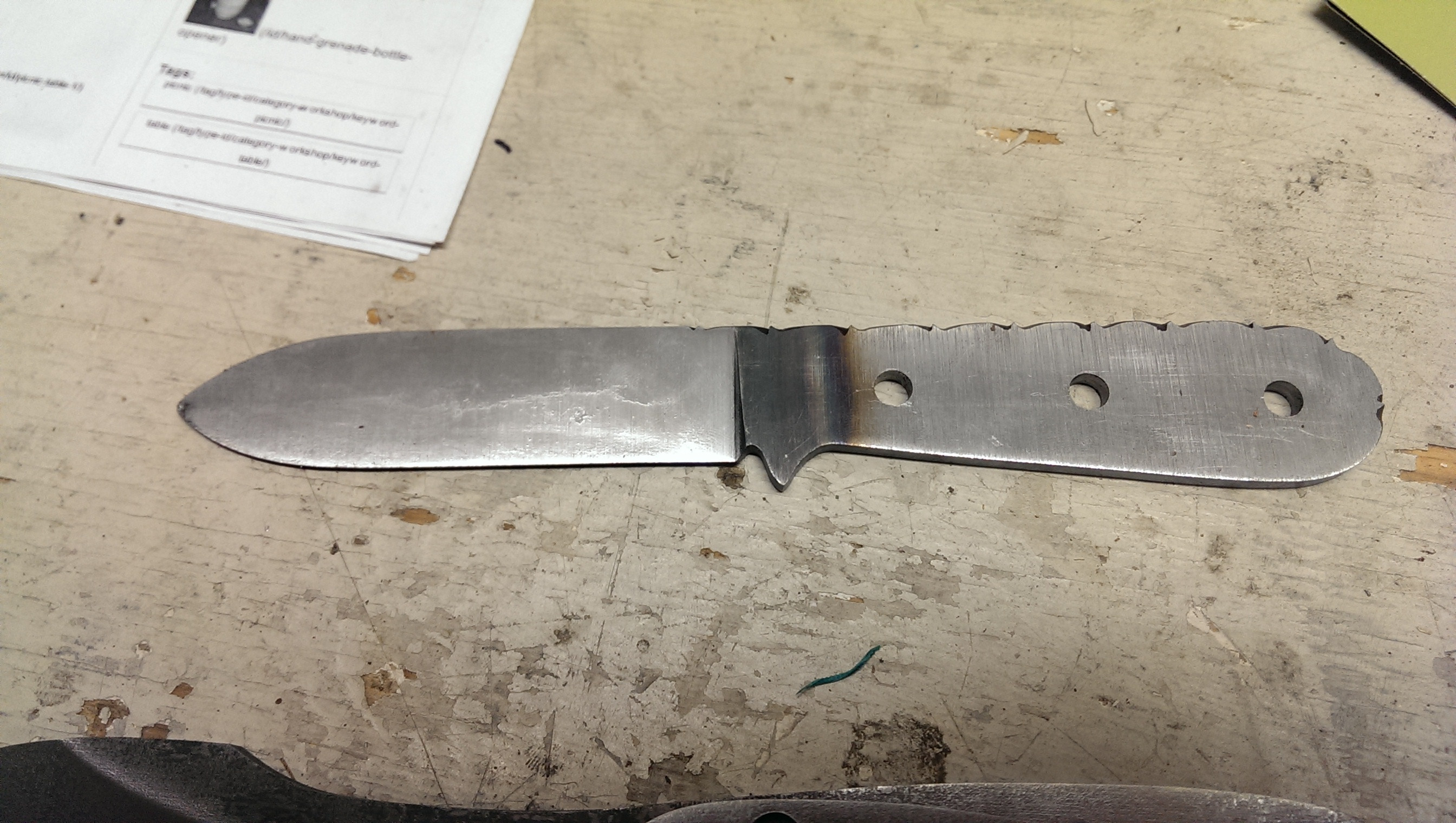
2oDXLAO.jpg


After getting the crazy hardness readings, I decided to do 2 2 hr tempers at 400.

Well, after mostly finishing it and putting an edge on it last night, I fear it has a crappy edge. It was very difficult to sharpen to shaving sharp and i ended up only being able to achieve this on a leather strop with a some compound. I can normally get a blade shaving sharp on my sharpmaker and then use the strop to further polish and hone the edge.

Then I tested it and whittled just a bit on a block of Boisd'arc I have. I know bois'd arc is really hard but it lost its shaving ability and visibly affected the edge after about 10 strokes. I'm thinking there's a problem. Can someone explain where I messed up? I know my temper was maybe a little excessive but that was because our readings seemed to say the blade was so hard. Is there any way I can fix the blade at this point???
 
I can promise you that your blade isn't 90, if you're reading Rockwell. 1095 maxes out at like 66 or 67 (IIRC). And I think your problem lies in the heat treat procedure. Canola oil for 1095 is not fast enough. Maybe just the edge....but just the edge...got hard. Remember 1095 has like a second to go from temp to 900 or under. Canola just is iffy with 1095. On a Kephart....I would quench the whole blade...not an edge quench on something that small. Also, on your test, make sure that you've cleaned off all scale and decarb before testing...it needs to be on a flat surface, too, like the ricasso, or you'll get crazy readings.

As far as fixing it....no problem. Just redo the heat treat. Don't edge quench this small blade. If you're set on it...then go for it. Take it to 1475 (using a torch this is difficult...but get it a shade or two past nonmagnetic) and hold it at 1475 for 10 minutes (how are you going to do that with a torch? 1095 needs a soak at temp). If you must use canola oil, warm the oil to 130F, and then quench the blade. Water might be better than canola for 1095...but the "tink" fairy could pay you a visit.

Bottom line...your steel choice isn't the best for the equipment you have. Good luck!
 
I mostly agree with Stu. Ditch the clamp thingy(those plates will never allow you to heat treat properly).

If you don't have a forge/kiln and are set on using a torch you'll have to change your approach. This is what I would do if I only had a torch...

Normalize
-heat the (whole) blade to bright red/orange and let it cool back to magnetic
-heat the blade to cherry red and let it cool to magnetic
-heat the blade to deep red and let it cool to magnetic

Harden
-heat the upper tang and ricasso to cherry red
-turn the blade edge up on a 45deg with the tip high.
-start working your torch from underneath, bringing the heat up from the ricasso along the spine... letting it rise through the steel toward the edge/
-have patience and run that torch back and forth to keep the heat as even as possible.
-get it up to non-magnetic and torch for another 30 seconds or so.
-quench in warm canola.
-clean blade thoroughly and temper in your kitchen oven at 425deg, for 2 hrs, twice.


Don't try to soak or nail temperatures because you aren't set up for that. Keep it simple and you'll end up with a decent knife. !084 is a better steel for simple means.
 
Thanks guys. The idea behind the clamped steel was just to try and achieve a differential hardening. I have access to a kiln and did this while I was baking some o1 blades. I thought the HT on 1095 was pretty foolproof, bringing it to non-magnetic and then quench... obviously not so. I did quench the whole blade and not just the edge.

I'm going to see my uncle in NE Georgia this weekend and was planning on delivering this knife then. Since it's pretty useless as anything more than an ornament or a letter opener, I'll probably bring it back with me. If so, I will definitely plan on redoing the HT in the kiln but the big question now is, is there any way I can remove the scales and liners and mosaic pins without damaging them???
 
Another concern regards the hardness reading... did You try to get readings on the bevels? Stuart is right, You cannot read hardness but on flat and parallel surface free of any dirt, dust, whatever.
Canola should work for edge thickness sections...get the oil to 100-120°F to speed the quenching ability. After the ht&temper be sure to remove scale and decarburation layer and keep the blade cool while doing it otherwise You may loose hardness very quickly. Good luck, remeber You can test the blade and redo ht before doing handle works ;)
Nice knife by the way :thumbup:
 
Thanks for the continued suggestions! The blade was clear of scale but since it's a full flat grind there was no perfectly flat surface to test on the blade itself. Perhaps that was the issue. Also, we did heat the canola to somewhere around 120-130 by dropping a hot block in before we quenched. I tested the hardness before and after temper before I put the scales on.... I went ahead and proceeded with the handle, assuming maybe the differential hardening or the unparalleled surface was to blame for the crazy readings. It wasn't until I started trying to get a shaving edge that I was sure there was a real problem.
 
If you are brave, follow Rick's heat treat, quench for 2-3 seconds in brine, then immediately finish the quench in warmed canola oil. 1095 needs to get to Ms temp in about 1/2 second, and even warmed canola is hit or miss. The break happens later in the martensite transformation, as the stress rises. The canola is slower than brine, and is easier on the steel for the later parts of the transformation. I did about 10 blades this way before getting commercial oil, and only broke one blade, but that one was 7 seconds in brine.

Re: the hardness readings: is the machine calibrated for Rc or one of the other scales? There are several different scales for different types of readings an materials. I would guess Rc 20-30 based on my experience.
 
is there any way I can remove the scales and liners and mosaic pins without damaging them???

Take a hammer and chisel or a hacksaw to the scales and pins. Once you have gotten them off, put them on the shelf as reminder of past mistakes. I keep a little piece of every mistake I have made so I remember not to make them again (that doesn't always work).

Scales and pins are one-time-use items. Sorry!
 
I think you overheated the edge with your torch and didn't get past the nose on your quench. Those plates are huge heat sinks. Better to try differential hardening with clay in your kiln. Either bust off the scales and start over or hang it on your wall as a reminder. Everyone has a wall of shame learning.:)
 
oh gosh. I was hoping for some magic method here. Thanks for all the support guys. I have way too much time and emotions invested in this blade to just hang it on the wall as a reminder... That was the first file work I've ever done and this is for my uncle that was a major influence on my passion for knives and bushcraft...

I'm going to attempt to hit the pins out with another piece of 1/4 pin and if that works, then I bet a sharp chisel will knock the scales off. If I'm able to prove you guys wrong, you'll hear about it!!!
 
Just FYI, I have "heard" of people removing scales intact by boiling , or putting in the oven long enough to soften epoxy. I have no idea if it actually works. Just a thought.
 
funny you mention the oven for removing scales. I brought up that I was heat treating a couple o1 knives while I was screwing up this blade- I ended up putting scales on one of those before I tempered them... Those scales were black micarta. The 2 2 hr cycles at 400 definitely took care of the epoxy but it also toasted the micarta to the point that one pry and it snapped. I just banged the rest with a hammer to get it off. Dag nabbit.....

I am really proving the merits of that quote in my signature, eh!?
 
The "learning" never stops :grumpy: :).

One of my "learnin's" was that it is usually easier to start over than to try to salvage a major mistake. In the time it takes to try to save the scales, you could shape a new set, and do a better job since you have more experience.
 
1095 is a PITA Steel to be sure.
 
Back
Top