As I understand it, and please correct me if I'm wrong, ALL new coated blades have the Decarb layer under the coating. I'm just wondering if rust will start on the Decarb layer near the edge and run up under the coating like an underground coal fire.
Not to any significant degree enough to justify concern. Rust is "oxidation" of steel. For steel to rust or oxidize, water or air containing moisture must contact the areas of steel to rust.
------------------------------------------
Here is a very good definition of rust:
"Rust is scientifically called oxidation, which occurs when oxygen comes in long-term contact with certain metals. Over time, the oxygen combines with the metal at an atomic level, forming a new compound called an oxide and weakening the bonds of the metal itself. If the base metal is iron or steel, the resulting rust is properly called iron oxide. Rusted aluminum would be called aluminum oxide, copper forms copper oxide and so on.
The main catalyst for the rusting process is dihydrogen oxide, but we know it better as water. Iron or steel structures may appear solid, but water molecules can easily penetrate the microscopic pits and cracks in any exposed metal. The hydrogen atoms present in water can combine with other elements to form acids, which will eventually cause more metal to be exposed. If sodium is present, as is the case with saltwater, corrosion will likely occur more quickly. Meanwhile, the oxygen atoms combine with metallic atoms to form the destructive oxide compound. As the atoms combine they weaken the metal, making the structure brittle and crumbly."
------------------
The decarb layer won't just automatically rust on its own. It still rusts via oxidation. It just obviously rusts WAY easier than regular INFI. It still need water and or moisture to rust. Although, mine rusted in a drawer with just moderate air humidity. In all fairness, the humidity may have been a little higher than normal as I live in Houston with high humidity and we were without electricity for a few days from Ike. So, inside the house and drawer humidity may have been a little higher than a typical homes humidity.
Still, the coating will to a large degree keep out the moisture. It is very hard for moisture to penetrate under the coating laterally to any significant depth.
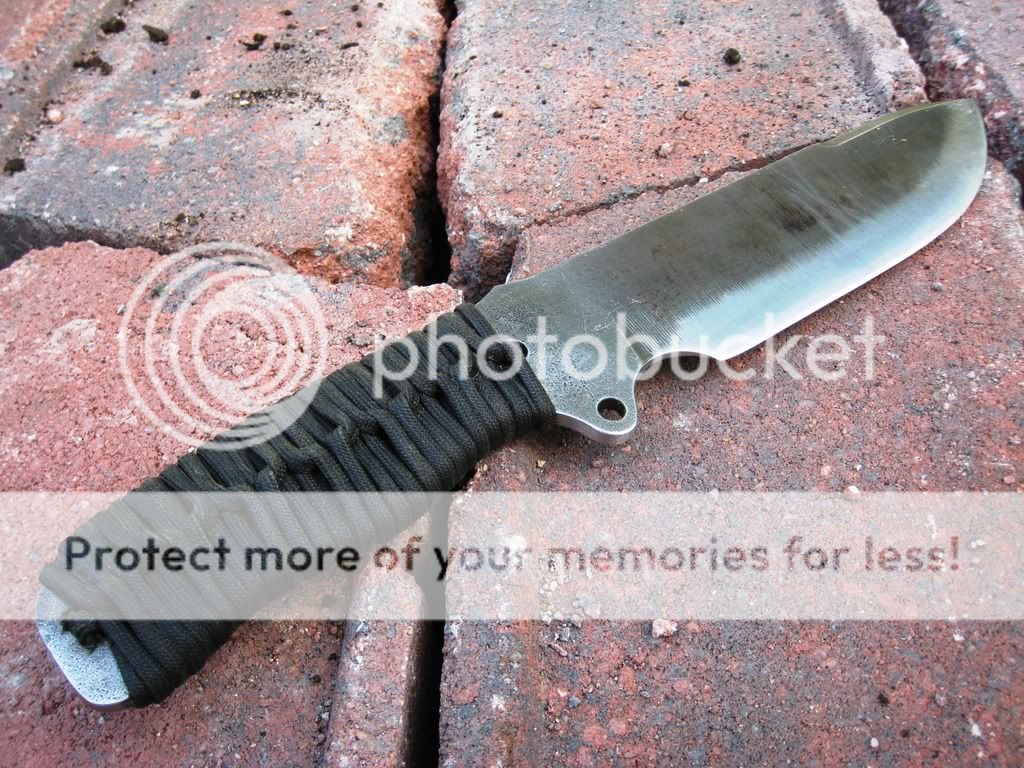
However, on a Competition blade, there are often sufficient gaps between the handle material and blade to allow moisture to penetrate and be trapped under the scales. Also, micarta has some "whicking" properties. G10 not so much.
---------
Like rust, fire requires oxygen. So, fire and rust have a lot in common.
Underground coal fires still require require oxygen to burn. Apparently, most underground coal fires draw their oxygen through cracks, fissures and coal mine shafts to allow them to keep smoldering.
------------
One might naturally be concerned about rusting the decarb layer as you wear away the coating. But, it really isn't that big a deal. As you wear the coating, you will also wear away the decarb layer. Once the decarb layer is removed, INFI is again pretty wasy to maintain and pretty reasonably resistant to rust for a non-stainless steel.
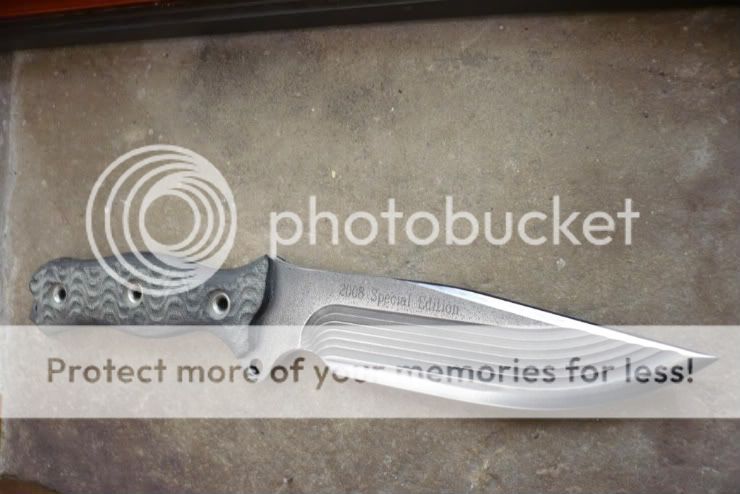
As mentioned by many already, if you have a Competition blade, it is probably best to sand off the decarb layer. Because of the grooves in CBT blades, 3M type pads are much easier to get into the grooves than sandpaper.
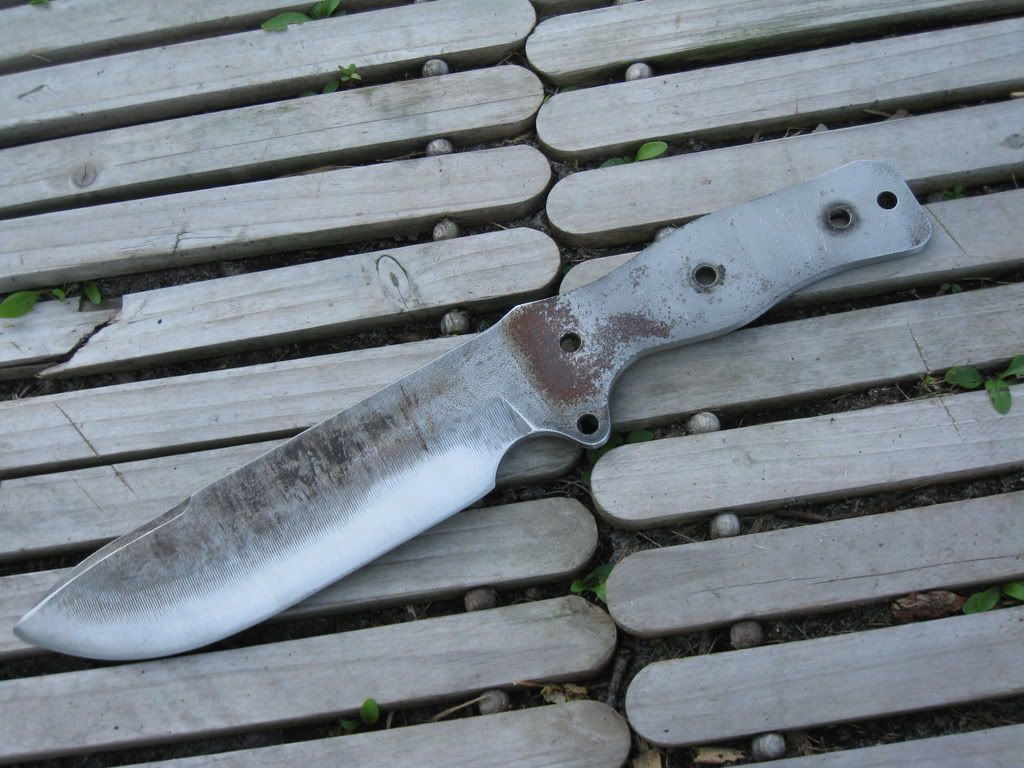
Unfortunately, with Competition blades, the tang areas under the handles will likely rust over time with use. I SERIOUSLY don't expect the tangs to rust to failure or any level of concern unless left in the most extreme humid conditions for MANY many years. - Most likely well beyond any of our piddly life-spans. Keep in mind, the decarb layer is very thin with INFI underneath.
*** I think it is very worth mentioning that while the decarb layer is very prone to rust, this would primarily only result in a "SURFACE" layer of very thin rust. Ugly on the surface, but just on the surface.
INFI will rust, but at a MUCH slower rate than the decarb. So, once the surface layer of decarb has rusted, the rust process slows WAY down.
Much like the initial decarb layer, if the decarb layer were to rust, it also could very easily be sanded of the thin layer of rusted decarb and be left with reasonably/to pure clean INFI.
So, don't worry about it too much. :thumbup:
.