Tommy pins are how bolsters have been attached to liners for a long time - going back to the early 1800s at least. The tommy pin is an integral part of the bolster - as the bolster's general shape is being rough formed by a die, a short round "pin" is formed protruding from the back of the bolster. This is matched up to a corresponding hole in the liner and the two are then riveted together - no welding, no soldering - proving that many problems can be solved with a big enough hammer. Precisely how they place the hole for the tommy pin and how they place the pivot hole depends on the manufacturer. For many, the tommy pin hole and the pivot pin are always separate; for many Sheffield firms and a few old American ones, they made a tommy pin hole, riveted the bolster on, and then drilled the pivot pin hole thru both liner and bolster, never mind where it goes thru the tommy pin and liners - so long as the tommy pin diameter is somewhat larger than the pivot pin, this works fine; Case took this another step and made the tommy pin quite large, so that when they drill the pivot pin hole thru they go more or less thru the center of the tommy pin.
Here we see my sophisticated drafting skillz - showing a cross section of the bolster, tommy pin, pivot pin, liners, scale. Now with new improved diagram - 17% less confusing that before. Examples for Miller Bros and Case - images below.
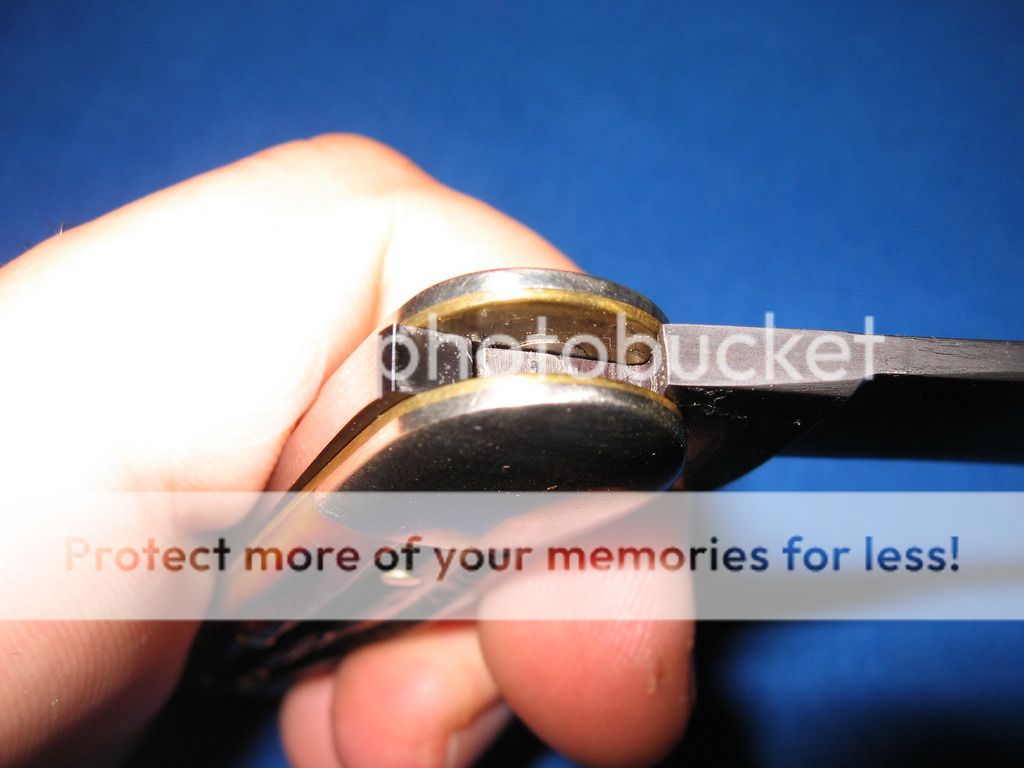
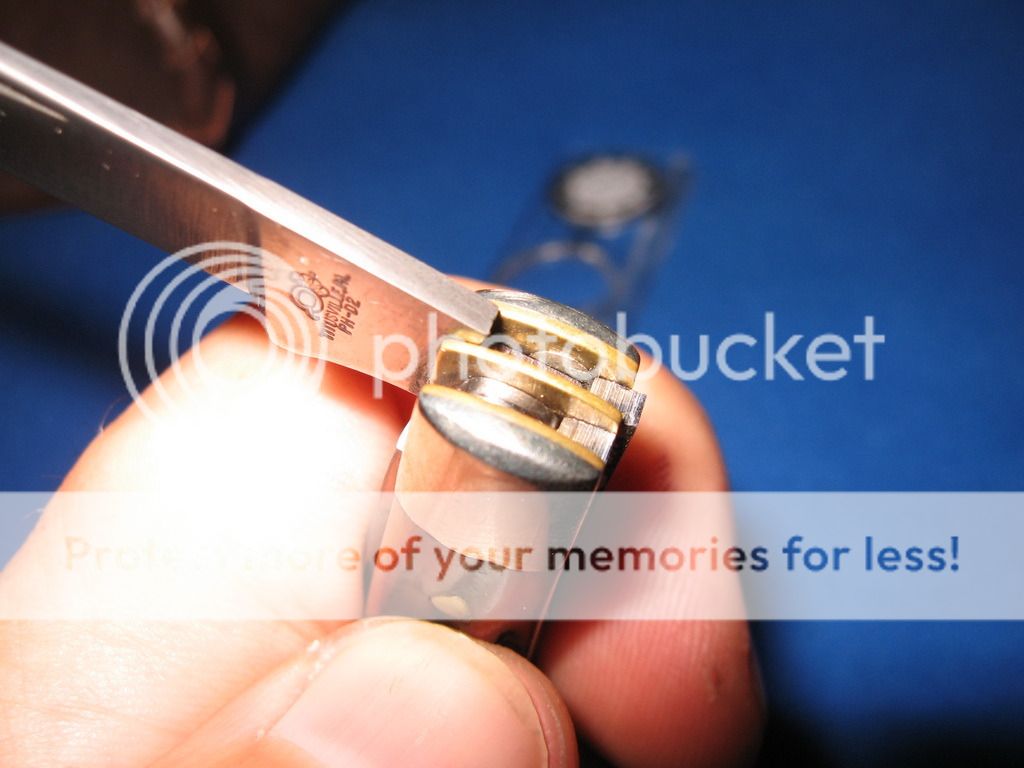
This is a Miller Bros congress - a clapped out example of another I have - showing separate tommy pins and pivot pin holes -- along with some unusual construction. They used a generalized liner with preformed holes (at least positioning holes) - same for both liners - with unused holes for tommy pins for longer bolsters, a second set of unused holes for scale pins (for use with the longer bolsters), and unused shield pin holes. By placing one set of tommy pin holes close to the ends of the liner, they can also attach some styles of tip bolsters. Iron bolsters.
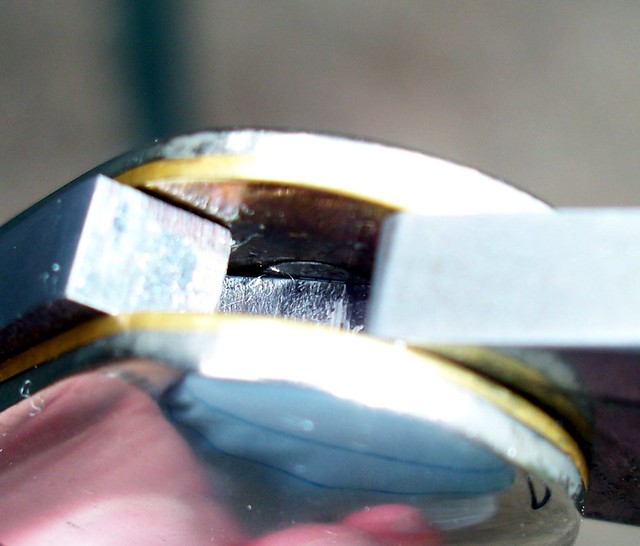
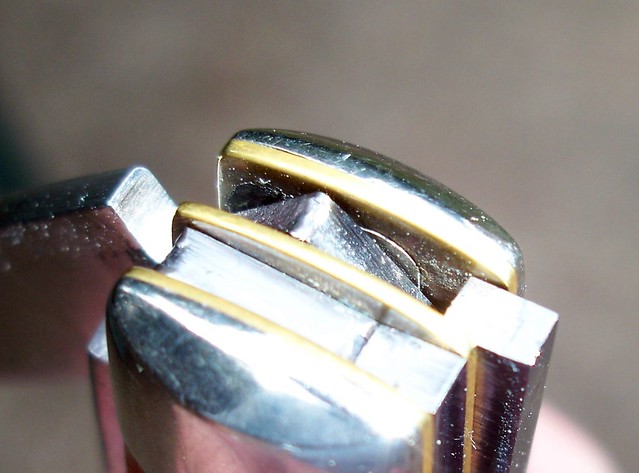
And this is a Case XX 64052 with the huge tommy pins. Nickel silver liners and bolsters. The older Case Tested XX knives used the same construction.
-- Dwight




 :
: