Quench and final hardness

BluntCut MetalWorks

Knifemaker / Craftsman / Service Provider
Joined
Apr 28, 2012
Messages
3,476
I've been looking at a few of my test blades grain images + performance tests, unfortunately getting more confused. Which and why at quench hardness is better than other.

Blade blank: aldo 52100 A, B & C - prepared solution, normalizes, triple therm cycle, etc. quite ready for ht
Goal: 61rc
Aust temp: 1480F 15 minutes soak
Post quench processes: snap temper, sub-zero, temper, dunk H2O, sub-zero, temper, dunk H2O, temper, dunk H2O
Let's pretend: No RA, no crack, no warp and rc readings are accurate

note - feel free to substitude diff steel and parameters

A) rc68 quenched in 2 secs quenchant
B) rc66 quenched in 8 secs quenchant
C) rc64 quenched in 15 secs quenchant
D) your approach?

My gratitude for your insights & guidance.
 
Why are you assuming no RA in test B and C?

The as quenched hardness is a function of the structures formed in the quench and cooling. Assuming the quench speed was fast enough to miss going straight into pearlite, at 1000F the structure is super-cooled austenite. Where it goes from there is a factor of rate of cooling and time delay at any point. Depending on several factors of the quench and cooling rates, RA, pearlite, martensite, and a varietal mix of those will be the final result.
 
Why are you assuming no RA in test B and C?

The as quenched hardness is a function of the structures formed in the quench and cooling. Assuming the quench speed was fast enough to miss going straight into pearlite, at 1000F the structure is super-cooled austenite. Where it goes from there is a factor of rate of cooling and time delay at any point. Depending on several factors of the quench and cooling rates, RA, pearlite, martensite, and a varietal mix of those will be the final result.

No RA for simplicity, however sub-zero and or cryo probably will taken care most of post quench RA. Cognizant of pearlite nose, thus I try to avoid that. I could also change aust temp to 1550 for 2secs quenchant to get lower at quench hardness (maybe around 65-66) + sub-zero to fix RA.

For a same end result rc+mart+pearl percentage matrix. does hardness at quench make a difference?
 
Never assume and never use sub-zero or cryo to correct poor HT or use for insurance against poor HT !! Some alloys are sensitive to hardening temp some not so much. Do it right !
 
Reverse engineer the process for your answers.

Ask ,"Why is there a different as-quenched hardness in the three tests?" When you have figured out what changes, then you will know what needs to be adjusted to get a desired result.

Also, don't assume that harder is better. Toughness drops rapidly as hard goes up. While tempering and sub-zero treatments can adjust some of that, a well designed HT regime will get the right parameters and give the results desired without having to "adjust" for things.

Don't assume that the wheel is old school and needs re-inventing. The HT regime for a 52100 blade is fairly well established. Start there and then adjust as needed to get a certain result. The first place I would NOT play with was quench speed. 52100 is a chromium alloy hyper-eutectoid steel and will not do the best if quenched too fast or too slow. Parks AAA or most medium speed commercial quenchants will be the right choice. From there look at the tempering procedures to get the final hardness needed.

Places to consider in designing the HT regime:
If this will be a slicer, go for procedures aimed at fine grain.
If it will be a chopper, toughness is the place to favor.
Edge retention.
Desired hardness.
Etc.

Make a set of graphs with all the desired things on them and see where they would conjoin the best.
 
Thanks Stacy & Mete.

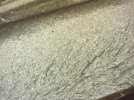
I took these images last weekend for a 52100 test piece (0.1 x 0.7 x 10) applied similar parameters as stated above, except quenched in 120F canola oil.

After quenched and washed in water.
52100 pre snasptemper 20130928.jpg

After 1hr snap-tempered 325F and 20 minutes sub-zero in dry ice acetone bath
52100 after dry ice  20130928.jpg

So does 'do it right' mean I should get something like 2nd image after quenched?

edit: Stacy, thanks again for your 2nd reply, I just saw yours after this post. I am guilty for not keeping much of a record for my attempts. What I need is better samples & images from Pro makers, so I can zero-in, otherwise just try and error would take a lifetime.
 
Last edited:
Back
Top