Question about Heat Treating 1084

Joined
Jul 29, 2014
Messages
155
Hello everybody. I am incredibly new to knifemaking (just getting materials to start my first blade) and I have a question about heat treating some 1084 steel I will be working with when the time comes. I have made a coal forge that should be sufficient to heat steel to non-magnetic, and keep it there for however long I need, but I am curious as to whether or not the fumes from the burning coals will add impurities to my steel that I don't want introduced. Can I keep my steel inside a pipe capped on one end and use it as a sort of heat treat chamber and still get up to temp or will I be alright just setting the blade directly into the coals? I have read the stickies and don't wanna send my blade out for heat treat. I would like to do it myself. If need be I can post pictures of my forge setup. Any advice is welcomed.
 
When ever your gonna HT in coal Or charcoal never let go of the blade and never take your eyes off it. As for the clean coal it depends where you got it from, if you got it from a reputable source that knows what you want it for then you should be OK. The best thing to do is to practice on a test piece.

It's probably a good idea to post pics of your set up.

Welcome to the forums.
 
Use hardwood charcoal, not briquettes. It should work just fine.

When you heat and quench your blade your will get some scale on your blade. Soak it in vinegar until it comes off (usually a few hours at room temp), then sand off the rest.
 
Welcome to Shop Talk.


Forging coal is low sulfur bituminous type. The specific type used by most smiths is called "Pocahontas #3". Hardwood charcoal is the other choice. Use the lump charcoal, not briquettes, as Shane noted.

A muffle pipe might work to some degree with a coal forge, but honestly, it will be far better to just keep the blade moving and heat it evenly. 1084 needs no soak time, so once it is at 1450-1500F and evenly red....quench it.

The worry about "contamination" from the coal is more of a problem at forging than at HT. Both the amount of time as well as the temperatures are far greater in forging. Additionally, the sulfides made are worked into the steel in the forging heats. Too much iron sulfide in the steel can make it brittle. In HT the sulfur may affect the surface, but won't penetrate far ( a thousandth or two). In HT there is always some surface scale to be removed anyway, but that is removed in an overnight vinegar soak and subsequent sanding and finishing of the blade.
 
When ever your gonna HT in coal Or charcoal never let go of the blade and never take your eyes off it. As for the clean coal it depends where you got it from, if you got it from a reputable source that knows what you want it for then you should be OK. The best thing to do is to practice on a test piece.

It's probably a good idea to post pics of your set up.

Welcome to the forums.

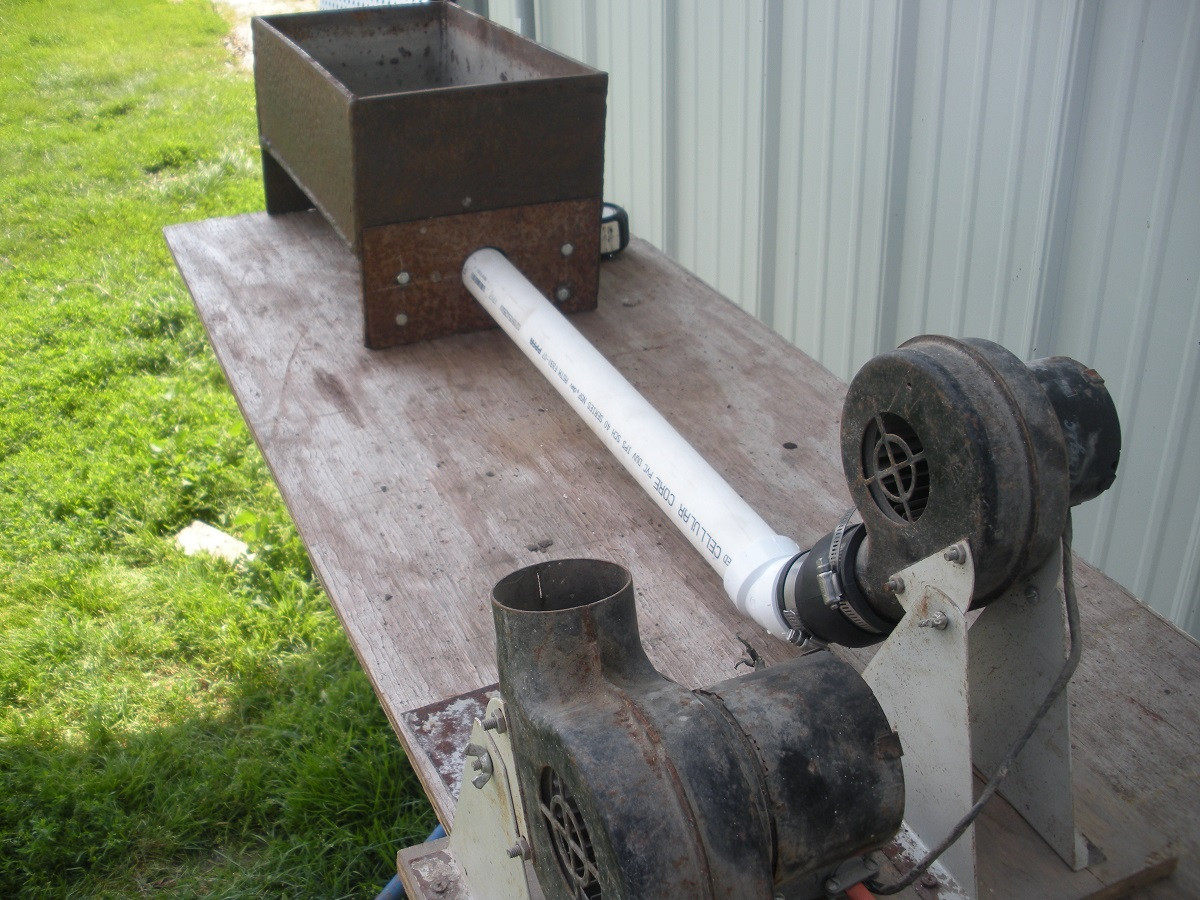
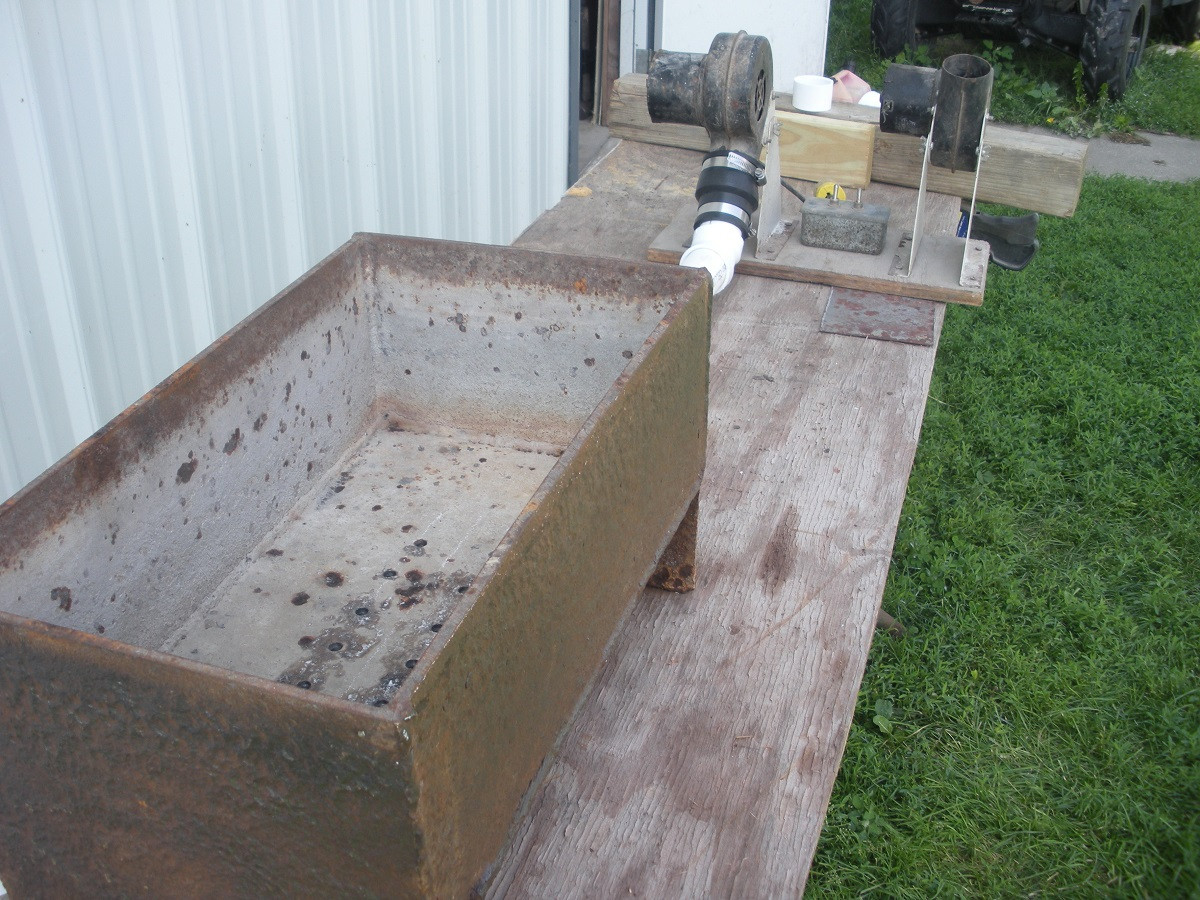
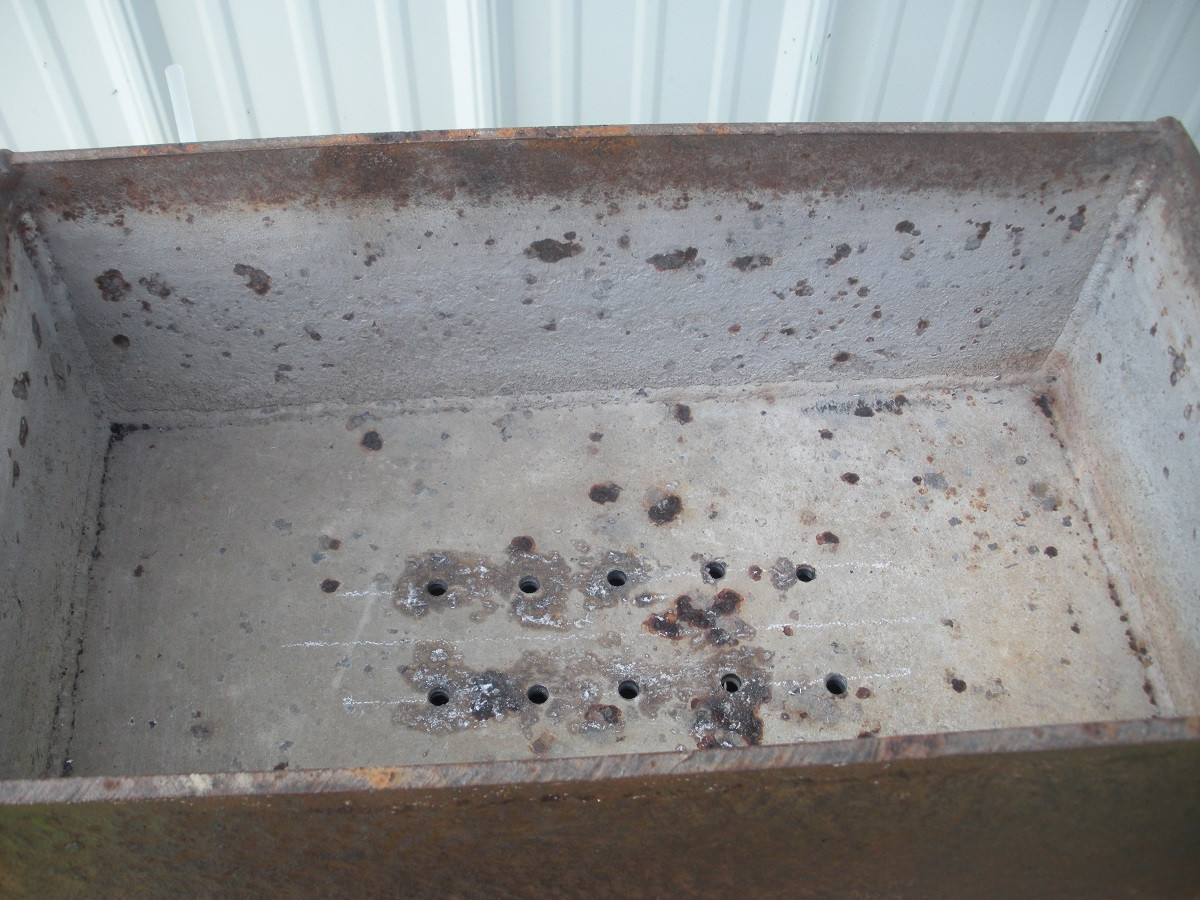
Thank you all for the information. Here is a few pictures of my set up. Any pointers?

sQ38LGf.jpg

22plTwe.jpg

p0arsBL.jpg


I forgot to get a picture but this rig has a 3 inch wide channel that runs almost the entire length of the box welded underneath.
 
Well........., that will make a lot of heat, for sure. Unfortunately, PVC and heat don't mix well.

It needs a valve added to the PVC pipe up by the blower. use that to control the blast.

Without a tuyree, it will have other issues with ash, but that is for another discussion.

It will work for forging to some degree, but may be rather poor for HT. The problem is that you will end up with a big box of burning coals, not a controlled fire hole.
 
Back
Top