Question about Integral Grinding Jig

Joined
Oct 16, 2001
Messages
1,917
Hello,

Let me first say a big thank you to Steve Culver for all the very good info on his site.

I am currently trying to build an integral grinding jig like the one on his site, only for a TW-90. I am making some of the necessary adjustments but just had a couple of questions that I hope others who have built it might be able to answer. Of course, I also asked Steve himself, but I'm not sure how busy he is.

1. Is simply welding the riser to the bottom of the platen rigid enough? From the photos it appears that this is the only point of contact. Is a second, shorter riser in front of the first one simply unnecessary?

2. Due to the different small wheel attachment, I will be mounting my base plate directly to the tooling arm (similar to how the KMG small wheel attachment is mounted). Because of this I have two choices for milling the slots to move the jig forward and backward. The first is to do it exactly as on the site. The second is to weld the angle iron riser to the base plate and mill slots in the mounting plate. I am not very mechanically gifted and was wondering if anyone can think of distinct pros or cons to either method.

Thank you
 
Hi John,

I'm always glad to hear that the information on my web site is helping someone out. My primary goal with my jigs and fixtures page, is to encourage people to be creative with their tooling. Build what you cannot buy to get your work done.

You’ve got a really great piece of machinery with the TW-90!!! Travis is an awesome designer!

There is very little force on the platen when using it for grinding. I've only got three small tack welds joining the riser and platen. I've had no problems with the connection.

On my KMG grinder, the end of the platen rests on the small wheel fork. So, I don't need a second support at the front of the platen. If on your machine you have nowhere for the platen to set, you could need a second support.

The slots for adjusting the platen, I did so that I can use different size wheels. I can move the platen to accommodate the diameters of different size wheels. If you will only be using one diameter of wheel, you may not need adjusting slots. I can't see any definite pros or cons for either of your mounting options. It basically comes down to which is easiest for you to build.
 
By the way. The 1/4" stock that I used to build this attachment is kind of over-kill. I just used what I had laying around to build it. It could be made of thinner stock and would work just fine.
 
Thank you very much!

I have already cut all the parts out of 1/4" stock. I like things a bit overbuilt anyway:)

The front of my platen also rests on the small wheel attachment, so I'll just go with the one point of attachment.

For anyone else who may be doing this in the future, I have also found (the hard way) that the reliefs in both width and thickness don't seem to be necessary on the TW-90. In fact, even a relief of 1/2" in width brought my platen down too low. At the correct angle--for me this is looking like about 24 degrees and using more like 3" angle iron to get it--the 1/4" stock slides right into place at the top of a 1/2" contact wheel.

Thanks again, and I'll update this once I do some actual welding and final fitting!
 
Well, thanks to Steve it looks like I got this thing 99% done, and perhaps quite a bit simpler than I first planned.

I'm usually the one to grind, cut, drill, hammer, whatever first, then regret it later. But I am really working on planning and layout and careful thinking these days. For whatever small discomfort there is in starting a project a bit later, there is a lot of satisfaction in doing it once and right.

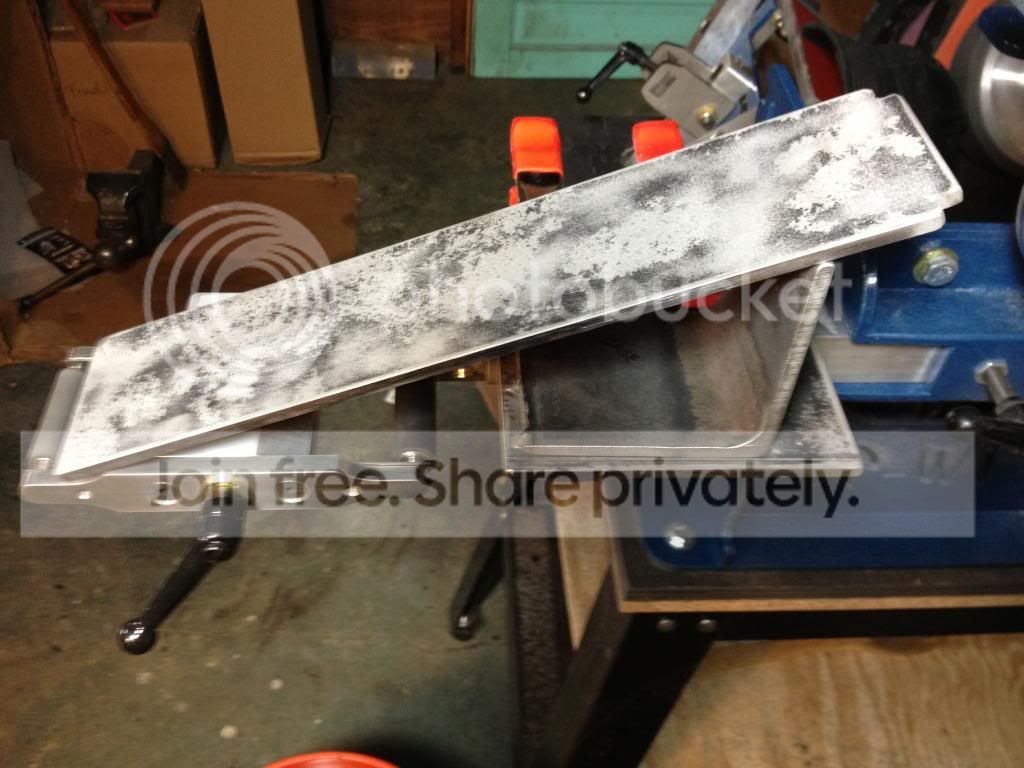
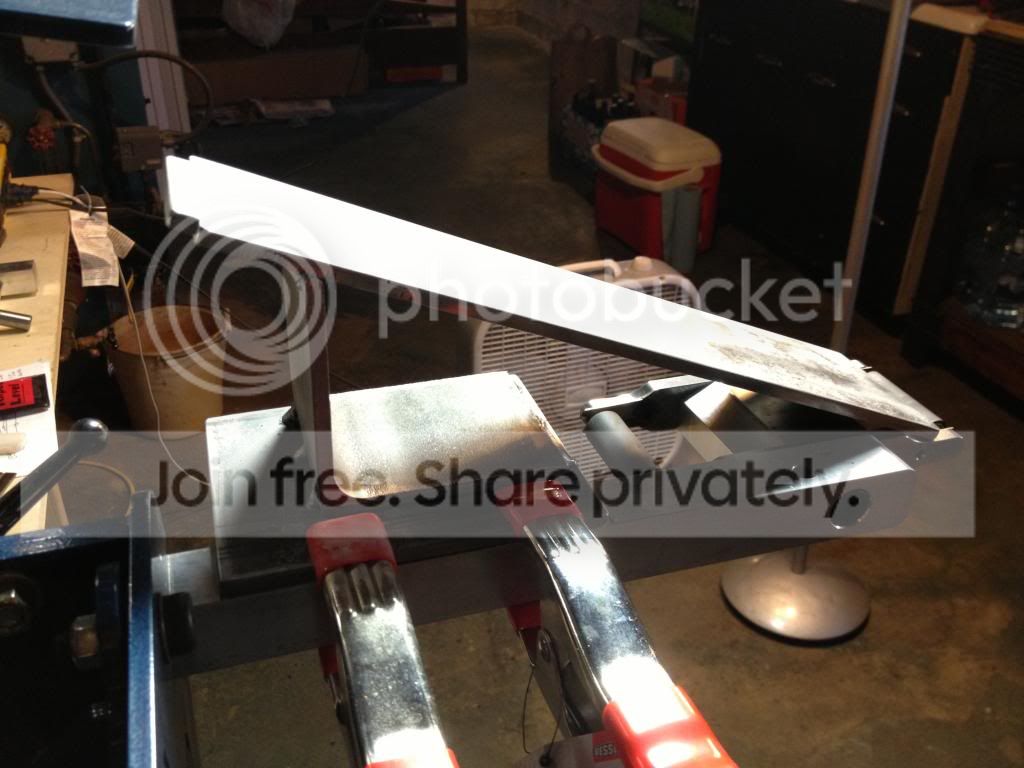
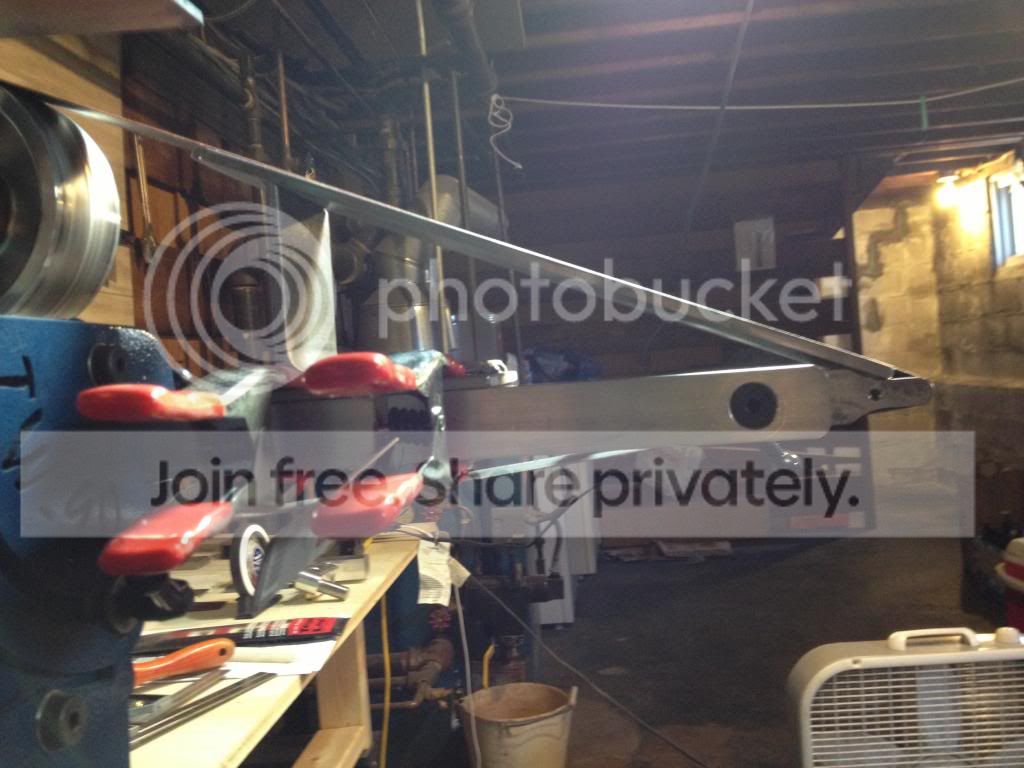
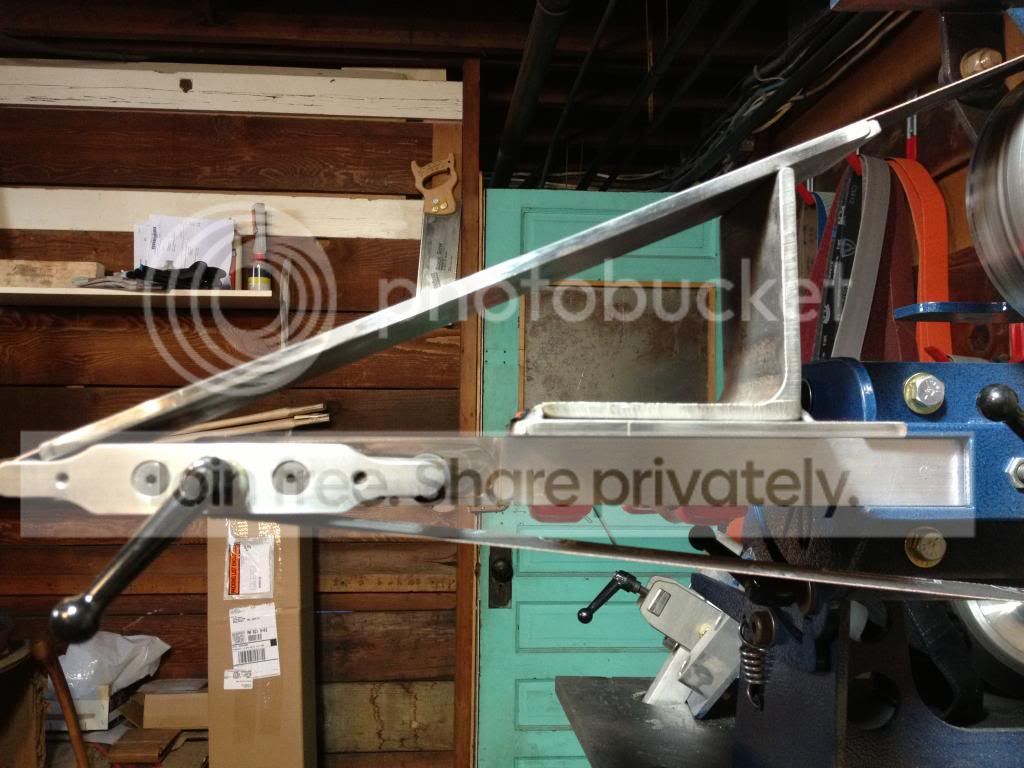
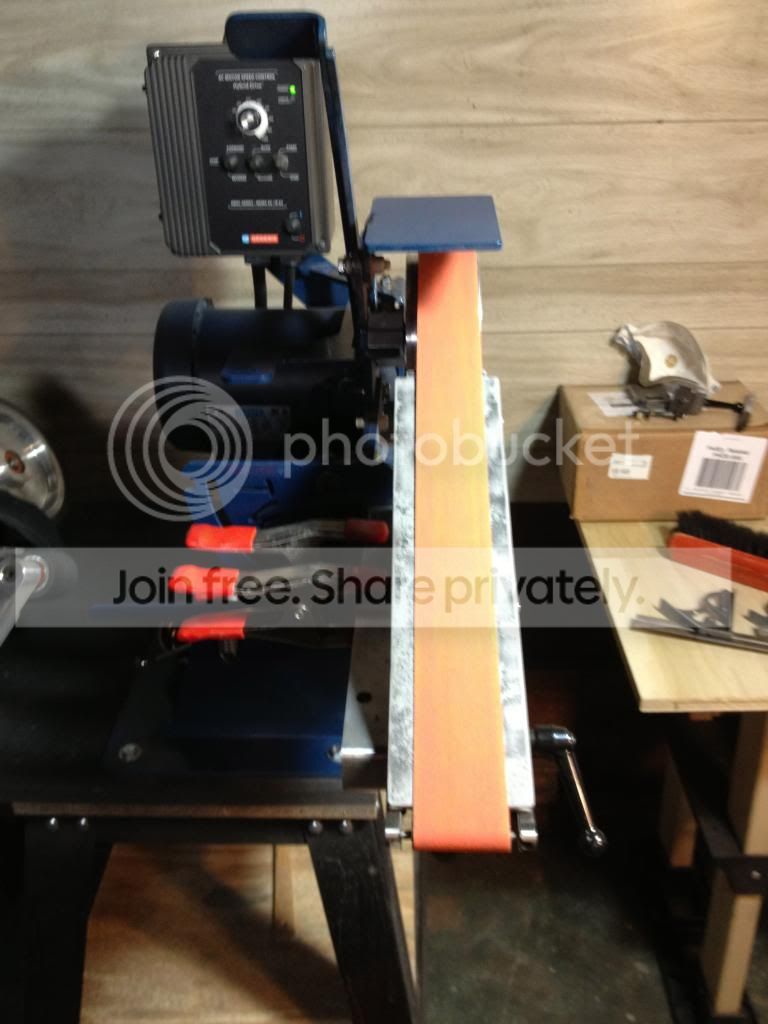
So rather than drilling and tapping my tooling arm and/or milling slots in one or more parts of this fixture, I thought and drew and made cardboard models, etc. Taking my cues from Steve's page and post above, along with some very good advice from Tim Hancock on his grinding DVD, I wound up drilling no holes. I simply welded up a fixture like Steve's at the proper angles for my TW-90 and stopped. My thinking was that spring clamps might do the trick, and they do!

When I have more time tonight I'll post some pics and dimensions for anyone else who may be doing this. A very simple jig to make (believe me, if I can make it it's simple!) that increased an already versatile machine.
 
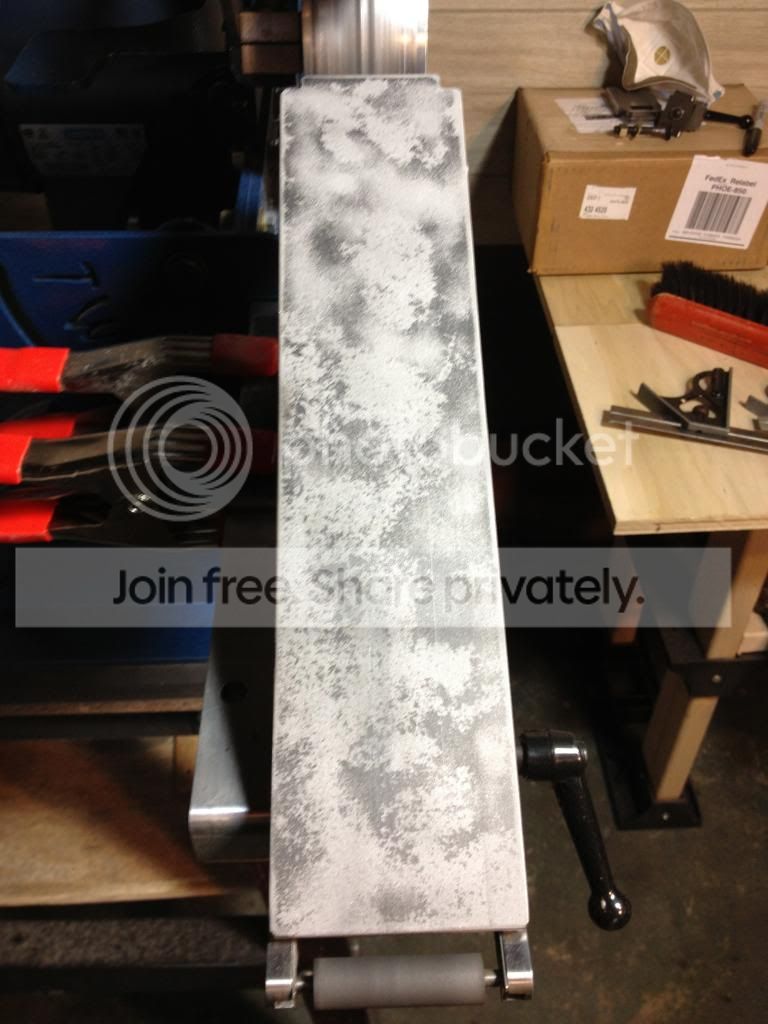
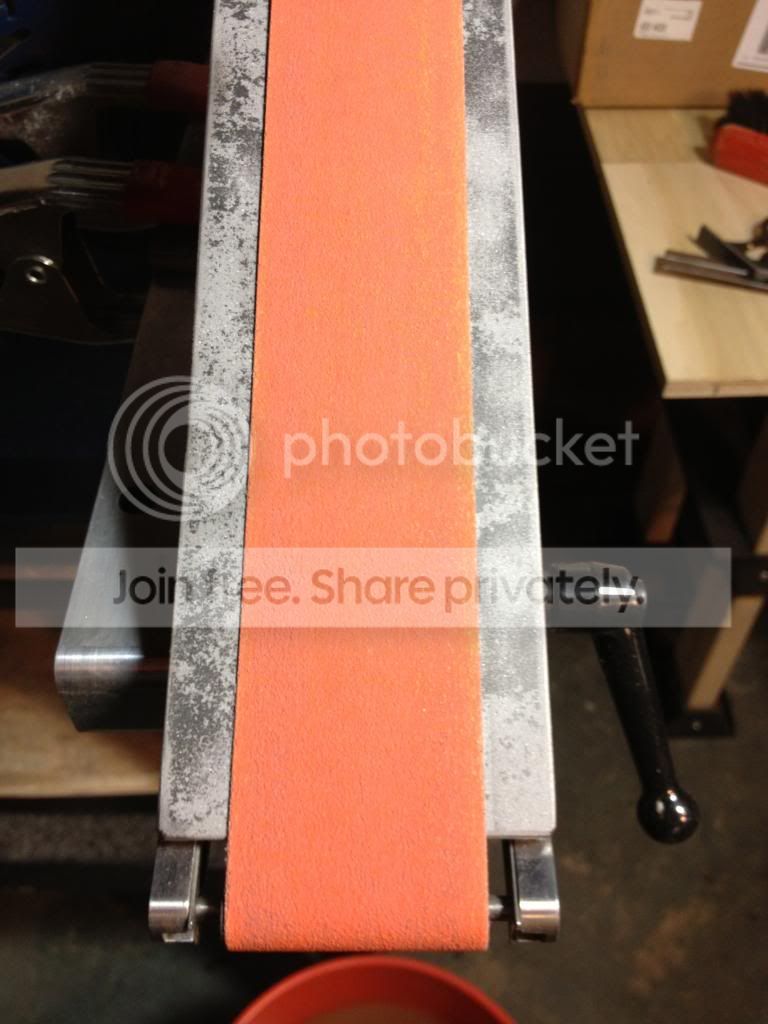
Here are the pics. Please don't mind the mottled look of the steel. I quickly sandblasted it for fun.

My platen is 3 inches wide by 14 inches long. The angle iron for the riser is 4" x 4". And the base plate is 4.5" wide by 5.75" long (I will soon be grinding the outside edge flush to 4.25"). The angle of the platen is about 24.5 degrees.

IMG_2724.jpg


IMG_2725.jpg


IMG_2726.jpg


IMG_2723.jpg


IMG_2722.jpg


IMG_2720.jpg


IMG_2721.jpg
 
Last edited:
Looks like it will do the job! Will look forward to seeing some pictures of a blade ground on it. :)
 
Thank you, and it's a deal:)

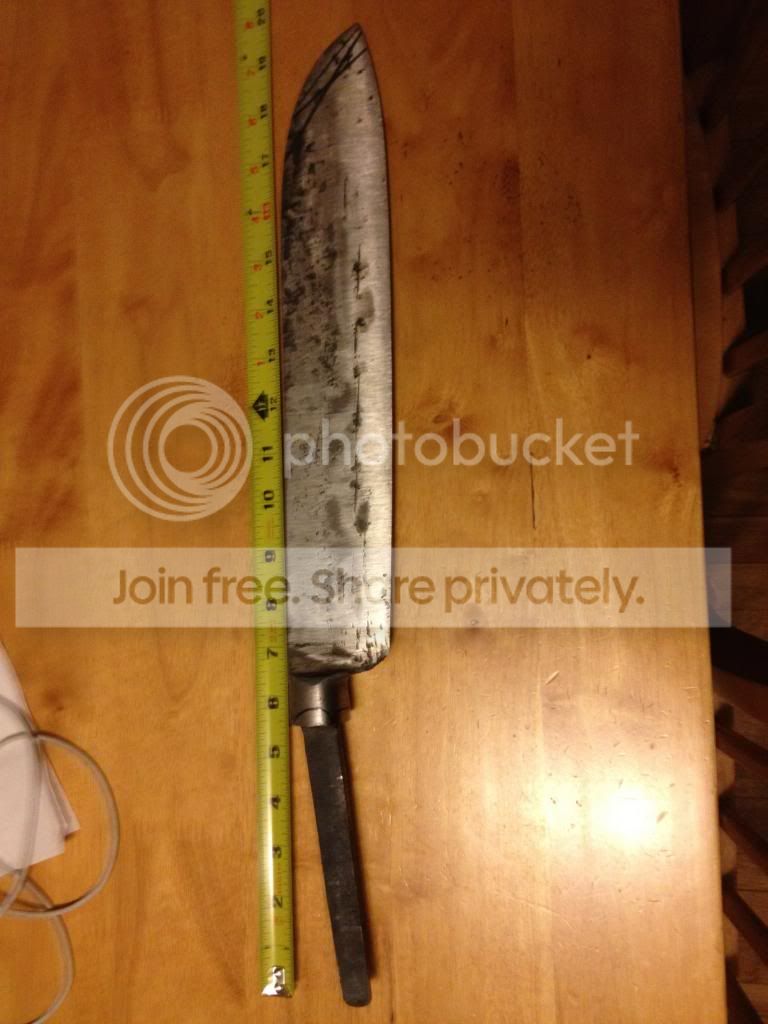
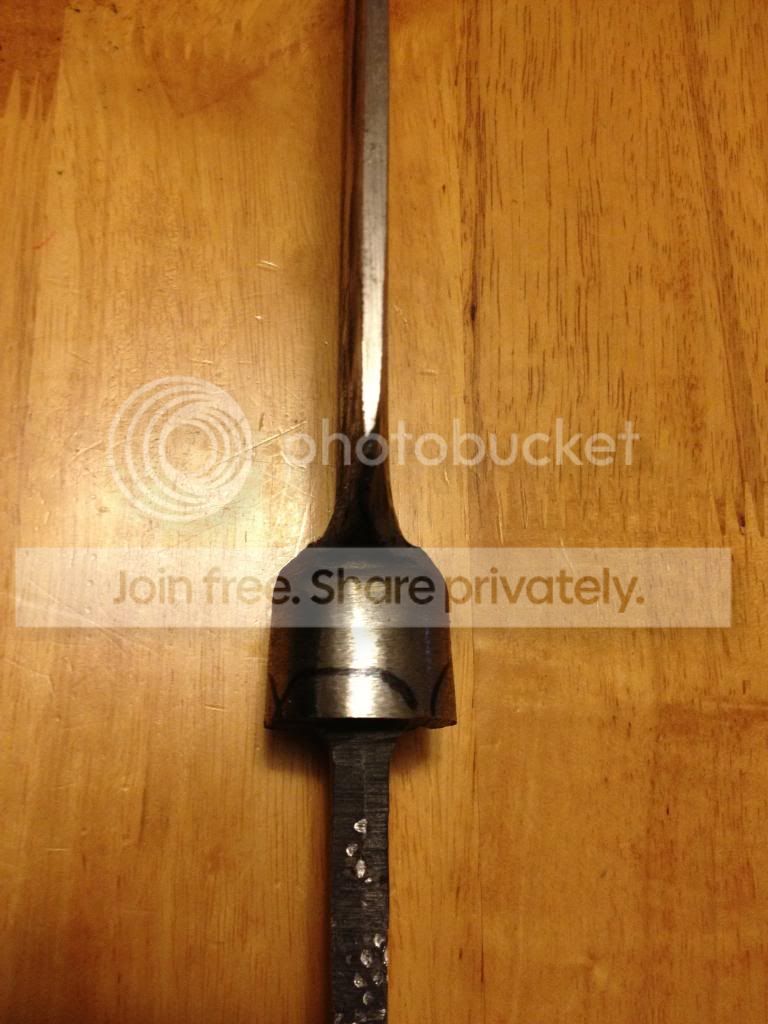
It was a trip to Burt Fosters a few years ago, followed by some time in SE Asia that got me on the idea of a big jungle type integral. Along came Don Hanson's 1.25" round W2 and voila! I now have a lot of bolster to clean up:)

IMG_2774.jpg


IMG_2775.jpg
 
Last edited:
Back
Top