Quick Drill Question

Joined
Apr 7, 2013
Messages
600
Quick question for you pros out there, I started drilling pin holes and a lanyard loop hole in my next knife. For the lanyard loop I started with an 1/8th inch pilot hole and then when I went to drill through that with a 1/4" bit I snapped the bit off and I have two huge burrs sticking out. Two questions, 1: What did I do wrong and 2: what can I do to fix this?

FYI: I am using a hand-held drill at the moment, no press or access to one. I started off very slow but the bit just dug in and didn't spin, I slowly increased speed but it just snapped. I also sprayed the bit with WD40 prior to drilling.
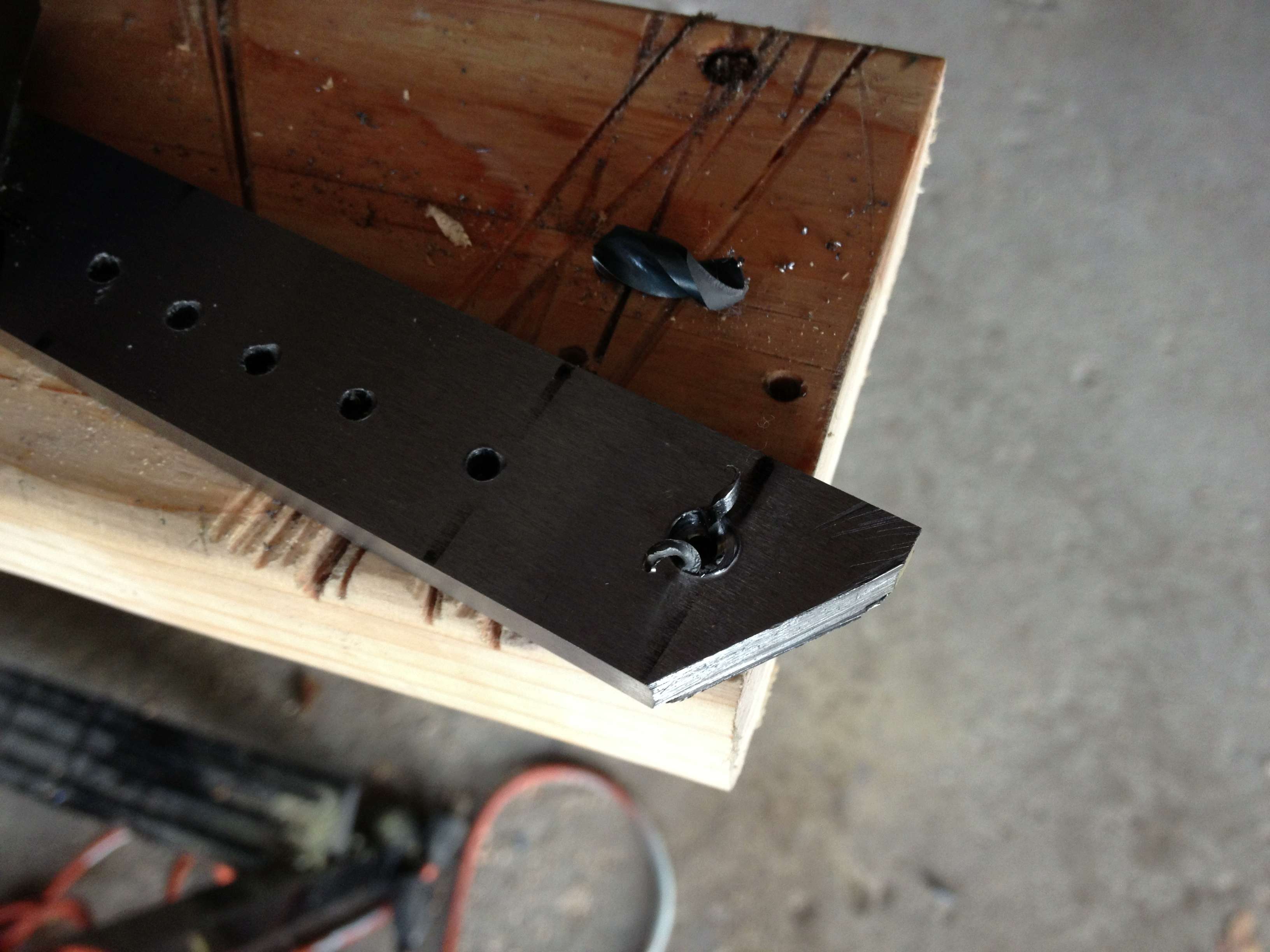

wip22o.jpg
 
Last edited:
The majority of the force required to feed a drill is to penetrate the web. When you predrill you take the web out of the equation which reduces the force needed to feed. You over fed, very likely because the bit fed itself. It is a good idea to predrill large bits with a drill the size of your web. But following a 1/8" drill with a 1/4" drill can lead to this.
 
Nathan,

Thanks for taking the time to answer my questions. Now, when it comes to machinist jargon I am ignorant so after a little google-fu, I believe I understand what you just said above.

What you are saying is that I was using too much speed/power on the bit.

You said, "But following a 1/8" drill with a 1/4" drill can lead to this." Does this mean I should have used a slightly larger bit than the 1/8" when moving up to the 1/4"?

Also, in terms of repairing should I just file down the burrs and abandon the lanyard loop?
 
was the steel clamped to something i.e. a table? if that drill is suddenly jerked left or right by unsteady hands or an unsteady base youd be liable to snap a bit. i'd imagine its very difficult to drill with just a hand drill available.
 
was the steel clamped to something i.e. a table? if that drill is suddenly jerked left or right by unsteady hands or an unsteady base youd be liable to snap a bit. i'd imagine its very difficult to drill with just a hand drill available.

I had the blank clamped down to a 2x4, which has worked fine for all my drilling needs so far. This was the first time I tried to pre-drill a smaller hole before going to the larger 1/4". I think I will avoid this method until I build a workbench and purchase a drill press.
 
If you predrill the pilot hole should be no larger than the web of the final drill size. Fo a 1/4" I doubt that would be 1/16. No need to drill a pilot for a 1/4 drill IMHO. What Nathan means by causing the drill to feed itself is that if the existing hole is to large the next drill acts like a screw and the twist of the drill sucks itself into the hole.
 
If you predrill the pilot hole should be no larger than the web of the final drill size. Fo a 1/4" I doubt that would be 1/16. No need to drill a pilot for a 1/4 drill IMHO. What Nathan means by causing the drill to feed itself is that if the existing hole is to large the next drill acts like a screw and the twist of the drill sucks itself into the hole.

Ok, thanks for clarifying that SteelSlaver. I must admit I am new at a lot of this stuff and when it comes to basic knowledge of tools I am limited. I guess I should have paid more attention to what my Father was doing on the work bench...
 
Web. Look at the end of say a 1/2 drill bit. The web is the part between the 2 flutes at the very tip. On a 1.2" drill it is .08 or just under 3/32. But a 1/8 bit works fine. Slightly over is OK, to much leads to problems. A machinist at work gave me a big lecture about all this when I was making a model cannon and trying to drill a 9" deep 5/8" hole in a piece of brass out to 3/4" with my lathe and was having problems. Actually had to regrind the 3/4 drill to make it happen. Search around the forum and you will find lots of good info on drilling holes and many of the best post by Nathan the Machinist.

Use this search engine http://www.google.com/cse/home?cx=011197018607028182644:qfobr3dlcra and then type in drill or drill holes.
 
SP,
In order to save the lanyard hole in this knife I would try to deburr the hole and they flip the knife over and attempt to drill from the other side. You may find that you have to drill a larger hole than the .250" due to the size of the pilot hole and the drill web size that has already been discussed. That will still be OK as long as the scales you are using fit the outside diameter of the lanyard tube correctly. Just make sure to fill the gap in the tang around the tube with epoxy during glue up. Your other pin holes will locate every thing in the right place.

Jeff
 
I've always tried to avoid pre-drilling. Firstly because of the web issues already explained and secondly because of the potential for work hardening when drilling the pilot hole.
 
Invest in a good set of step-drill bits. Or unibits as most call em. You can even drop to the edge of the next step to quickly chamfer your hole... Of course best advice is get a drill press. My first one was a 16 speed industrial floor model about 50 years old I got for $50 at a yard sale. Changed the way I drilled everything in the shop and is still one of my favorite pieces of equipment.
With a cross slide vice and proper bits it can even do a little milling.

Best advice is above to salvage your lanyard hole though, flip it over and start again... go slow.... Most steel rarely likes to be worked quickly.
 
**Update: After taking everyone's advice into consideration, I had to go out and make a purchase that I knew would solve the problem. I purchased a tool that would handle the stress and pressure's of doing things the hard way.

Liquid Courage

moarbeers.jpg


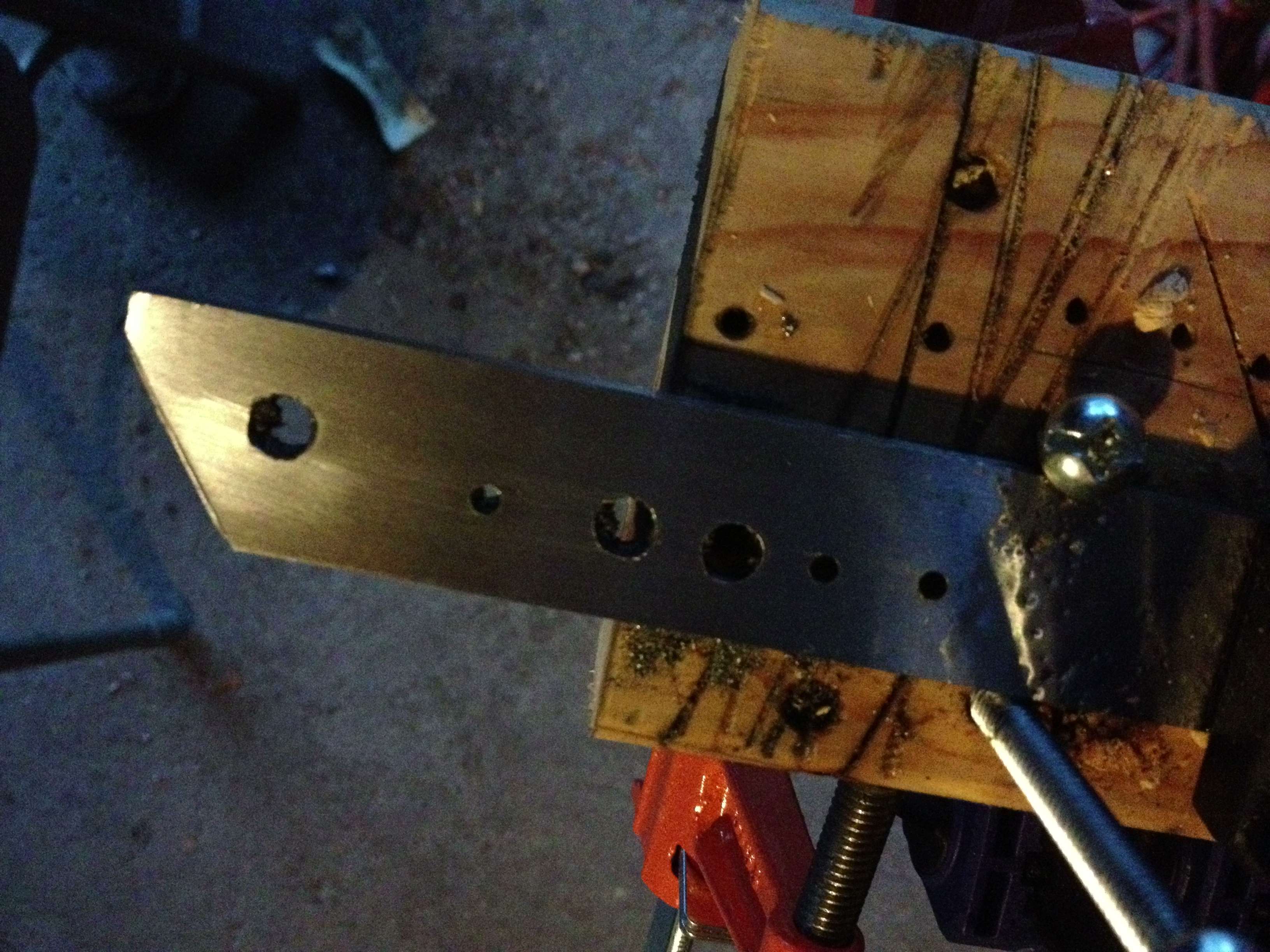
All jokes aside, I switched to a non-carbon drill bit and went at it with copious amounts of WD40 and steady hands. I also installed two 1/4" bolts to brace the knife to prevent any jerking of the bar stock.


wip23.jpg


I was able to save the lanyard loop! Thanks everyone!
 
As another suggestion. If you pre-drill, only go about half way through, then switch to the size desired.
 
Back
Top