i hear about of a lot of people reprofiling there knives and i was wonder what that means really? do you have the sharpening angle go from a 30 to a 20? and is it easy enough to do yourself on something like a lanskys sharpening system or does it really need a pro to do it? or am i just missing something and you have something totally different done.

-
The BladeForums.com 2024 Traditional Knife is available! Price is $250 ea (shipped within CONUS).
Order here: https://www.bladeforums.com/help/2024-traditional/
You are using an out of date browser. It may not display this or other websites correctly.
You should upgrade or use an alternative browser.
You should upgrade or use an alternative browser.
re-profiling?
- Thread starter jnbh34
- Start date

David Martin
Moderator
- Joined
- Apr 7, 2008
- Messages
- 19,520
34, What your speaking of is rebeveling only the edge. Reprofiling is changing the grind (or sides) of the entire blade. DM
Do you mean from flat to hollow grind also do people get reprofiling and rebeveling mixed up? It seems that the videos I've seen it at least looks that there just rebeveling them. But if they reprofile them why would someone reprofile a benchmade or another brand? Is it just personal preference or at is it needed in some cases?
Different profiles (blade side geometry) do different things. For instance, a convex blade will work well for bushcraft tasks, as will a full flat grind or scandi grind. A hollow grind won't work well for bushcraft, but it's great for skinning and slicing. There's lot's to be said about blade grinds and many people don't agree on the pros and cons of the respective grinds.
Rebeveling is like has been said here, something that pertains to the edge exclusively. It can be many different geometries as well and they are all best suited for different tasks.
Rebeveling is like has been said here, something that pertains to the edge exclusively. It can be many different geometries as well and they are all best suited for different tasks.

- Joined
- Apr 12, 2009
- Messages
- 13,535
I know many knife nuts view it differently, but I was pondering the meaning of 're-profiling' a while back. The topic had been brought up in an old thread. I'd looked up the definition of 'profile'; it refers to the shape, look, or outline of something (anything). So, to 're-profile' is to change or otherwise alter the shape, look or outline of something. I tend to believe you can therefore 're-profile your edge', by changing the angle or shape. Or you can 're-profile your blade' in a similar manner. Don't really view it as right or wrong, either way.
As mentioned, 're-bevelling' is more specific as to what's going on, when changing or re-doing the edge bevel itself.
As mentioned, 're-bevelling' is more specific as to what's going on, when changing or re-doing the edge bevel itself.

- Joined
- Jul 22, 2009
- Messages
- 11,409
So I guess this would be a true "reprofile"?

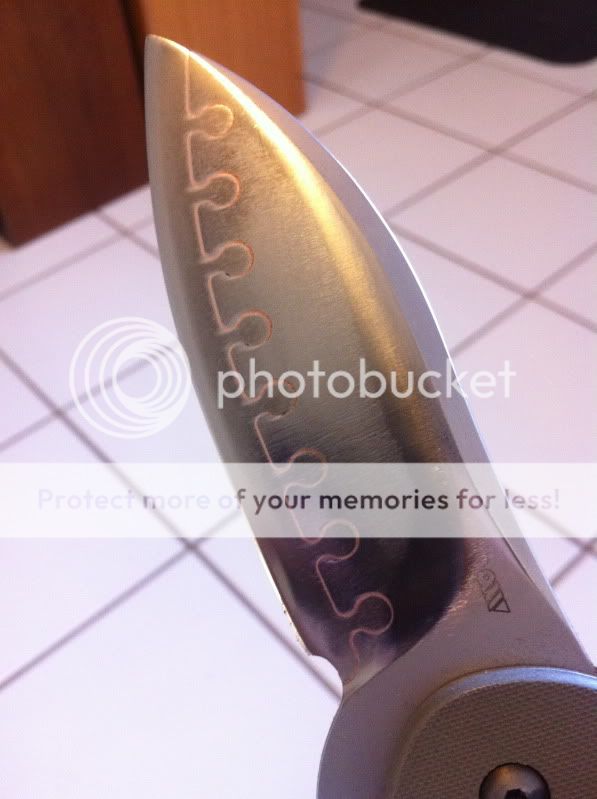
I'm guessing this is like saying "clip" for guns when the proper term is "magazine". While Hollywood can't be blamed for the thing with knives, it will persist .
.
I'm guessing this is like saying "clip" for guns when the proper term is "magazine". While Hollywood can't be blamed for the thing with knives, it will persist
.I know many knife nuts view it differently, but I was pondering the meaning of 're-profiling' a while back. The topic had been brought up in an old thread. I'd looked up the definition of 'profile'; it refers to the shape, look, or outline of something (anything). So, to 're-profile' is to change or otherwise alter the shape, look or outline of something. I tend to believe you can therefore 're-profile your edge', by changing the angle or shape. Or you can 're-profile your blade' in a similar manner. Don't really view it as right or wrong, either way.
I agree with that.
so noctis what did you do to that knife or did you have it done and why did you do it? does it make it easier to sharpen or does it make it sharper?
It looks like he did a convex grind. Convex grinds are supposed to cut better because they reduce resistance/drag when cutting through materials.
- Joined
- Feb 7, 2007
- Messages
- 2,787
here is a small 're bevel' i did not long ago; doesn't look the best, but its a different cutter now.
factory edge

after
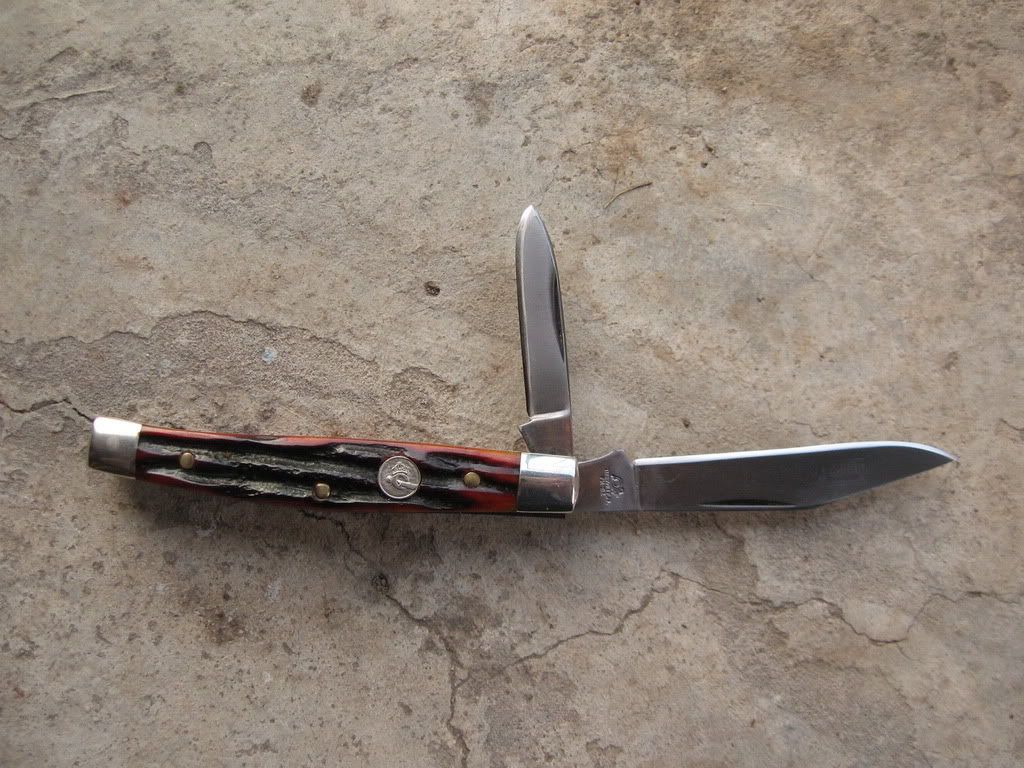
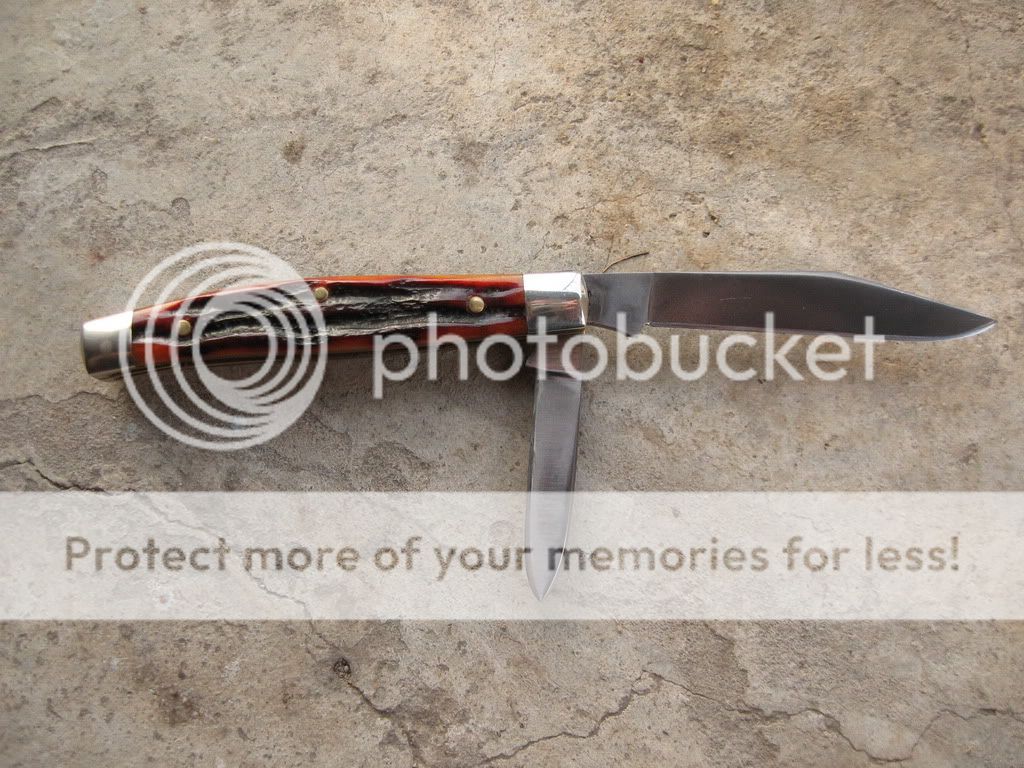
factory edge
after
- Joined
- Jul 22, 2009
- Messages
- 11,409
Actually the idea was to simply thin out the blade behind the edge, but because I used the Worksharp to do it rather than a full size belt sander with a platen(lack of space), it ended up being more convex than the flat ground I would have preferred.It looks like he did a convex grind. Convex grinds are supposed to cut better because they reduce resistance/drag when cutting through materials.
It does cut better though, and I'm hoping to apply the same treatment to a couple of Queen fixed blades to see how that turns out.