
Really struggling to find info on zeroing or calibrating an ENCO hardness tester

Josh Rider

Stuff maker
Joined
Sep 2, 2014
Messages
2,428
I can't seem to find any information on calibrating this hardness tester.
I've been through the manual several times.
I purchased a new diamond indenter and am still getting high numbers by at least 10 points.
Ken H. had some info for calibrating a wilson machine, but the insides are different than mine.
Does anyone know where to look to find out how to calibrate this machine?
I've tested it on the steel heat treated by Peter's as well as the test blocks that were made for the hardness tester.
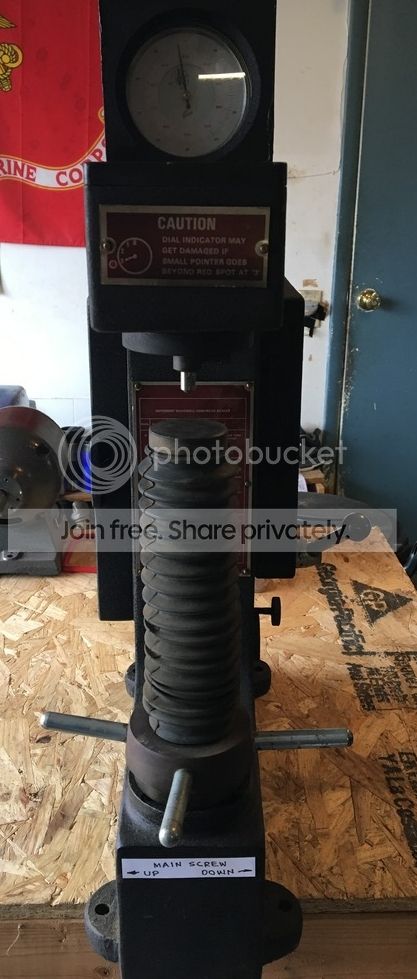
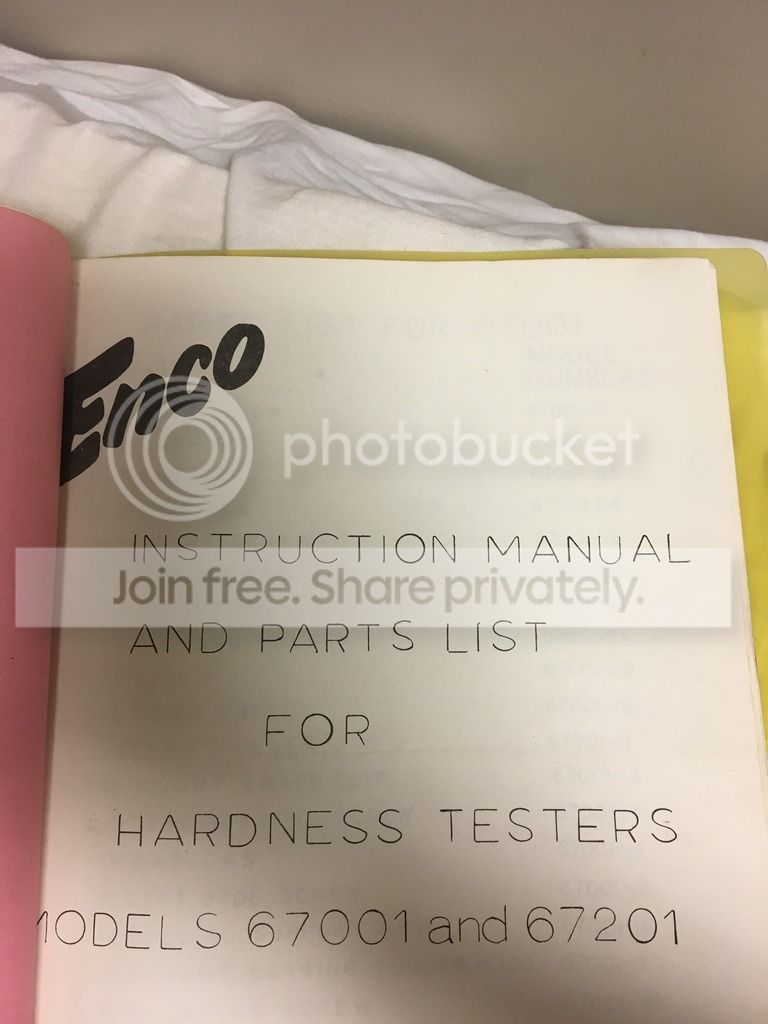


Does it make a difference if this is on a wooden table?
I sanded and cleaned the anvil, do I need to surface grind it?

Thanks for any help or experience.
 
I do know that they should be level and you have to unload the indenter with the secondary leaver after the dial stops moving.
 
Not yet but only because this was purchased used and Enco was sold recently. But I will try to call the number I have on the manual. I'm just surprised there's not much information online, or maybe I'm just not asking the right questions.

I would be willing to pay an authorized tester/inspector if I knew where to find one locally or what they would be called.
 
Do you have a calibrated billet for the hardness you usually use? RC testers are pretty simple to calibrate if there are no major malfunctions.


Pablo
 
Do you have a calibrated billet for the hardness you usually use? RC testers are pretty simple to calibrate if there are no major malfunctions.


Pablo
I do Pablo, but the guy that owned it before me from the looks of it used both sides one time. Which brings up another question. Can I surface grind the test blocks?
 
yes you can, the ISO literature says you don't measure 2mm from a previous indentation, but lets not get that anal, surface one side and with a sharpie write do not indent here :D

When I calibrated mine I went with measurement samples and measured with other RC testers, once you are in the +/-1RC range you are ok, not NIST ok, but ok.

My RC tester has one of the weights in the back filled with metal blasting media, so you take or add a little until measurements are in the range. Mine is still accurate.


Pablo
 
To calibrate the tester adjust the flow of the dashpot. If it is reading too hard, open the set screw to allow faster penetration. Most of these have a cap screw over the adjustment screw. Make sure things are at room temperature for consistent results.

Look at your new diamond penetrator under magnification to make sure there is no damage.

Hoss
 
Hoss, I'm getting similar high numbers from both the old diamond and the new, so I guess that's a good sign.
I'm going to try to mess with it again tomorrow and bring it in the house. I'm probably in the 50s in the garage today, but I'll try other things.
I also need to pick up some oil for it, I don't know if that will make a big difference, but it may.

Thanks all
 
Devin and others - How often should you change the oil in the dashpot, and what oils do you recommend. I was thinking about Mobil hydraulic 10W as a possible replacement.
 
Stacy, this manual recommends atline 10, sae 10 light, or any light weight unblinded hydraulic lubricating oil.
How come everything knife related is hard to find :grumpy:
 
Back
Top