Relying too much on technology...

My biggest beef with GPS is that it doesn't really allow you to study the terrain and plan a route. The first time I tried one, I made a point of following it exactly. Well, it got me to the base of a bluff and my waypoint was a benchmark I knew was up on top. But I was still within 100m, lol. I was always trained that most of your nav happens before you leave so I don't see gps supplanting magnetic nav and dead reckoning, at least not for me.

One of the biggest advantages of using a map vs gps is that you have a record of your navigation that you can see at a glance without scrolling through several pages on a 3" screen. It is good as a means to double check resections, but if the two methods disagree I'll question the gps results first.
 
When I had a GPS I loved it.

You could get coordinates for stuff you had never been to before.

I also loved bookmarking camping spots and water sources because sometimes you are on the trail and that lets you know how far you can go before dark and stuff.

That said I always had a map and compass also.

Around here it's hilly so the land has a lot of contour. You can do nearly as good with a topo map because as long as it's not too wooded and brushy to get a view you can figure out the turnoffs and stuff based on the hollows and stuff.
 
I was just going to ask that Hollowdweller.
When I was young and a scout we learned to navigate by reading terrain and using a topo map, as well as compass navigation.

Honestly, I'm very comfortable with a map and compass. I've never owned a GPS, so I won't bad-mouth them or talk them up, but I think people should learn to navigate themselves, before buying the fancy doo-dads.

Or maybe I'm just well-aged flatulence.
 
I don't have a GPS. But I have seen Mapquest give some pretty shoddy meandering directions to what should have been fairly straightforward destinations. It's made me wonder what kind of weird process is used to generate directions.
 
The problem with idiots and GPS is not the GPS.

They work well when someone spends a few minutes to figure out how to use them.

Maybe I'm the only one in the world that knows how to use one, or maybe I have the only one that works, but I have never gotten into more trouble as a result of my GPS unit.

I used it 5 months ago in my move from New Haven CT to San Mateo CA, with the routing function not working.

I don't rely on it solely for backpacking, but you can bet that it is in my backpack.
 
Mapquest uses algorithems to define the fastest route. It bases that on speed limits, traffic lights, etc. It will definitely take you way out of the way if the program says that it is 1 minute faster. It vastly prefers interstates to highways, and if you are walking, the directions are a waste, as it also takes into account 1-way streets. But they do give you start point, end point, and a decent lay of the land in between.
 
Id be willing to bet that you guys that have no trouble with the GPS know how to use a map and compass too, and did not just buy it as a way not to learn how to orientate.

Im sure lots of people have bought a GPS and thought that thats all they would ever need to get around.

Society as a majority is lazy and relys on gizmos to do stuff for them waaay too much.
 
I was just going to ask that Hollowdweller.
When I was young and a scout we learned to navigate by reading terrain and using a topo map, as well as compass navigation.

Honestly, I'm very comfortable with a map and compass. I've never owned a GPS, so I won't bad-mouth them or talk them up, but I think people should learn to navigate themselves, before buying the fancy doo-dads.

Or maybe I'm just well-aged flatulence.

Well to tout the benefit I was going for the first time to Haystack Knob a few years back.

Basically you come to this point where an old Railroad grade winds around the hill and then there's a turnoff up the hill and over the hill to an old road that leads there.

The area was logged in the early 20th century and most of the trails follow the railroad grades either partially or totally.

The problem is that there are railroad grades all over the place that LOOK like the trail. Sometimes even more than the trail does.

So I'm going along and on the railroad grade and my GPS says TURN! I might have missed the trail off the grade. Also when I went over the hill you go thru this huge meadow after you leave the woods. On the way back I nearly missed the turnoff cause it was pretty grown up.

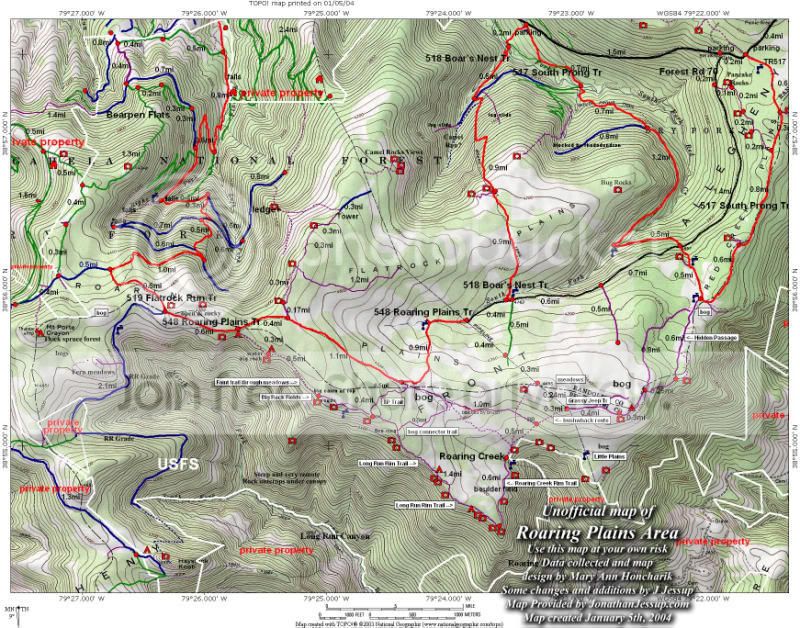
But by far the most awesome use of GPS in my opinion is the ability to use them to DRAW topo maps for future use.

The Roaring Plains area is one of my favorite places in the Mon. However it has very few official trails.

I would never attempted hiking the area till 2 people I know did a LOT of hiking and bushwhacking there and mapped all the trails and bushwhack routes and camping sites and points of interest with their GPS's.

To me that is what makes them invaluable:
Roaringplainsmap.jpg


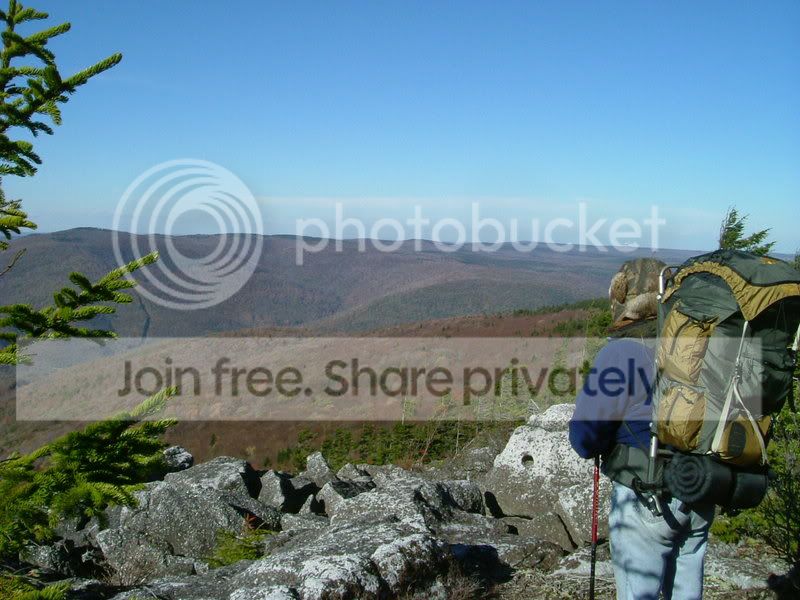
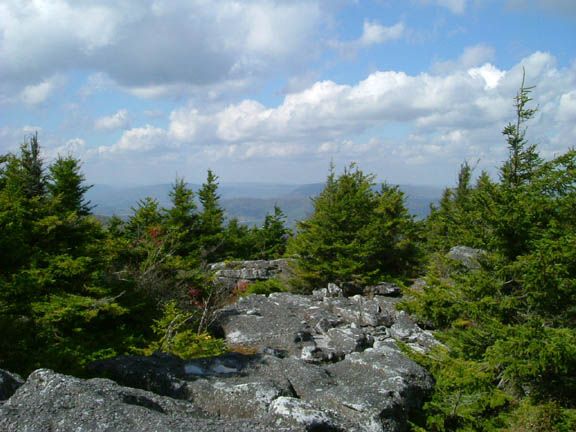
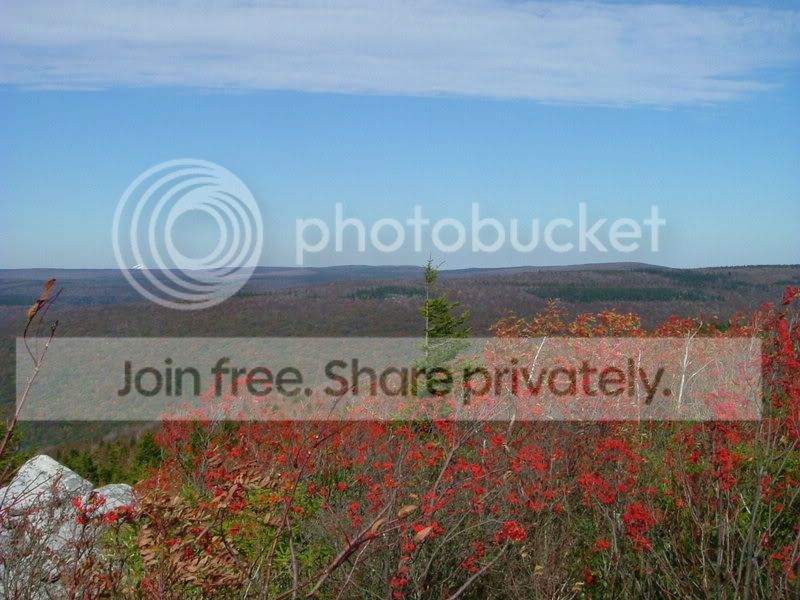
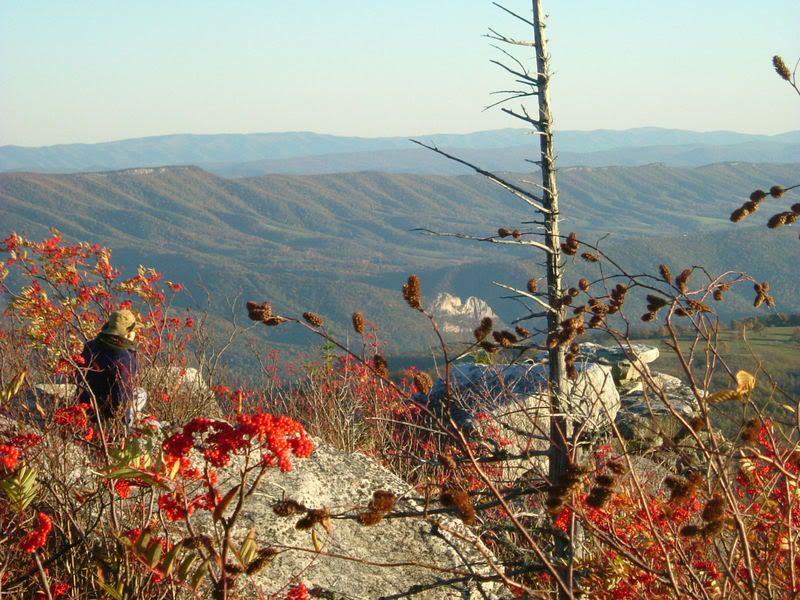
Without them I would have never seen these sights:
View off of the microwave tower trail on that map
2006_1010Image0081.jpg

radiotoweroverlook3.jpg


View from the Boars Nest
2006_1010Image0118.jpg


The point on the rim trail
2006_1010Image0029.jpg


Blueberry and spruce on Hidden Passage
2006_1010Image0015.jpg


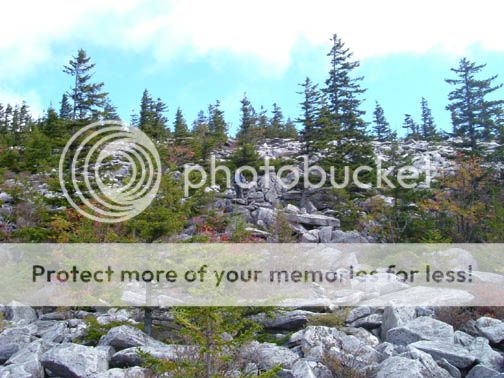
The mega boulder field near where the Canyon Rim meets Roaring Plains

meboulder.jpg
 
Mapquest uses algorithems to define the fastest route. It bases that on speed limits, traffic lights, etc. It will definitely take you way out of the way if the program says that it is 1 minute faster. It vastly prefers interstates to highways, and if you are walking, the directions are a waste, as it also takes into account 1-way streets. But they do give you start point, end point, and a decent lay of the land in between.

You would think. But in the instances I refer to, no. My guess, with the times Mapquest went pretty wrong, is that it simply had bad information to work with. In any event, the sub optimal result is still the same.
 
on mapquest-i prefer to use mapquest or googlemaps (lately been preferring googlemaps) to pull up a picture of the route and then use that to map my own route. basically it allows me to print out the piece of a roadmap that is directly relevant to me more than anything else.

also, most of my road trips are short distance, within about 15 miles, so that means that its easy to map out in one map in fairly large scale.

before i go hiking/exploring locally i like to pull up a map on googlemaps and print out a "terrain" (topo) map and a satellite photo. it just helps get a good close up picture of everything.

HD-that's pretty awesome that they were able to map out that area, a good thing about GPS for sure. i agree with the previously posted sentiments though and agree that GPS should be a supplement instead of a replacement to a map and compass.
 
GPS itself cannot lead anyone astray. It's a system for satellite-mediated location-finding. But GPS connected to mapping technology leads to over-reliance on what the ancient Greeks presciently and mockingly referred to as "the God from a machine".
 
GPS itself cannot lead anyone astray. It's a system for satellite-mediated location-finding. But GPS connected to mapping technology leads to over-reliance on what the ancient Greeks presciently and mockingly referred to as "the God from a machine".

That's "deus ex machina", right Esav ?

My wife's from Arizona and tells many tales of tourists from the less arid east wandering off into the desert on a "hike", only to be found weeks later, inanimate, of course. Most of these never even packed water, compass, or a map ! At least a GPS might have allowed them to backtrack properly...maybe.

I consider these to be of the same ilk as those who are killed/mauled by cougars on the California suburbs 'hiking trails. "If your goin' where lions are, pack a GUN!" Regardless of the 'illegal firearm" statutes of the "endangered" status of cougars, better to be alive and cited/ticketed than dead and green/stupid.

Sorry to get off track...

I learned on my first trip to Colorado that just because the map/GPS says it's a "road" doesn't mean you can actually go down it !
 
That's "deus ex machina", right. I spent 5 years on Latin, but never got around to Greek so I don't know the original phrase.

You're not the one who's off track! :D Those poor tourists were.
 
In my area, even a lot of paper maps have roads on them that don't exist or aren't where they should be. The road navigation GPS stuff would be almost worthless for a lot of places I go. Map and compass have gotten me around for quite a while, and will continue to do so for a long time. I really can't comprehend depending on a rather unreliable gadget to get around.

There are a few situations where I'd like to have a GPS around, but I'm way too cheap to buy one. Also, usually in those situation somebody else has one, so I mooch.
 
I agree, it's not the GPS but the person using it that is the issue; but I do agree about relying too much on technology. I use to do a ton of land navigation in Washington and every topo map we had was not updated...several new logging roads, etc. Forget roads, focus on using your compass and terrain with the topographic features. Same thing happened in Korea...I could locate hilltops, but if you followed any roads you'd end up a victim from "slicky-boy":D. We had two critical SAR missions (civilian injuries) down in Ecuador where our military maps were completely white:eek: Talk about tough...the only instrument was the compass and GPS to track the teams on the ground from the helo...we had no maps of the area at all and eventually had NIMA shoot some newely mapped areas down to us about 2 months later.

ROCK6
 
Hollowdweller: t thanks, I can see why they'd be invaluable for that purpose.

Heck, that may be enough reason for me to buy one!
 
Yes, there are many people out there that think if they buy a GPS they can never get lost and it will always get them home safe. I think those myths are perpetuated by the news media, magazines and even online forums. Anyone remember James Kim? There are lots of discussions online about how if he'd had a GPS he wouldn't have become lost.


I would never attempted hiking the area till 2 people I know did a LOT of hiking and bushwhacking there and mapped all the trails and bushwhack routes and camping sites and points of interest with their GPS's.

Maybe I'm missing something, but I don't understand this part. You wouldn't go hike in an area until you knew beforehand where the trails, camping sites, etc. were? To me that's the best part of being in the woods....finding new things, exploring what's there.
 
Relying entirely on a GPS for navigation in the back country is not terribly wise. Just because some people misuse a device or rely to heavily upon it is no justification to reject it out of hand. The persistant aversion to GPS I hear professed by people here is puzzling. This view of technology fails to recognize that a compass is technology. Today's topo maps are products of exceedingly high technology. Even the blades we all enjoy so much are technology.

Can a GPS fail? Of course. Batteries can go dead, the military could detune the system, or the unit could just crap out. That an item my become inoperable is an insufficient reason to utterly reject using it. Believe it or not, a flashlight can go dead, a knife can break, or a motor vehicle can break down. I would hate to think that any of you would forego these items or suggest that anyone that carries/uses one is too dependant on technology.

Like it or not, a magnetic compass has linitations and weaknesses as well. It is fragile, subject to interference, and can be knocked out of callibration. How exactly is this going to help you determine your location in deep timber or dark of night? Am I saying a compass is bad and that outdoorsmen should all chuck them out? Of course not. Am I saying that GPS necessary? No again. Nonetheless, this technology is proven, reliable, and affordable. Limitations can be addressed, just like those related to any other equipment we choose. Exactly how hard is it to make sure you have have fresh batteries in the unit before heading out and to carry spare batteries?

As hollowdweller mentione, in addition to realtime navigation, a GPS is very useful in accumulating data on your routes and locations you would like to remember. Many will also record you time under way, your speed, and your rate of ascent for later use.

-- FLIX
 
FLIX, although for the most part I am a proud Luddite, I wasn't trying to downplay the usefulness of a GPS in my post. I'm not really a big fan of them because of reasons already mentioned - that people rely solely on them to keep themselves found. If a GPS is used as an adjunct to other navigational skills, then great!

A GPS can be a wonderful tool - you can bookmark fields of cordage fibres, a patch of blueberries, etc. so you can come back and find them again. Perhaps a fishing hot spot. One time I thought it could come in really handy is when we were canoeing this serpentine river. There are no real landmarks along the river to help locate yourself on a top map. A GPS can provide useful information like where you are, or how far is it to the campsite. Or, there is a really nice campsite and I would like to come back and camp there. The GPS can pinpoint it for you.

Having said that, I always used to bitch to my buddies about them being useless pieces of s**t. I guess they got tired of listening to me because they bought me one to shut me up. Now I'm in the process of learning how to use it. :o

Hey you never know, one day I might run into new-GPS-owner guy again and I'll be ready. :D

Doc
 
Back
Top