Restoring a Broken Tip -- Freehand

Joined
Nov 9, 2009
Messages
2,161
My roommates destroyed the tip of their Murray Carter (MS) paring knife and while they were out today I decided to fix it for them. You can see the knife before I started my work here:
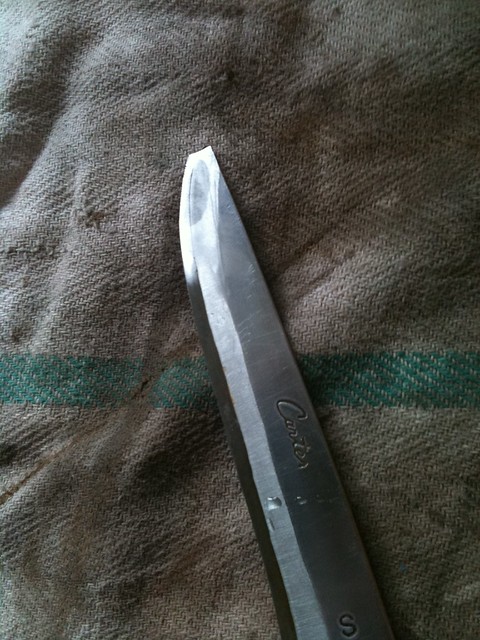
7033548101_8a59de2f6b_z.jpg

Working on a KING #1000. My 'last molecule' that will eventually become the tip will be the top of the spine. I'll be removing steel on both the secondary and the primary edges to re-establish the tip. Compare the location of the shinogi (ridge line between the blade flats and the secondary edge) with the last picture and you can see how much of the secondary edge I ground back.
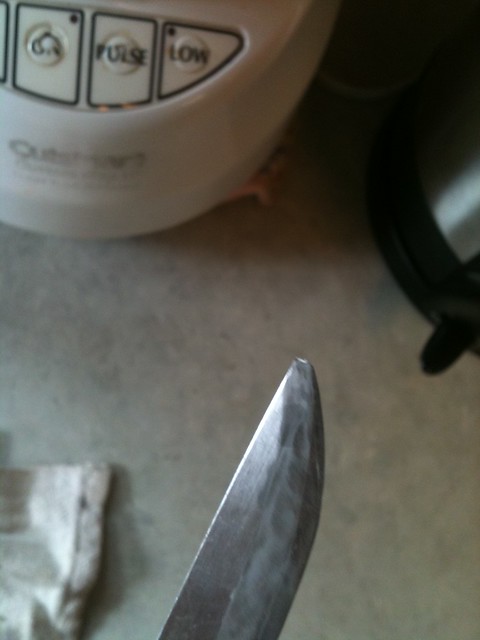
6887455310_f11fa8642b_z.jpg

Slowly making my way up to the spine. 80% there after one hour.
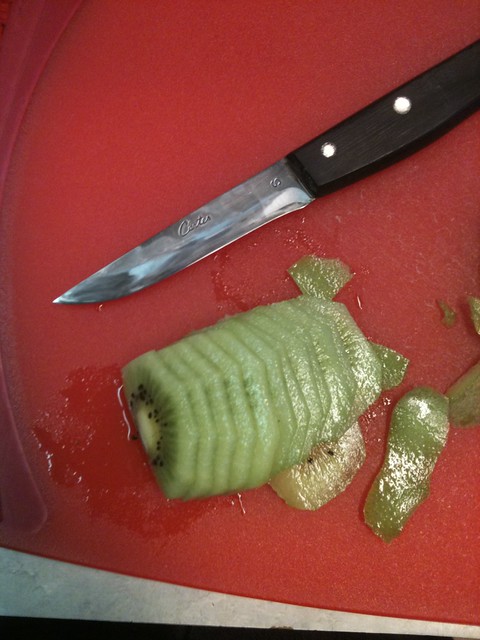
7033545619_f816b45cca_z.jpg

The tip is restored, I've polished the secondary edge on the rest of the blade to even our the scratch pattern (next time I will make it more consistent and even), polished on a KING #6000.

The total project took about two hours to complete, but it was well worth it to have this knife back in the drawer shaving, pin-point sharp.

Thanks for looking!
 
Thanks! You don't see very many people doing actual sharpening on Bladeforums. I figured I would offer something different from the usual 'paper wheels/Sharpmaker are the only way to sharpen' BS.
 
I've started to make videos, less typing :D
 
oi, 2 hours... wasted! dont get me wrong, its a good result but a just as good if not better result could have been had in a fraction of the time with a fraction of the effort and a sharp edge could have been acheived as well with a belt sander/paper wheel!
 
Yup papier wheels are great for wide flat bevels, that's obviously the best tool for the job. :rolleyes:

More seriously great job, I would not even think about it without a couple coarser stones and I'm actually pretty surprised that such a job took only two hours on a 1k stone.
 
oi, 2 hours... wasted! dont get me wrong, its a good result but a just as good if not better result could have been had in a fraction of the time with a fraction of the effort and a sharp edge could have been acheived as well with a belt sander/paper wheel!

I'd love to see similar results achieved on paper wheels. Do you have photographs?
 
Yup papier wheels are great for wide flat bevels, that's obviously the best tool for the job. :rolleyes:

More seriously great job, I would not even think about it without a couple coarser stones and I'm actually pretty surprised that such a job took only two hours on a 1k stone.

I wish that I had had a more coarse stone when I had started, but I had to use the materials I had available. I almost used my Norton lapping stone to reprofile. :) I could have used some techniques to save time, like grinding the spine down, but I wanted to try and keep it's original profile.

Thanks for the compliment! I thought it turned out great!
 
i've already used a naniwa 60grit truing stone, i like the edge it gives on some knives, for some tasks, but if your norton is similar it wont grind any faster than a good coarse waterstone, the binder is way too hard it doesn't break down and free new abrasive like a regular waterstone, the cutting rate is kinda slow.
 
First of all, how the F did they break the tip that bad? Were they trying to bust open a coconut?
Second of all, paper wheels, jigs, and other sharpening " mechanisms " only award the user an end result having acquired only that- an end result. Learning to fixed anything that can happen to cutlery by using the skills acquired through practice yield not only an end result but the user gains experience of what it took to get to the end result as well as satisfaction that through no artificial means did you achieve that result. Learning a skill empowers you with knowledge and command over that perspective medium , allowing to have no hang ups when it counts. Just my .02!
 
Just to confirm it is possible to restore tip freehand ;)

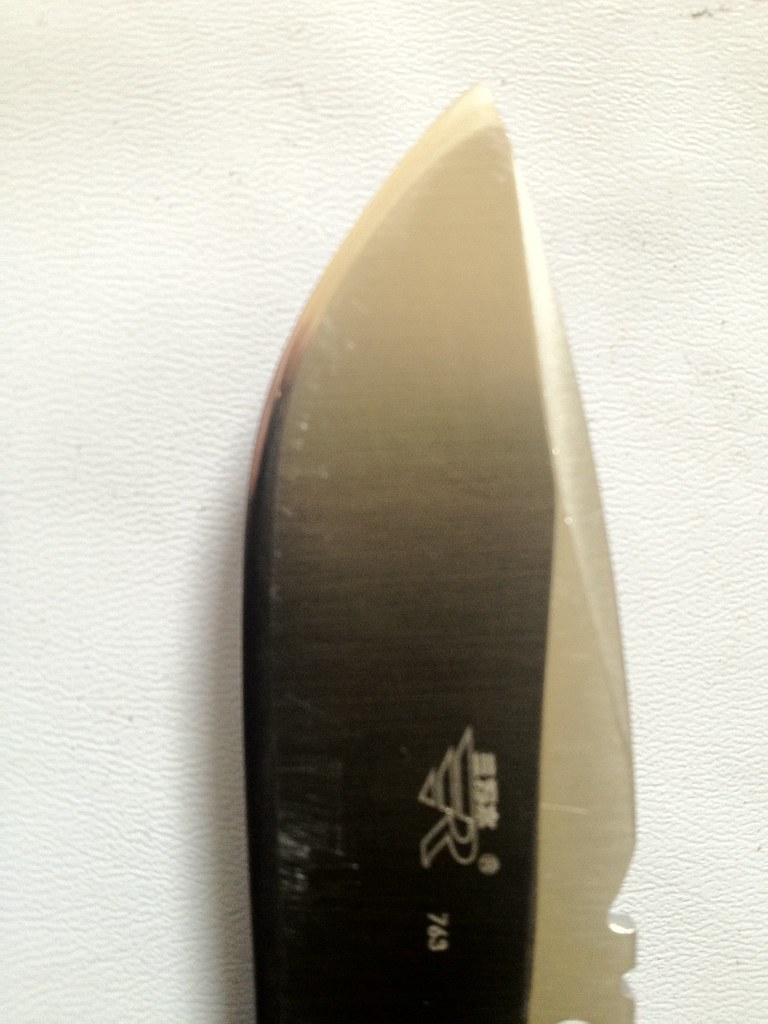
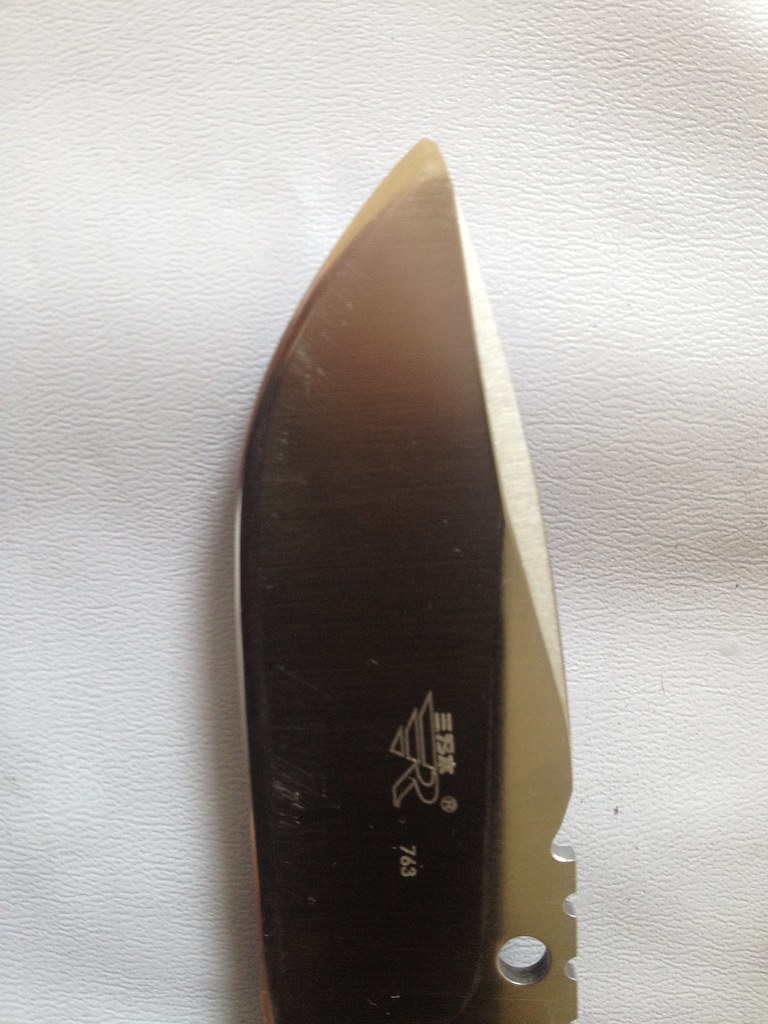
Dropped my Sanrenmu 763, the tip broke off:
6942955732_f95da6da32_b.jpg


I brought down the spine with diamond files and touched it up with sandpaper, finished it on strop.
7098298473_d3e1427d7c_b.jpg
 
Last edited:
Thanks! You don't see very many people doing actual sharpening on Bladeforums. I figured I would offer something different from the usual 'paper wheels/Sharpmaker are the only way to sharpen' BS.

It's unusual to see someone say those to are the only way that work. And it's not as if they don't work. Your results speak for themselves. There's no need to run other's methods down to make your point.
 
It's unusual to see someone say those to are the only way that work. And it's not as if they don't work. Your results speak for themselves. There's no need to run other's methods down to make your point.

I have seen many posts on how sharpmakers are the best, or that paper wheels are THE way to go because they give you a good edge in a short time. I would use a jig if I had to completley regrind an edge. But, freehand sharpening is more rewarding and many times more versatile (I could sharpen a knife with a coffee mug and the leg of my jeans if neccesary, while machine sharpeners would be hard pressed to get their edge back to normal.) Bottom line: There are some fanatics who believe that their grinder is the only way of sharpening, but not all who use their grinders/ setups are fanatics.
 
Nicely done, Somber! That came out looking darn good, I definitely agree with your choice to take the edge up and not bring the spine down. That's a bit much tip loss to bring the spine down, I think. It'd look a LOT different.

My choice would probably have been the belt grinder (I don't typically have the patience to remove THAT kind of metal on a waterstone!) but that came out extremely well! Big thumbs up to your freehanding skills, it looks literally good as new.
 
Most people think their way is the best. Few have the knowledge and experience to point out the advantages and disadvantages of various methods. There are many posts like that, but they are not the majority, and the most knowledgable proponents of paper wheels and the Sharpmaker understand the short falls of each and advise others of different methods that might be better suited for a given situation. There are some fanatics that believe their way of using water stones is the best way of sharpening, but not all who use water stones are fanatics. Murray has recently put out some videos that say all the various other methods besides his are flawed, from the Tormek to ceramic "steels". It works both ways.
 
oi, 2 hours... wasted! dont get me wrong, its a good result but a just as good if not better result could have been had in a fraction of the time with a fraction of the effort and a sharp edge could have been acheived as well with a belt sander/paper wheel!

plus adding undue and uneven wear on good 1000 6000 stones sharpening a small section. Personally I think the look of the distinct lamination line makes it attractive ( unless thats a polish too) I would be disappointed if my blade ended up looking like a Himalayan import polish and could void any warranties. Please dont take offense, different strokes for diff folks.
 
plus adding undue and uneven wear on good 1000 6000 stones sharpening a small section. Personally I think the look of the distinct lamination line makes it attractive ( unless thats a polish too) I would be disappointed if my blade ended up looking like a Himalayan import polish and could void any warranties. Please dont take offense, different strokes for diff folks.

I don't take offense; I like using knives, you like looking at knives.
 
So after much youtube viewing and reviewing the 7 step process from Carter's mailing list, I decided to give his method a try on my Food Network damascus kitchen knife. Being damascus, full flat ground, and only needing a sharpening and some dishwasher chips taken out, I did not work on the secondary bevel. I did start on a coarser stone, the green 220 waterstone on my King 220/1000 combo stone. A few cuts into the edge of the stone took out the chips. Then I reset the bevel, gave it a few high angle deburring passes (the burr was very large and basically unaffected by drawing through the board). After this I moved to the 1000 side and continued, this time deburring on the board, stroppping and deburring again, and maybe one more time. I don't quite remember. Anyway, I now have a 1000 grit finish that will treetop hair 1/2" or more above my skin. The polish is interesting, kinda hazy, but attractive none the less.
 
Back
Top