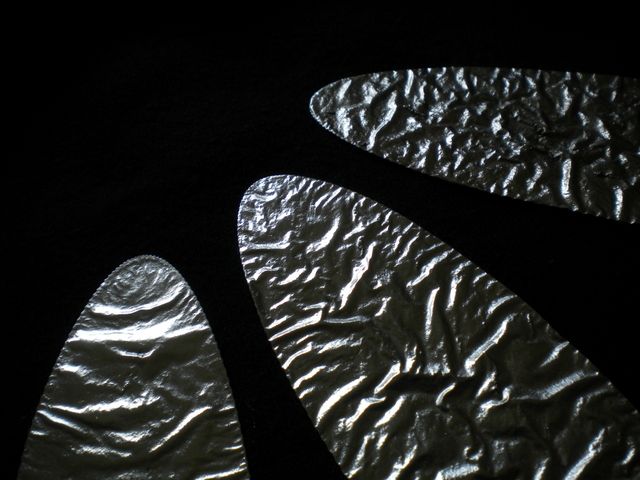
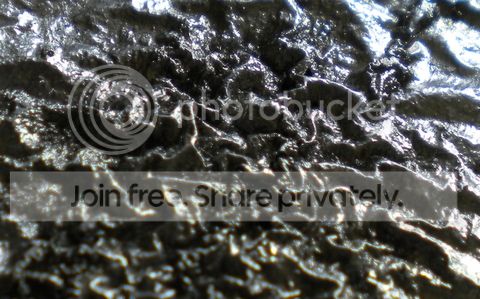
reticulated silver

Tai Goo

BANNED
Joined
Apr 7, 2006
Messages
3,806
(This is a copy of a post in the sticky BBQ Camp Sword thread)
-----------------------------------------------------------------------------
Here’s a good overview of the reticulation process:
http://www.ganoksin.com/borisat/nenam/ajm-reticulation.htm

They refer to the prep as “depletion gilding”, … but it is also called “depletion silvering”.

I used to do some reticulation with a super hot oxygen/acetylene torch and a pencil flame, which would give some wild looking textures in deep relief, but it’s hard to get a large piece nice and even, and without any holes burnt through it that way.

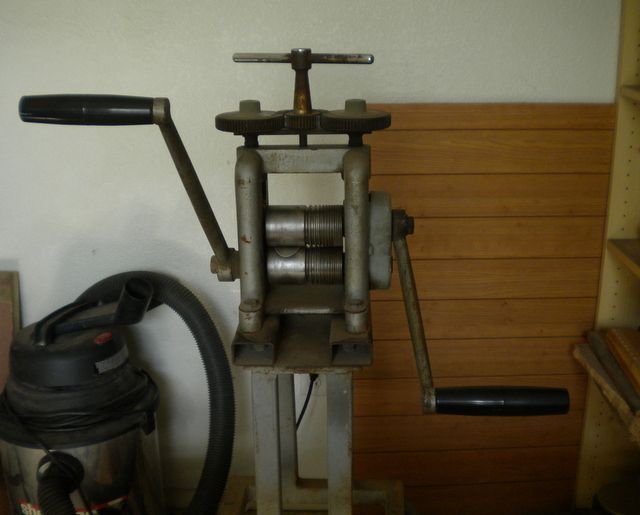
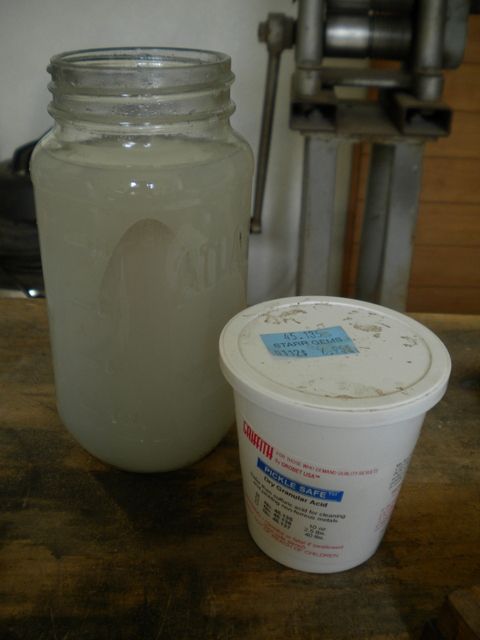
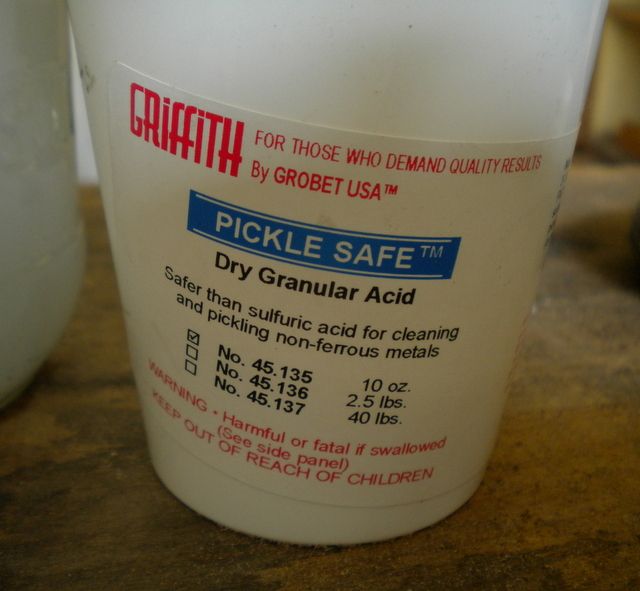
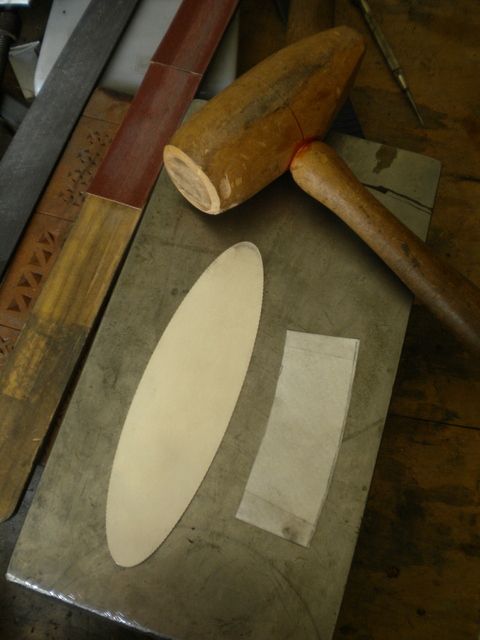
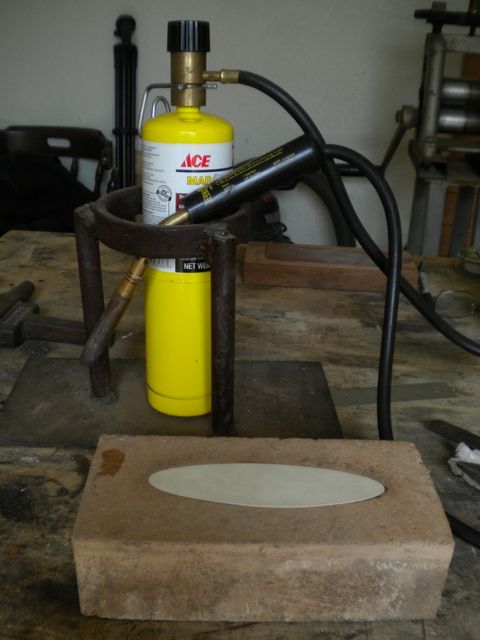
I started with a silver dollar and rolled it out. I figured I’d just keep rolling until it was big enough for the shape I needed (barely big enough), which came out to about 22-24 gage. Thin like that usually gives more relief and a better pattern. As I rolled it down, every time I annealed it I pickled it as well, which gets a good jump on the depletion silvering. After that, I repeated the depletion silvering a half dozen or so more times to get it nice and even. It’s better to overkill that part than under kill. I’m using my Map gas torch for the heat source,… same torch I use for silver brazing and fabricating. It has a nice bushy flame.

DSCN3753.jpg


DSCN3762.jpg


DSCN3770.jpg


DSCN3773.jpg


DSCN3778.jpg


DSCN3782.jpg


DSCN3802.jpg


DSCN3808.jpg
 
Yeah, reticulation is neat. Hoover and Strong used to make a special silver for reticulation, but the same method you just did has worked for centuries.

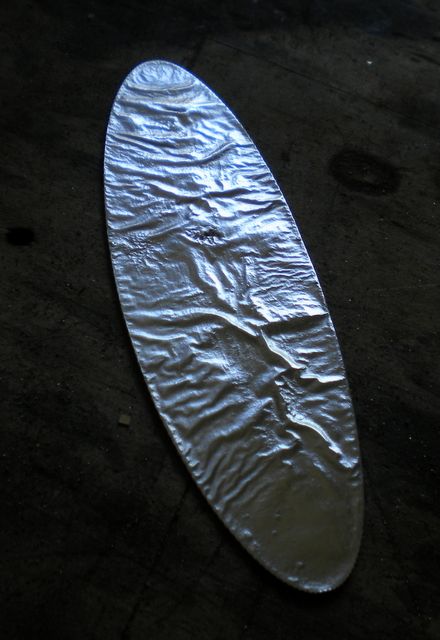
The principle is that by repeatedly annealing the silver and then pickling it, the sheet ends up with a fine silver outer shell over a .800 silver core. This is heated with a reducing flame to a red color, and then the flame is made super hot by turning up the oxygen and the gas down. This small flame is played across the sheet and causes the core to melt, wrinkling the still solid outer shell which has a higher melting point.
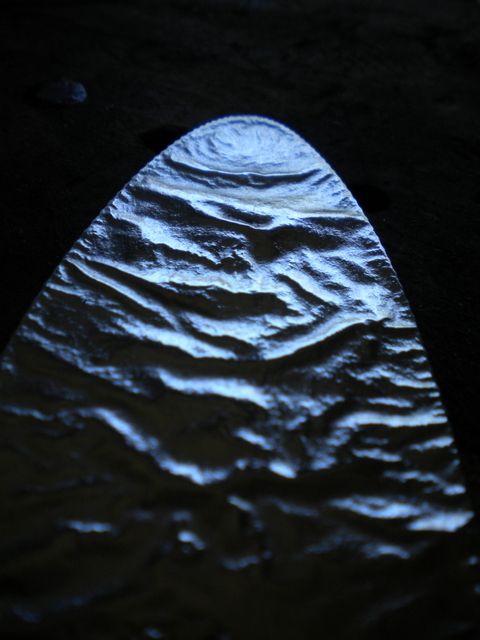
Speed, and intensity will make bold patterns. If anything goes wrong you get molten puddles.

I probably spoiled all the joy for Tai with that science talk...sorry.
 
Stacy, the science part is interesting and necessary to understand,... but I'm mostly interested in the textures. That link talks about some of the different ways of doing it,… the metallurgy, history etc.

It's like an aerial view of the desert where I live.

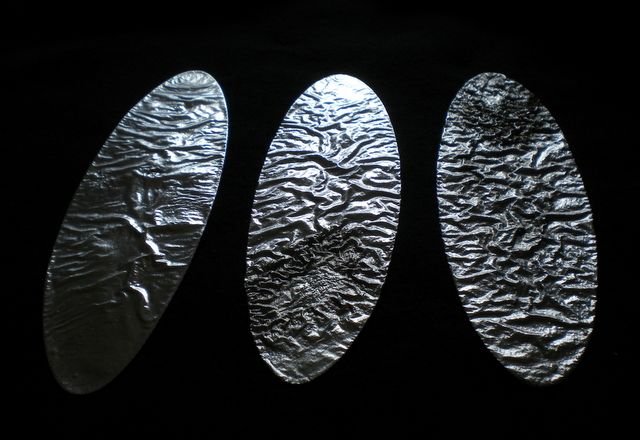
The plan is to do a whole handle with it in three sections.
 
Last edited:
That is a very striking texture! Seems to go against common sense, melting the inside but not the outside! Very nicely done!


-Xander
 
Well, if you like reticulation, try granulation. First you make thousands of minute fine silver balls by filing the silver and heating the tiny shavings on a charcoal block . Then you coat some coin silver with the micro-balls, usually inside of a bordered recess. A flame is worked until the fine silver fuse the spheres to the coin silver. The result looks like silver sand.
 
Yeah, granulation is difficult. I haven't done much of it, just on some jewelry.

The way I've done it was first formed the granules and then copper plated them to lower the melting point of the surface... The copper alloys with the silver at just the right temp. Sort of the opposite of reticulation. It just "shimmers" for a second and the granules stick. The copper plating is so thin it just disappears. The surface alloy is so thin it polishes off and/or just disappears from the fine silver with some depletion gilding. Tut's gold dagger has some granulation on it. Imagine doing that with charcoal and blowpipes.

I actually like the look of reticulation better.

Cuttle bone castings are another neat texture, but figuring out ways to use it on knives other than simple inlays and overlays on flat surfaces is hard. That’s another one that needs some attention.
 
Last edited:
That’s a great copy,… but historically the original pair (1341 BC – 1323 BC) are much more impressive.

king_tut_treasures_09.jpg
 
Where can a fella like me get courses in this stuff? I'm serious. I don't intend on making wedding rings or anything but the creative metallurgy is very interesting.

Maybe a month stay at each of your houses(Tai and Stacy) night and day, breakfast, dinner, glued to your side should do it. We could be best friends!
 
I'll tell you what Rick,... if you bring your drums and pay for some lessons,... I'll supply the beer. :)

If we even had a week, I could give you a crash course in basic non ferrous fabrication, mokume, reticulation, sand casting, cuttle bone casting and granulation.

Cuttle bone casting picks up the natural texture of the cuttle fish bone, sort of like rippled sand on a beach:


http://www.pennabilli.org/tecniche/CUTTLEBONE.htm
 
Last edited:
Yes, it will come off with more pickling. It's just a couple places where I got it a little hotter and the core bled through the fine silver "skin" and oxidized. You can see how the higher temps., caused the pattern to gain more detail, but it was right on the brink of melting ... we're talking a fraction of a second… just glad I got through all three without a meltdown.

On the final finish, I will patina it all black and highlight the reticulation anyway.

DSCN3822.jpg
 
Last edited:
Back
Top