Rivet Brass?

WillbertR

Basic Member
Joined
Oct 5, 2025
Messages
65
I’ve been thinking it would be nice to build my own custom Victorinox knife but I’ve hit a roadblock.

I bought some Brass Rod in 2.5mm and 2.2mm and made a tool to make some Rivets. It turns out that the Brass I bought is likely grade CZ121 which is a bit too hard to produce Rivets successfully. Apparently Brass Rivets are normally made from a softer CZ131 grade. I can get it over here but only in 3/16”.
I’m just wondering what custom knife makers are using, particularly for SAK’s?

I have seen some small bits of brass offered for things like SAK’s but this could be any old brass, the grade isn’t mentioned.
I have also seen fully formed SAK Rivets but the cost plus postage is quite prohibitive.

Anyone got any suggestions?
 
Anneal the brass by heating it to red and letting it cool..
Hard brass rivets well. Annealed brass pins may bend instead of flaring at the heads.
What kind of tool did you make for making rivets?
Here is a badly made video of riveting that I made some years ago. Somehow, it became controversial.
 
Thanks for the Video. There are two schools of thought for annealing brass. Heat to red and let it cool naturally, and heat to red and quench in water (as you do to anneal copper) I tried both methods and it made no difference, the material was still too brittle.
The tool I made is just two blocks of steel with a hole drilled between them. It clamps the brass so you can make either a countersunk rivet or a domed one (with a suitable punch) which I also made.
 
When annealing brass, it doesn't matter how you cool it.
Whatever brass you have should be fine for rivets. We make rivets out of steel, and it's much harder than brass.
 
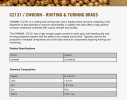
The stuff I have cracks too readily. Having begged the question online, the general consensus is that a grade with good ductility is needed for cold forming. CZ131 fits the bill perfectly but is not commonly available in small quantities at the size I need.


IMG_5988.jpeg
 
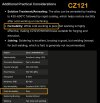
Looking online, by far the most common type of Brass available over here in Rod form is CZ121, and looking at its properties confirms it’s not really suitable for making Rivets. This is quite likely the stuff I’ve been supplied.

IMG_5992.jpeg
 
There is tons of brass rod, wire, and pin stock available on Ebay.
K&S brand is very good.
 
It may be that you are trying to make a rivethead to large and that is what is giving you problems.
You only need a very small bit of material sticking out and that should form a good peened head.
Even annealed stainless should work
 
It may be that you are trying to make a rivethead to large and that is what is giving you problems.
You only need a very small bit of material sticking out and that should form a good peened head.
Even annealed stainless should work

As it’s for use on a Victorinox knife I’ve been trying to replicate the rivets they use. I wouldn’t say the profiles are particularly large.

Looking at an existing Victorinox with intact rivets, it’s clear that the material must be relatively ductile as they appear to be pressed to close them on one side? I’ve seen a video where you can build your own SAK at their facility, and customers are provided with a hammer to close the rivets. There’s no evidence of hammer marks though on production knives. It could be one single impact I suppose.
 
Try low fuming bronze from the welding supply, it’s more yellow in color very similar to brass. Otherwise, look for 70/30 brass pin stock.

Hoss
 
As it’s for use on a Victorinox knife I’ve been trying to replicate the rivets they use. I wouldn’t say the profiles are particularly large.

Looking at an existing Victorinox with intact rivets, it’s clear that the material must be relatively ductile as they appear to be pressed to close them on one side? I’ve seen a video where you can build your own SAK at their facility, and customers are provided with a hammer to close the rivets. There’s no evidence of hammer marks though on production knives. It could be one single impact I suppose.

The production knives are rivetted by machine, there are hardly any hand operations on production SAKS. I know Schrade pressed steel pins as well as brass and nickel silver. Larger steel pins were done in large presses (such as the steel rivets used in the Swinden style keyhole construction), others such as steel, brass or nickel silver tommy-on pins were done on O-presses. The actual brass and nickel silver pocket knife pins were pressed, spun, or hand hammered. I don't recall them using any special grade of brass for the pins but it's possible they did. I've never had issues hammering or spinning any of the rivets, all were quite pliable. That goes for nickel silver and stainless steel as well. What type of rivet are you trying to form? Someting with a flat head but not tapered?

Eric
 
Last edited:
I’ve done some more research and it appears there are at least two grades of brass suited to making rivets. One of them as noted above CZ131, is even commonly known as Rivet Brass. This gives an obvious clue to its suitability.

Here in the UK, by far the common type of brass is CZ121 and this clearly isn’t really suited to cold working like making rivets.
This isn’t to say that many of the more common, perhaps harder brasses can’t be used in some instances. If you were making a sheath knife for example, and put a steep countersink in the scales, I’m sure you would deform the brass enough to secure them if you hit it hard enough.

With something like a multi bladed pocket knife though, if you set the rivets too hard you’d have trouble opening the blade.
Such is the case with the Victorinox knives. I’ve watched a few custom builds and the point has been mentioned many times.
Not hard enough and the blades are a bit loose, too hard and they’re difficult to open. I couldn’t help noticing that some of these custom builders seem to have managed to get stock of some ready made rivets, rather than using brass rod.

I have had a quote for some suitable material but it’s unavailable in the diameters I need and the minimum order is 3 metres.

The rivets I’ve tried making are the same as those used on the Victorinox 91mm knives, namely, countersunk rivets with a flat top in 2.5mm diameter and traditional dome shaped ones in 2.2mm diameter.

As mentioned, just in case the brass I had was supplied in a hard condition, I did try annealing it which made no noticeable difference.

I could use a different metal but stainless against stainless isn’t a good idea and I don’t want anything going rusty. Victorinox have been using brass for many decades so it obviously works well in a suitable grade. It’s just a shame they don’t sell the rivets as spare parts but we all know why, they don’t really like people making custom versions of their knives!
 
It seems as though you are blaming materials for your in ability to make, or understand making, rivets.
Perhaps your approach or methodology is wrong.
 
I'm with Bill on this. Most folks can make rivet a handle with nearly any metal. It is 99% technique and 1% material.

The #1 and #2 issues with riveting are too much rivet metal sticking out and too much force with the hammer.
 
Zapwizard has pins for SAKs under the Multiparts section. You’d still need to follow the expert guidance above, of course.
 
With something like a multi bladed pocket knife though, if you set the rivets too hard you’d have trouble opening the blade.
Such is the case with the Victorinox knives. I’ve watched a few custom builds and the point has been mentioned many times.
Not hard enough and the blades are a bit loose, too hard and they’re difficult to open. I couldn’t help noticing that some of these custom builders seem to have managed to get stock of some ready made rivets, rather than using brass rod.

Use a shim between a blade and liner. I usually use something around .004" but it varies depending on the knife, with a SAK you may be able to go a thou or so thinner. Cut a little notch in it so that it fits around your pin. this way you can hammer away and you shouldn't overtighten. Pull the shim out and you have room for the blade to move freely. If there's a bit of blade play just give the pin a tap or two, check blade and repeat until they're no wobble. The key is not the material but the thickness of your pins. They should have a snug fit in the liner holes, not super loose. The more snug they are the less chance you have of the pin spreading in the blade hole and binding it up as you hammer. You can also make your blade hole just a bit larger than your liner hole/pin diameter to help alleviate this.

Eric
 
Back
Top