
Rotary bur for carving mammoth/walrus ivory

Joined
Nov 14, 2016
Messages
636
hi everyone, I plan on doing some knives with mammoth and walrus ivory and doing a bit of carving on them with some type of rotary tool.
I can't find anywhere what the best type of burr to use would be. I've never carved this material before and don't want to waste a piece because I used the wrong tool and burned the material or chipped it out or something.
If anyone knows what's best to use I would really appreciate it. Idk maybe like diamond bits or carbide bits?
Also for getting into small areas for detailing would some small type of carving knife work???
Thanks everyone I appreciate it,
Paul
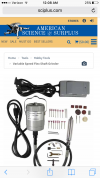
 
And also what type of rotary tool works well for precision carving. I have a dremel but it's so big and heavy I can't maneuver it that well. I've seen little ones that look like cylinders with a wire on the back but idk a good model. Thanks everyone.
 
IMG_2051.PNG
I found this online and thought this is a possibility. Any thoughts or suggestions?
It's 70$
Thanks
 
Fordom makes a Flex Shaft high speed unit with a slender hand piece. They have been the standard for Jewelers for a long time. Get the hand piece with the chuck.. the one with the collets sucks ... I’m on my phone but go to www.riogrande.com. They have the best people there to help that have actually used the equipment to answer your questions ...they will have someone that uses one to carve...
 
Fine cut carbide burrs are what you want. You can use rubber abrasive wheels to polish your carving. Ivory can be carved with woodworking tools if you are not working with the outer layer of enamel, or real fossilized (stone) mammoth ivory.
Your $70 flexible shaft machine is a Chinese copy of an older model Foredom. It has the Jacobs chuck handpiece. I have found these to be good values, though they are not as precise as the Foredom tools.
 
If possible use fine cut carbide burrs. I use a set of carbide ball burrs for much of the detail work. They range from 3mm to .5mm. Other good burrs to have are a 10mm cylinder burr, and a knife edge or 70° angle bearing/setting burr.

You can use the high speed steel burrs, but they will wear and burn more easily. Also, the ruby stone burrs work, but are considered an expendable item.

I also recommend getting one of the HF #50 piece diamond rotary point set". It sells for about $10 on sale all the time.
 
Great thanks for all the tips guys. I'll definitely pick up some dine cut carbide burs and look into the foredom tool suggested
 
I used up a dremel and got a Foredom to replace it and nevet looked back.
Get one that goes in reverse as well
What he said!^^^^.....Buy the best, forget the rest! I’ve had my Foredom for 23 years. Gone through one cable & two sets of brushes. Just standard maintenance .. If I was to buy another I’d get the reverse feature.
 
What he said!^^^^.....Buy the best, forget the rest! I’ve had my Foredom for 23 years. Gone through one cable & two sets of brushes. Just standard maintenance .. If I was to buy another I’d get the reverse feature.
Thanks for the tips. I definitely don't want to buy the cheaper one if I'm gonna have to replace it sooner then later.
 
I just recently got a Foredom. It's an unbelievable upgrade from a Dremel and the chuck is quite convenient since I have tools of varying shank size.

The biggest thing that sucks about it is the cord length from the foot pedal to the power head, and that the foot pedal weighs about 1/2 of a gram so won't stay where you put it if you breath on the cord. But that can be worked around. Personally wish I'd gotten a bench top speed control but most seem to prefer the foot pedal.
 
If you plan on doing metal caving, as well as other hard materials, it is hard to beat the TX series Fordom motor and the heavy duty square drive shaft/handpiece.
 
One thing if you get the reverse feature: only sanding drums, cutt off wheels and diamond coated burrs cut in reverse.
Toothed bits don't cut in reverse (guess how I found out)
 
Also what do you guys suggest as the best stainless steel for a guard that I want to do some carving on and what is a better bur for that. Diamond or the carbide?
Thanks
Paul
 
carbide, I hardly ever use diamond burrs

Carbide burrs have tooth that cut, Diamond burrs have "diamond gritt" like sandpaper gritt adhered to itself.
Toothed burrs cut way better but only in the right direction
 
Back
Top