- Joined
- Jul 27, 2003
- Messages
- 5,699
For those interested in such things.
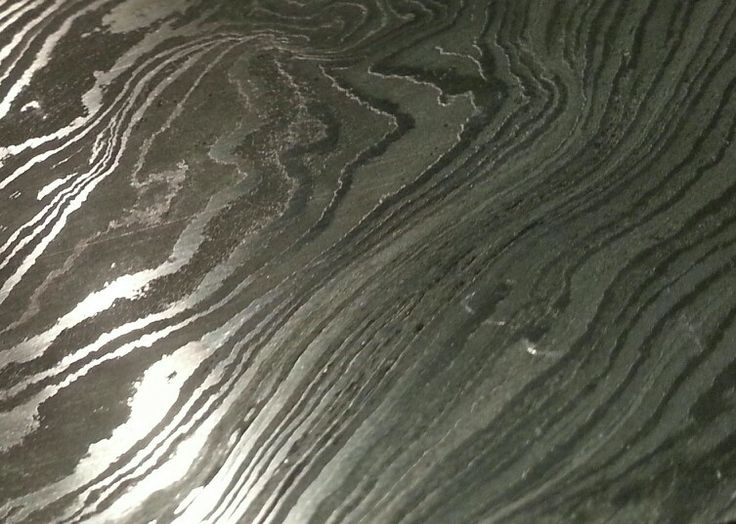
I was sending a knife off and while cleaning things up noticed how nice it looked laying on the bench and catching the light just right.
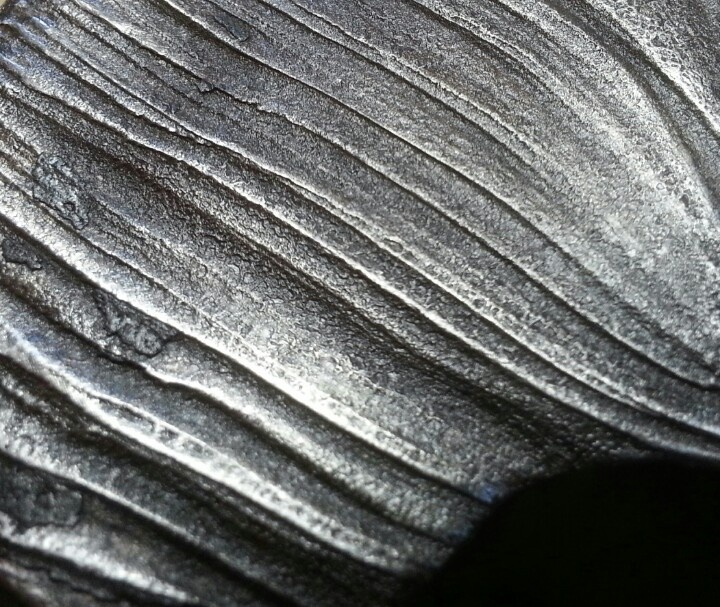
Keep in mind these displays are really only a few thousandths of an inch in thickness, but we get to appreciate the view as we grind at a tangent to the layering.
A little etching and we can see the varying degrees of carbon/alloy concentration that happened while at welding temps.
The longer the blade is at high heat - if it's a larger blade - the more "stuff" happens.
Some folks use three pieces of steel that, together, are nearly the thickness of the blade they seek. So, they don't spend much time at welding heat.
Others, like myself use thicker steels which need to be drawn out. (I'm using 3/8" 1095 core and two layers of 1/4" 420) Staying at higher forging temps allows more time for migration to occur, and we get some cool displays of activity.
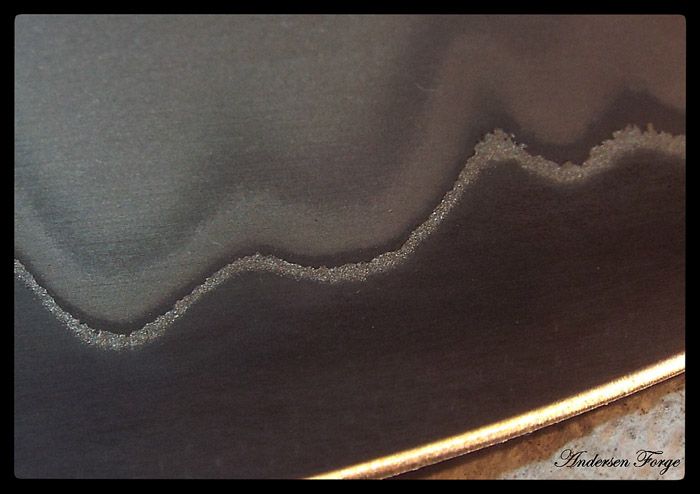
The shiny layer above the 1095 is where the carbon in the carbon rich tool steel "left" to equalize the carbon deficient 420 SS, which, now that it has some carbon, etches darker.
It sort of happens on stages over time. It's not a constant "flow" so there are varying degrees of activity.
(The undulations along the bottom edge are the results of my drawing dies as I draw out the billet)
Anyway, some eye candy to start the day.

I was sending a knife off and while cleaning things up noticed how nice it looked laying on the bench and catching the light just right.
Keep in mind these displays are really only a few thousandths of an inch in thickness, but we get to appreciate the view as we grind at a tangent to the layering.
A little etching and we can see the varying degrees of carbon/alloy concentration that happened while at welding temps.
The longer the blade is at high heat - if it's a larger blade - the more "stuff" happens.
Some folks use three pieces of steel that, together, are nearly the thickness of the blade they seek. So, they don't spend much time at welding heat.
Others, like myself use thicker steels which need to be drawn out. (I'm using 3/8" 1095 core and two layers of 1/4" 420) Staying at higher forging temps allows more time for migration to occur, and we get some cool displays of activity.
The shiny layer above the 1095 is where the carbon in the carbon rich tool steel "left" to equalize the carbon deficient 420 SS, which, now that it has some carbon, etches darker.
It sort of happens on stages over time. It's not a constant "flow" so there are varying degrees of activity.
(The undulations along the bottom edge are the results of my drawing dies as I draw out the billet)
Anyway, some eye candy to start the day.