Sanmai hardening fail

PEU

Gaucho Knifemaker
Joined
Aug 6, 2006
Messages
1,184
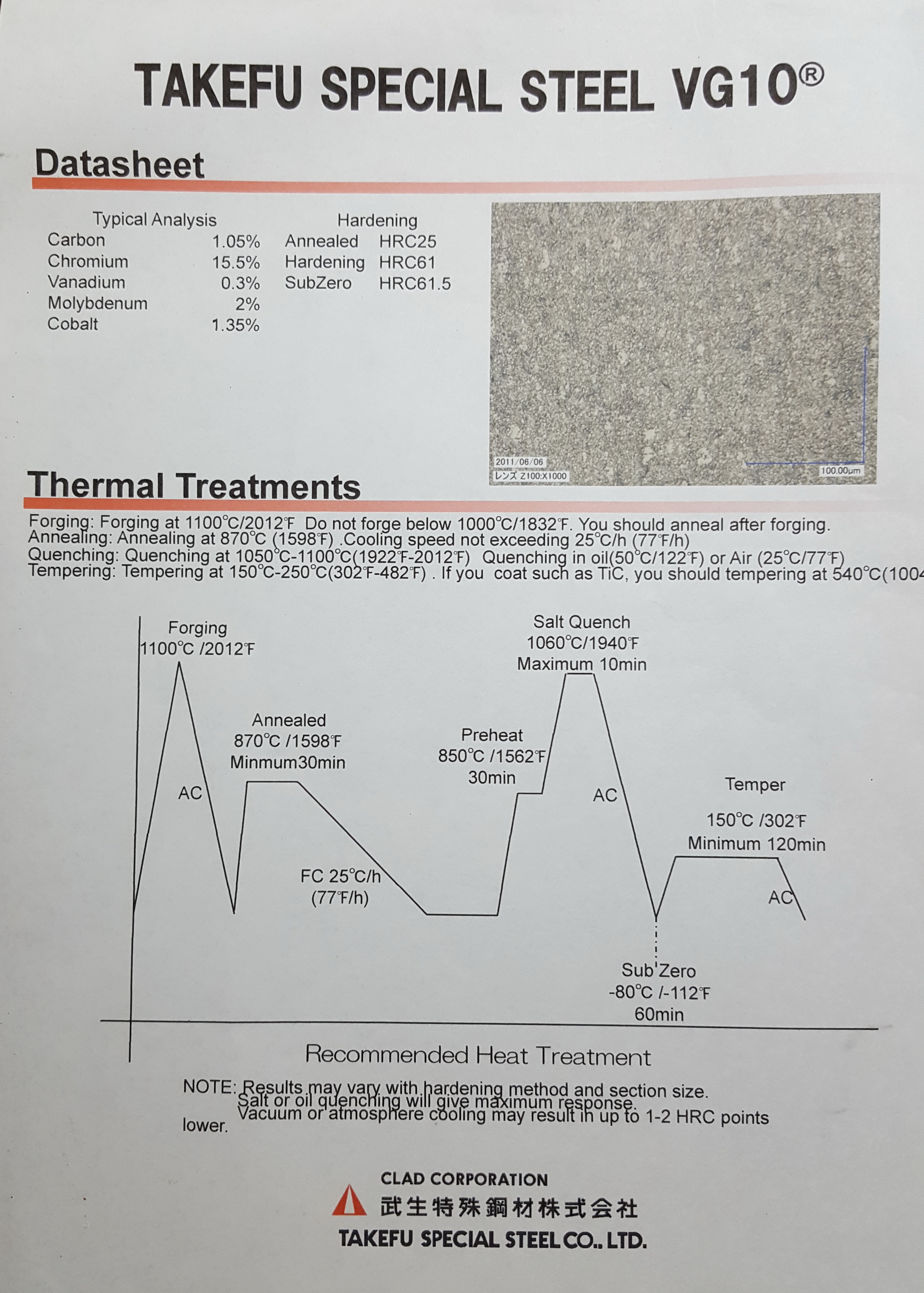
Hi guys, I'll share my pain, I still don't know what happened, maybe you can help me find what went wrong. This is a very thin takefu sanmai 1.5mm total (1/16") the core is VG10 and the sides non hardening stainless steel.
It does not appear to be delaminated, using a digital caliper, both sides of the split measure 0.75mm (1/32") so it appears the vg10 split in two.

I hardened at 1070C, in the middle of the suggested 1050-1100C range, blades were fine out of the oven, then went straight to dry ice in ethil alcohol. When the dry ice evaporated I put the blades in room temperature water, they were still fine. While waiting for the oven to go down to tempering temperatures I left the blades in the water (no snap temper, may be this was the problem?)

An hour later happened what I described above.

I'm puzzled, its not the first time I harden vg10 sanmai, but the first time I harden one this thin.
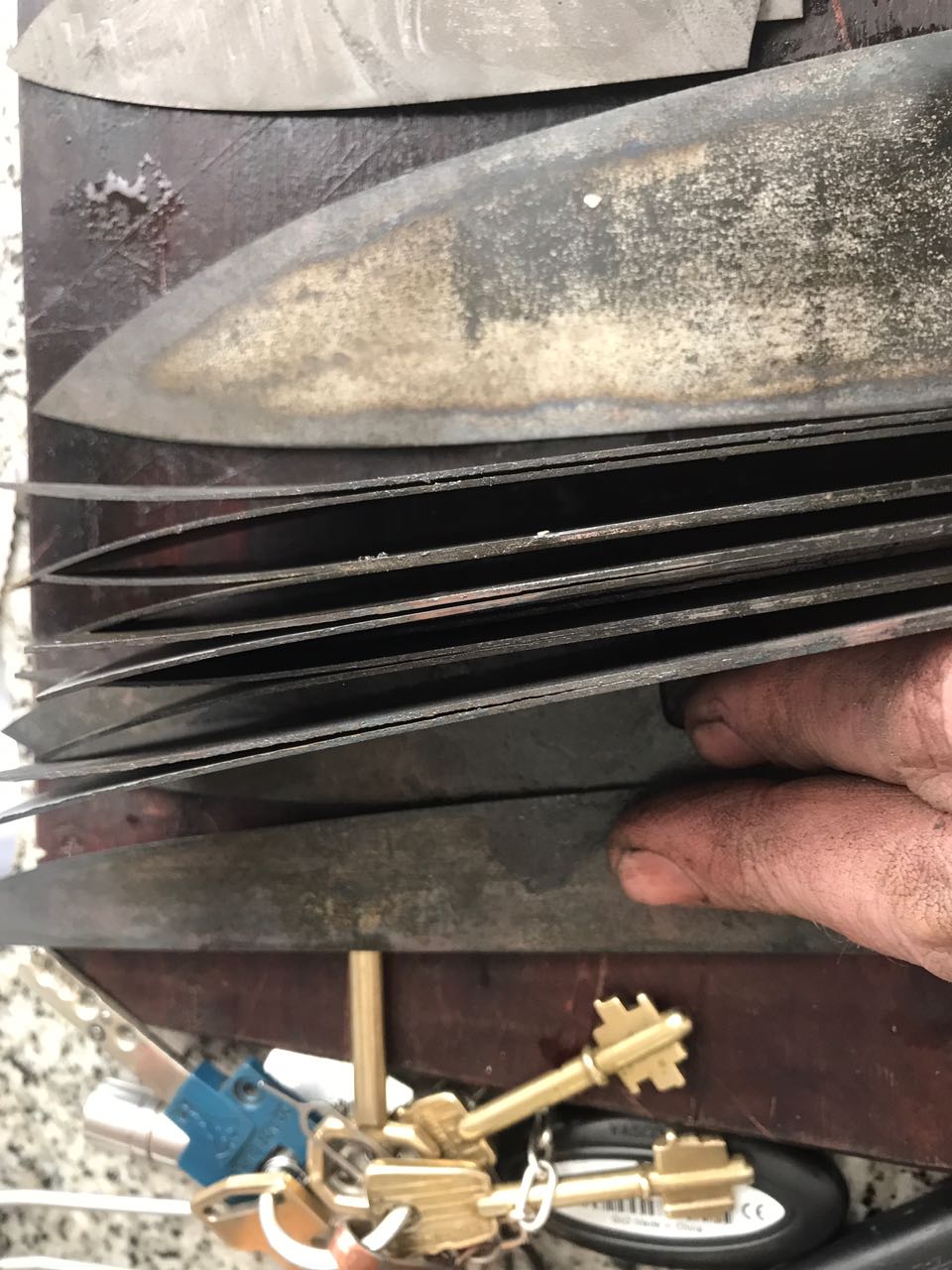
EF0J83h.jpg


I splitted one of the blades to see the innards
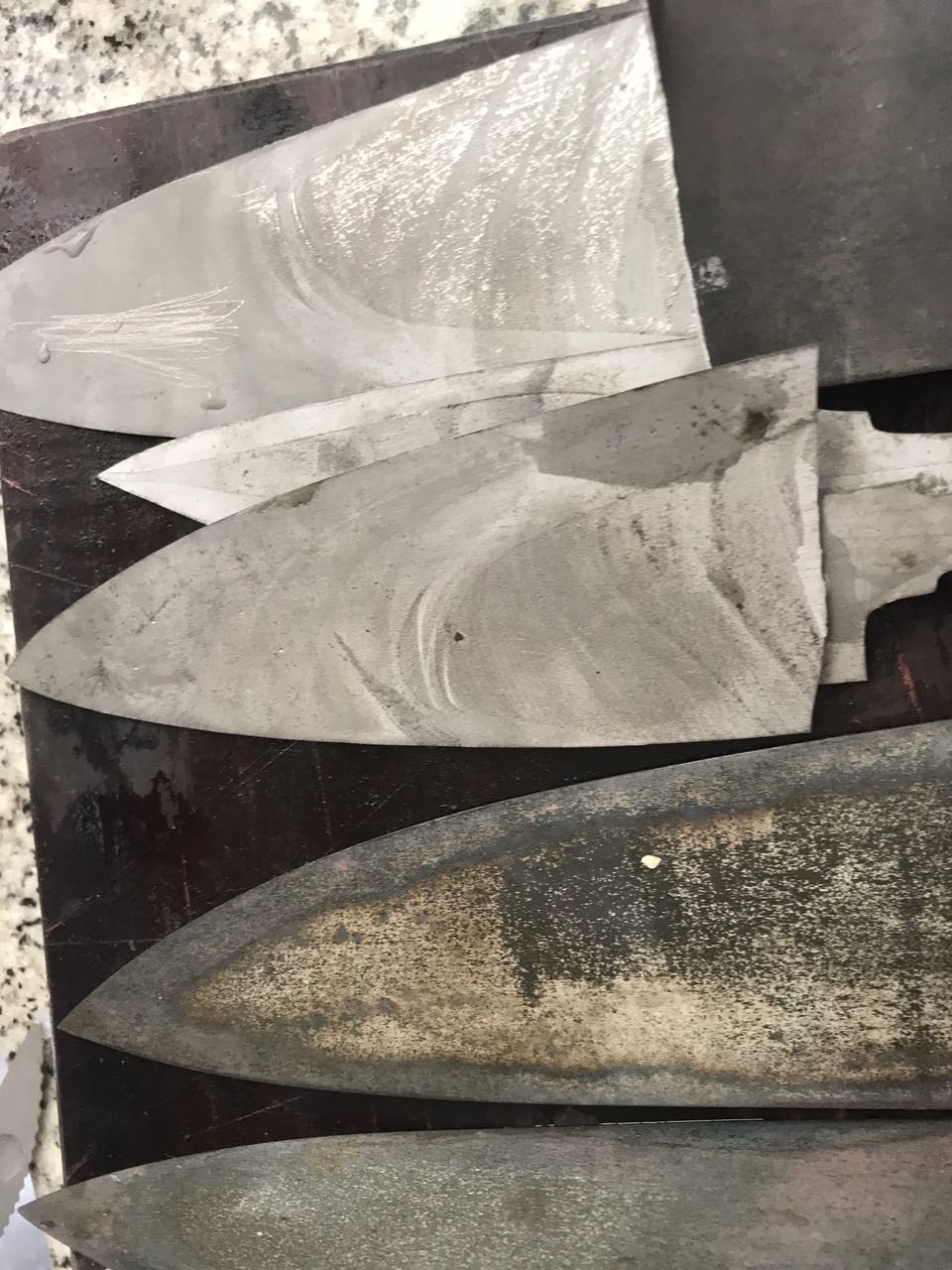
4cuT9SI.jpg


Pablo
 
My guess is that during the delay after cryo, the high stress in the core was pulled apart.
 
That was my best guess since I did no snap temper, I'm still puzzled, but that seems to be the more plausible explanation... Thanks Stacy

Pablo
 
i had a core get split apart on me recently. Best I could figure was that the cladding had cooled at a different rate and expand enough to split the core. I research this problem and found that it is common practice for Japanese smiths to hammer the cladding to compress it to account for some of this expansion. Not sure if I am explaining it correctly, but the next san mai i did had the cladding well hammered and there was no splitting.
 
The problem with this sanmai is that its so thin that if I hammer it I will move the core to a side and leave unhardened steel at the edge...
After they were out of the subzero nothing unusual happened, it was about an hour later

Pablo
 
Tip; heel and any sharp corners are stress riser in z axis(through layers) of cross section. This case, pointy tip + thin cross section is most sensitive to thermal changes, triggered starting point of dimensional changes when vg10 core phase change from aust & ra to martensite. I think, layers probably already started to separating at the tip in the initial quench (aust to room temp) and continual to accelerate unzipping layers.

Geometry worked for me when ht lam blade... leave 10mm curvature radius for the tip, 5mm radius for 80+ degrees corners.

ymmv.
 
good tip, didn't tought about Z axis stress!, will leave a little extra material and round everything. Also will skip subzero, according to datasheet hardness increase is marginal, and go straight to tempering like I do with 1095 and similars, no wait times.

Pablo
 
I would try again with sub-zero, don't skip. After sub zero, air warm to room temp rather than rapid warm with dunk in room-temp water.

good tip, didn't tought about Z axis stress!, will leave a little extra material and round everything. Also will skip subzero, according to datasheet hardness increase is marginal, and go straight to tempering like I do with 1095 and similars, no wait times.

Pablo
 
sub-zero is about -100 F
cryo is about -300 F [ LN temps ]
Lots of alloys require immediate temper after quench. Those martensite structures are highly stressed !!
 
sub-zero is about -100 F
cryo is about -300 F [ LN temps ]
Lots of alloys require immediate temper after quench. Those martensite structures are highly stressed !!

Thanks Mete, the datasheet specifies subzero, so the problem appears to be the delay in the temper...

Pablo

BvpfVTo.jpg
 
BTW, even if you don't get broken blades you can get micro-cracks in the blade . These cracks , in time may grow and cause a blade failure much later. The forces in martensite , especially at 1.00 % Carbon are very high
 
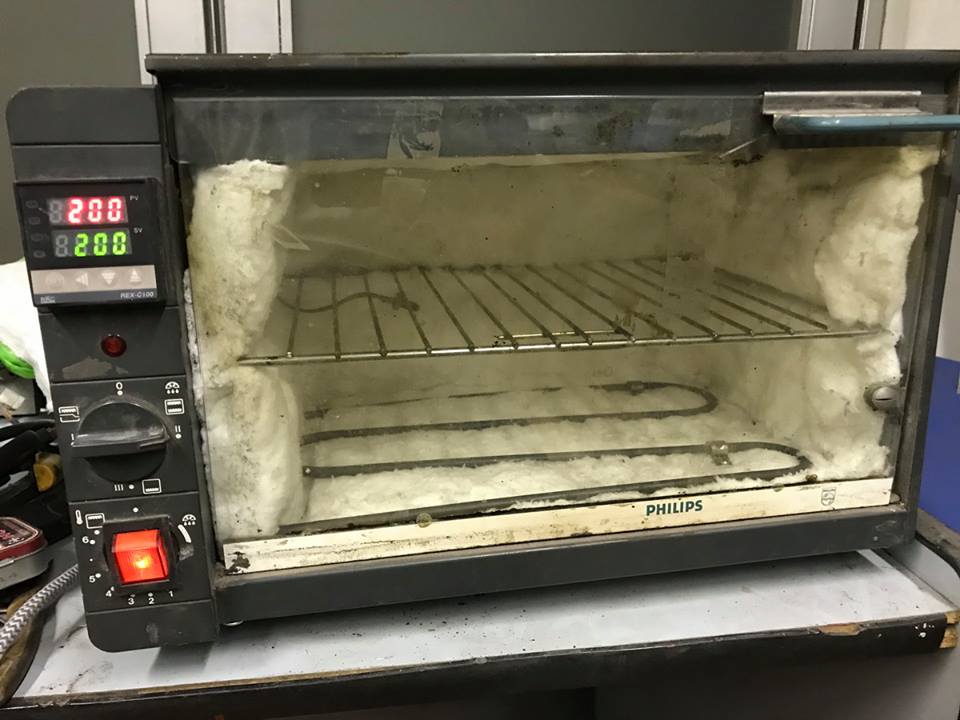
Modified this oven with a PID years ago, but it was awfull, it heated the room like a stove instead what was inside, so after my fail, I decided to try a solution that ended working very well, lined it with 1" thick ceramic blanket, works like a charm, it would work even better if I replace the glass door with something better, but, I prefer to spend time on other stuff :)

Pablo

TLpHDHQ.jpg
 
It looks like the martensite core wants to grow longer while the sides want to stay since they dont undergo martensite transformation. The only way to accomodate this movement is the core splitting in half and the two halves bending outward. The curvature each half shows has the martensite side longer than the not hardened side.
I don't think the total thickness of the blade might change this behaviour, of course minimizing both stress risers and delay before tempering helps.
 
hardened 3 new blades, 1070C > cooling plates > 150C tempering oven 2x2 hours. Success!! Im happy :)


Pablo
 
Back
Top