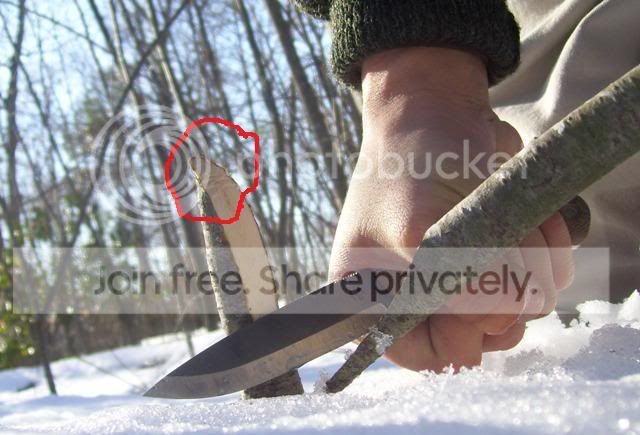
Sappling Cut with 4" or under Blade

k_estela

Co-Moderator, Wilderness and Survival Skills Forum
Moderator
Joined
Feb 23, 2001
Messages
2,101
This has been shown before but it is a skill that can be brought up again. On a recent hike, I came across a large (I'm talking hundreds!) grouping of birch sapplings. One in particular was broken over from the top from ice and all that was left was a 4' stump. The tree would grow improperly or die and get in the way of others. I determined it to be a perfect opportunity to show off this skill.
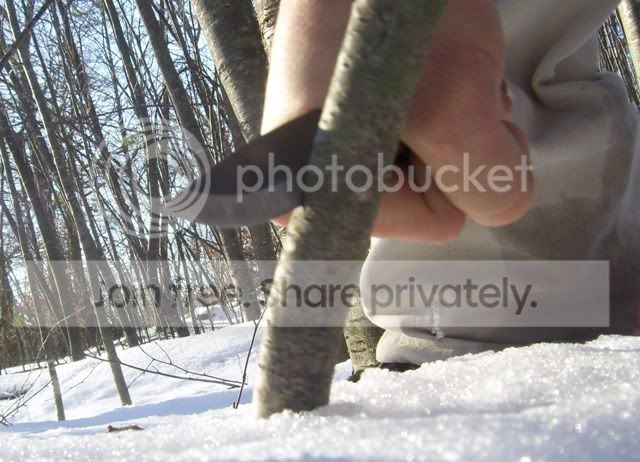

100_2452.jpg


If you guys and gals aren't aware, a small knife is able to cut through a decent sized sappling with ease. Like a rope under tension, the grain and fibers of wood can be weakend if they are stressed. While under stress, a knife is placed against the grain towards the base and rocked, much like a see-saw, through the wood until it is cut through.
100_2453.jpg
 
Sorry Omniviking! I repent before you! Forgive me brother!!!!

Koster Bushcraft 3V
 
another cool post Kev..:thumbup: that is definately a valuble skill to know... i have also used it many times...
 
Figured this one out myself about 2 days after getting my first knife! :D Very useful skill, but seems like common sense to me.
 
iBlade,

It is safer in some respects but it doesn't replace battoning. This will cut through green wood grain and requires stressing it by bending. That can't be done with dry, seasoned and unbendable wood that is thick and is being cut with the grain and down through it.
 
Maybe I am just an inexperienced batoner but I have never found it particularly effective for taking down springy saplings. To my mind this is an excellent technique, but one that serves a pretty different purpose than batoning.
 
I'd be afraid of putting my eye out. I carry a Gerber's retractable pruning saw or SAK w/ saw blade for that sort of thing. Not that it's not a cool piece of knowledge I just see stressing and cutting as potentially hazardous.

Of course, I should add that I'm speaking from zero experience in taking down saplings as we have few enough of them here.
 
G'day Kev

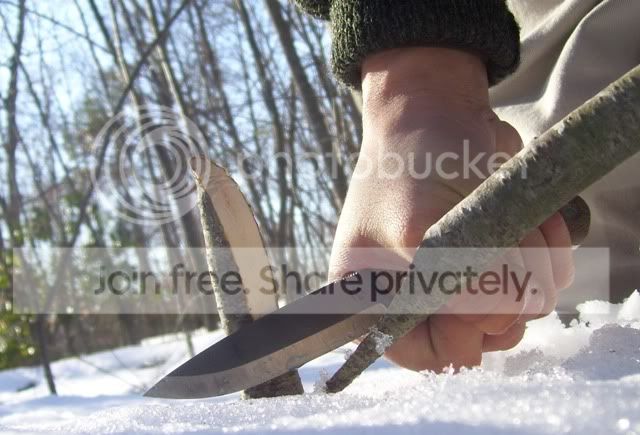
I can see where you see-sawed the blade to start the cut (circled) and it looks to have started to split as well once you cut through the outside of the sapling.
100_2453_1.jpg


The additional benefit of doing it under controlled tension :thumbup:


Kind regards
Mick
 
Kev ... I was looking at this thread and my patrol skills kicked in. A question about this thread I have, I''l email you.
 
Last edited:
As Dartanyon inquired about a spike being left on the trail. I responded this way,

"I was well off the trail. Never do I cut anything if it is in clear view of the trail. As for the left overs, I capped it by sawing it at the base with my SAK saw."

Cut trees on the trail are unsightly and I never would do that.

Hope this answers the question.
 
This is a handy tip and often overlooked.

One thing I always do is to cut the 'stump' flat afterwards. I know the chances of someone falling on it are very slim but still better safe than sorry. If anyone has ever made a punji stick pit or trap then you will know how dangerous these things can be.

The same thing applies when I make a camp site. I clear the small saplings and bushes to the ground, that way if i'm bumbling around in the dark and I trip I won't be found in the morning impaled. I do this to branches I cut from trees also, the other benefit to the tree being it is less likely to become infected.
 
Back
Top