- Joined
- Dec 31, 2005
- Messages
- 2,984
A while ago now I picked up this custom shop SJ variant with a nice serrated clip...
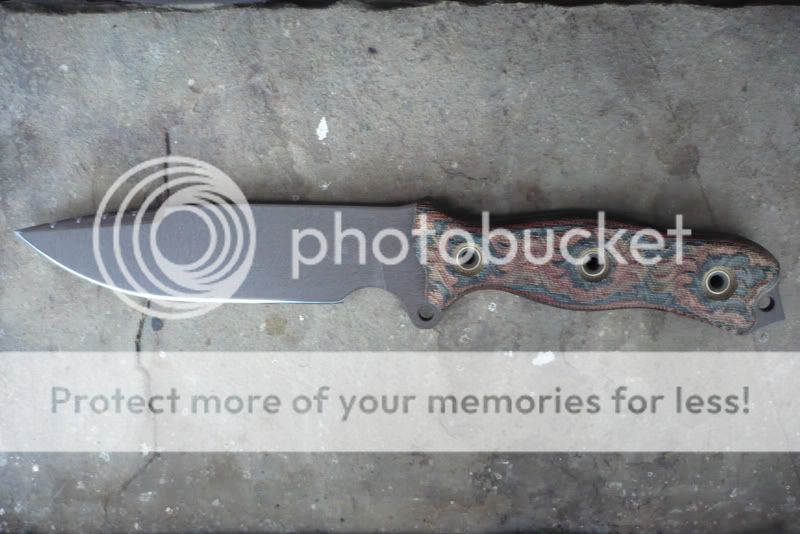
I loved the overall design of the knife and the snakeskin grips but the muddy finish was'nt to my taste and there are disadvantages with a coating as dark as this on food prep as you cannot easily tell how clean the knife is....so the knife was languishing a bit unused.
I decided to strip the knife and give it a better more acute convex edge and see how it worked. Here is a pic of the stripped knife amongst others getting a bit of a testing session on basic fire lighting duties...
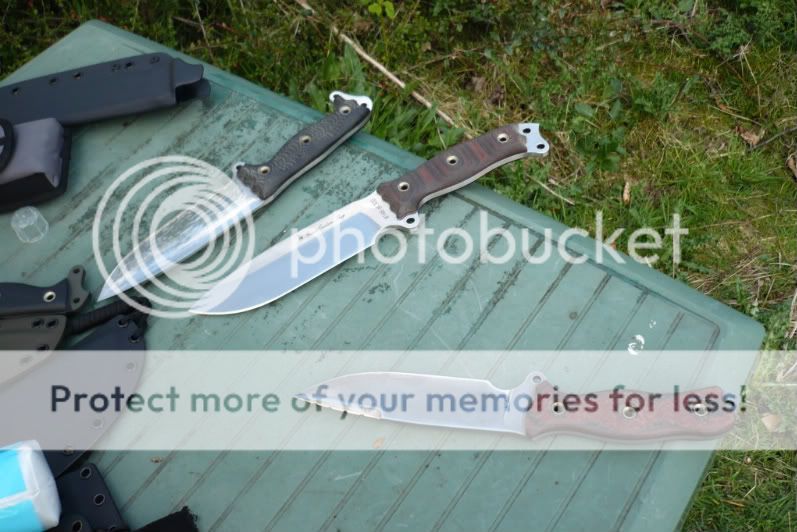
I liked the clip as this works very well as a strike area for a ferro rod and helps in rowling holes for fire drills as you can sharpen the clip and use this for such tasks leaving the main edge nice and sharp for fine cutting or skinning near the point. The clip also helps preserve the main edge if you use the knife for Hunting/Deer carcass preperation on tasks like going through the atlas joint to remove the head or through the knees to take off the hooves. All told this knife was very impressive and struck me that it would make a great knife for the coming Winter when I go up to Scotland to help a few Estates with their Culling of old Hinds in their large Herds.
I thought I would therefore give the knife a home made "Satin" treatment using various belts on my Sander to polish it up. I fancied doing a job similar to the Skinny Ash in the pic above which was my first Busse and which I modified by thinning it out with a fully convexed blade. I also dropped the point slightly on the Skinny Ash to help it as a "sticker" for bleeding out the Deer but with Satin Jack having a clip point there was no need for this. However I did decide to shape the clip back into the blade so there was no "right angle" lip at the end of the clip where it meets the spine as this can catch on the ribs of the Deer when piercing the heart.
I also wanted to round off the skull crusher point which on a knife I want to use more for field work is a better option. You can use the pommel more for crushing up or opening chestnuts...acorns...pine cones...and for breaking up "withy" branches or stems to extract the fibres for cord/string.
The knife now looks like this...
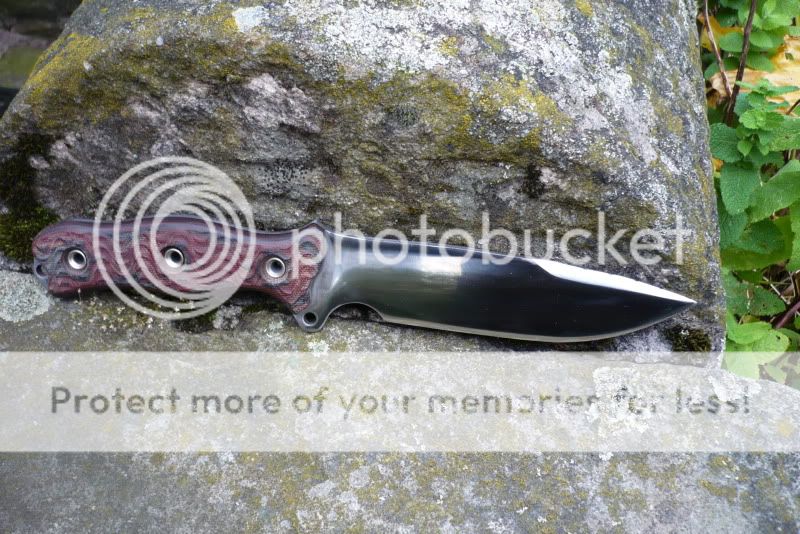
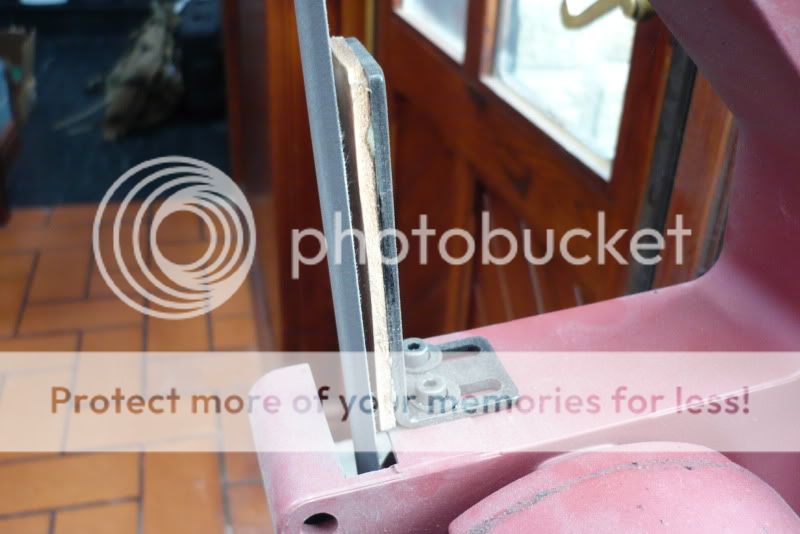
It has a very sharp edge which I have graduated at the tip for more thickness and durability on the point....possibly the sharpest I have ever put on a knife...I used a different technique for this edge than I have done in the past. Usually I use a slack belt on my belt sander using differing grades of belt to finally end in a polished edge. This time I glued to the metal back plate which sits behind the belt a thick piece of leather hide. Usually this back plate or "platten" is removed or turned around so it is sitting well away from the belt. This time I got it lined up so the leather was just clearing the belt and when I applied the side of the grind of the knife to the belt I could thin the grind down without removing stock from the spine and it gave the edge a very smooth finish. Once I had done this with repeated strokes keeping the blade cool by immersion in water and wiping it down the leather had begun to erode to give a great convex shape and the edge it then subsequently took by holding the spine slightly away from the belt is pure Hamaguri-ba just like those on my custom Japanese knives...a really awesome full convex grind.

This edge is not as thin as those who have applied edges to competition knives but is from my experience the best type of edge you can put on a knife for cutting and strength. I took some modelling clay or plasticine and did a cross section slice into it with one of my sharpest/best performing custom knives and used this blade dimension "tear shape V "as a template for the edge I wanted to create. Taking the knife away from the grinder and doing a test cut in the plasticine and examining the cross section shape...very interesting...and very satisfying as a final result. The leather glued to the platten definately gives greater control for creating this type of zero grind convex edge...I firmly recommend doing this.
The thickness of the blade though still has quite a bit of strength in the spine...
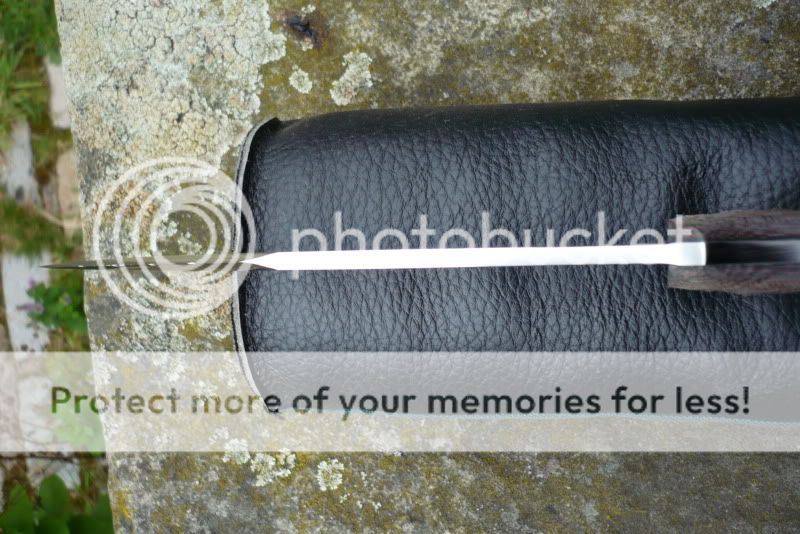
It is thinned down slightly but the performance of the knife is the best I have ever had. It will work like a "laser" when I take it to Scotland for my hind cull work this coming winter.
Now I just need to do a leather sheath for the knife. It has a kydex sheath done for the old knife but my experience is that when giving a knife such a sharp edge leather sheaths are much better at keeping the edge when inserting and withdrawing the knife. Kydex just gets "sliced" with little bits of kydex showing up on the blade and this can dull it sometimes over time....even though the kydex does fit well on the knife. Your mileage might vary on this...certainly if I keep a more obtuse edge on my knives this is not a problem...but for a real razor edge leather is best IMO....and in fairness I actually prefer kydex most of the time. It just depends on geometry...horses for courses really...my hunting/bushcrafter knives I like that bit sharper for the work they do.
Having a nice Busse with some lovely Snakeskin handles and a Satin Mirror finish has been a long held desire of mine...quite pleased with this one for a homemade job...I will do some test reports on this in due course.
I loved the overall design of the knife and the snakeskin grips but the muddy finish was'nt to my taste and there are disadvantages with a coating as dark as this on food prep as you cannot easily tell how clean the knife is....so the knife was languishing a bit unused.
I decided to strip the knife and give it a better more acute convex edge and see how it worked. Here is a pic of the stripped knife amongst others getting a bit of a testing session on basic fire lighting duties...
I liked the clip as this works very well as a strike area for a ferro rod and helps in rowling holes for fire drills as you can sharpen the clip and use this for such tasks leaving the main edge nice and sharp for fine cutting or skinning near the point. The clip also helps preserve the main edge if you use the knife for Hunting/Deer carcass preperation on tasks like going through the atlas joint to remove the head or through the knees to take off the hooves. All told this knife was very impressive and struck me that it would make a great knife for the coming Winter when I go up to Scotland to help a few Estates with their Culling of old Hinds in their large Herds.
I thought I would therefore give the knife a home made "Satin" treatment using various belts on my Sander to polish it up. I fancied doing a job similar to the Skinny Ash in the pic above which was my first Busse and which I modified by thinning it out with a fully convexed blade. I also dropped the point slightly on the Skinny Ash to help it as a "sticker" for bleeding out the Deer but with Satin Jack having a clip point there was no need for this. However I did decide to shape the clip back into the blade so there was no "right angle" lip at the end of the clip where it meets the spine as this can catch on the ribs of the Deer when piercing the heart.
I also wanted to round off the skull crusher point which on a knife I want to use more for field work is a better option. You can use the pommel more for crushing up or opening chestnuts...acorns...pine cones...and for breaking up "withy" branches or stems to extract the fibres for cord/string.
The knife now looks like this...
It has a very sharp edge which I have graduated at the tip for more thickness and durability on the point....possibly the sharpest I have ever put on a knife...I used a different technique for this edge than I have done in the past. Usually I use a slack belt on my belt sander using differing grades of belt to finally end in a polished edge. This time I glued to the metal back plate which sits behind the belt a thick piece of leather hide. Usually this back plate or "platten" is removed or turned around so it is sitting well away from the belt. This time I got it lined up so the leather was just clearing the belt and when I applied the side of the grind of the knife to the belt I could thin the grind down without removing stock from the spine and it gave the edge a very smooth finish. Once I had done this with repeated strokes keeping the blade cool by immersion in water and wiping it down the leather had begun to erode to give a great convex shape and the edge it then subsequently took by holding the spine slightly away from the belt is pure Hamaguri-ba just like those on my custom Japanese knives...a really awesome full convex grind.
This edge is not as thin as those who have applied edges to competition knives but is from my experience the best type of edge you can put on a knife for cutting and strength. I took some modelling clay or plasticine and did a cross section slice into it with one of my sharpest/best performing custom knives and used this blade dimension "tear shape V "as a template for the edge I wanted to create. Taking the knife away from the grinder and doing a test cut in the plasticine and examining the cross section shape...very interesting...and very satisfying as a final result. The leather glued to the platten definately gives greater control for creating this type of zero grind convex edge...I firmly recommend doing this.
The thickness of the blade though still has quite a bit of strength in the spine...
It is thinned down slightly but the performance of the knife is the best I have ever had. It will work like a "laser" when I take it to Scotland for my hind cull work this coming winter.
Now I just need to do a leather sheath for the knife. It has a kydex sheath done for the old knife but my experience is that when giving a knife such a sharp edge leather sheaths are much better at keeping the edge when inserting and withdrawing the knife. Kydex just gets "sliced" with little bits of kydex showing up on the blade and this can dull it sometimes over time....even though the kydex does fit well on the knife. Your mileage might vary on this...certainly if I keep a more obtuse edge on my knives this is not a problem...but for a real razor edge leather is best IMO....and in fairness I actually prefer kydex most of the time. It just depends on geometry...horses for courses really...my hunting/bushcrafter knives I like that bit sharper for the work they do.
Having a nice Busse with some lovely Snakeskin handles and a Satin Mirror finish has been a long held desire of mine...quite pleased with this one for a homemade job...I will do some test reports on this in due course.