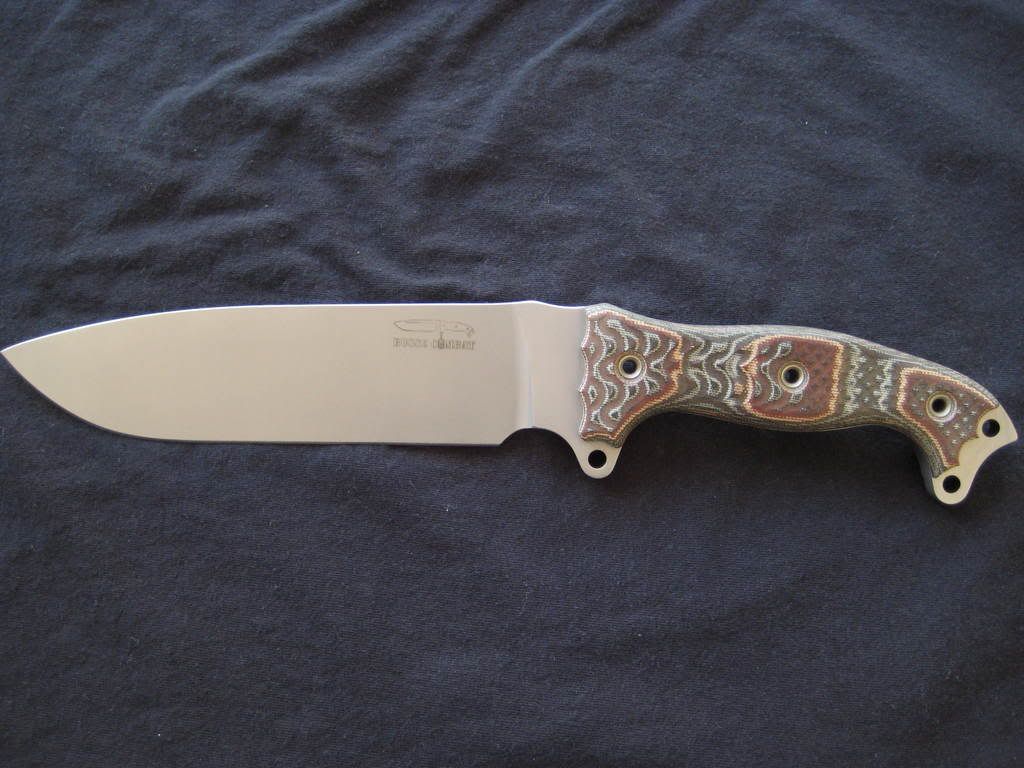
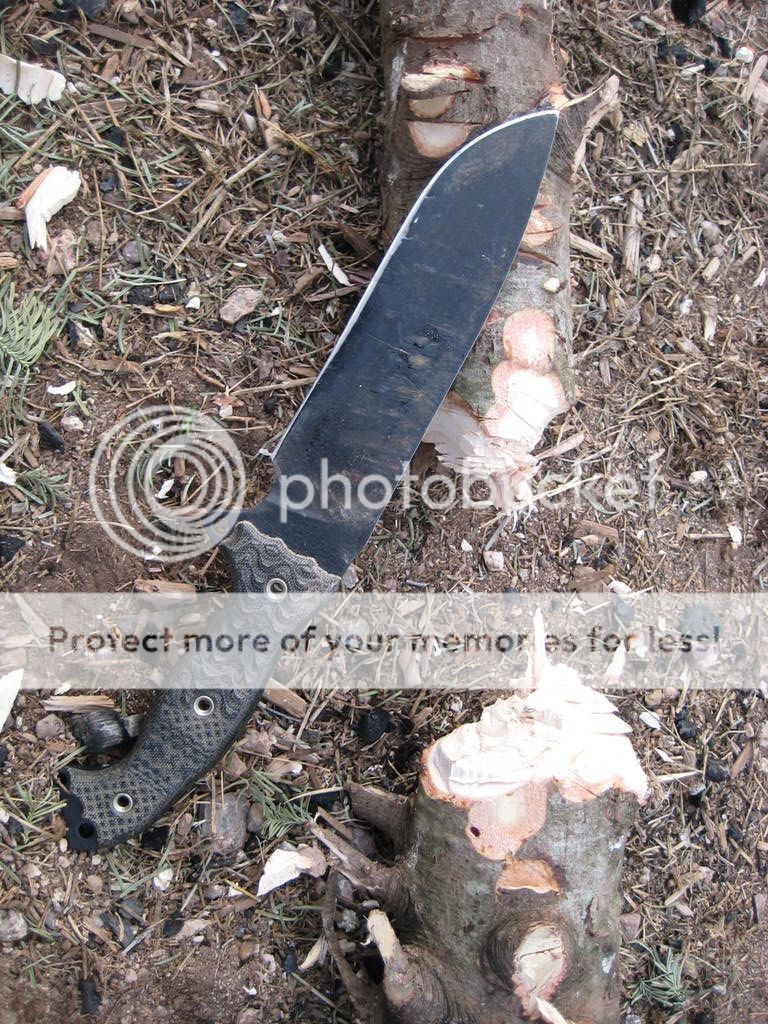
Scandi ground Busse????

Joined
Jan 1, 2006
Messages
1,649
What would all of you think of a Scandi ground Busse? I've never used a scandi ground knife before, but have been reading about them quite abit lately and they seem to be pretty dang usefull, would it be worth it?
Would the Boss make them production? would there be any benefit?
I was thinking a blade about the size of BATAC or SAR-5
S/F
 
what is the benefit of a scandi grind?

i have a knife that is scandi ground, and i dont see the advantage or find it pleasing to the eye.

but im sure it would be cheaper to produce.
 
what is the benefit of a scandi grind?

i have a knife that is scandi ground, and i dont see the advantage or find it pleasing to the eye.

but im sure it would be cheaper to produce.


Depending on the angle cuts better.

The INFI steel would be really great in scandi cause with the thinner scandi edge it is not as strong so the really good steel would let you have the wear resistance of the infi but w/the greater cutting efficiency of the scandi.
 
IMO convex best for chopping. Full flat sticks too much.

+1 Convex has a way of parting wood and making deep cuts without sticking. The flat grind although thinner will also chop deep but sometimes tend to stick. I like convex grind for choppers and flat for smaller knives that will mostly be used for cutting and slicing. Regardless of grind I still prefer to put convex edges on them.

A true zero edge convex is not much different than a scandi grind with a more reinforced edge.
 
The convex edge is better than the tradition "V" grind, but I am talking about the actual grind.


Flat grind.

BIllpics647.jpg


Saber grind:


BIllpics022.jpg


+1 Convex has a way of parting wood and making deep cuts without sticking. The flat grind although thinner will also chop deep but sometimes tend to stick. I like convex grind for choppers and flat for smaller knives that will mostly be used for cutting and slicing. Regardless of grind I still prefer to put convex edges on them.

A true zero edge convex is not much different than a scandi grind with a more reinforced edge.
 
Last edited:
why is it easier to sharpen than a v grind?

it would be like if you layed the main grind of a full flat battle mistress onto a giant sharpening stone - and then started sharpening. your essentailly reducing the entire main grind in order to sharpen the knife.

I personally hate scandinavian grinds for a bunch of reasons. as a true "zero edge", the edges are very very thin and thus cut well - HOWEVER, the saber grinds tend to be loooooooooooooooow, sometimes only 1/4" high. thats not so bad when the blade is 1/32" thick, but when it's 1/8" thick, your going from edge to full stock thickness in less then 1/4" - it's feels like a wedge more then a knife.

so all that stock thickness would increase strength right? in prying, yes. but since the edge is ground so thin, your just as likely to chip out an edge as you are on a full flat blade, if not moreso because the edge is often actually thinner and at a more acute angle.

there easier to sharpen - depends on how your sharpening. with an edgepro system, the super short main grinds don't really help much in keeping the blade flat, and you have to remove a loooot of metal as you go, unless your putting on a "micro" bevel, or a secondary bevel - which, when the secondary bevel becomes wide enough, defeats the purpose of the scandi grind. it becomes a very very very very low saber.

I know there are many lovers and supporters of the scandi grind, but I am definitely not one of them :mad::grumpy::thumbdn::grumpy::mad: :p
 
The convex edge is better than the tradition "V" grind, but I am talking about the actual grind.


Flat grind.

BIllpics647.jpg


Saber grind:


BIllpics022.jpg

I was talking about actual primary bevel grinds ;)

A convex primary bevel along with convex edge in my opinion chops better than a flat grind with convex edge. The friction introduced by the flat grind is very linear in that it gets more and more friction as the material moves up towards the spine.

A convex grind is also somewhat linear to a certain extent but friction starts to drop off by the middle portion of the blade. I don't have a scientific explaination for it....but I do notice that the convex grinds tend to easily and smoothly wedge large wood chips apart with very little to no binding. My fully convexed .235 thick HHFSH would not have any problems chopping along side the much heavier HOGFSH.
 
Gotcha. I was talking about the secondary grind, and when you chop into a tree, the closer you get to the Saber grind the more resistance the knife will show.


I was talking about actual primary bevel grinds ;)

A convex primary bevel along with convex edge in my opinion chops better than a flat grind with convex edge. The friction introduced by the flat grind is very linear in that it gets more and more friction as the material moves up towards the spine.

A convex grind is also somewhat linear to a certain extent but friction starts to drop off by the middle portion of the blade. I don't have a scientific explaination for it....but I do notice that the convex grinds tend to easily and smoothly wedge large wood chips apart with very little to no binding. My fully convexed .235 thick HHFSH would not have any problems chopping along side the much heavier HOGFSH.
 
Gotcha. I was talking about the secondary grind, and when you chop into a tree, the closer you get to the Saber grind the more resistance the knife will show.

A saber grind is essentially a flat grind that is not taken all the way to the spine. So yes, give the same width blade it will generate more friction faster than a full flat grind.
 
I was going to say that I think scandi grinds work well on thinner stock, and ease of sharpening is the the benefit. I really don't think you want a traditional scandi grind on a thick knife.
 
Back
Top