
I'm about to use my first piece of Cocobolo for scales on a vintage cleaver restoration project. I know about the allergic reaction that some have to the wood so I'm prepared to deal with that 
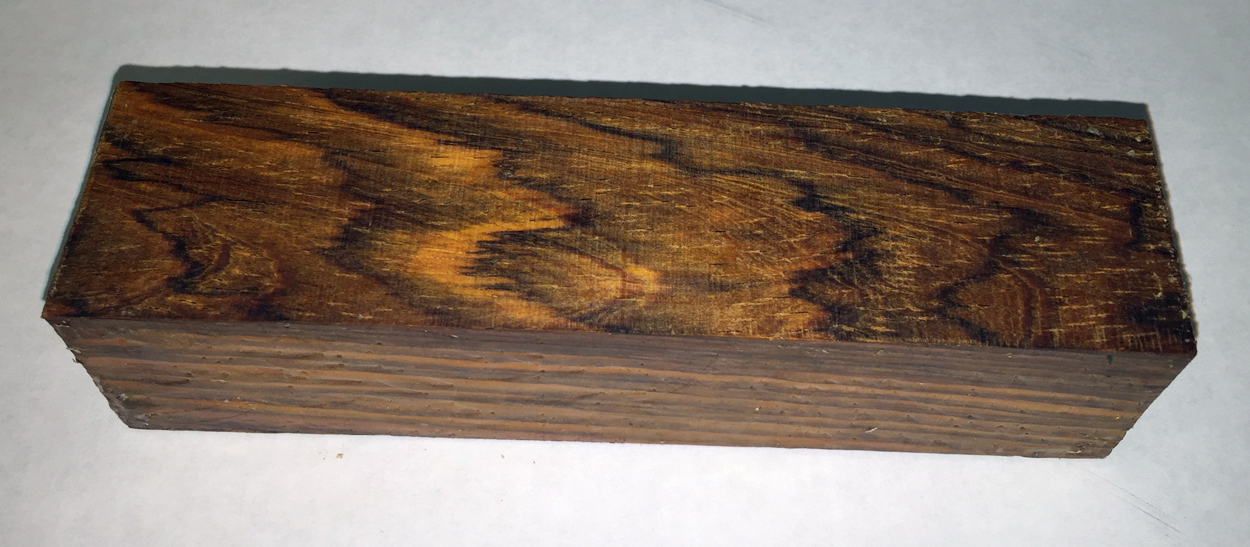
The block seems very heavy and dense but has not been stabilized. In fact, it seems so solid and oily that I'm not even sure I could get any resin into it if I tried!
Can you more experienced folks tell me if you think it is worth the effort to try to stabilize it or is it good as is in your opinion. This is a very nice figured block 1.5" X 1.5" X 6". I am going to rip into a book-matched pair. Excited about working with it.
Thanks for any advice in advance,
Big Mike
The block seems very heavy and dense but has not been stabilized. In fact, it seems so solid and oily that I'm not even sure I could get any resin into it if I tried!
Can you more experienced folks tell me if you think it is worth the effort to try to stabilize it or is it good as is in your opinion. This is a very nice figured block 1.5" X 1.5" X 6". I am going to rip into a book-matched pair. Excited about working with it.
Thanks for any advice in advance,
Big Mike

