
Whisperstealth
Gold Member
- Joined
- Feb 27, 2021
- Messages
- 277
I'd like to know: What is a Mid-Tech knife exactly?
Thanks in advance for an explanation!
Thanks in advance for an explanation!

The BladeForums.com 2024 Traditional Knife is available! Price is $250 ea (shipped within CONUS).
Order here: https://www.bladeforums.com/help/2024-traditional/
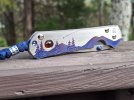
I ordered this directly from CRK back before they stopped taking orders. I chose the hardware color and lanyard bead combo. I requested a shooting star. I chose the almandine garnett inlay. The graphic was done by an artist with tools in hand, not a computer. All parts were made in house. Is this a custom? A midtech? A special small batch production? View attachment 3143502

It's a customized small batch production blade, but beautiful and unique none the less!I ordered this directly from CRK back before they stopped taking orders. I chose the hardware color and lanyard bead combo. I requested a shooting star. I chose the almandine garnett inlay. The graphic was done by an artist with tools in hand, not a computer. All parts were made in house. Is this a custom? A midtech? A special small batch production? View attachment 3143502

I think you have a whole bunch of employees typing your posts for you!Here's another way of looking at it, I think:
A. Number of people involved in making a knife:
1. Single maker doing all the work.
2. Single maker with apprentice(s), i.e. people learning to be independent knifemakers, both the lead maker and apprentices are physically involved in making the knife.
3. Single maker with apprentice(s), i.e. people learning to be independent knifemakers, apprentices making the knife, lead maker only inspecting.
4. Single maker with employees, i.e. machinists or other people hired to do specific factory-type tasks who are not learning the knifemaking process as a whole, both lead maker and employees physically involved in making the knife.
5. Single maker with employees, i.e. machinists or other people hired to do specific factory-type tasks who are not learning the knifemaking process as a whole, lead maker only supervises or does quality control.
6. Single maker with outsourced labor at another company doing OEM manufacturing, maker still involved in some meaningful part of the knifemaking.
7. Single designer with entire knifemaking process outsourced to OEM. Designer created the knife design but has no physical role in making the knife.
B. Level of handcrafting involved in making a knife:
1. Made by hand with no power tools from completely raw or repurposed materials.
2. Made by hand with power tools from raw or repurposed materials.
3. Made by hand with power tools from partially processed materials, such as bar or round stock, handle material already cut to size, pin stock, etc.
4. Partially made by hand with power tools from components machined in-house with CNC.
5. Made by hand with power tools with some parts purchased in complete or near-complete state, such as waterjet blade blanks, screws, pivot pins and collars, thumb studs, etc.
6. Made predominantly by CNC in-house.
7. Assembled from components made by OEM with limited hand work such as sharpening and parts assembly.
C. Level of customer involvement in making a knife:
1. Maker designs knife completely to customer specifications. This is actually fairly rare as few makers are willing to give complete carte blanche to customer whimsy.
2. Maker allows wide customer variation to existing maker designs, such as guards, size, handle shape, etc.
3. Maker allows wide customer choice of materials but no substantial changes to existing design, such as blade steel, guard material, handle material, etc.
4. Maker allows limited selection of changes to materials.
5. Maker only produces knives to his or her taste and allows no customer choice.


Negative Steve, I'm a single maker here, just spent years transcribing medical dictation and do 120+ wpm haha. I would never outsource posting to Reate or Kizer.I think you have a whole bunch of employees typing your posts for you!


Here's another way of looking at it, I think:
A. Number of people involved in making a knife:
1. Single maker doing all the work.
2. Single maker with apprentice(s), i.e. people learning to be independent knifemakers, both the lead maker and apprentices are physically involved in making the knife.
3. Single maker with apprentice(s), i.e. people learning to be independent knifemakers, apprentices making the knife, lead maker only inspecting.
4. Single maker with employees, i.e. machinists or other people hired to do specific factory-type tasks who are not learning the knifemaking process as a whole, both lead maker and employees physically involved in making the knife.
5. Single maker with employees, i.e. machinists or other people hired to do specific factory-type tasks who are not learning the knifemaking process as a whole, lead maker only supervises or does quality control.
6. Single maker with outsourced labor at another company doing OEM manufacturing, maker still involved in some meaningful part of the knifemaking.
7. Single designer with entire knifemaking process outsourced to OEM. Designer created the knife design but has no physical role in making the knife.
B. Level of handcrafting involved in making a knife:
1. Made by hand with no power tools from completely raw or repurposed materials.
2. Made by hand with power tools from raw or repurposed materials.
3. Made by hand with power tools from partially processed materials, such as bar or round stock, handle material already cut to size, pin stock, etc.
4. Partially made by hand with power tools from components machined in-house with CNC.
5. Made by hand with power tools with some parts purchased in complete or near-complete state, such as waterjet blade blanks, screws, pivot pins and collars, thumb studs, etc.
6. Made predominantly by CNC in-house.
7. Assembled from components made by OEM with limited hand work such as sharpening and parts assembly.
C. Level of customer involvement in making a knife:
1. Maker designs knife completely to customer specifications. This is actually fairly rare as few makers are willing to give complete carte blanche to customer whimsy.
2. Maker allows wide customer variation to existing maker designs, such as guards, size, handle shape, etc.
3. Maker allows wide customer choice of materials but no substantial changes to existing design, such as blade steel, guard material, handle material, etc.
4. Maker allows limited selection of changes to materials.
5. Maker only produces knives to his or her taste and allows no customer choice.

Good to know, thanks.Tim Reeve has absolutely made and designed knives. And they still have hands on their knives at the factory.

I'm not sure what your definition of "production" is, but I can show you some that are made without automated machines and every step is done by hand on what machines are used. I did this photoshoot for Andy Roy of Fiddleback Forge over 11 years ago, and these are still the processes he uses.Show me a knife that was made without production.


Oh I absolutely understand and recognize that some knives are "handmade one-offs" and others are not. If my poking fun came off as ignorance, well... I'll do better next time.I'm not sure what your definition of "production" is, but I can show you some that are made without automated machines and every step is done by hand on what machines are used. I did this photoshoot for Andy Roy of Fiddleback Forge over 11 years ago, and these are still the processes he uses.
The following is a series of images that tell the story of the weekly road to the Friday sales posts in the Fiddleback Forge sub-forum. It is a series of photos that illustrates the effort, level of craftsmanship, and love for the craft that goes into the knives that are handcrafted by Andy Roy and his team at Fiddleback Forge. I hope you enjoy viewing them as much as I enjoyed taking and going through them.
Some things to note here are; the absence of automated machinery, and the attention to detail that is paid, it's a very hands-on process.
As well as the temperature conditions at...
- Mistwalker
- Replies: 94
- Forum: Fiddleback Forge Knives
I didn't see it as ignorance but as a question. I wasn't being sarcastic, just conversational. I consider Fiddleback Forge a hand made, production, knife company. Becuase Andy has several models he uses original patterns to produce, so every iteration of a model is physically and visually obviously that model, but with all steps being done by human hands there are subtle differences in each one as well. Ed Martin and Bill Harsey, two other favorites of mine do the same thing. I know of a couple of makers who make only one-offs by hand using only files and stones, but not many and they don't make many knives.Oh I absolutely understand and recognize that some knives are "handmade one-offs" and others are not. If my poking fun came off as ignorance, well... I'll do better next time.

I really miss the ol’ boy!! He made my first custom knife. I bought many others after that one. Unfortunately, due to life’s journey, I don’t have one any more.I'll tell you what, I do love a handcrafted sandwich. LOL (I never ordered one from a machine though.)
It's all b.s.
Kit Carson told me years ago that he couldn't necessarily make a better knife than the Sebenza...but he could give the customer what they asked for. (And in a video, I remember Andrew Demko saying something similar, as in that he couldn't make the AD10 better than the manufacturing company for Cold Steel in Taiwan, all he could do was make it more expensive.)
Kit was a wonderful man who let many folks copy his designs and when it was mentioned to him, he said "we all stand on the shoulders of those who came before us."
I say buy the best quality knives you can from the best quality people and companies. Forget the semantics.
Whatever the label- it is really super nice!I ordered this directly from CRK back before they stopped taking orders. I chose the hardware color and lanyard bead combo. I requested a shooting star. I chose the almandine garnett inlay. The graphic was done by an artist with tools in hand, not a computer. All parts were made in house. Is this a custom? A midtech? A special small batch production? View attachment 3143502
“Custom” vs “Customized”Not trying to be too cheeky but this thread is giving me a bad case of deja vu from the long running discussion of what makes a custom motorcycle VS a motorcycle with some parts bolted on.
Close friends and brothers have been known to come to violence over that one too.

