Skinny Ash Project

Thanks alot, I will keep all of this in mind when I go back to work on it. I think I am going to spend some time away from it for a little bit now. A friend of mine told me if you are unsure at all of how to do something, step away from the grinder and do not come back until you are absolutely sure.

I am going with that for now. Plus it will give time for all of you experienced guys to learn me a thing or two.:)

Thanks again:thumbup:
 
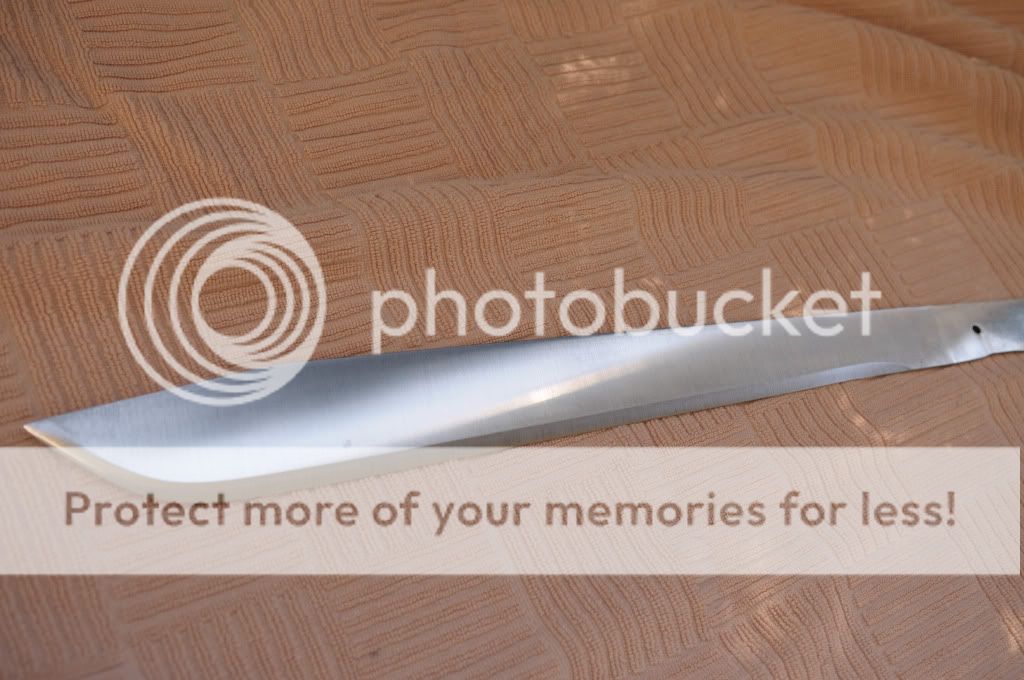
Thanks Dennis:) Right now I am looking into the best way to establish a clean plunge I guess it is called. under the coating were heavy grind marks and I want to make it look nice.

I guess I can just make it with the slack belt and make the grind lines clean by going back over the flats?

That is what I did with the most recent machete when I had to make my own "plunge?" and it turned out like this. Of course I am hoping for better results with my ASH.

MacheteSatin4.jpg
 
So... you're not going put the grind on your ASH like you did to the Machete?
 
Rolf,

I know you can't help me unless you are clear on my intentions:)

I am "trying" for something like this:

NMFBMLE1.jpg


Thanks Rolf:thumbup:
 
Kev,

To clean up the grind lines.....if you use a slack belt you end up curving the edge of the spine as it goes to right angle to the flats and to the blade and convexing at the edge itself but cannot get purchase in the middle of the blade sides/flats themselves...unless belt tension is "very tight"....it is much better to use the platten and glue the leather hide in place so you can press the sides of the blade against the belt and the leather and stroke the knife from the plunge line towards the tip pulling the knife away one the tip reaches the belt.

Do equal strokes either side to keep the geometry right...

Using a new belt at finer grit is the best way...a severe grit can remove a bit too much steel as once done you then need to use finer belts to give a satin finish.

Once the sides of the knife are clear of grind lines...then do the slack belt on the edge to give it a full convex keeping the spine away from the belt to keep strength at the spine and the correct geometry between spine and handle.

My tip about taping a block just after the plunge line so you do the ricasso and flats seperately is to avoid the loss of the plunge line as the belt skims over it to the flats...this is common when doing a ghetto satin when the grips are'nt removed...but as you have removed the grips you can avoid this.

When you do the flats you will be able to reverse the process and put a block just after the plunge line...but when you hold the blade flat against the belt you will not damage the plunge line if the belt goes over it slightly...and you should end up with a uniform shape by counting off the passes so that the handle gets the same as the blade...or better still by using a digital micrometer to check the spine thickness each side.

The job you have done so far looks great though...so no worries...you seem to have done the worst of it...but it is hard to tell from the photo's which show a spine shot...we would need to see side views to see what you mean.

Good luck and crack on...:thumbup:
 
Last edited:
Thanks Rolf, I have a feeling it is going to turn out okay.:)

Peter - Thanks for all of the insight on the project. A while ago when you told me about the leather on the platen I wanted to give it a try so I looked for leather. While I was looking I found some Velcro rolls lying around that I figured why not see what it would be like with any type of "cushion". Well, as common sense would tell you Velcro is not the ideal material for this task, but it did give me an idea. So, a very kind leather professional sent me a few pieces fitted for my platen.

LeatherPlaten.jpg


Now here are my questions for you - If I put this on and dislike it can it be taken off without damaging the platen? What type of glue did you use? Is this technique ideal for anything other than satin finishing? For example if I wanted to attempt to make a flat ground knife from a bar of steel would it still work with the "cushioning effect" (I know this is just an extreme what if scenario since it will probably never happen, but what if)? These are just a few of the things that come to my mind before I look for adhesive to attach the leather to my platen.

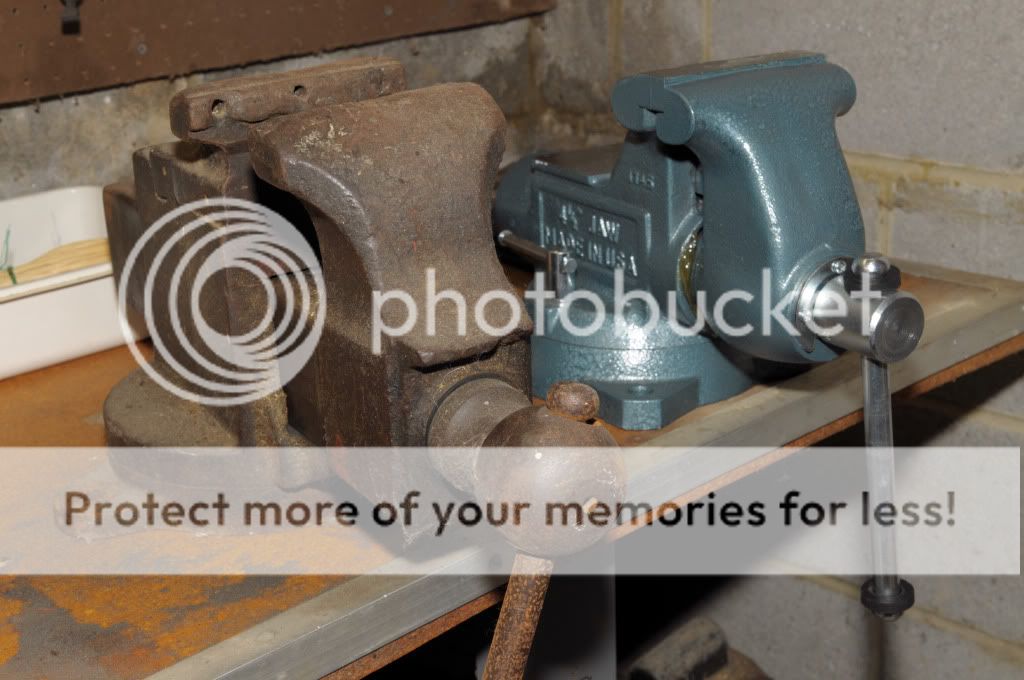
On to the idea of attaching the handles, I picked up a new vise because the old one was getting a little worn:

Vises.jpg


If anyone has any advice on this also I would appreciate it. At this point I am under the impression that this can be accomplished with ~.033" tubing and drywall screws but would gladly take more advice. I may be able to have dies for this in about a month. Should I try to wait for them?

Thanks so much for everyone's help!

 
Back
Top