Smith's Tri-hone stones?

Joined
Oct 24, 2009
Messages
42
ok..apparently i cant sharpen a knife to save my life.. i only make them duller.. i need help with my situation and im a fast learner so any tips would be great.. i will admit that i dont know all the lingo or the purpose of certain things. i frequently visit the forum and try to learn from other threads but i figured it was time to try for some direct help. i know practice is key and i can do that but i want to practice with the right methods so if someone could break it down for me like im a 5th grader id appreciate it.

ok..heres what im working with..

SHARPENER: smith's tri-hone...c m f... the course stone is aluminum oxide (i know this isnt the best grade) the medium and fine are arkansas stones.

i also have the smith's honing oil

KNIVES: nothing impressive... i have a spyderco cat and a cheapo rough rider 440ss

the cat is shaving sharp (it shaves hair but not with ease). the cheapo rough rider actually shaved hair as good as the cat.. the blade on the RR was dull and i wanted to get its edge back to its original sharpness and somehow made it worse.

im attempting to sharpen with a 23 degree angle.. apparently im doing something wrong and if you guys could give me a few pearls i would sure appreciate it! i love to learn and ill try whatever you throw at me! i know i dont have the best blades OR tools but if you could guide me down the right path until i can spring for the proper blades/equipment i would be grateful.

::i also have ceramic rods fassioned in a 'v' for whatever it may be worth.
 
I have the same problem...I can get my knives shaving sharp but they dont do it easily..kinda have to scrape...But thats even with a sharpmaker....sad.
 
heck...if i could get a nice edge on my blade i would be glad to go through the trouble... i cant even get it sharp enough to cut butter!
 
DMT diamond stones when you decide to upgrade.


Holding a consistant angle and using the right amount of pressure are key. as you get to the final stages of sharpening extremely light pressure makes all the difference.

Personally I wouldn't even try to sharpen any CPM or tool steels with what you have, it could take forever and a day :)
 
i think youre spot on with the DMT suggestion. they seem to be a favorite. when i have a couple hundred to drop id love to get them. ill keep dreaming until then.

i have trouble seeing/feeling a burr (if ive even created one).. ive read on how to spot them but i guess im not picking it up..

could it take several laps (with the stones i have) on one side before i even think about rotating? 10? 30? 50? 100?

once i rotate am i going until i push the burr back? if that makes sense?

how do i know how much to push one side and when i need to switch?

(this shows how little i know...but want to excel and i definitely respect blade sharpening as an artform)
 
Simply put, you want to grind two angles until they reach a apex. Some work on forming a burr and some (like me) work on forming the edge without creating much of a burr if any. Do alternating strokes 1 for 1, it should be easier this way to get your knife sharp. Conserning yourself with the burr can sometimes lead to more problems than you need. Just try and get it sharp first then worry about the complex stuff latter. Two good ways to check for a burr is by looking under bright light and by using a stropping motion on the top of your finger nail, if there is a burr it will scrape your nail surface.


P.S. dia-folds are fairly cheap.
 
ill try alternating strokes 1 for 1 and see how i manage. at what point do i move to a medium or fine stone? i know i need to create this apex now but as soon as i achieve this do i move on or keep going on the course stone?
 
When the scratch pattern has equaled the grit stone your using, this will also hold true for the sharpness of the edge. If you feel the edge can not get any better with the stone your using and your scratch pattern is even and the edge is formed properly then its time to move on. Make sure each new stone make a new and complete scratch pattern.

Your correct to say its a art, try placing yourself in a quiet room and putting yourself in a zen state. The more in-touch you are with your senses the better things will turn out. Look, feel, and hear
 
Personally I wouldn't even try to sharpen any CPM or tool steels with what you have, it could take forever and a day :)

And that's just it with non-diamond surfaces, it really does take forever and a day (if starting from dull-ish), but people don't realize or even want to accept how much time needs to be spent stroking away with light, even passes. So there is another "pearl" -- when you think you'e done, keep going!

When the scratch pattern has equaled the grit stone your using, this will also hold true for the sharpness of the edge. If you feel the edge can not get any better with the stone your using and your scratch pattern is even and the edge is formed properly then its time to move on. Make sure each new stone make a new and complete scratch pattern.

To make all this scratch pattern inspection easy and worthwhile, some sort of magnification device should be used. Jewelers loupes are great for this, and cheapo magnifying glasses are even better than nothing. There's another tip -- edge inspection using magnification.
 
Many things you look for, bevel inspection, whether you turning up a burr, whether your keeping a consistent angle with it you can tell whats really going on .
Ok, another pearl, it DOES NOT take a diamond stone . The equipment you have is good enough ! I'm hoping you have Smith's 2x6" stones as I've used those and it can be done . Its not so hard either ! Use a black marker and draw a line on the bevel take a stroke and look at the bevel w/ your magnifer . Keep doing this on the coarse stone until you can consistently make your stokes . Then keep going on the same side until you work up a burr . It will show up on the opposite side and look and feel as a small amount of curled metal . When you have aquired this the entire length of the blade flip it over, mark it and do the same thing . After a stroking keep looking for the burr to start appearing on the opposite side-just very small amount of curled metal . When that occurs progress to the next stone . It will probably take you fewer strokes on this stone but go at it in the same manner w/ lite pressure . After this stone you could stop here as it will shave arm hair alot . Should you desire to do more go to the third stone in the same manner . You should come out w/ a very sharp edge in about 1-2 hrs.. Your coarse stone is 150 grit AO, that will easily do it . Good luck . DM
 
ok. so keep a close eye on the scratch pattern, use magnification to aid you visually in confirming burrs-scratch patterns-etc, light passes..

i got all that. that will help me a lot! i appreciate all the different points of view and bits of advice you guys are giving me. i do have some super cheap diamond grit stones that i bought for next to nothing from ebay..i could try those as well..

QUESTION: when i create a burr on one side and then flip and create or push the burr on the other side...am i automatically done with this stone? do i continue to go back and forth or is that a no-no?

also..how light are we talking on the passes? like basically just the blades weight working against gravity? or do i press with 1/2 lb of pressure (random #)?
 
I think diamond stones are easiest for me, like knifenut says.

The DMT duo-fold is a great tool for tossing in your kit for a camping trip!

Here's a complete set for less than I payed for my complete Sharpmaker setup.

I'm talking about the frequently bought together stuff.

I'd get a strop to and convex those newly sharpened edges.
 
i have (i think) the same tri-hone you're referring to, took me a while, kept at it, researched, watched alot of videos, cussed alot... but i can finally put decent edges on all mine:thumbup: it had more to do with my technique than with my equipment... I wasnt holding a consistent angle and too much pressure...
I use the smiths and an old benchstone that was my grandads, pretty minimal set up but it works and wont break the bank
to each his own, but dont give up on it, cause once you "get" freehand sharpening theres nothing more satisfying!
best of luck
ivan
 
Con, Your actually removing some of the burr when you start stroking on that other side . So, stroke like you say w/ about 1/2 lb. pressure and not more than 1lb. and less on the next stone . On that first stone you stroke only on one side until you work up a burr, then flip the blade over and stroke the other side several times . 1) Setting the bevel as on the opposite side . 2) Removing some of the burr, (hopefully alot) . Once you've achieved those two things . Then go to your next finer stone, starting on side one the first side you began on . Working it in the same manner as steps one and two . Only now your on a finer stone . No other difference . So, at this point you no longer establishing the bevel your 1) removing more of the burr, 2) refining the edge and the bevel . Which is what creates sharpness . Its a simple step and procedure, process and like Ivan said, technique . You don't need the best equipment like many here say, as theres been several threads posted here of people sharping knives to shaving edges on bricks . Its not rocket science like some here think . Stay at it you'll get it . DM
 
i really appreciate it. i was starting to get depressed. if i win my fantasy football championship tonight im going to buy one of those DMT aligners.

im definitely good at maintaining a constant angle. i think my problem lies somewhere around creating/removing the burr..

hopefully with all the info ive received ill be able to achieve a nice edge
 
Con, A blade guide/aligner is a good idea for anyone using stones . I use the narrow or wide, heavy style paper clamps depending on what angle I'm after . They work good as well . Glad to have been of assistance thats what we're here for . Your welcome and good sharpening . DM
 
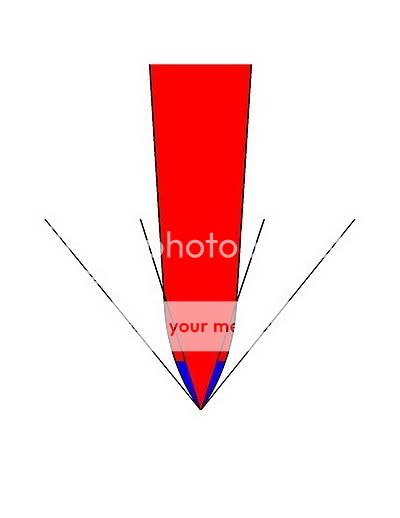
Sharpening a knife is a matter of geometry period. Edge holding is a matter of steel and heat treatment period. These are simple statements you can take to heart. People will say x brand knives are hard to sharpen or y brand knives are hard to sharpen.The problem these people are experiencing is that the blade is too thick directly behind the edge. Anyone that has been cut opening a tin can has experienced the power of edge geometry. If you look at the following drawing there are two sets of lines. The closer you get to the inside lines the better the knife will cut period.

tn_Untitled.jpg


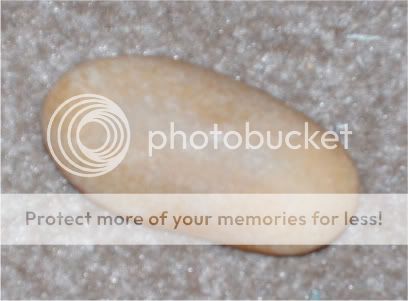
As you reduce the angle of the edge one of two things will happen. The edge will chip or it will bend. Then you can put on a secondary bevel if needed. There is no voodoo involved in sharpening , there are no magic stones or gadgets. It is a simple skill anyone can acheive.The picture below is a rock i picked up in my yard that i sometimes use as a finishing stone. If you look closely at the middle of the stone it is darker on the ridge i use for sharpening.

HPIM0558.jpg


If you feel sharpening impaired take heart it's easier than you think.

Johnny
 
thanks. so if i create the secondary bevel it should be at a higher degree than the first right?
 
Con, correct . Blade, I would'nt word it that way but I can agree with you . (Just the first sentence) . The diagram looks alot like one in John Juranitch's book . Quote: "no voodoo, no magic stones and anyone can achieve it". This sure sounds different than things I hear around here at times . DM
 
Back
Top