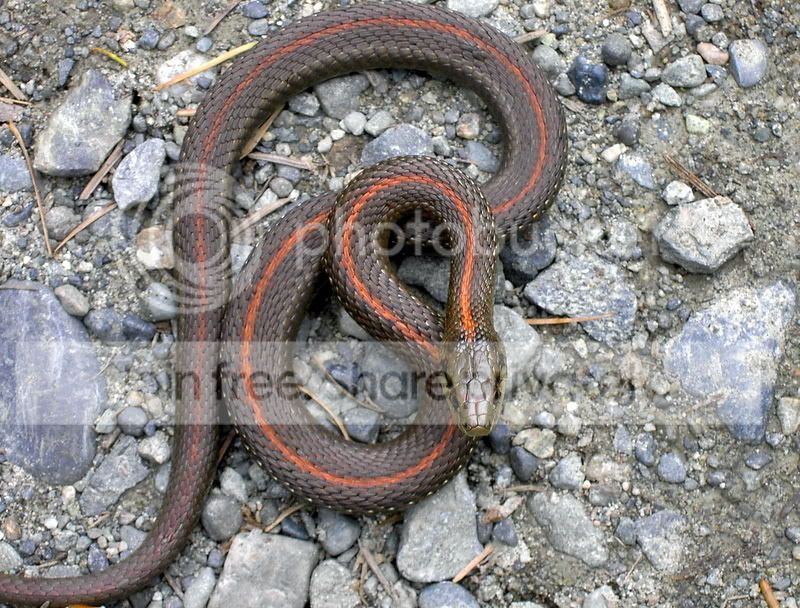
Snake pics

Here in Ga we have copperheads, and LOTS of them! In my experience or run-ins with them they have been highly aggressive (not just curious). A friend of mine was horseback riding one day and there was a snake crossing the trail about 20-30 feet in front of us; as we waited for it to cross it made a 90 degree turn and came right down the trail towards us as we waited to identify it we figured out it was about a 16" copperhead. We turned around and bypassed the snake but as we went around the snake it altered its course so it would be heading back towards us, nothing exciting happened but that is an example of the basic nature of a copperhead down here. BTW I lived on the North Shore of Lake Ponchartrain in LA for many years and we had plenty of snakes (the first place I ever saw a pygmy rattler) and other reptiles but not even the cottonmouths would put that much effort into checking something out!

Most people around here just don't want to wait and see if the copperhead wants to play nice or not!

That is just my 2 cents.

Now that is interesting stuff. They are all over my camp and I never had a problem with them. I always thought that the only snake that would actively seek out a human and attack it was the black mamba. Which luckily we don't have to worry about :D :thumbup::thumbup:
 
Pictures are not the issue. Its a big problem for reptiles that produce slowly, with most of their offspring eaten before they are a month old. When the adults are collected for the pet trade the breeding population almost never recovers. The people collecting pet trade animals, especially reptiles and birds, usually end up destroying the populations they are collecting from. I study population trend and environmental and non-environmental factors that effect herp populations and collecting is very high up there.
 
Thanks, this is one of those things that I feel strongly about. I've been studying one particular population of copperheads and their behavior for over four years and have a special place for them in my study log.
 
Pictures are not the issue. Its a big problem for reptiles that produce slowly, with most of their offspring eaten before they are a month old. When the adults are collected for the pet trade the breeding population almost never recovers. The people collecting pet trade animals, especially reptiles and birds, usually end up destroying the populations they are collecting from. I study population trend and environmental and non-environmental factors that effect herp populations and collecting is very high up there.

I see what you mean bro..I wasn't trying to start anything. I was just stating how excited I was to see something like that in person.
 
no worries, I felt the same way before working with the fish and wildlife guys
 
Md 25v, out of curiosity, what other environmental and non-environmental factors affect copperhead population dynamics?
 
Welcome to W&SS MD 25v. I'm a biologist also, but mainly work on fish and deal with contaminant transfer through food webs. I do a little bit of work with herps and published with a colleague this year on Lake Erie watersnakes. Anyhow, great pictures and stick around. There are quite a few really good folks around and something that we share here is a deep respect and love for nature. Nice to have more ecologists contributing here and providing some expert opinions on wildlife management issues.

For me, it is also nice to know somebody who is performing telemetry research. We are playing around with telemetry systems and fish tags a bit here but nothing too serious yet.

Sincerely,

Ken
 
Welcome to W&SS MD 25v. I'm a biologist also, but mainly work on fish and deal with contaminant transfer through food webs. I do a little bit of work with herps and published with a colleague this year on Lake Erie watersnakes. Anyhow, great pictures and stick around. There are quite a few really good folks around and something that we share here is a deep respect and love for nature. Nice to have more ecologists contributing here and providing some expert opinions on wildlife management issues.

For me, it is also nice to know somebody who is performing telemetry research. We are playing around with telemetry systems and fish tags a bit here but nothing too serious yet.

Sincerely,

Ken

Thanks Ken, I'm not new to the W&SS forum, thats about the only place I post here. Telemetry in aquatics? Interesting. How well does the signal transmit through water?
 
Unfortunately a lot of people don't want to see what any snake is going to do if it is indeed a copperhead; we have a lot of red rat snakes get killed because they "knew it was a copperhead". On the other hand people get bitten by picking up "red rats" and surprise, surprise it was a copperhead and that is their own fault for fooling around with things that should just be left alone!

Perhaps aggressive was the wrong word (it wasn't meant to mean they seek out and attack people), perhaps pro-active is a better choice? They would rather check something out than be checked out by something bigger and hungrier. That is the only rationale I can come up with for a 16" snake to go anywhere towards 4 horses and riders. Most of the people I associate with view pretty much any encounter with snakes as a normal occurrence or non-event, unless a cat brings one into the house as a "present" for the wife, then it gets a little exciting!!

I personally think copperheads are one of the prettier snakes we have in the States!
 
Great pics MD! Did one ever nab you?

Unfortunately, one of the early times in my career I learned the importance of using the right size tube to work on the telemetry implants. Its a lesson you don't learn twice.
thumb.jpg
 
Md 25v, out of curiosity, what other environmental and non-environmental factors affect copperhead population dynamics?

Environmental- birds and raccoons are the biggest predators to baby snakes. Many copperhead populations eat more frogs and toads than rodents, so droughts that affect amphibian populations have a major effect on the amount of food those populations receive and therefor the size of the clutch the female can produce. There are a lot of factors that go into population analysis, far more than I could pup in a post.
Non-environmental- humans- collecting and straight up killing them, roads-for road strikes, Pollution- those that eat mostly amphibians can be effected by toxins in the amphibians they eat which can effect thier offspring. Like before, way to many factors to put in a post but those are a few of the biggest.
 
Youch. That looks like it left a mark. Thanks for the info, it's easy to forget the factors that have an effect on or through their food supply.
 
Copperhead bite, correct??

No, timber rattlesnake (C.horridus)
Copperheads venom would, more often than not, have cause a lot more swelling and pain but usually doesn't deteriorate much tissue, at least untill the swelling is severe.
 
Holy crap! See, that's why I don't want nothing to do with those things...

Remember, that was my fault. We pulled her out of her safe hole in the rocks, put her in an acrylic tube, and generally pissed her off. Thats the snake equivalent of alien abduction. I have no ill will toward the snake because the whole incident would have been avoided by me choosing the right tube size. I grabbed one that was to big and allowed her to double back as I was putting her head in.
 
Great pics buddy, thanks for sharing them !

I took this pic last year and guessed it was a Garter snake but I have never seen another with the same coloring before, can you confirm what it is ?

PICT5054.jpg
 
Back
Top