So I Acquired this Forge ...

Joined
Mar 22, 2011
Messages
1,084
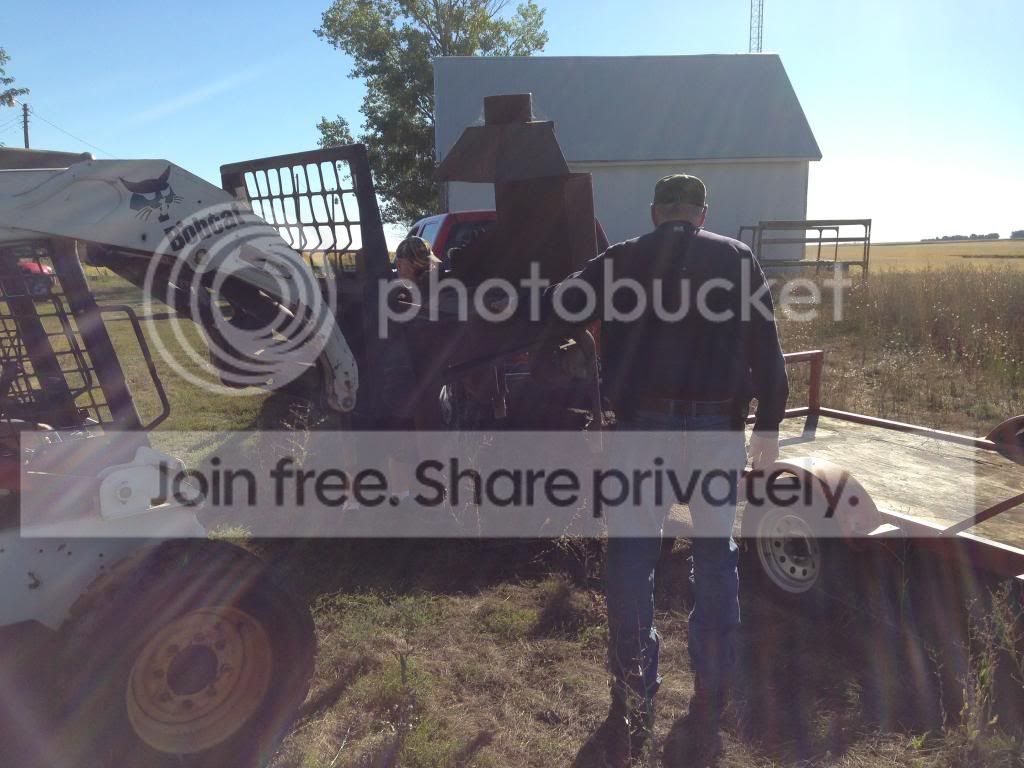
Today I went out to a nearby farm and traded 2 of my homemade parangs for a monstrous 400+ pound forge.
IMG_0742_zps6baa948e.jpg

I got it loaded up and got it home. Before I took it off the trailer I mounted caster wheels on it so I could both get it off the trailer and move it around. It still takes 2 people to push it.

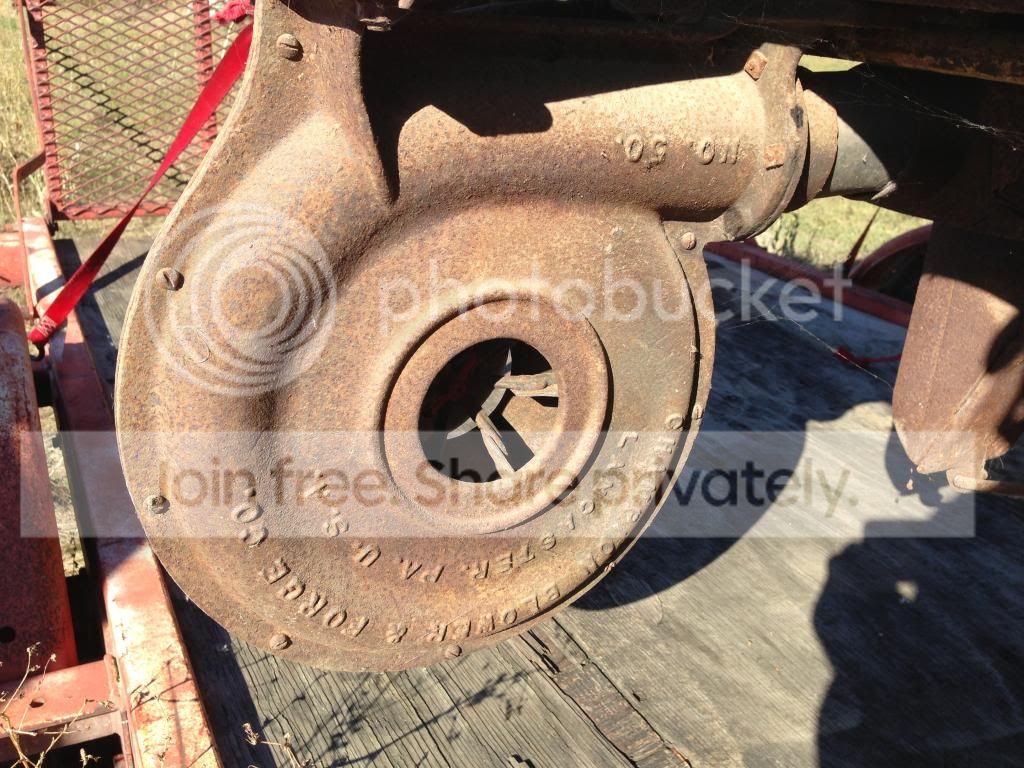
I fired it up and the blower still works fine.
IMG_0743_zps85d76965.jpg

Only problem was, everywhere a rat could build a nest, a rat did build that nest. I got it all cleaned out. There is a ball joint nozzle that lets you direct the flow into the area of the fire you choose. I got that freed up and functioning. There is also a little open and close gate so that you can control the flow of the blower into the forge. I took that apart and I am making a new gate out of sheet metal. Additionally, there is a cleanout valve that I freed up and got functioning again. Good times.
IMG_0744_zps5548cfec.jpg


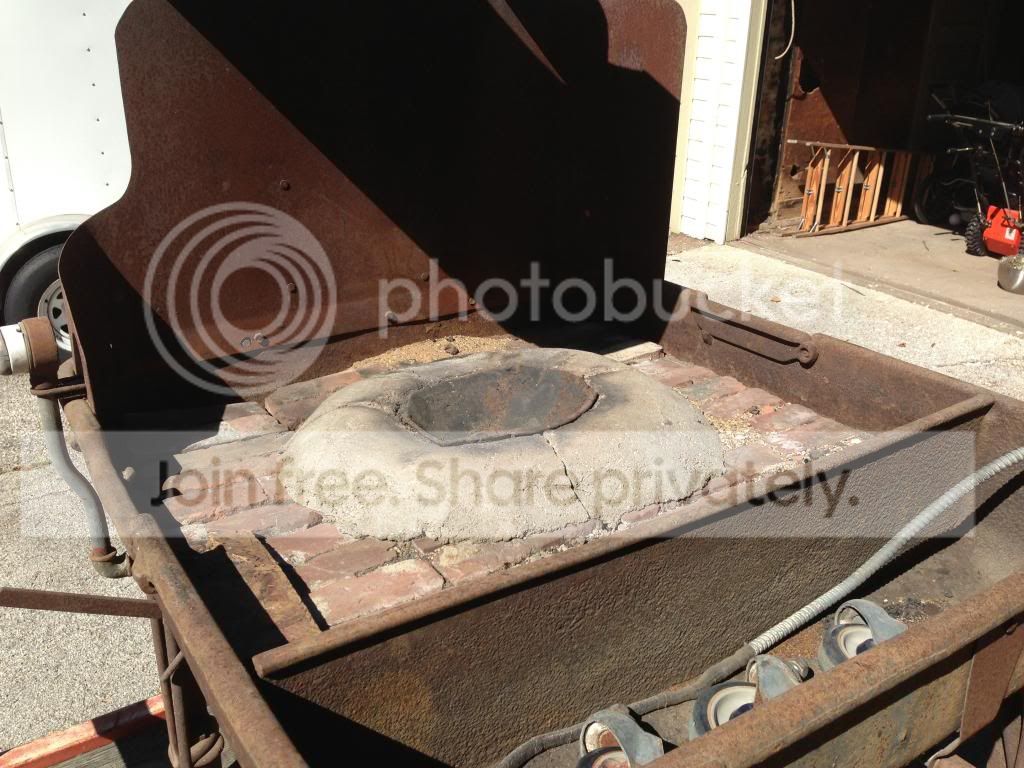
Now the problem is, I've never fired up a forge like this. I'm assuming you put some sort of expanded metal grate in the bottom of the center area and just go to town. Any other suggestions for a grate for that area that would be easy to come by?

I was also thinking of burning lump charcoal in here at least to start. I'm looking for opinions here. Would you burn coal/lump charcoal/other in here? I'm asking for opinions from people who have actually used a forge like this.
 
I don't know anything about forges, but way to go on acquiring that one and getting it ready to use. You better start pounding out some sweet looking parangs, now. You can put me on the pre-order list. Cool, man. :thumbup:

Sam
 
It's hard to tell from the pics, but is the center area where your air comes in? I've never seen a forge where there's a built up area where the fire pit should be. It could be it's been converted to a single use as a ferriers forge. As it is now, it seems like it would be hard to get the steel down deep in the coals. Oh, and yes, charcoal can be used to get up to weilding heats, especially with the blower you have.
 
It's hard to tell from the pics, but is the center area where your air comes in? I've never seen a forge where there's a built up area where the fire pit should be. It could be it's been converted to a single use as a ferriers forge. As it is now, it seems like it would be hard to get the steel down deep in the coals. Oh, and yes, charcoal can be used to get up to weilding heats, especially with the blower you have.

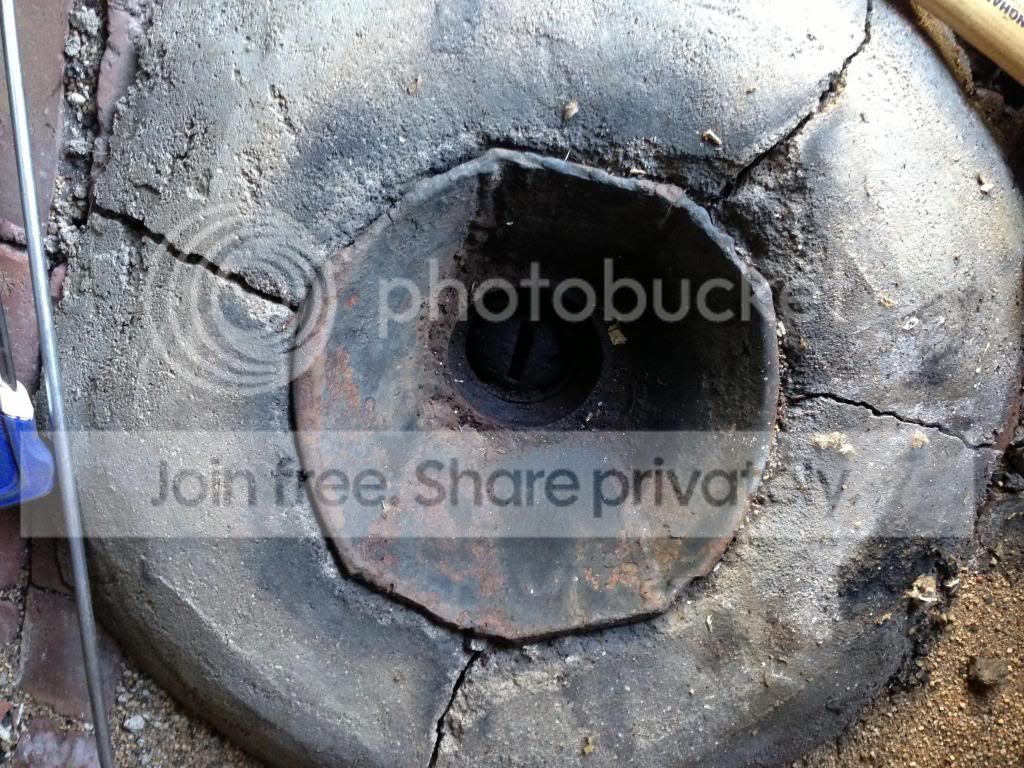
Yeah the air comes out the center. That is just cemenet built up there. They took some thick metal of some sort and built a cup on the inside of the cement. I'll upload another photo when I get home.
 
Here is the center area. I'm wondering if I should fire it up a few times as is and then decide whether to take that mountain of cement out as well as the cup thing. What would you put in the bottom of this?

IMG_0746_zpsaaf8392f.jpg
 
The problem I see is you only have air coming out in one place, so that's your only hot spot. The rest of the fire just won't get that hot. It's a fine forge, just not adapted to knife making. I'd figure out some way to cut the pipe below the forge, cap it and install a long pipe with mulitiple holes in the fire area. That way, the air will blow out the lenght of your forge. As I said earlier, I'm fairly certain this forge was designed to make horseshoes, hinges, etc.

If you want to use it as is, I'd get a piece of steel, drill a bunch of holes in it, and shape it to fit the blower opening. As it's configured now, you can expect a column of superheated fire that will quickly melt steel, depending on how much air you are applying. I really don't like that concrete, but...let us know what results you get.
 
The problem I see is you only have air coming out in one place, so that's your only hot spot. The rest of the fire just won't get that hot. It's a fine forge, just not adapted to knife making. I'd figure out some way to cut the pipe below the forge, cap it and install a long pipe with mulitiple holes in the fire area. That way, the air will blow out the lenght of your forge. As I said earlier, I'm fairly certain this forge was designed to make horseshoes, hinges, etc.

If you want to use it as is, I'd get a piece of steel, drill a bunch of holes in it, and shape it to fit the blower opening. As it's configured now, you can expect a column of superheated fire that will quickly melt steel, depending on how much air you are applying. I really don't like that concrete, but...let us know what results you get.

Will do. Thanks for your reply. I guess the only way to know is to fire it up and make adjustments as needed.
 
Will do. Thanks for your reply. I guess the only way to know is to fire it up and make adjustments as needed.

Kyle, you may find it helpful to google "Charcoal washtub forge" to get an idea of the pipe blower placement most suited to knife making.
 
Kyle, you may find it helpful to google "Charcoal washtub forge" to get an idea of the pipe blower placement most suited to knife making.

Yeah if I end up redoing this one I'll probably make something along those lines. Alternatively, I might just get this one into working condition with all the parts moving and functioning well and sell it. I got the lawnmower blades for free from my next door neighbor who has a small engine repair shop. So it isn't like I sunk a ton of money into the forge. I more or less just wanted to try a real forge to see how much better it was than my homemade propane weed burner forge. It is a fun project to take something like this and get it restored to working order.
 
Update: Over the weekend I got the airflow director all freed up. It is a ball in socket style joint and you move a lever and it will direct the flow where you want it. PB Blaster is your friend. I also fixed the airflow control. Apparently this model was made before the advent of variable speed motors, or they were too expensive to be economical on this model forge. To control the airflow there is a lever that pulls a little steel slider back and forth. It works like a sliding door. Well that little sliding plate was all rusted up and stuck and someone way back when just horsed it open and left it. So you would have full on air all the time. I fabricated a new sliding door out of galvanized steel so it should theoretically last a little longer without rusting. I also made a new lever arm, as the old one was bent and rusted to the point of fragility. The only thing left to do is put a new power cord on and figure out how to ground it. My next door neighbor is eager to use the forge with me and he works for the power company so he is going to help with that step. The fan works and blows like CRAZY when the sliding door is all the way open. More to come. I'll probably make a video of the first firing.
 
Very cool, looking forward to the video! I love it when old stuff is rescued!
 
Kyle,

go to some of the blacksmithing forums and look around. even join one or two and post picture ask questions.

without pictures I don't know forsure but from experiance what you call an airflow director is the klinker breaker. the ball should have one or two flat sides on it. it is turnedd around to break up the hard klinkers formed on the bottom of a coal fire. The air flow gate is actually the ash dump and is used to dump ash and clinkers out the bottom of the forge without disturbing the fire.
 
Kyle,

it is turnedd around to break up the hard klinkers formed on the bottom of a coal fire. The air flow gate is actually the ash dump and is used to dump ash and clinkers out the bottom of the forge without disturbing the fire.

[video=youtube;fjNqLOorulI]https://www.youtube.com/watch?v=fjNqLOorulI[/video]
 
Update: Over the weekend I got the airflow director all freed up. It is a ball in socket style joint and you move a lever and it will direct the flow where you want it. PB Blaster is your friend. I also fixed the airflow control. Apparently this model was made before the advent of variable speed motors, or they were too expensive to be economical on this model forge. To control the airflow there is a lever that pulls a little steel slider back and forth. It works like a sliding door. Well that little sliding plate was all rusted up and stuck and someone way back when just horsed it open and left it. So you would have full on air all the time. I fabricated a new sliding door out of galvanized steel so it should theoretically last a little longer without rusting. I also made a new lever arm, as the old one was bent and rusted to the point of fragility. The only thing left to do is put a new power cord on and figure out how to ground it. My next door neighbor is eager to use the forge with me and he works for the power company so he is going to help with that step. The fan works and blows like CRAZY when the sliding door is all the way open. More to come. I'll probably make a video of the first firing.

Does the air still come out of the center opening? How does the director point the airflow? Are there other air openings? I can't see anything in the pictures.
 
Nothing looks unusual abut that forge. Get someone who uses a coal forge or an older blacksmith to come over and help you set it up.

This weekend at Ashokan, we had three that were basically like that one running all night long.
 
Yep, What Bill said. That is a basic coal forge. Used one for years before I came around to the dark side and built a propane forge. Much easier to use (propane) and much much cleaner. Have fun and keep a close eye on your steel. One second of inattention will turn your knife into a blob on the bottom of the forge.
 
Yep, What Bill said. That is a basic coal forge. Used one for years before I came around to the dark side and built a propane forge. Much easier to use (propane) and much much cleaner. Have fun and keep a close eye on your steel. One second of inattention will turn your knife into a blob on the bottom of the forge.

From what I am seeing on youtube, when people use this type of forge they don't have a grate in the bottom. The coal is just piled in a heap and they go to town. Am I seeing that right? Would you put a grate over the bottom where the blower exhausts?
 
Back
Top