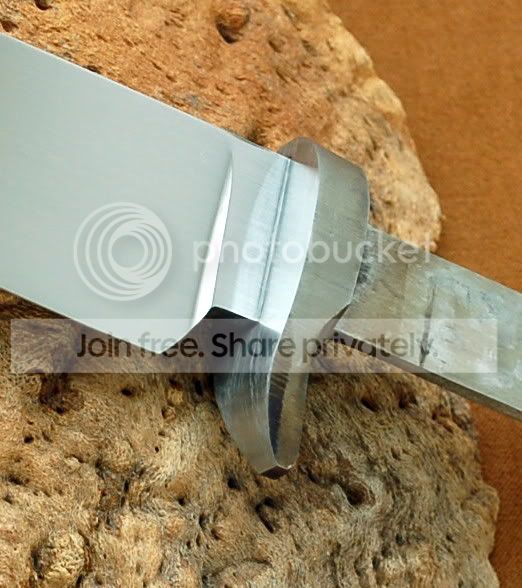
Solder a Guard

Joined
Mar 17, 2006
Messages
1,363

This process works for me and I am sure there is room for improvement.

To Get a Clean look and a good seal I solder my guards.

To explain it right I need to start with fitting the guard correctly.

Start off point.
Blade is hand sanded to 1000grit recoso is belt sanded to 400 grit.
I leave the recoso at 400grit and will hand sand it later.
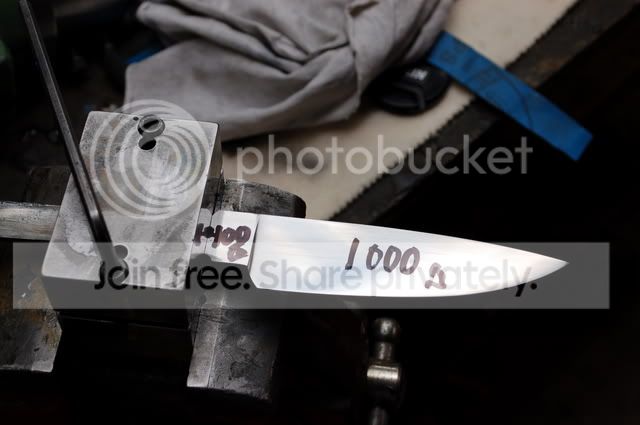
DSC_0001-41.jpg


Layout where you want the guard to stop.
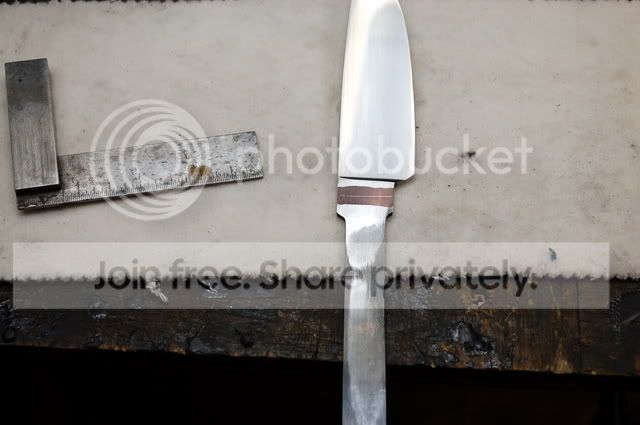
DSC_0002-31.jpg


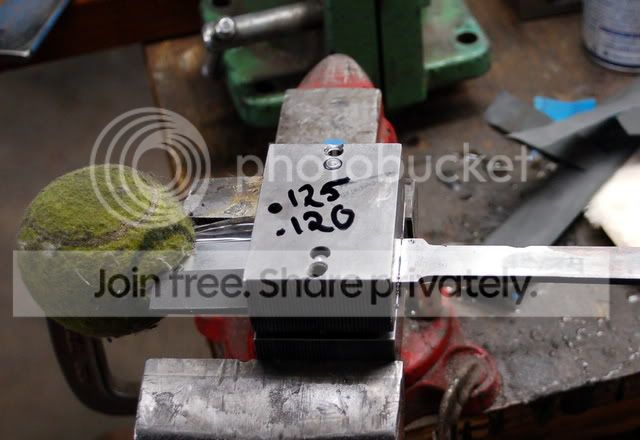
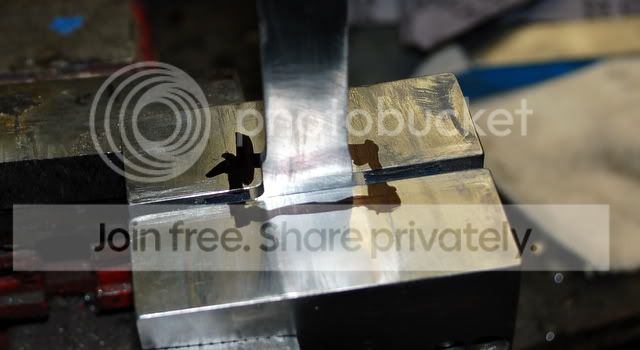
Put it into your filing jig up to your line.
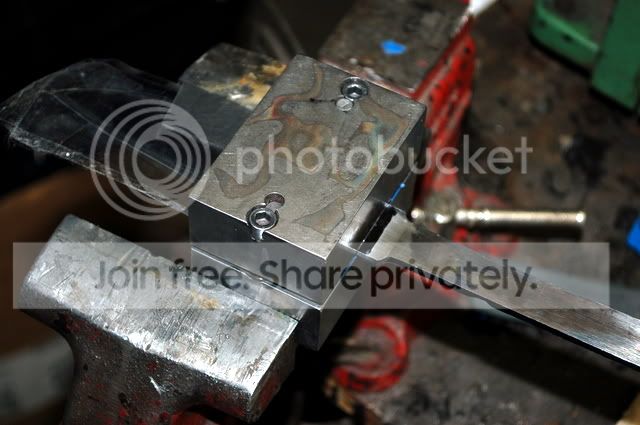
DSC_0003-28.jpg


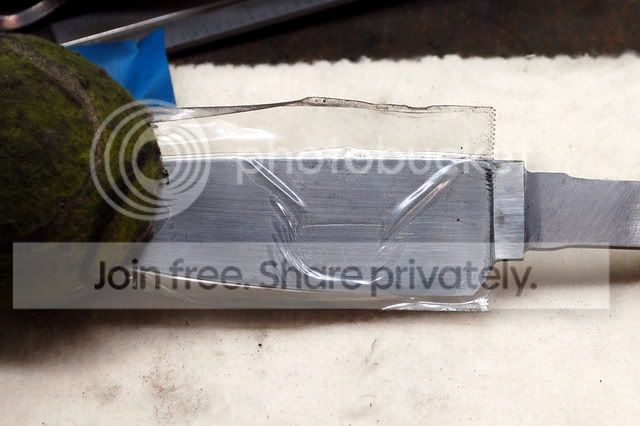
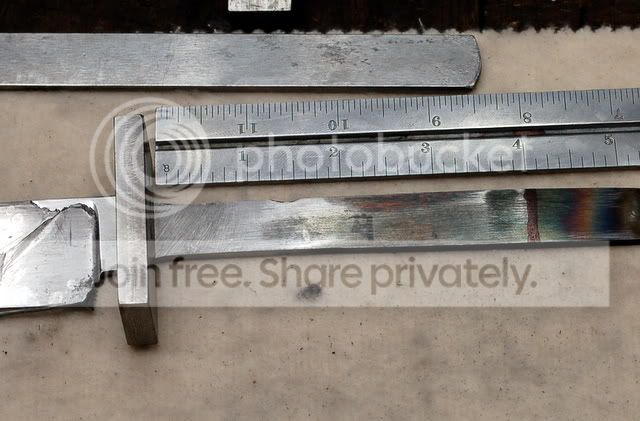
Measure the thickness that I blacked out and write it down (.130) Then write down the thickness - .005. or .125
Sorry for the blured picture I have a few of them in this how too.
Notice the guard I premachined on a mill is .108
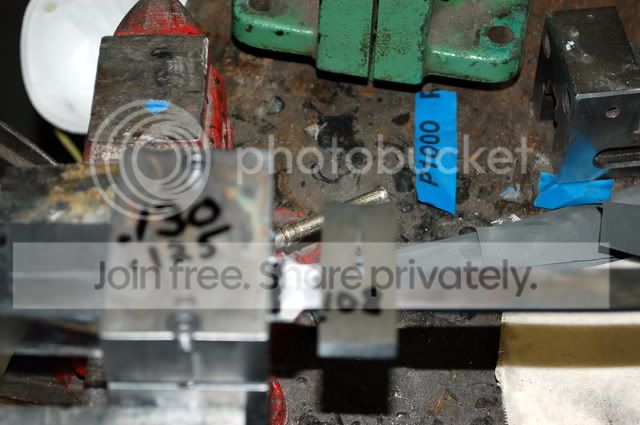
DSC_0004-23.jpg


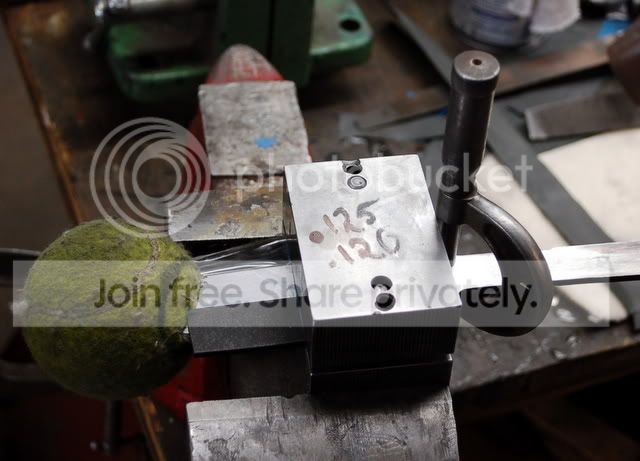
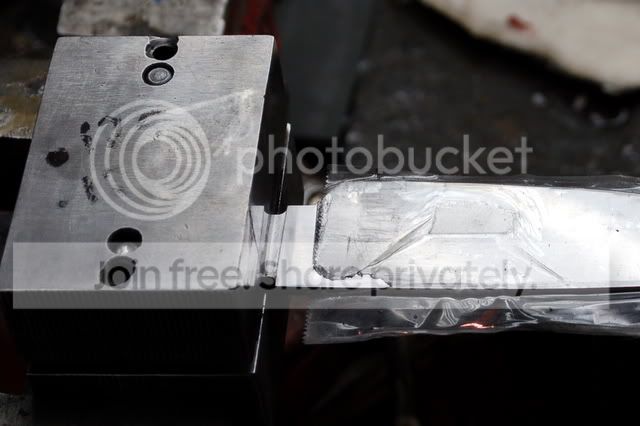
File and sand first side till you have removed .005
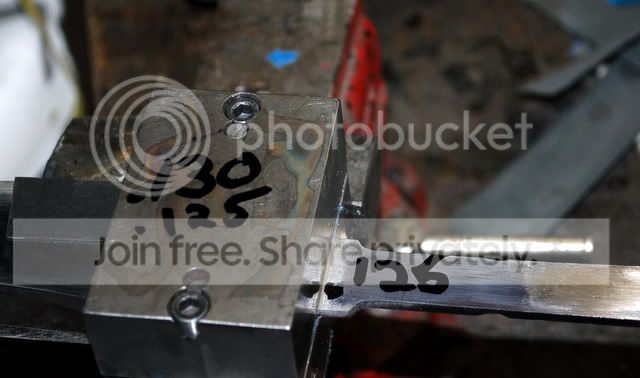
DSC_0005-27.jpg
 
Next
Flip your filing block over and write down your thickness. mine is .125.
write down the thickness - .005 or in my case .120
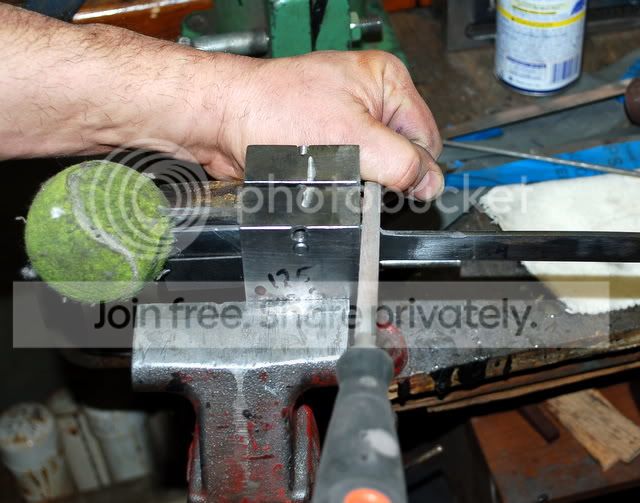
File and sand till you measure .120

DSC_0006-24.jpg


I use a micrometer out of habit for this.

DSC_0007-18.jpg


Next turn the spine up and file a radius where the tang meets the recoso.

DSC_0008-15.jpg


Same side now using a smaller file.

DSC_0009-7.jpg


File and sand to blend.Then flip over and start the other side.

DSC_0011-5.jpg
 
When you finish put the tang straight up so you can see you work. You should have a continues line around the recoso.
Drag a pin around it to see that there is no major steps. If so file and sand untill you are satisfied.

DSC_0012-8.jpg


Remove the jig and inspect your work.

DSC_0013-5.jpg


Sand the recoso, spine and area under the recoso. to 1000grit.
Why I do it now is it removes the burr I pushed up when filing.
Why I like 1000grit or higher it make the clean up easier later.

DSC_0014-6.jpg


Cut tang to length. In this case 4"

DSC_0015-4.jpg


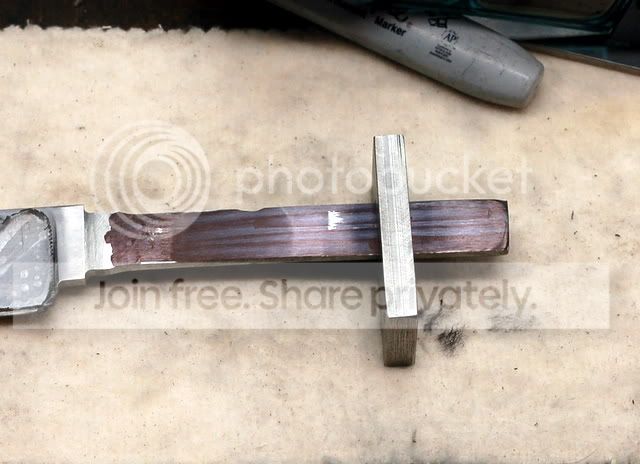
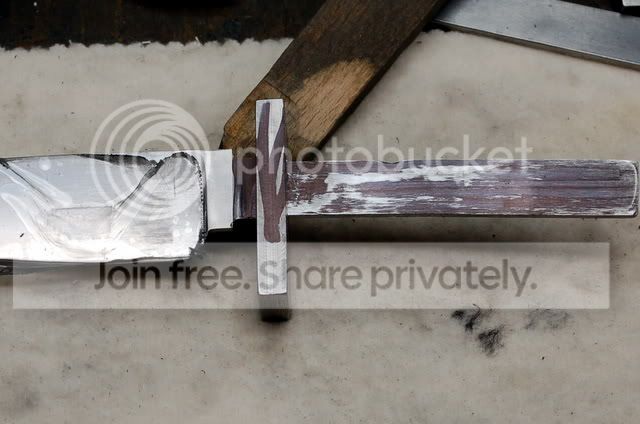
Blacken the shank with a marker and slide the guard on till it stops.
Note where it marks.

DSC_0017-2.jpg
 
Time to fit the guard,
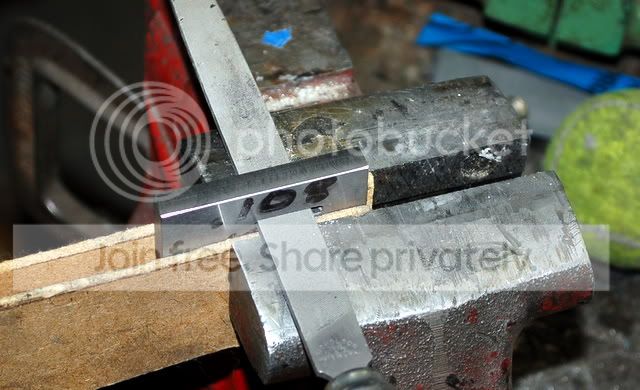
File the guard where it marks the tang.

DSC_0016-1.jpg


DSC_0018-2.jpg


Keep on working the guard till it approaches the fit area.
I mark the guard so I do not get it turned around.

DSC_0019-2.jpg


If you wish to skip this next step its OK. go to the push tool
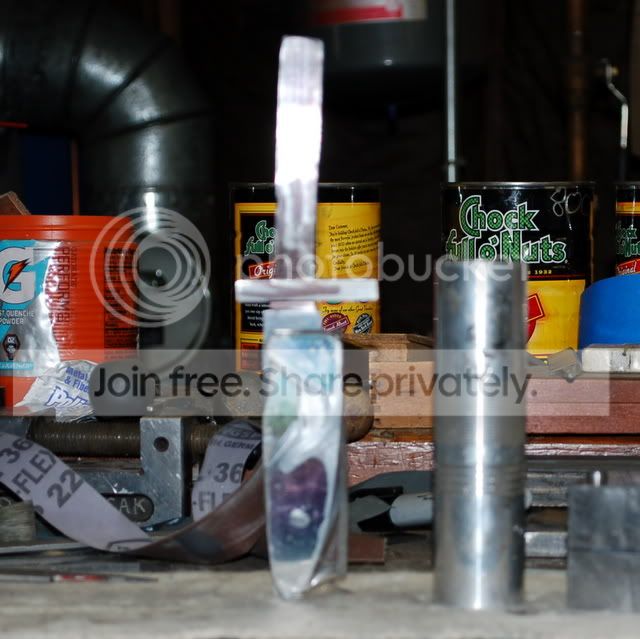
I use a hammer and a piece of aluminium tubing to try to drive the guard partway on,
I trust my blade to stand up to the abuse.

DSC_0020-3.jpg
 
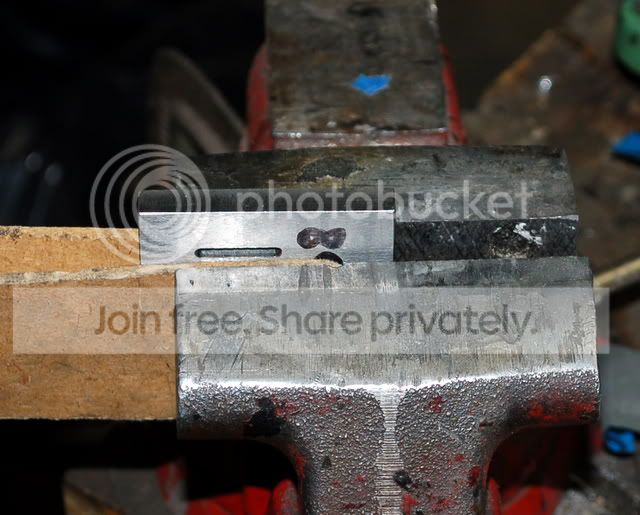
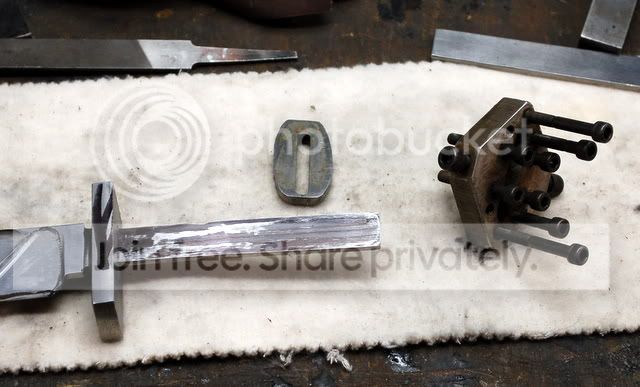
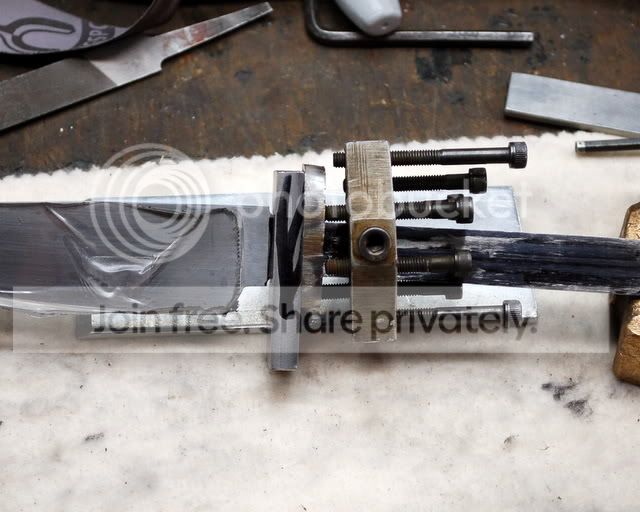
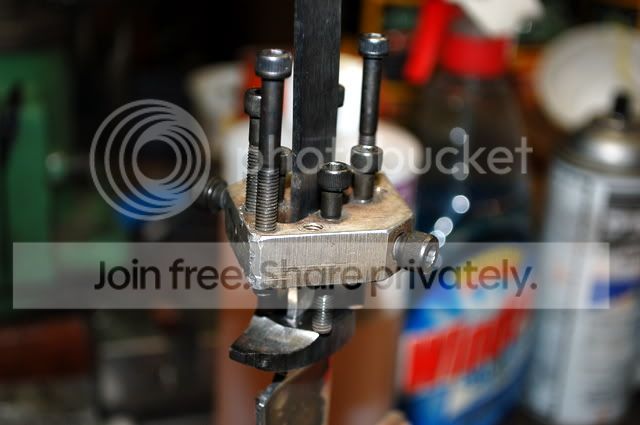
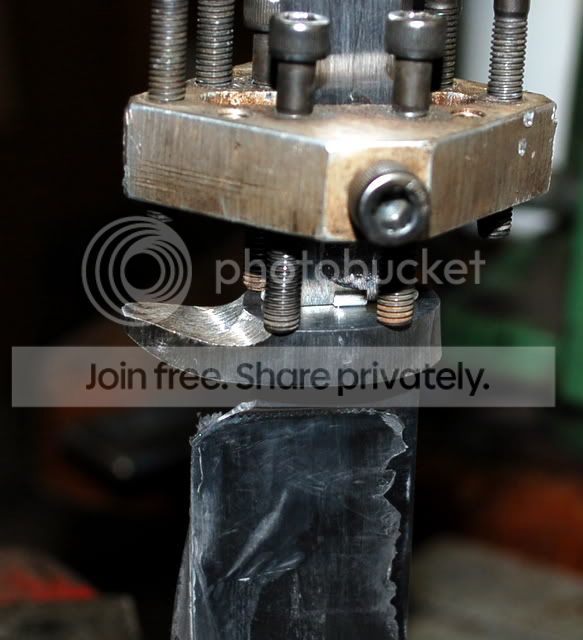
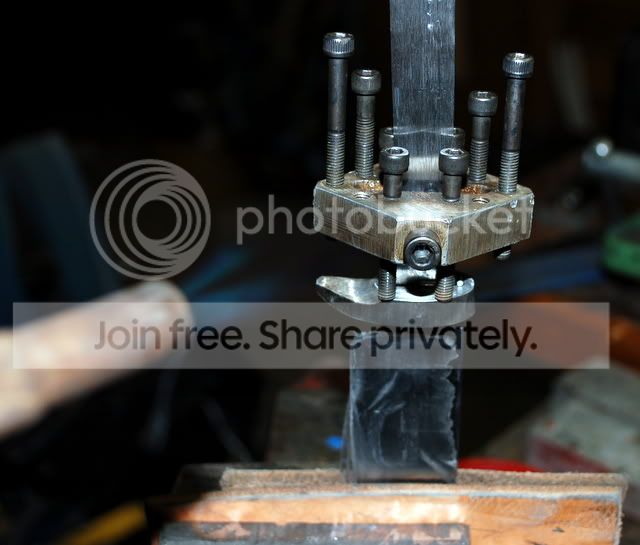
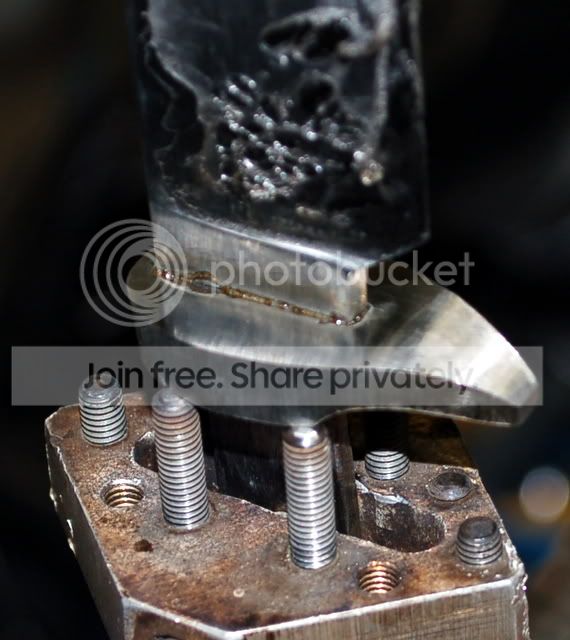
After getting the fit close file and sand the high spots using the push tool to get it even closer.
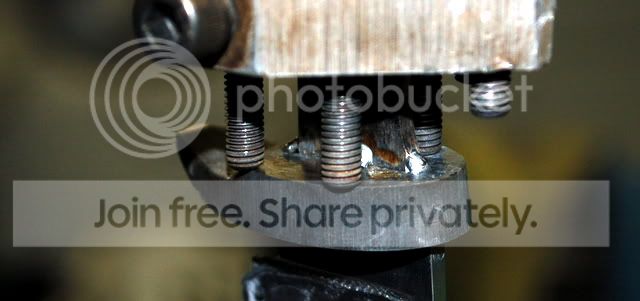
I use a spacer so the push screws do not dig up the guard.

DSC_0022-2.jpg


DSC_0023-4.jpg


Now layout the guard shape.

DSC_0024-1.jpg


Rough Grind the guards profile and install usin the push tool Check for gaps.

DSC_0025-3.jpg
 
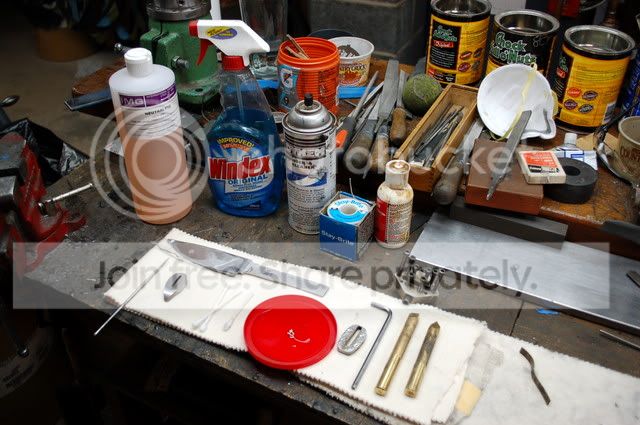
Getting ready to solder.
I use stay-brite solder and liquid flux.
Solder pieces no longer than 1/8" make a extra or two. Put in a lid with a a little flux.
Q-tips to apply the flux to the guard and fitted area.
Dykem cleaner
Brass rods with various points on them to scrap the extra solder off.

Clean the guard and the fitted area with some sort of industrial cleaning agent. ie Dykem cleaner.
Using magnification of some sort and a Q-tip with no cotton on the end, put a LIGHT coat of flux on the contact areas of the guard and blade.

DSC_0026-1.jpg


Push together with the push screws and using the protective spacer.
Take off push tool to remove the protective spacer.
Reinstall the push tool only lightly pushing the screws onto the guard.

DSC_0027-2.jpg


Put Stay-brite pieces one on each side.

DSC_0028-1.jpg
 
The Torch is next.
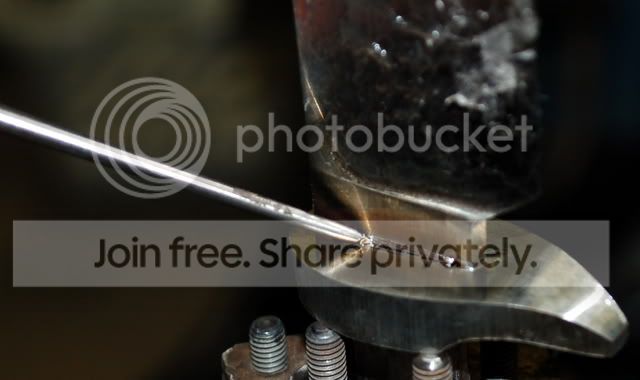
Using a torch, heat the solder till it beads up and sticks. Aim on the solder side not the blade side.

DSC_0030-1.jpg


DSC_0031-1.jpg


Now hold the tang in the vice.
You can see how the flux is working only in the area that I applied it.

DSC_0033-1.jpg


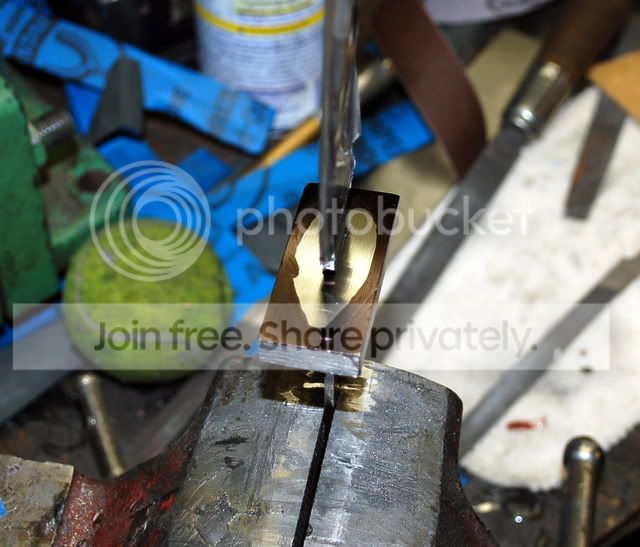
Apply heat toward the guard aiming at the spine. This will pull the solder up thru the fitting.
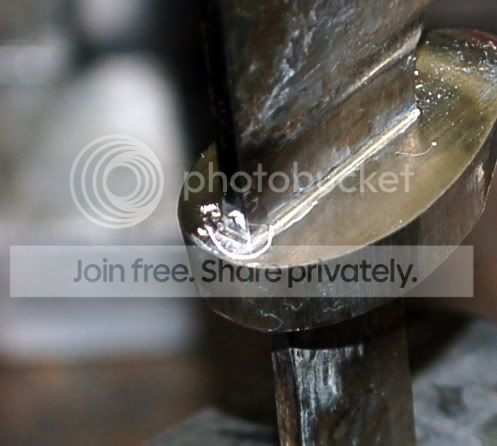
Using a sharp probe run it along the contact area. This will help you see that the solder flowed all the way around.


DSC_0034-2.jpg
 
Side note.
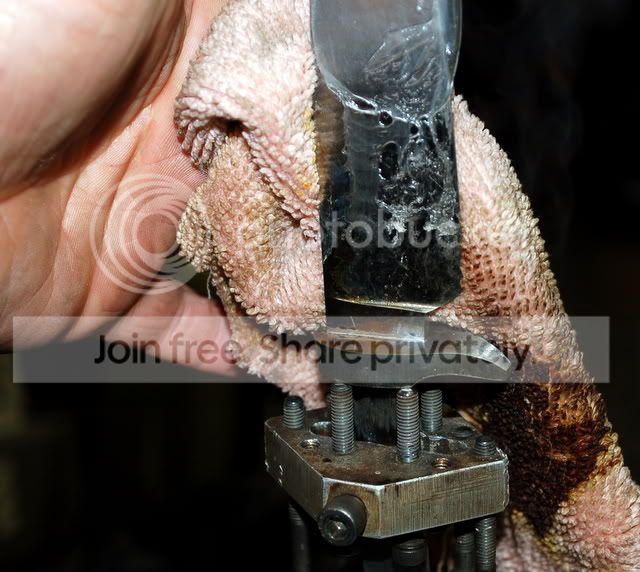
Keep your cutting edge cool. If it gets to hot you will lose some hardness.
I us a damp wash cloth. To wet and the water will make it to the guard and cool it also.

DSC_0035-1.jpg


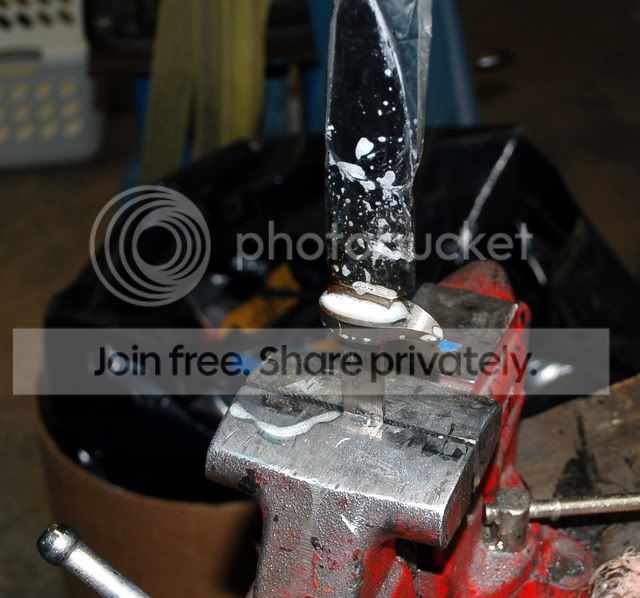
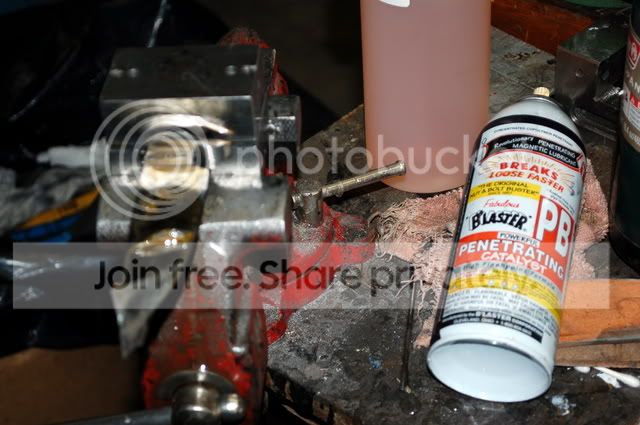
Once the joint is soldered let cool and then spray with Windex to start to neutralize the acid flux.

DSC_0036-1.jpg


Spray and wipe a few times then inspect the joint for flaws.

DSC_0037-1.jpg


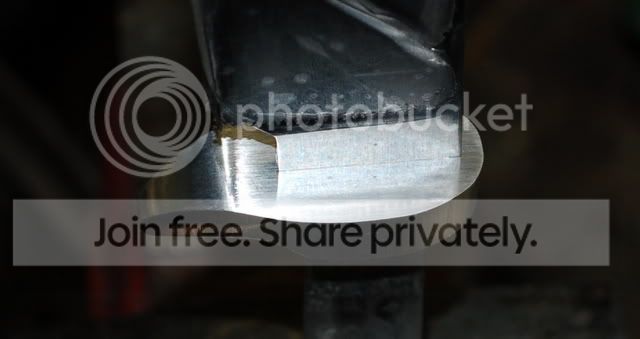
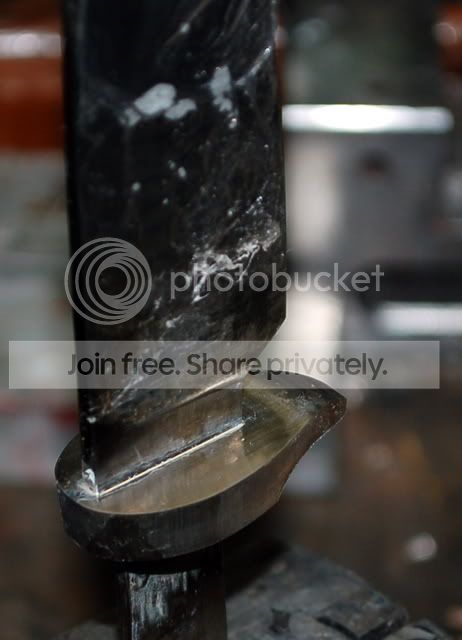
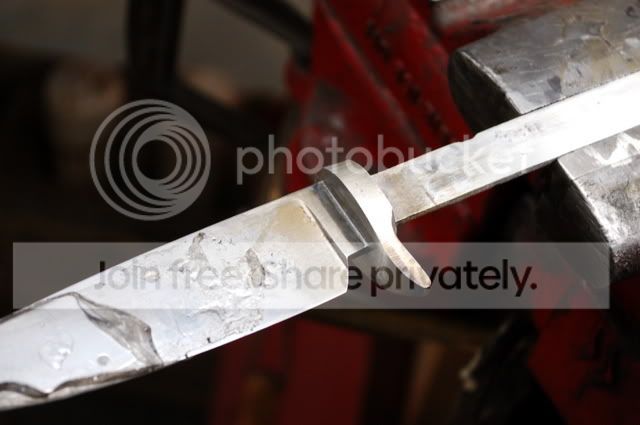
The Solder is only where I wanted it and will clean up nicely.

Using the brass rods as scrapers remove excess solder. Note the little solder scrapping at the spine.

DSC_0038-2.jpg


Spray again with windex, dry, Dowse with neutralite, baking soda or any thing that neutralizes acid.
Then Wash with hot soap and water, windex again.
This step of cleaning is very important. If the acid remains it will at least discolour the blade, at worst rust will form.
DSC_0039.jpg
 
Last edited:
Now clean and oil the blade with a good penetrating fluid.

DSC_0040-1.jpg


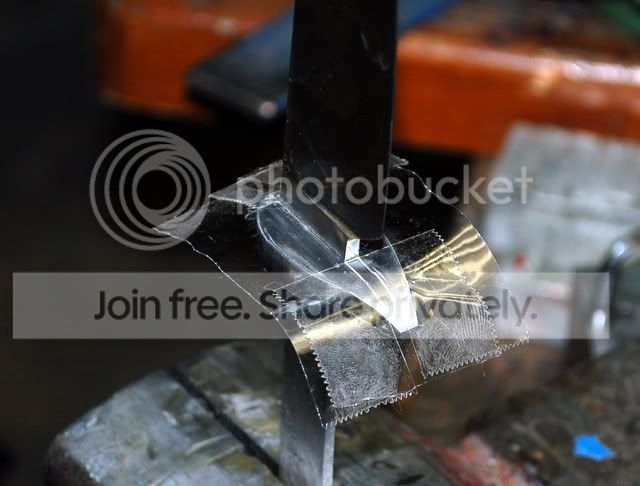
Sand the guard and mask.

DSC_0041.jpg


Sand the blade.

I will be refinishing every surface after assembly.

DSC_0042.jpg


DSC_0043-1.jpg


With practice Makes almost Perfect!!!!!!!
 
PLEASE ASK QUESTION's
I am not a really good writer and just because I understand what I wrote doesn't mean I got all my points across.
Sincerely,
Dave
 
David - Thank you so much for taking the time to create and post this. I've been interested in this process for quite some time.

Question - How do you manage to not create little fish hooks and stop/start sanding marks on the already soldered guard face.... especially near the spine? Or, is this taken care of during refinishing after final fit up of the handle?

Again, THANK YOU!!

Peter
 
Hi Wloch248,
I start scrapping while it is still warm, solder not liquid. The windex is wiped off at this point.
Soft solder scrapes easily but you will have to sand to get it all off.
Any tool harder than brass I find risks marking the guard or blade.
 
Hi Peter,
I redo the blade and the guard again after the handle is finished.
The "Tricks" I use are,
I only use the silicon carbide Sand paper with the paper backing.
While sanding the guard it won't scratch the blade.
Use strips of the paper under a strip of brass shim stock. Use finger pressure of one hand while dragging it in one direction with the other hand.
The little areas under the recoso and over the spine I use hard wood with a chisel edge ground on it. Its width is no wider than the thickness of the blade. I then cut the paper in narrow strips to use under it.
Hope this helps out,
Sincerely
 
Wow. I just did this for the first time Sunday, man I wish I would have seen this. What a great thread, thanks for taking the time to post. I'm interested in that push tool, is that your design, what thickness is the base plate for it?

Earlier this week I thought "press fit" meant whack it with a hammer, I bent my guard and had to straighten it back out. I ended up ripping a scrap 2x4 and placing it on each side of the guard and hammering that. If I can't figure out how to make the push tool I will at least use the tubing idea. Thanks again, I'm going to print this one.
 
Great thread. I too like your push tool. I read somewhere that using a valve spring over the tang and pressing against the guard works well also. Just hold in place in a vise clamped on the tang. The spring provides constant tension against the guard. Over time, you will lose the spring as the soldering process will take the temper out of the spring, so you could treat it as another consumable.

I had a neighbor (fireman) give me a whole bunch of broken hickory ax handles. I drilled out one so that it would slip over the tang of the knife and used another as a hammer to "persuade" the guard into place. After filing, fitting sanding and fitting some more, of course. The wood is hard enough to do the job and yet left no scratches.

Just another couple of ideas..

Bob
 
Hi S2f,
I made my push tool after I saw one like this. http://www.riversidemachine.net/item608238.ctlg
It is 1/2" thick
The protector I made out if a spacer that was made for a Bowie that didn't work out.
The spacer you use needs to have one side that is kept smooth. That side goes towards the guard the screws will dig up the other side.
The tube I use is thick wall aluminium pipe. But other types of pipe will work if you have something protecting the guard from getting damaged.
 
Back
Top