
some family pictures

Joined
Apr 14, 2006
Messages
7,021
Well, like M. le pitdog, I too got out for a very short (damn work!) hike this afternoon. I guess it's true what they say - "The only thing worse than having a job, is not having one."

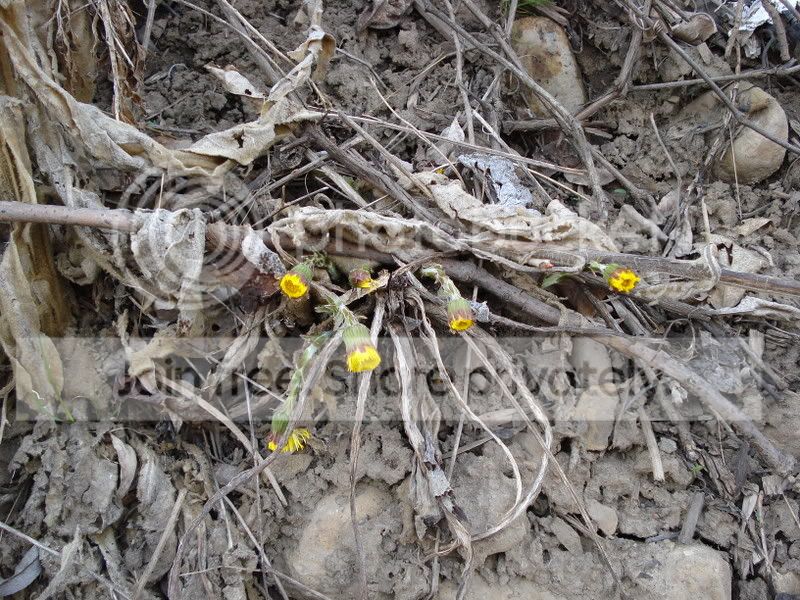
Since there is no way I can compete with Mr. pit on a photographic level, I decided that I would try and make my pictures educational (relevant to wilderness survival/primitive skills). What does this have to do with family pictures? Well you decide. This is a picture of some baby Coltsfoot (Tussilago farfara).
babyColtsfoot.jpg

As I understand it, some Native peoples referred to this plant as "son before the father" because unlike most wild flowers, first the flowers come out and then they are followed by the leaves.

(BEFORE I GO ANY FURTHER, ANY REFERENCE TO USE OF PLANTS AS A FOOD OR MEDICINE IS BELIEVED TO BE 100% ACCURATE, BUT THE FINAL DETERMINATION AS TO THE SUITABILITY OF A PARTICULAR PLANT FOR THESE PURPOSES IS THE RESPONSIBILITY OF THE INDIVIDUAL. IN OTHER WORDS, YOU TRY IT, YOU GET SICK, IT'S YOUR FAULT )

Traditionally, the plant was used for medicinal purposes such as a cough suppressant, asthma medication and for other respiratory ailments. However, like many plants, a caution exists regarding its use internally. Apparently it contains a chemical, pyrrolizidine which isn't particularly good for your liver.

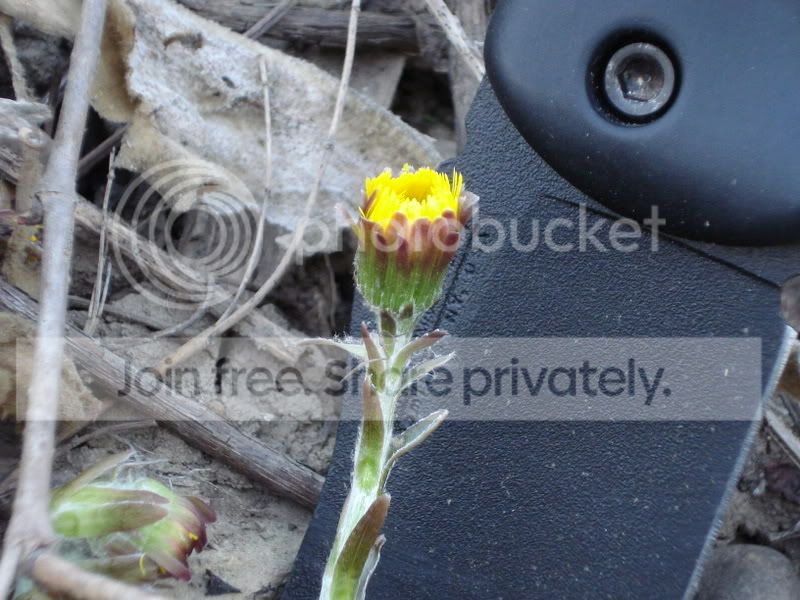
When the plant opens up, it is quite similar to a dandelion. One of the distinguishing characteristics is the reddish like scales that are found on the stems
Coltsfootscales.jpg


and, of course, another characteristic is the lack of leaves at this time.
There are other plants called Coltsfoot (Petasites spp.) that apparently grow out west (Pitdog and misanthropist's neck of the woods) that I have no knowledge of. This is one of the difficulties using common names for plants. I urge anyone who wants to develop their knowledge of plant use to include the use of binomials (the Latin or botanical name). This helps to reduce a lot of confusion and it's much easier starting with them at the beginning rather than trying to learn them later on, at least IMHO.


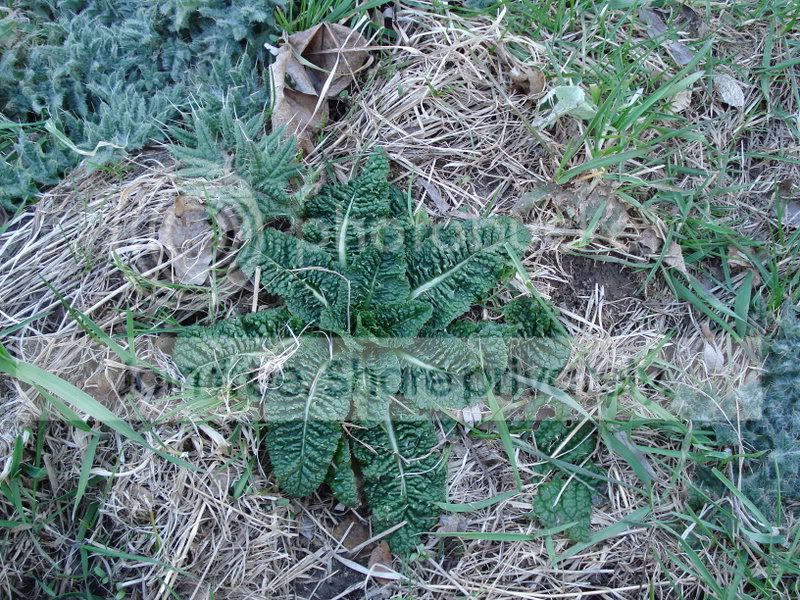
Here is another babe of the woods. This is a young Teasel (Dipsacus sylvestris) plant.
babyTeasel.jpg


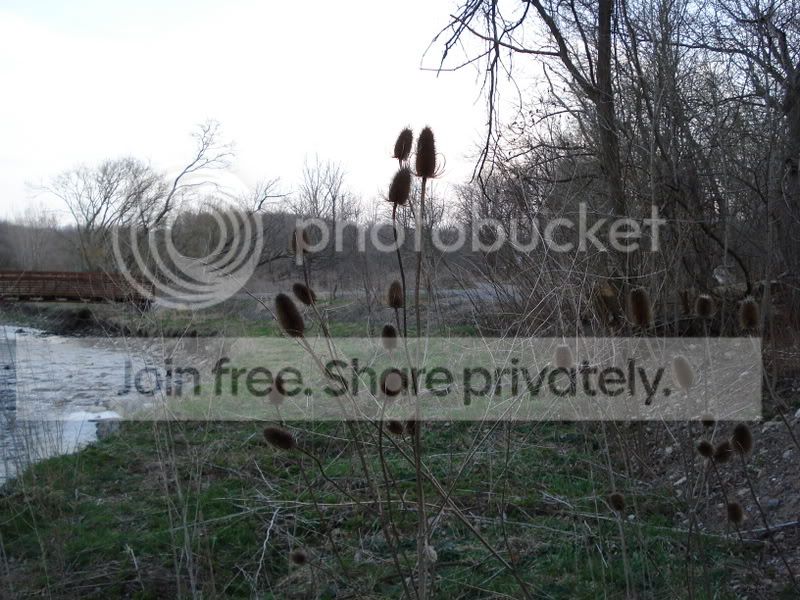
This is an alien plant that was brought here for the prickly heads which were used in the textile industry. In this area, they are everywhere! The survival use of these plants are as an effective hand drill for hand drill fires. The woody stalks can also be used as trap trigger parts. Here's the parents (thus the family pictures designation):
BabyTsparents.jpg


Here we have another baby - Common Mullein (Verbascum thapsus)
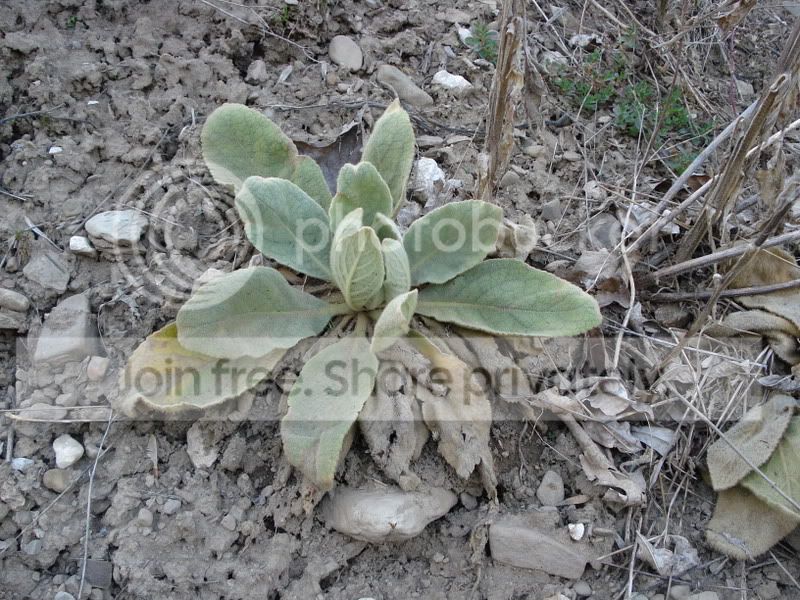
thebaby.jpg


This plant had many uses - medicinal, as lamp wicks
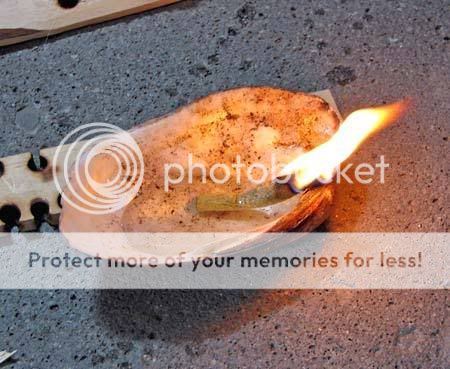
MymulleinlampatWalters-1.jpg
,

a fish poison, a pot holder that could be used around a fire, "nature's toilet paper" because of its soft, wooly leaves but beware of its rubefacient properties (can irritate the skin), a torch when soaked with animal fat, and as a hand drill material, favoured by many (although not by me). I also thought because of the rough stems it would be a good material to use to make the trap for the Arapuca bird trap. On the list to try. Here are baby Mullein's parents:
Mr. and Mrs. Last Year Mullein.
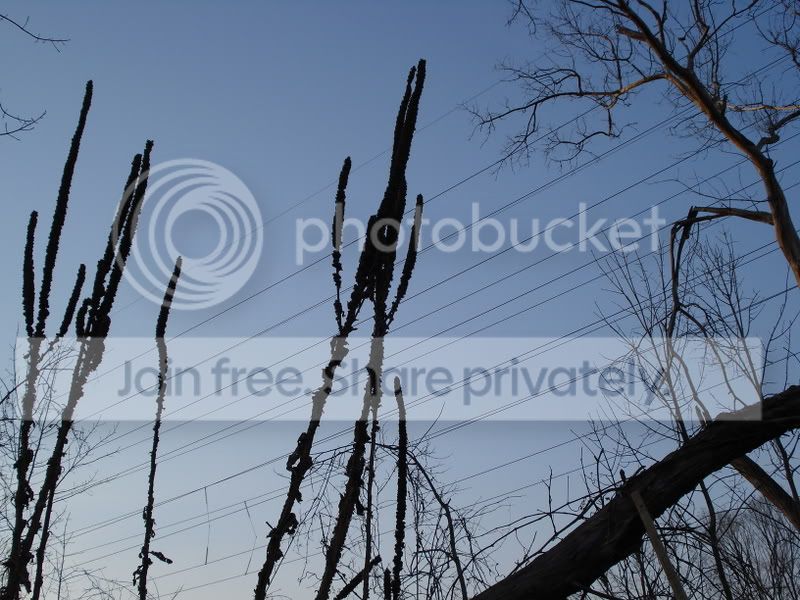
MomandDad-1.jpg


Leaving Nature's families, some individual shots - here is a Thistle (Cirsium spp.)
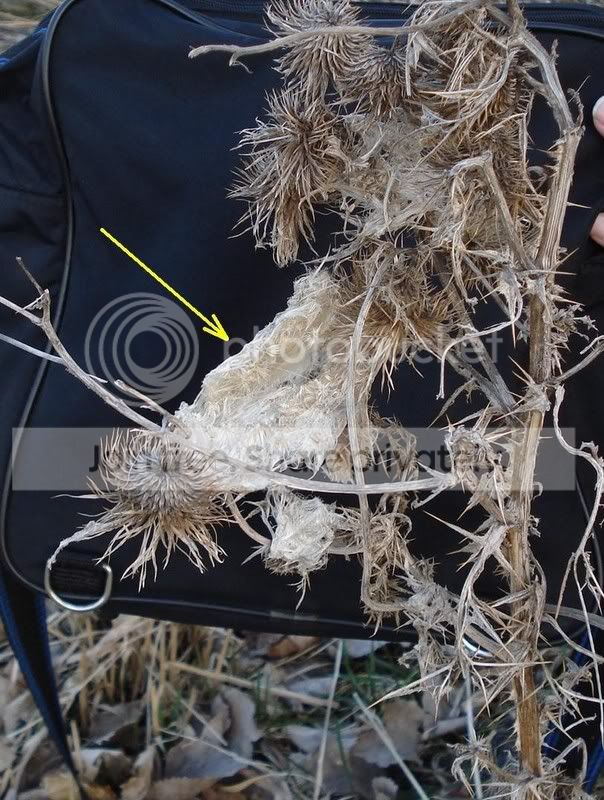
stillhastinder2.jpg


that still has pappus left on it. This can be lit from the spark from a fuel deficient Bic as well as a ferro rod, etc. Thistle also can be used as an excellent hand drill for hand drill fire. Thistle is an edible plant.

And lastly, the Goldenrod (Solidago canadensis) gall.
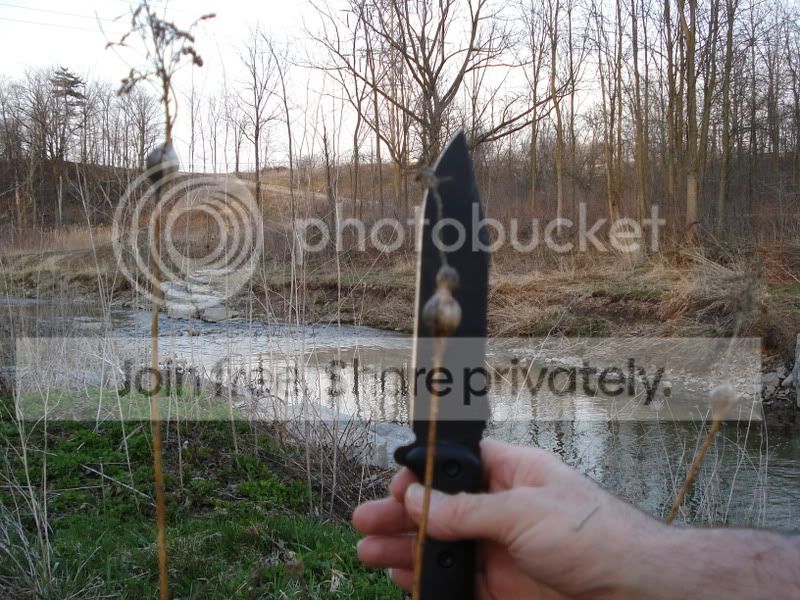
DSC01797.jpg


(Notice how I snuck in the obligatory knife picture :)) This swelling of the stem is caused by the larva of the small spotted wing fly (Eurosta solidaginis). This larva can be used as a fish bait in the winter or can be eaten (and was by some native peoples). In fact at one of our gatherings, a university student who had spent a lot of time with some of the northern people was chowing down on some. Personally, I would cook them first to destroy any possible parasites, but to each their own.

Anyway, that's my effort for today. I hope you enjoy.

Doc
 
Very educational, I am not very good when it comes to plants, I keep mixing up the names and charactarisics. The only edible wild plants I can I.D are blackberrys, boison berries and salmon berries:D. They are all pretty plentifull in B.C. Though I have to keep an eye out for that Common Mullein.
 
Very impressive! Is identifying just a hobby? Or related to your work?

I think, clinically, it's called an obsession :( - a good one, mind you :). In my mind, to be good at anything, you have to be a little obsessed, and I would like to be good at it. As far as identifying goes, all the things I posted about, except the Coltsfoot and the Goldenrod gall, I use. I've spent a long time learning the little I know but the rewards are manifest. If for no other reason than it makes you feel more comfortable in the outdoors.

For example, think about going into a bar in a strange town where you don't know anybody and compare this with going into a bar "where everyone knows your name". Sure, you can be in the woods and know you like that gray thing, that blue thing and that neat looking rock but think about how more at home you would feel when you see that Cut-leaved Toothwort (out soon), that Yellow Fawn Lily, or that Pale Jewelweed and you know what they're used for and how to do that.

To me, wilderness survival is mostly about how to improvise with what you can find, not what you can carry with you. To do that, you have to learn about plants. Plants for food, medicine, cordage fibres, different tools, fire making, fish poisons, etc., etc., etc.

Oh,..........I'm on my soap box again :o , sorry about that. Glad you liked it.

As far as work goes, I work with the public. Makes me appreciate the plant world even more. :)

Doc
 
Hey Doc, thanks for the pics and the lessons. I just bought a couple of books to begin identifying some plants and edibles around here. This is something that always interested me but I just never took the time to learn. I actually recognize many of the plants you show here. I think we have all but the Coltsfoot here in Ohio. We have a small wetland/pond on my little trail and I can't wait to try eating cat tails this spring. Maybe even cook a few dandelions this years too. I hope I can teach my boys some of plants also.

I learned something new with your goldenrod pics. We have those everywhere and although I knew the bulb was from an insect I did not know which one, let alone it was possibly ediible. Thanks! (I love this forum)

Do you folks get morels (mushrooms) in the spring up there? Our season is very near and I am excited. I really must take the time to figure out how to post pics as I love to take pics of mushrooms. :D I'm no photographer but I like to look at the mushroom pics at different times of the year to bring back the memories of finding them. I bought a book on mushrooms also but will probably not eat anything other than morels until I have someone teach me in person. Too easy to get poisoned with those I think.

Thanks again!
 
One of the most informative posts I have read, thanks...
If only someone could do that for here in Aus!
 
Great information there Doc. I certainly recognize all those plants you've identified in my neck of the woods. Can you elaborate on how you use the teasel for a hand drill. I'm assuming you use the adult stock, just didn't think they would be strong enough.

Thanks
 
Hey Doc, thanks for the pics and the lessons. I just bought a couple of books to begin identifying some plants and edibles around here. This is something that always interested me but I just never took the time to learn. I actually recognize many of the plants you show here. I think we have all but the Coltsfoot here in Ohio. We have a small wetland/pond on my little trail and I can't wait to try eating cat tails this spring. Maybe even cook a few dandelions this years too. I hope I can teach my boys some of plants also.

I learned something new with your goldenrod pics. We have those everywhere and although I knew the bulb was from an insect I did not know which one, let alone it was possibly ediible. Thanks! (I love this forum)

Do you folks get morels (mushrooms) in the spring up there? Our season is very near and I am excited. I really must take the time to figure out how to post pics as I love to take pics of mushrooms. :D I'm no photographer but I like to look at the mushroom pics at different times of the year to bring back the memories of finding them. I bought a book on mushrooms also but will probably not eat anything other than morels until I have someone teach me in person. Too easy to get poisoned with those I think.

Thanks again!

Hey Dave,
You're in for an excellent adventure, however let me suggest something. If you're going to rely mostly on books to learn about edible plants, you need quite a few more than a 'couple'. The reason for this is that there is some conflicting information out there.

I have one book that says: "The blue berries of Woodbine (Virginia Creeper - Parthenocissus quinquefolia) are edible....." (Guide To Northeastern Wild Edibles, E. Barrie Kavasch, Hancock House, 1994, ISBN# 0-88839-090-4, page 16). I have another that says, "Berries, which may be attractive to children have been reported to cause poisoning in a number of cases. Results ranging from gastric upset to death have been reported. However evidence is circumstantial. (Venomous Animals & Poisonous Plants, Steven Foster / Roger Caras, Peterson Guides, 1994, ISBN# 0-395-35292-4, page 190)

My personal advice is, "When in doubt, leave it out". It also is a good idea to have some books on poisonous plants, that will teach you what not to eat. After a personal experience with my daughter, many years ago, when we almost ate some Canada Moonseed (Menispermum canadense) mistaking it for Wild Grape (Vitis spp.), I have become cautious to a fault. It slows down the learning/eating experience, but hey, I'm still here. :D

And of course, just because I can eat something with complete safety, doesn't mean that you can. You may be hypersensitive to it and you would never know because you never tried it before. And this mistake can kill you. Think I'm exaggerating? Think about what peanut butter can do to some kids. This is why it's a good idea, when learning to forage, to have an epi pen available.

About the Goldenrod gall, the above refers to the ball gall, not the Elliptical Goldenrod Gall.

Peterson Guide to Wildflowers says that Coltsfoot extends down to Ohio.

Apparently we have morels here. Can't say from experience because I don't like mushrooms. I could never get excited about eating anything related to Athlete's Foot and Crotch Rot. :( From a survival point of view, it is my understanding that mushrooms offer very little sustenance. Perhaps others can address that.

Learning about edible and poisonous plants has another advantage. That learning can carry over to other uses. For example, you learn to recognize Indian Hemp (Apocynum cannibinum) because it is a poisonous plant, but hey, it is also a primo source of cordage fibre.

Learning and interacting with plants and trees can be a life long adventure. Want one more benefit? You don't have to travel for miles to do it. You can do it in your front yard, back yard, drainage ditch, that bit of deserted land.

Anyway, enjoy and BE SAFE!

Doc
 
Great information there Doc. I certainly recognize all those plants you've identified in my neck of the woods. Can you elaborate on how you use the teasel for a hand drill. I'm assuming you use the adult stock, just didn't think they would be strong enough.

Thanks

Hey kgd,

I'm not quite sure I know what you're asking. You take the adult stalk, clean off all the little prickles, smooth out any rough areas, like where you have removed the branches, etc. and use it. You want it as straight as possible, although you can straighten it somewhat with heat (obviously this would be done on practice pieces because you wouldn't have the heat if you were counting on it to make fire).

As far as strength, they are more than strong enough. I collect stalks in the fall, after the leaves have gone, through the winter, and in the spring, although quite often, by spring, the stalks have deteriorated to the point where they are useless.

This answer your question? If not, elaborate.

Doc
 
Hey Doc, thanks again. Your words of wisdom are well taken here. I completely understand the dangers. In fact I think that is why I have never learned more about this, fear. Now I want to educate myself but trust me, I am always very careful. Also, I am not one to react to everything. I don't get upset stomach much and I do not get poison ivy or oak or ??? I have never had a reaction to anything but I am also careful.

Yes, I understand also about the ball gall. I knew it was from insect just didn't know it was edible (not that I'm going to eat one anytime soon) nor did I know from what insect.

Yes, I have purchased 2 books and a field pamphlet. These will begin to aquaint me with the plants but I won't chance anything unless I am completely sure. I am just starting so I will begin with the basics and the easier ones then will progress over time. I went to college back in '79 and '80 for Recreation and Wildlife but have forgotten much of what I learned. Now I am wanting to gain much of this back. The good thing is much of it is coming back quickly, except for those darn scientific names! You have them down well but I will need much more practice. There are many that I do remember and some I recognise and are coming back also. Same with the trees. They used to be my strong point. I don't think there was a tree in Ohio that I couldn't ID at one time and I really enjoyed that skill. Unfortunately that too has slipped away but I am working on them also. :D

What do you think of the young cat tail stock and or root? Are they good to eat, meaning tasty? I have it in my mind that it will be very simple and of little taste. They have not started to sprout yet that I can see. Clover is another that I will begin to try more and more.

Maybe the coltsfoot is something I have overlooked. I will watch and also look in one of my books to see. I am in mid-west Ohio so maybe a little too far south, not sure yet.

Oh my, you don't like mushrooms? Wow! Finding them and eating them are 2 big joys in my world. :D

Thanks again for sharing.
 
May 4th sounds good Doc,I woul like to follow you around for a couple of hours.I think I might learn something:)
 
Great stuff again Doc, you should start a sticky with all this info on but we should try and keep it without any ramblings about each post in-between, if that makes sense !!!!
 
May 4th sounds good Doc,I woul like to follow you around for a couple of hours.I think I might learn something:)

Or not. :(

pitdog: Great stuff again Doc, you should start a sticky with all this info on but we should try and keep it without any ramblings about each post in-between, if that makes sense !!!!

No ramblings! Did he say no ramblings? SACRILEGE!!!!

Doc
 
Also, I am not one to react to everything. I don't get upset stomach much and I do not get poison ivy or oak or ??? I have never had a reaction to anything but I am also careful.

Hey Dave,

Do you mind if I ask you a question? (Assuming the answer is no), do you have allergies?

About Cattail (Typha spp.) stalks, it's been a long time since I ate them, and IIRC, they were pretty bland, something like Thistle (Cirsium spp.) inner stalk.

You reminded me of the line in Crocodile Dundee (one of my favourite movies), "Sure you can eat it, but it tastes like s**t!"

Doc
 
Hello Doc, no, I have no allergies that I am aware of. Hehehe, that line is funny! I fully understand. I went for walk in the woods yesterday for a couple of hours (in the rain) and looked for some common things to try. I ate a couple of dandelion flowers, a few clovers and a couple small stalks of alfalfa. All was just fine to eat. Later I was at my sister and brother-n-laws house and they offered me avacado, peeled and raw. I've never had it and I know they are supposed to be very good for you so of course I said yes. Kinda like that saying! I had a very hard time getting it down. They like it, unfortunately I cannot say the same...yet. I will ty again soon.

Maybe I should mention, a few years ago I fell on ice and hit the back of my head so hard I was letterally knocked stiff. It took a long time before I could move. In fact I ended up taking my first ride (as a patient) in the squad and was punch drunk for 8 days. Twelve hours after the fall I lost all sense of taste and smell. Over the next 5 years things have gradually come back but many in a distorted way. Some things that used to be very good are almost untolerable now. Bananas and cucumbers are 2 that I can think of. I used to love them both but now they are completely different. I have made the best of this in too many ways to explain here but I also must be careful. For a long time I had to fully rely on expiration dates for food and that was scary for me. I could have eaten something completely rancid and not known. Now I can easily differentiate and can also tell sweet and bitter better than before. For me, a little blan is fine, I got very used to it. :)

As stated I am looking at everything in the woods much different again. I am already able to I.D. many. The more I read the more I want to try. Since there is a small pine and spruce woods close also I am wanting to try making tea from the new spring needles. I want to cook some dandelions too. I think I want to find a bigger and better book for home also. What I have are both field guides and seem to be rather brief in the descriptions. I have not looked up what you listed but hope maybe it is something better than what I have. I do look in both books to be sure that I am making a proper I'D Yes, I am liking this and hope to learn a lot so I can teach my boys.

Thanks again Doc.
 
Back
Top