

- Joined
- Feb 28, 2007
- Messages
- 9,786
Some of my first shots on work in Dubai, UAE. I went out into the field just to do a bit of range finding in terms of sampling before we really get into the thick of things. All our boat work so far has been on the Palm Jumeirah, with further work moving to the other structures later.
First a shot of the satellite image of the Palm Jumeirah. For those of you not familiar with these islands these are the largest man made islands in the world. Palm Jumeirah has a length of 5 km from the base (stem) at shore to the top of the crescent.

This is the harbour within the Palm (near the base of the stem) housing the field boats. Ours wasn't quite as nice as this one.

At the base of the Island are two rows of massive condominiums.


A shot of the famous Burj Al Arab, the worlds only 7/5 star hotel! Sorry about the grain, we were pretty far out and I was trying to hold this 450 mm lens (on a boat) without the benefit of a tripod.

There about 7 different types of villas. The villas are situated on two rows facing the fingers of the palms. Here are a couple of designs. Each villa has its own beach front.

Notice that over sized Palm in the background - it's actually a cell phone tower in disguise!
Suiting up...

The breakwall in the background represents the inner wall of the outer crescent surrounding the islands. The divers are performing surveys to identify and enumerate different species of fish. We also have various traps out for tag/recapture of fish to get a handle on population abundances.
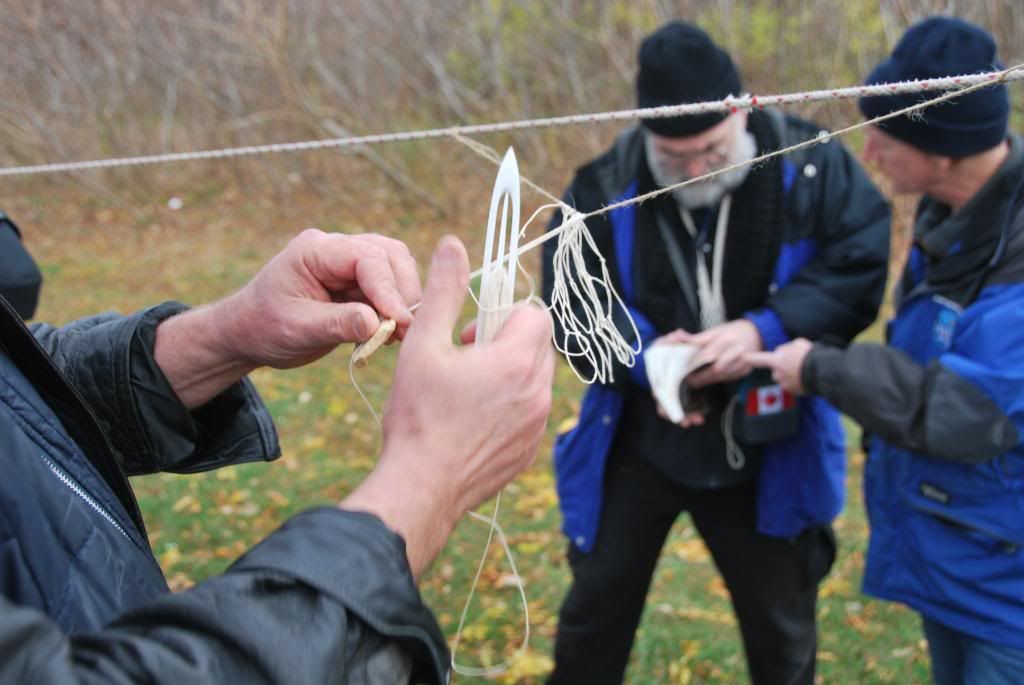
Here we set up a horizontal net tow to collect zooplankton. When I return back to Canada with these samples I will be analyzing the zooplankton, benthic invertebrates and fish for stable isotopes. Due to the nature of how the islands were build, we believe the leachates from the islands will alter the stable isotope signatures of animals living within the lagoons of the Palms. If we can detect this, we will have a handy tracer to indicate whether fish are feeding predominately outside of the lagoons or within the lagoons.

Thats it for now. I can't wait until we start pulling up the fish traps. More pictures will be forthcoming in the next few weeks.
First a shot of the satellite image of the Palm Jumeirah. For those of you not familiar with these islands these are the largest man made islands in the world. Palm Jumeirah has a length of 5 km from the base (stem) at shore to the top of the crescent.
This is the harbour within the Palm (near the base of the stem) housing the field boats. Ours wasn't quite as nice as this one.
At the base of the Island are two rows of massive condominiums.
A shot of the famous Burj Al Arab, the worlds only 7/5 star hotel! Sorry about the grain, we were pretty far out and I was trying to hold this 450 mm lens (on a boat) without the benefit of a tripod.
There about 7 different types of villas. The villas are situated on two rows facing the fingers of the palms. Here are a couple of designs. Each villa has its own beach front.
Notice that over sized Palm in the background - it's actually a cell phone tower in disguise!
Suiting up...
The breakwall in the background represents the inner wall of the outer crescent surrounding the islands. The divers are performing surveys to identify and enumerate different species of fish. We also have various traps out for tag/recapture of fish to get a handle on population abundances.
Here we set up a horizontal net tow to collect zooplankton. When I return back to Canada with these samples I will be analyzing the zooplankton, benthic invertebrates and fish for stable isotopes. Due to the nature of how the islands were build, we believe the leachates from the islands will alter the stable isotope signatures of animals living within the lagoons of the Palms. If we can detect this, we will have a handy tracer to indicate whether fish are feeding predominately outside of the lagoons or within the lagoons.
Thats it for now. I can't wait until we start pulling up the fish traps. More pictures will be forthcoming in the next few weeks.


