I am looking into making my first knife and I have been looking at some knife making supply websites and have found a few blanks that I like. All of the ones I like have already been heat treated so I shouldn't have to have that done right? Another question, When you guys cut the scales to the shape of your handle what do you use to make the cut? I'm sure some other questions will come to mind but that's all I can think or for now. Thank you!

-
The BladeForums.com 2024 Traditional Knife is available! Price is $250 ea (shipped within CONUS).
Order here: https://www.bladeforums.com/help/2024-traditional/
You are using an out of date browser. It may not display this or other websites correctly.
You should upgrade or use an alternative browser.
You should upgrade or use an alternative browser.
Some newbie questions
- Thread starter ttank0789
- Start date
- Joined
- Sep 10, 2000
- Messages
- 4,786
Read the stickies at the top of the page. They will certainly help you. Frank

- Joined
- Jan 28, 2005
- Messages
- 2,154
Are you using files or a belt grinder? If a grinder, what grinder? If already heat treated you won't be able to use files, you will need or want to get annealed steel for files so they can cut. If you are using a belt sander, you can profile heat treated material as long as the speed is not to fast and you don't over heat the blade. If you over heat the heat treated steel, it will need to be heat treated again. I prefer to use annealed steel and then send it off once I am about 90% finished with the knife.
Handle material shaping depends on the material. Belt grinders are great but if you aren't skilled, you can remove too much too fast. Hand sanding after cutting a on saw is a good option starting.
Good luck and take the time to read all the stickys and watch some YouTube videos.
Handle material shaping depends on the material. Belt grinders are great but if you aren't skilled, you can remove too much too fast. Hand sanding after cutting a on saw is a good option starting.
Good luck and take the time to read all the stickys and watch some YouTube videos.

Hengelo_77
Basic Member
- Joined
- Mar 2, 2006
- Messages
- 6,318
hardened blanks don't need to be hardened again.
You buy them, put a handle on them, have a beer and enjoy your knife.
Shape the scales on the ricasso side before gluing them. You won't be able to work them afterwards.
Epoxy one scale on and rough shape it. it can be done with one of these. They arn't expensive
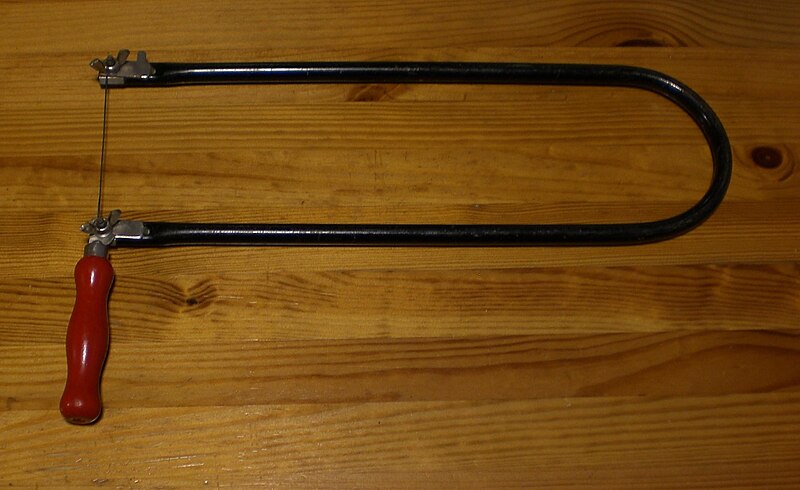
Then put on the second scale. Now use files and/or coars sand paper (wrapped around something stiff)
Then use finer and finer sandpaper.
Spend some time reading WIP's and tutorials on the net.
knifekits.com has some good beginners info
You buy them, put a handle on them, have a beer and enjoy your knife.
Shape the scales on the ricasso side before gluing them. You won't be able to work them afterwards.
Epoxy one scale on and rough shape it. it can be done with one of these. They arn't expensive
Then put on the second scale. Now use files and/or coars sand paper (wrapped around something stiff)
Then use finer and finer sandpaper.
Spend some time reading WIP's and tutorials on the net.
knifekits.com has some good beginners info
Another question. Is there anything special about the way scales are made, or are they just a piece of wood? My uncle has some pieces of black walnut in his woodshop that are about the size of a scale and I think they would look awesome as a knife handle.
Another question. Is there anything special about the way scales are made, or are they just a piece of wood? My uncle has some pieces of black walnut in his woodshop that are about the size of a scale and I think they would look awesome as a knife handle.
Lots of scales are stabilized. There is a lot less chance of the wood chipping or splitting. If you are getting an expensive blade, you might invest in stabilized wood, or get Pakkawood. It is very forgiving and looks good on a first knife. If you are making a knife that is historically fairly accurate for the mid 1800s - Green River makes some inexpensive blades. Your black walnut would be historically accurate especially with the chips, checks and cracks in the scales. A belt or disc sander and a drill press will substantially decrease the amount of time needed to complete your project.
Lots of scales are stabilized. There is a lot less chance of the wood chipping or splitting. If you are getting an expensive blade, you might invest in stabilized wood, or get Pakkawood. It is very forgiving and looks good on a first knife. If you are making a knife that is historically fairly accurate for the mid 1800s - Green River makes some inexpensive blades. Your black walnut would be historically accurate especially with the chips, checks and cracks in the scales. A belt or disc sander and a drill press will substantially decrease the amount of time needed to complete your project.
What's it mean for them to be stabilized? Would I be able to do this myself? When I'm working on projects like this I like to do as much as I can myself. So using wood that I can get myself would make it a little cooler and more fun to me. I'm not looking to make a historically accurate knife or anything like that. I just want to have something that looks nice, I put together myself, and that I can use for a hunting knife.
Anytime you treat wood to minimize the chances that it will deform you can refer to that as stabilizing the wood. Multiple coats of boiled linseed oil will stabilize wood. Coating the wood with polyurethane or verathane will stabilize the wood. Sealing your scales in a can of polyurethane for a couple of weeks will allow the stabilization to go deeper into the wood. The stabilized scales that you buy from a reputable source will use a resin that is forced into the wood under pressure and sometimes at a higher temperature. The resin will go completely through the wood, seal the pores, glue cracks together, making them waterproof and essentially impervious to most things they will be exposed to during the life of the knife. For your purposes, preparing and gluing the scales on with a good slow set epoxy, finishing with multiple coats of boiled linseed oil, keeping the knife clean and dry, and reapplying boiled linseed oil yearly will allow your knife to be passed down to your grandchildren.
I do a lot of work on the handle after I attach it to the blade. I use slow set epoxy and corby bolts to attach the scales. The main consideration with a tapered tang is drilling the holes for rivets, bolts, or pins. they need to be at right angles to the centerline of the blade so they line up between the scales.
Hengelo_77
Basic Member
- Joined
- Mar 2, 2006
- Messages
- 6,318
Just make sure you use dry wood and you'll be fine.
Hengelo_77
Basic Member
- Joined
- Mar 2, 2006
- Messages
- 6,318
I use sandpaper up to gritt 2500
(but 1000 or 1500 also looks fine)
Some use a buffer or a small buffing wheel on the dremel.
(but 1000 or 1500 also looks fine)
Some use a buffer or a small buffing wheel on the dremel.