
-
The BladeForums.com 2024 Traditional Knife is available! Price is $250 ea (shipped within CONUS).
Order here: https://www.bladeforums.com/help/2024-traditional/
You are using an out of date browser. It may not display this or other websites correctly.
You should upgrade or use an alternative browser.
You should upgrade or use an alternative browser.
spalted is it woth having stabalized??
- Thread starter crank78
- Start date


- Joined
- Jun 15, 2006
- Messages
- 853
In my experience spalted wood is too soft to use without stabilization. I send my wood to K&G to stabilize.

Britt_Askew
Knifemaker / Craftsman / Service Provider
- Joined
- Dec 9, 2010
- Messages
- 1,218
Seeing how the wood is end grain and there are no big cracks YET I am guessing you just cut it and it is not dry enough to send to have stabilized

- Joined
- Dec 5, 2013
- Messages
- 1,180
I don't have anything very useful to contribute. I do know that if you are going to send it out to be stabilized it needs to have a moisture content below 8% and needs to be cut into blocks that have a maximum thickness of about 1-3/4" in one of the planes. I'm wondering about how well spalted wood would hold up to kiln drying. I was under the impression that most people who curate their own figured wood supply allow it to dry very slowly over a number of years.
Bob
Bob

- Joined
- May 2, 2013
- Messages
- 1,711
You need to seal the endgrain and let it dry for quite some time. A year per inch of thickness is the rule of thumb. Accelerated drying will cause it to split.
You can cut a small piece and saw with/across thr grain or across the bias and check to see the patterning of the spalt and the condition of the wood to see if it is worth saving. Spalted wood is rotten, so yes it needs stabilizing. The results are worth the effort IMHO.
This is maple:
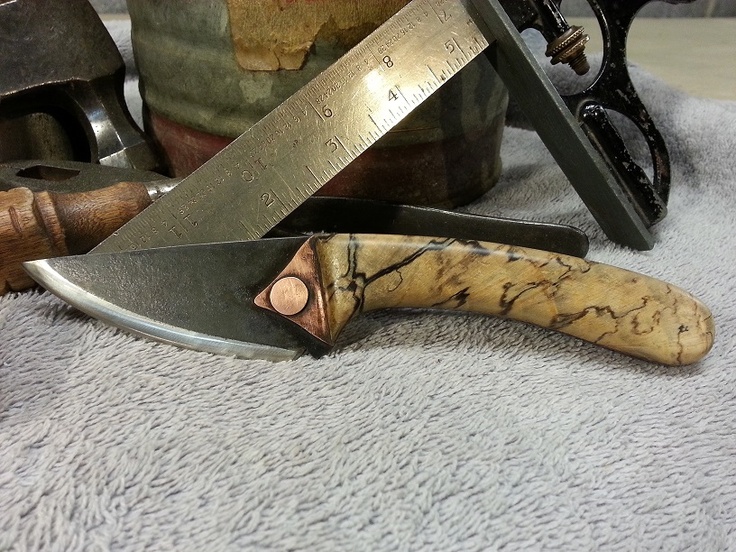
You can cut a small piece and saw with/across thr grain or across the bias and check to see the patterning of the spalt and the condition of the wood to see if it is worth saving. Spalted wood is rotten, so yes it needs stabilizing. The results are worth the effort IMHO.
This is maple:
I would resaw into thicknesses no thicker than absolutely necessary than what you need for your projects. Then you can cover the ends of each piece with whatever material you use to prevent cracking, put the pieces in your oven for a couple of days @ 130 degrees. Check it often for cracking. Ideal stabilization moisture content is 5% or below. Depending on the length and thickness you need, cut one of your pieces in half after 24 hours in oven. Check moisture levels. Thicker pieces obviously take longer than a couple of days, but if you are doing knife scales, blocks 5"x1.5''x1.5" dry for me in approx 39 hours. Denser woods, such as maple and walnut, dry slower and are more prone to cracking. I have found that wrapping them tight in aluminum foil helps with the cracking.
Also, be aware that pricing for stabilized wood is based on the weight of the wood AFTER stabilization. A 2 oz. piece of wood weighs anywhere from 3.5-6 ozs. after stabilization, so plan accordingly. Also plan on two weeks to account for shipping and the usual ten day processing time. I prefer WSSI, stabilizedwood.com. Best prices and customer service.
Finally, good luck! Spalted wood is an amazing thing to see finished in whatever project you are using.
Also, be aware that pricing for stabilized wood is based on the weight of the wood AFTER stabilization. A 2 oz. piece of wood weighs anywhere from 3.5-6 ozs. after stabilization, so plan accordingly. Also plan on two weeks to account for shipping and the usual ten day processing time. I prefer WSSI, stabilizedwood.com. Best prices and customer service.
Finally, good luck! Spalted wood is an amazing thing to see finished in whatever project you are using.
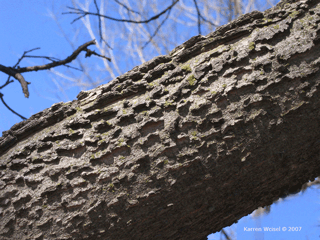
Does it look like this?
Mainly curious to find out for my own selfish reasons.It may well be worth saving some of my "firewood"
Chris


You need to seal the endgrain and let it dry for quite some time. A year per inch of thickness is the rule of thumb. Accelerated drying will cause it to split.
You can cut a small piece and saw with/across thr grain or across the bias and check to see the patterning of the spalt and the condition of the wood to see if it is worth saving. Spalted wood is rotten, so yes it needs stabilizing. The results are worth the effort IMHO.
This is maple:
I love that knife btw. have looked at it several times lol.
so what if I cut this into say 18in x 1.5 x 2/3 and stored it in my building for a year or so. I got to looking I bet I have 4 logs of this stuff. there all spalted like this.
I also got some kind of wood that has a bright red heart. going to try and save some of it to.
we are clearing out some trees so you can see our racetrack from the main road. all this stuff grows right beside the creek.
im going to go cut some to see how good it looks. will post a pic when I get back.

- Joined
- May 2, 2013
- Messages
- 1,711
Looks like Hackberry...
There are a million ways touted out there on the internet to speed up drying wood... But, there is no reliable way to speed up the drying process without unnecessarily sacrificing wood. The best way to dry wood is to take as large a section as practicable, seal the endgrain with house paint, sealant, or (best) wax. Then place the wood in a neutrally humid cool place out of direct sunlight. Water leaves the wood via the endgrain, and we want to slow down the process, not speed it up. After about a year or so, you can check the wood and cut it into blocks if the moisture content is right. Then set aside and allow to dry to about 5-8% moisture content before sending out for stabilization. I will guarantee all those methods mentioned lose more wood than necessary just to hurry up the process...
Remember that spalted wood is basically midway through the rotting process. There are soft sections of decayed wood in there. If we speed up the drying, it will become even softer and just blow apart when sawed into sections. There is going to be loss in picking the best looking and most stable parts of the wood, no need in wasting even more of it by a hurried attempt at drying. The biggest reason is that you have no reliable way to see what's inside that log prior to cutting it. Best to save as much as possible, so you don't inadvertently screw up a really good section. It would be a shame to cut into the wood, find a treasure spot, and lose it because it split during sped up drying.
Don't use any of the methods listed by wood turners and the like, they are looking for a different end product than we are...
Good luck. Spalted woods are some of my favorite, and spalted Hackberry is absolutely gorgeous. I have some at the house waiting for the right project...
-Eric
-Edit: I didn't realize that was a pic posted by Salolan. Your pics almost look like Kentucky Yellowood. Can you take a pic of the standing tree, or a clearer pic of the bark nearer the base?
There are a million ways touted out there on the internet to speed up drying wood... But, there is no reliable way to speed up the drying process without unnecessarily sacrificing wood. The best way to dry wood is to take as large a section as practicable, seal the endgrain with house paint, sealant, or (best) wax. Then place the wood in a neutrally humid cool place out of direct sunlight. Water leaves the wood via the endgrain, and we want to slow down the process, not speed it up. After about a year or so, you can check the wood and cut it into blocks if the moisture content is right. Then set aside and allow to dry to about 5-8% moisture content before sending out for stabilization. I will guarantee all those methods mentioned lose more wood than necessary just to hurry up the process...
Remember that spalted wood is basically midway through the rotting process. There are soft sections of decayed wood in there. If we speed up the drying, it will become even softer and just blow apart when sawed into sections. There is going to be loss in picking the best looking and most stable parts of the wood, no need in wasting even more of it by a hurried attempt at drying. The biggest reason is that you have no reliable way to see what's inside that log prior to cutting it. Best to save as much as possible, so you don't inadvertently screw up a really good section. It would be a shame to cut into the wood, find a treasure spot, and lose it because it split during sped up drying.
Don't use any of the methods listed by wood turners and the like, they are looking for a different end product than we are...
Good luck. Spalted woods are some of my favorite, and spalted Hackberry is absolutely gorgeous. I have some at the house waiting for the right project...
-Eric
-Edit: I didn't realize that was a pic posted by Salolan. Your pics almost look like Kentucky Yellowood. Can you take a pic of the standing tree, or a clearer pic of the bark nearer the base?
Last edited:

Looks like Hackberry...
There are a million ways touted out there on the internet to speed up drying wood... But, there is no reliable way to speed up the drying process without unnecessarily sacrificing wood. The best way to dry wood is to take as large a section as practicable, seal the endgrain with house paint, sealant, or (best) wax. Then place the wood in a neutrally humid cool place out of direct sunlight. Water leaves the wood via the endgrain, and we want to slow down the process, not speed it up. After about a year or so, you can check the wood and cut it into blocks if the moisture content is right. Then set aside and allow to dry to about 5-8% moisture content before sending out for stabilization. I will guarantee all those methods mentioned lose more wood than necessary just to hurry up the process...
Remember that spalted wood is basically midway through the rotting process. There are soft sections of decayed wood in there. If we speed up the drying, it will become even softer and just blow apart when sawed into sections. There is going to be loss in picking the best looking and most stable parts of the wood, no need in wasting even more of it by a hurried attempt at drying. The biggest reason is that you have no reliable way to see what's inside that log prior to cutting it. Best to save as much as possible, so you don't inadvertently screw up a really good section. It would be a shame to cut into the wood, find a treasure spot, and lose it because it split during sped up drying.
Don't use any of the methods listed by wood turners and the like, they are looking for a different end product than we are...
Good luck. Spalted woods are some of my favorite, and spalted Hackberry is absolutely gorgeous. I have some at the house waiting for the right project...
-Eric
-Edit: I didn't realize that was a pic posted by Salolan. Your pics almost look like Kentucky Yellowood. Can you take a pic of the standing tree, or a clearer pic of the bark nearer the base?
no that tree isn't standing any longer. there are several more tho and all the ones we have cut so far are all spalted. if I go back up there tomorrow ill take a pic of one standing. I think it may be a hackberry. although I don't know what ky yellow wood is either tho. the bark on the smaller branches look like the pic he posted. this is the biggest tree I have seen of its kind tho. the base is 26in across.

- Joined
- Jan 17, 2012
- Messages
- 276
Along these same lines, my neighbor recently cut down a tree and left this base/root burl. I'm not sure of the type of tree, but does this look to be worth saving?


Bad move. Cutting it thin increases the likelihood of warping
ok since I probably have at least 2tons of this stuff. I am going to cut some into 1.5x1.5x18 in sections and take them to the sawmill and stick them in there kiln. will also cut several more and stack them up in my shop to let dry properly. may even see if the saw mill will cut it out for me. that's a lot to cut.
I have pleanty of wax to put on them.
if this works out ill have spalted handles on everything I own lol. may even try to make a spalted pool cue. even though I have never seen one and im sure there is a reason for that.